
Sep 5, 2013 | Anonymous, Leaks

Information security, especially at schools that provide training on the subject, in for-profit higher education should not be a premium. It would make a really great story to send an “undercover” technician to DeVry and Rasmussen campuses to observe their incredible service delivery.
Rasmussen’s portal has long had a SQL injection vulnerability that has been published on the internet several times. It still remains uncorrected.
Rasmussen College and DeVry Institute of Technology are both HLC accredited schools with for-profit business models. Both schools often claim, “the same accreditation as Harvard” and other quality Universities. Surprisingly, the two institutions have a lot more in common. From sharing questionable leadership to providing questionable placement practices for students and even extremely questionable security policies, these institutions are the embodiment of the flaws of American education.
The curriculum, and curriculum for partner schools as mentioned later, is created by individuals that rarely have any current knowledge in the subjects. Course material is often incorrect or misunderstood by the instructors. The policy of both institutions require instructors with Masters Degrees, but because they do not invest in qualified candidates they will allow, for example, an individual with a Masters Degree in Business to teach OpenGL Programming based on course material created by an individual with no programming experience.
Rasmussen and DeVry not only share the same accreditation, but the sponsorship was provided with the same seed money. The two institutions share employees, transferring their employees back and forth. One such employee is Todd Pombert, a newly appointed Vice President of Infrastructure and Technology for Rasmussen College. Having very little professional experience when compared to individuals at similar roles, it was insisted Todd be given this role by Gerald Gagliardi. Gerald Gagliardi is on the board of directors for businesses like NetWolves and Rasmussen College itself. A shrewd investor from Boca Raton, Mr. Gagliardi is shrewd investor that has used his resources to create successful people and businesses as he decides. There is no altruism here.
Rasmussen College, Inc. itself, along with it’s sister company Deltak Innovation which is now owned by John Wiley & Sons in an attempt to break into online courseware, is reorganizing. Rasmussen Collge will be its own entity with I.T. services provided by Collegis Managed Services. These are the same employees but now with a different title. Services provided include lead generation, hosting online courses with the Angel, Blackboard and Moodle LMS systems; retaining student data and more. Customers of Collegis include Purdue University, University of Florida, Gonzaga, Benedictine, Lubbock, Anna Maria College and more – if a school’s online URL includes learntoday.info it is a Rasmussen (now Collegis) resource. Similarly, if the URL begins with “engage” then it is most likely a Collegis resource. These schools are outsourcing to Collegis hosting some of their online courses. There are no operational controls, no security officer and no practice in providing even the smallest amount of protection for the data these schools have hosted with Collegis. In particular, many colleges are Jesuit schools that are preyed upon for their association to other Jesuit colleges.
In the case of Todd Pombert this individual was promoted to a very senior role with no practical or noticeable work experience that should be required for a leader in an industry requiring critical care in student information security. A drop-out from his Master’s Degree, this individual maintains this position only because of the multi-level-marketing that DeVry and Rasmussen consider as qualifications for employment. There is no Security Officer for Rasmussen College. There is no reputable third party providing those services. Todd Pombert does not have the qualifications to adhere to industry practices that provide protection, confidentiality and integrity to managed services exposing flaws to their customers. Worse, an educational institution cannot provide and does not insist on the training required to keep students of Rasmussen and its partners safe. The lack of knowledge is so blatant that Todd Pombert keeps an archive of every email he received at DeVry to use as reference at Rasmussen. From confidential information, business plans, document templates and even financial data, much of DeVry’s history and future decisions are recorded unsecured on a “competitor” owned laptop with no disk encryption.
The school has all of the students in the same domain as contractors, faculty, staff and the board of directors. Not only does this create conflicts, but it allows any domain user (ie: student, contractor, etc) to browse the domain for information about any other user. Students are free to attempt to brute force Executive passwords giving them access to unencrypted financial information of other students and more. The network services between campus and the datacenter is the same class A network – you can reach the Chicago based datacenter from a school in Fargo from any ethernet jack. There are no standard, practical security mechanisms in place to prevent such a thing.
Students are forced to use a password convention that they often can’t change – firstname.lastname password: fl1234. This 6 character password utilizes the last four digits of the student’s social security number. None of the websites have any protection from common brute force attacks. If you know the name of a student (Joe Smith) then you know 1/3 of his password (jsXXXX) and it is trivial to use the portal, online courses or other services to continually guess 0000-9999. This exposes the student to possible fraud from someone acquiring their personal identifying information as well as allows an intruder to view the student’s grades, financial data email to the student with the same password and any academic work the student has previously submitted.
Staff manage students through a public RDP system at class.learntoday.info. There is no password policy assigned. Staff are free to use passwords including their own names and more. If an intruder gains access to the RDP system all student financial data is stored unencrypted on a Windows file share.
The wireless network for Rasmussen is WEP. WEP is a long outdated mechanism for securing a wireless network. Modern approaches to attacking WEP networks can allow an intruder to gain access within minutes. Again, financial data for students and the school itself are not encrypted in-place or in-flight. An attacker is able to gain access to any information just by being near a campus or corporate site.
There is no NAP, no RADIUS no 802.1X. The networks are completely unprotected. Coincidentally, both schools teach courses that promote the use of tools capable of easily harvesting corporate, student and financial data like Wireshark and Snort.
Even basic controls have been neglected. The printers and copiers throughout all sites run default settings with no authentication and the web interface enabled. Anyone can request a re-print of jobs including social security numbers or financial data.
The employee portal itself did not follow practical standards and did not have SSL protecting employee information from being broadcast in plain text. That includes the passwords of financial aid employees as well as C-level visitors to local campuses.
These points above may not even be considered the most critical flaws in the service provided. The practices of Rasmussen and DeVry are a blight on Higher Education as a whole. Their practices should be considered, and some are outright, criminally negligent.
Rasmussen and DeVry continue to pay their questionable leadership large amounts of money. This is a clear misappropriation. If even a fraction of Todd Pombert’s salary was spent on security reviews, operational controls or educating Todd Pombert then these schools would not be risking disastrous consequences for their students and students of large, responsible institutions like Purdue and the University of Florida.
For Rasmussen (Collegis) hosted instances of online platforms nearly all of the content has the same ACL. There is nothing protecting content from one school from being used in another school’s offering or worse – being copied by an intruder.
Finally, to add insult to injury, while these schools are raking in student tuition to pay higher amounts of money to irresponsible leadership, they are placing students with Bachelor’s degrees as minimum wage Gamestop clerks. They claim this to be “in-field” placement for Information Technology students. The subject of ballooning student loans is covered in-depth lately and there is no need to remind you that these students will never be able to pay their debt for an education they received at profit for individuals just as qualified as graduates.
-Anonymous Email Submission-

Oct 10, 2012 | Abuses of Power, News
 A school district in Texas came under fire earlier this year when it announced that it would require students to wear microchip-embedded ID cards at all times. Now students who refuse to be monitored say they are feeling the repercussions.
Since October 1, students at John Jay High School and Anson Jones Middle School in San Antonia, Texas have been asked to attend class clasping onto photo ID cards equipped with radio-frequency identification chips to keep track of each and every pupil’s personal location. Educators insist that the endeavor is being rolled out in Texas to relax the rampant truancy rates devastating the state’s school and the subsequent funding they are failing to receive as a result, and pending the program’s success the RFID chips could soon come to 112 schools in all and affect nearly 100,000 students.
Some pupils say they are already seeing the impact, though, and it’s not one they are very anxious to experience. Students who refuse to walk the schoolhouse halls with a location-sensitive sensor in their pocket or around their neck are being tormented by instructors and being barred from participating in certain school-wide functions, with some saying they are even being turned away from common areas like cafeterias and libraries.
Andrea Hernandez, a sophomore at John Jay, says educators have ignored her pleas to have her privacy respected and have told her she can’t participate in school elections if she doesn’t submit to the tracking program.
To Salon, Hernandez says subjecting herself to constant monitoring by way of wearing a RFID chip is comparable to clothing herself in the “mark of the beast.” When she reached out to WND.com to reveal the school’s response, though, she told them that she was threatened with exclusion from picking a homecoming king and queen for not adhering to the rules.
“I had a teacher tell me I would not be allowed to vote because I did not have the proper voter ID,” Hernandez told WND. “I had my old student ID card which they originally told us would be good for the entire four years we were in school. He said I needed the new ID with the chip in order to vote.”
Even after Hernandez politely refused to wear an RFID chip, Deputy Superintendent Ray Galindo offered a statement that suggests that both the student’s religious and civil liberty-anchored arguments will only allow her some leeway for so long.
“We are simply asking your daughter to wear an ID badge as every other student and adult on the Jay campus is asked to do,” Galindo wrote to the girl’s parents, WND reports. If she is allowed to forego the tracking now, he continued, it could only be a matter of time before the school signs off on making location-monitoring mandatory and the repercussions will be more than just revoking voting rights for homecoming contests.
“I urge you to accept this solution so that your child’s instructional program will not be affected. As we discussed, there will be consequences for refusal to wear an ID card as we begin to move forward with full implementation,” Galindo continued.
The girl’s father, Steve Hernandez, tells WND that the school has been somewhat willing to work with the daughter’s demands, but insists that her family “would have to agree to stop criticizing the program” and start publically supporting it.
“I told him that was unacceptable because it would imply an endorsement of the district’s policy and my daughter and I should not have to give up our constitutional rights to speak out against a program that we feel is wrong,” Mr. Hernandez responded.
By reversing the poor attendance figures, the Northside Independent School District is expected to collect upwards of $2 million in state funding, with the program itself costing around one-quarter of that to roll out and another $136,005 annually to keep it up and running. The savings the school stands to make in the long run won’t necessarily negate the other damages that could arise: Heather Fazio, of Texans for Accountable Government tells WND that for $30 she filed a Freedom of Information Act request and received the names and addresses of every student in the school district.
“Using this information along with an RFID reader means a predator could use this information to determine if the student is at home and then track them wherever they go. These chips are always broadcasting so anyone with a reader can track them anywhere,” she says.
Kirsten Bokenkamp of the ACLU told the San Antonio Express-News earlier this year that her organization was expecting to challenge the board’s decision this to roll out the tracking system, but the school has since gone ahead anyway. Steve Hernandez tells WND that he approached the ACLU for possible representation in his daughter’s case, but Rebecca Robertson of a local branch of the organization said, “the ACLU of Texas will not be able to represent you or your daughter in this matter,” saying his daughter’s case in particular fails to meet the criteria they use to pick and choose civil liberties cases to take on.
May 10, 2012 | Globalist Corporations
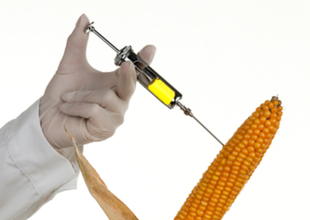
It’s not enough that the biotech industry — led by multinational corporations such as Monsanto, Dow, Syngenta, BAS, and Dupont — is poisoning our food and our planet. It’s also poisoning young minds.
In a blatant attempt at brainwashing, the Council for Biotechnology Information(CBI) has widely circulated what it calls a Biotechnology Basics Activity Bookfor kids, to be used by “Agriculture and Science Teachers.” The book — calledLook Closer at Biotechnology — looks like a science workbook, but reads more like a fairy tale. Available on the council’s Web site, its colorful pages are full of friendly cartoon faces, puzzles, helpful hints for teachers — and a heavy dose of outright lies about the likely effects of genetic engineering on health, the environment, world hunger and the future of farming.
CBI’s lies are designed specifically for children, and intended for use in classrooms.
At a critical time in history when our planet is veering toward a meltdown, when our youth are suffering the health consequences (obesity, diabetes, allergies) of Big Ag and Food Inc.’s over-processed, fat-and sugar-laden, chemical-, and GMO-tainted foods, a time when we should be educating tomorrow’s adults about how to reverse climate change, how to create sustainable farming communities, how to promote better nutrition, the biotech industry’s propagandists are infiltrating classrooms with misinformation in the guise of “educational” materials.
Brainwashing children. It’s a new low, even for Monsanto.
You don’t have to read beyond the first page ofLook Closer at Biotechnology to realize that this is pure propaganda:
Hi Kids! Welcome to the Biotechnology Basics Activity Book. This is an activity book for young people like you about biotechnology — a really neat topic. Why is it such a neat topic? Because biotechnology is helping to improve the health of the Earth and the people who call it home. In this book, you will take a closer look at biotechnology. You will see that biotechnology is being used to figure out how to: 1) grow more food; 2) help the environment; and 3) grow more nutritious food that improves our health. As you work through the puzzles in this book, you will learn more about biotechnology and all of the wonderful ways it can help people live better lives in a healthier world. Have fun!
Before we take a closer look at the lies laid out in Look Closer at Biotechnology — lies that are repeated over and over again, the better to imprint them on young minds — let’s take a closer look at the book’s publisher. The Council for Biotechnology Information describes itself as “a non-profit 501(c)(6) organization that communicates science-based information about the benefits and safety of agricultural biotechnology and its contributions to sustainable development.”
According to the Internal Revenue Service, a 501(c)(6) organization is a “business league” devoted to the improvement of business conditions of one or more lines of business. The mission of a 501(c)(6) organization “must focus on the advancement of the conditions of a particular trade or the interests of the community.”
The bottom line is that CBI exists to advance the interests of the corporations that it was formed to promote — in this case, the biotech industry. While it purports to communicate “science-based information,” in fact, that’s not its mission at all. Its mission is to maximize the profits of Monsanto and the biotech industry.
Not surprisingly, CBI is funded largely by the biotech, chemical, pesticide, and seed industry giants: BASF, Bayer CropScience, Dow Agro Sciences, Dupont, Monsanto, and Syngenta.
There’s nothing new about corporations lying to the public. Corporations routinely lie to their employees. They lie in advertising. They lie in the lopsided so-called studies and research projects that they self-fund in order to guarantee the outcomes that support their often false, but self-serving premises. They buy off politicians, regulatory officials, scientists, and the media.
Although here we’re focusing on the biotech industry trying to brainwash our kids, CBI certainly does not limit its propaganda to just children. CBI recently contributed $375,000 to the Coalition Against the Costly Labeling Law — a Sacramento-based industry front group working to defeat the California Right to Know Genetically Engineered Food Act of 2012. If passed in November, this citizens’ ballot Initiative will require food manufacturers and retailers to label foods containing genetically engineered ingredients, as well as ban the routine industry practice of labeling or advertising GE-tainted foods as “natural” or “all natural.” CBI, the Farm Bureau, and the Grocery Manufacturers Association are campaigning furiously to preserve their “right” to keep consumers in the dark about whether their food has been genetically engineered or not, and to preserve their “right” to mislabel gene-altered foods as “natural.”
Clearly, the Council for Biotechnology Information has little or no regard for “science-based” information. But lies aimed directly at kids — under the guise of science education? In our schools?
Let’s take a closer look at the claims made in Look Closer at Biotechnology.
Lie #1: “Biotechnology is one method being used to help farmers grow more food.” (page 7)
This statement is patently false.
In 2009, in the wake of similar studies, the Union of Concerned Scientists examined the data on genetically engineered crops, including USDA statistics. Their report — Failure to Yield — was the first major effort to evaluate in detail the overall yields of GE crops after more than 20 years of research and 13 years of commercialization in the United States. According to the definitive UCS study, “GE has done little to increase overall crop yields.” A number of studies indicate in fact that GE soybeans, for example, actually produce lower yields than non-genetically engineered varieties.
Research conducted by the India research group, Navdanya, and reported in The GMO Emperor Has No Clothes turns up the same results:
Contrary to the claim of feeding the world, genetic engineering has not increased the yield of a single crop. Navdanya’s research in India has shown that contrary to Monsanto’s claim of Bt cotton yield of 1500 kg per acre, the reality is that the yield is an average of 400-500 kg per acre. Although Monsanto’s Indian advertising campaign reports a 50-percent increase in yields for its Bollgard cotton, a survey conducted by the Research Foundation for Science, Technology and Ecology found that the yields in all trial plots were lower than what the company promised. (Page 11).
The claim that GE crops increase agricultural yields is a blatant lie. Equally untrue is the industry’s claim that it is motivated by the desire to feed the hungry of the world. As the Union of Concerned Scientists points out: “For the most part, genetic engineering techniques are being applied to crops important to the industrialized world, not crops on which the world’s hungry depend.” Where does all the genetically engineered soy and corn — two of the largest GE crops — end up? In animal feed, processed junk foods — and school lunchrooms. Precious little goes to feed the hungry in impoverished regions.
One of the sub-arguments related to increasing yields is the biotech industry’s claim that GMO crops are more resistant to pests — hence more of the crops survive. In Look Closer at Biotechnology kids are told that agricultural biotechnology is a “precise way to make seeds with special qualities. These seeds will allow farmers to grow plants that are . . . more resistant to pests . . .” In fact widespread commercialization of herbicide-resistant and Bt-spliced GE crops has engendered a growing army of superweeds and superpests, oblivious to all but the most powerful and toxic pesticides.
What we should be teaching kids in science class is what scientists have been warning for years — that any attempt to increase resistance to pests through genetic engineering will ultimately fail. Insects — and diseases — will build up a tolerance over time, and evolve into stronger and stronger strains. That’s how nature works — and even Monsanto can’t fool Mother Nature. Organic agriculture, on the other hand, utilizing crop rotation, biodiversity, natural fertilizers, and beneficial insects, reduces crop loss from pests and weeds, without the collateral damage of toxic pesticides and fertilizers.
Recently, 22 leading scientists told the US Environmental Protection Agency that it should act with “a sense of urgency” to urge farmers to stop planting Monsanto’s genetically engineered Bt corn because it will no longer protect them from the corn rootworm. Bt corn is genetically engineered with bacterial DNA that produces an insecticide in every cell of the plant, aimed at preventing corn rootworm. Except that corn rootworms have now developed resistance to these GE mutants.
Just as scientists had predicted years ago, a new generation of insect larvae has evolved, and is eating away at the roots of Monsanto’s Bt corn — a crop farmers paid a high price for on Monsanto’s promise that they would never have to worry about corn rootworm again. Scientists are now warning of massive yield loss and surging corn costs if the EPA doesn’t act quickly to drastically reduce Bt crops’ acreage and ensure that Monsanto makes non-GMO varieties of corn available to farmers.
“Massive yield loss” doesn’t sound like “more food” — whether you’re 12 years old or 112.
What we should be telling kids is what responsible scientists and farmers — experts at the United Nations — have been saying all along: Eco-farming candouble food output. According to a UN study:
- Eco-farming projects in 57 nations showed average crop yield gains of 80 percent by tapping natural methods for enhancing soil and protecting against pests.
- Projects in 20 African countries resulted in a doubling of crop yields within three to 10 years.
- Sound ecological farming can significantly boost production and in the long term be more effective than conventional farming.
Lie #2: “Biotechnology can help farmers and the environment in many ways.” (page 8)
Two lies for the price of one.
Biotechnology — specifically genetic engineering — helps neither farmers nor the environment, according to the majority of legitimate scientists and economists. In fact, the opposite is true. Genetic engineering of seeds has wreaked havoc on the environment and brought misery to hundreds of thousands of small farmers all over the world.
The majority of farmers in developing countries struggle to afford even the most basic requirements of seeds and fertilizers. Their survival depends on the age-old practice of selecting, saving and sharing seeds from one year to the next. When multinational corporations move into areas previously dominated by small farmers, they force those farmers to buy their patented seeds and fertilizers — under pretense of higher yields, and under threats of lawsuits if they save or share the seeds. Every year, they’re forced to buy more seeds and more chemicals from corporations — and when the promises of higher yields and higher incomes prove empty, farmers go bankrupt.
Compounding their corporate crimes, when Monsanto’s patented seeds contaminate the non-GMO crops of small farmers (because the seeds drift across property lines) Monsanto routinely sues farmers for growing their patented seeds illegally, even though the seeds were actually unwanted trespassers. Further, the company has ruined the livelihoods of small farmers by harassing them for illegally growing patented seeds, even in cases where no patented seeds have been grown, either knowingly or by accident.
As Monsanto and others have expanded worldwide, into India, China, Pakistan, and other countries, the effect on small farmers has been devastating. In India, for instance, after World Trade Organization policies forced the country in 1998 to open its seed sector to companies like Cargill, Monsanto and Syngenta, farmers quickly found themselves in debt to the biotech companies that forced them to buy corporate seeds and fertilizers and pesticides, destroying local economies. Hundreds of thousands of India’s cotton farmers have committed suicide.
And according to a Greenpeace report, poorer farmers in the Philippines were sold Monsanto’s Bt corn as a “practical and ecologically sustainable solution for poor corn farmers everywhere to increase their yields” only to find the opposite was true: Bt corn did not control pests and was “not ecologically sustainable.”
Which brings us to one more of the Council for Biotechnology Information’s lies to kids: That agricultural biotechnology is good for the environment.
Study after study, over more than a decade, has warned us of just the opposite. Even the pro-biotech USDA has admitted that GE crops use more pesticides, not less than non-GE varieties. Genetic engineering results in evermore pesticides being dumped into the environment, destroying soil and water, human and animal health, and threatening the biodiversity of the planet.
How about telling kids instead that numerous reports, including one from theGerman Beekeepers Association, have linked genetically engineered Bt corn to the widespread disappearance of bees, or what is now referred to as Colony Collapse Disorder? And while we’re at it, maybe we should remind kids of the Albert Einstein’s quote: “If the bee disappeared off the surface of the globe then man would only have four years of life left. No more bees, no more pollination, no more plants, no more animals, no more man.”
Maybe we should also tell them that glyphosate, the active ingredient in Monsanto’s herbicide, Roundup, the most widely used herbicide in the world, kills Monarch butterflies, fish, and frogs, destroys soil fertility, and pollutes our waterways and drinking water.
The fact is, widespread use of Monsanto’s Roundup in all agricultural and urban areas of the United States is destroying the environment, pure and simple. US Geological Survey studies released this month show that Roundup is now commonly found in rain and rivers in agricultural areas in the Mississippi River watershed, where most applications are for weed control on GE corn, soybeans and cotton. Here’s the real truth, from an article published this past week: Monsanto’s Roundup is actually threatening the crop-yielding potential of the entire biosphere. According to the article, new research published in the journalCurrent Microbiology highlights the extent to which “glyphosate is altering, and in some cases destroying, the very microorganisms upon which the health of the soil, and — amazingly — the benefits of raw and fermented foods as a whole, depend.”
Lie #3: “Scientists are using biotechnology to grow foods that could help make people healthier.” (page 11)
This is the perhaps the most outrageous lie of all. Telling kids that GE foods are more nutritious is tantamount to telling them Hostess cupcakes and Coca-Cola are health foods.
Genetic engineering — of human food and food for animals that humans eat — has been linked to a host of diseases and health issues, including auto-immune disorders, liver and kidney damage, nutritional deficiencies, allergies, accelerated aging, infertility, and birth defects.
There’s a growing and alarming body of research indicating that GMO foods are unsafe, and absolutely no research whatsoever proving that they are safe. And yet the USDA and FDA continue to approve, and just this past month even agreed tospeed up approval of these crops that scientists and physicians increasingly link to poor health.
Instead of force-feeding kids lies in bogus activity books, how about having them read some truthful articles?
The study Bt Toxin Kills Human Kidney Cells says Bt toxins are not “inert” on human cells, and may indeed be toxic, causing kidney damage and allergies observed in farmers and factory workers handling Bt crops. The article supportsprevious studies done on rats, showing that animals fed on three strains of GE corn made by Monsanto suffered signs of organ damage after only three months.
Or how about this: “19 Studies Find That GMOs Aren’t Up to Consumer Safety Protection Standards” which reports:
It is abundantly clear that both GMOs made to be resistant to herbicides (aka “Roundup Ready”) and those made to produce insecticides have damaging impacts on the health of mammals who consume them, particularly in the liver and kidneys. We already know that from the trials of 90 days and less. In looking a little deeper into the info, we found a number of issues that point to a probable increased level of toxicity when these foods are consumed over the long term, including likely multi-generational effects.
Multi-generational effects. Eating GMO foods harms not only our health, and our kids’ health — but quite possibly their kids, too — even if we stop eating them today.
In a recent report to the United Nations General Assembly Human Rights Council by Special Rapporteur on the right to food, Olivier De Schutter, Schutter outlines the case for sustainable agricultural practices (the antithesis of industrial agribusiness, with its GE crops and heavy reliance on chemical fertilizers and pesticides). He also addresses the links between health and malnutrition. In the report, Schutter shows why undernutrition, micronutrient deficiency and overnutrition are different dimensions of malnutrition that must be addressed together through a life-course approach. From the report’s summary:
Existing food systems have failed to address hunger, and at the same time encourage diets that are a source of overweight and obesity that cause even more deaths worldwide than does underweight. A transition towards sustainable diets will succeed only by supporting diverse farming systems that ensure that adequate diets are accessible to all, that simultaneously support the livelihoods of poor farmers and that are ecologically sustainable.
Corporate greed plus a complicit government have allowed for the rampant poisoning of our food and environment, and the demise of sustainable agriculture practices — practices sorely needed if we are going to feed the world’s population, and avoid a world health crisis. And we’ve exported the same misery and destruction to foreign countries far and wide.
Propaganda like the CBI’s Look Closer at Biotechnology has brainwashed many of our kids into thinking that the biotech industry has people — not profits — in its best interests. The book’s claims are laughable. But framing blatant lies as “science” for children in schools borders on criminal.
For parents and teachers out there, here’s an alternate lesson plan. Because world hunger is a concern, because saving our planet does matter, and because better health is a worthy and achievable goal, let’s ask our kids to think critically, instead of accepting at face value “information” attractively packaged by multinational corporations.
Don M. Huber, emeritus soil scientist of Purdue University puts it in terms everyone, kids included, can understand. Huber talks about a range of key factors involved in plant growth, including sunlight, water, temperature, genetics, and nutrients taken up from the soil. “Any change in any of these factors impacts all the factors,” he said. “No one element acts alone, but all are part of a system.” “When you change one thing,” he said, “everything else in the web of life changes in relationship.”
This is what we should be teaching the future stewards of our planet.
SOURCE:
http://www.alternet.org/food/154602/outrageous_lies_monsanto_and_friends_are_trying_to_pass_off_to_kids_as_science?page=entire
By: Ronnie Cummins, March 20, 2012


