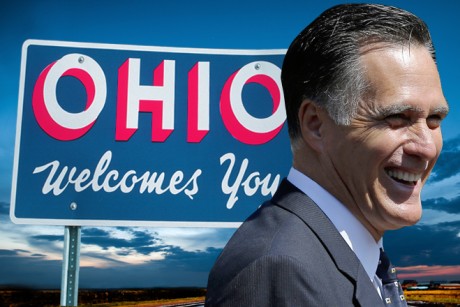
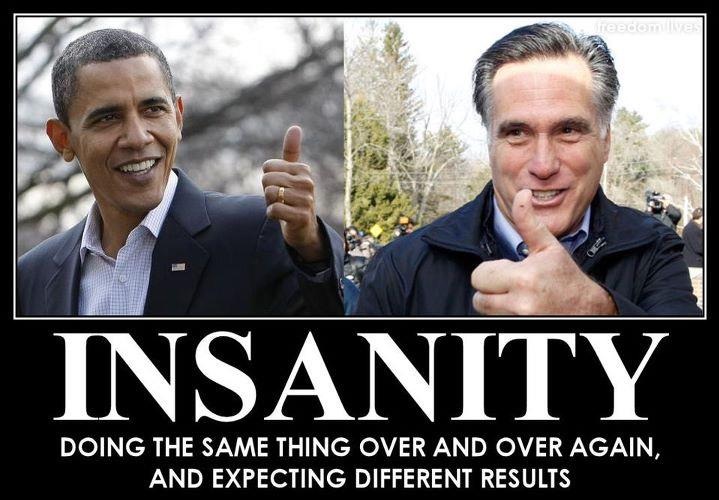
Tagg Romney, the son of Republican presidential candidate Mitt Romney, has purchased electronic voting machines that will be used in the 2012 elections in Ohio, Texas, Oklahoma, Washington and Colorado.
“Late last month, Gerry Bello and Bob Fitrakis at FreePress.org broke the story of the Mitt Romney/Bain Capital investment team involved in H.I.G. Capital which, in July of 2011, completed a “strategic investment” to take over a fair share of the Austin-based e-voting machine company Hart Intercivic,” according to independent journalist Brad Friedman.
But Friedman is not the only one to discover the connection between the Romney family, Bain Capital, and ownership of voting machines.
“Through a closely held equity fund called Solamere, Mitt Romney and his wife, son and brother are major investors in an investment firm called H.I.G. Capital. H.I.G. in turn holds a majority share and three out of five board members in Hart Intercivic, a company that owns the notoriously faulty electronic voting machines that will count the ballots in swing state Ohio November 7. Hart machines will also be used elsewhere in the United States.
In other words, a candidate for the presidency of the United States, and his brother, wife and son, have a straight-line financial interest in the voting machines that could decide this fall’s election. These machines cannot be monitored by the public. But they will help decide who “owns” the White House.”
Both The Nation and New York Times confirm the connection between the Romney family, Solamere and the Bain Capital investment in the voting machine company, Hart Intercivic, whose board of directors serve H.I.G. Capital.
“Mitt Romney, his wife Ann Romney, and their son Tagg Romney are also invested in H.I.G. Capital, as is Mitt’s brother G. Scott Romney.
The investment comes in part through the privately held family equity firm called Solamere, which bears the name of the posh Utah ski community where the Romney family retreats to slide down the slopes.” Truth out added.
There are also political connections between Solamere and the Romney’s. “Matt Blunt, the former Missouri governor who backed Mr. Romney in 2008, is a senior adviser to Solamere, as is Mitt Romney’s brother, Scott, a lawyer,” according to the New York Times.
Voter ID and voter fraud have been top issues in the 2012 race, as have claims of Republican voter suppression. Mr. Romney’s campaign has also been the subject of controversy over misleading ads, false claims, sketchy math on his tax plan, and overall vagueness on women’s rights and other hot button issues.
Raising further questions of legitimacy in the Romney campaign is an audio recording recently made public, where Mitt Romney is heard asking independent business owners to apply pressure to their employees to influence their votes. What has also been made public are the emails those employers have sent to their employees with an implied threat that if they don’t vote for Romney they may lose their jobs.
What it all says is that Mitt Romney, with the help of his family and Bain Capital connections, is more than willing to try to take the White House through illegitimate and highly unethical, if not specifically illegal means.
With each passing day, the character and campaign methods of Mitt Romney cast an ever-darker shadow over free and fair American elections.
Yet there is an irony in the Romney campaign that cannot be ignored. For all the noise the right-wing has made in questioning the legitimacy of Obama’s presidency, there have been so many questionable efforts made to help put Romney in the White House, if he wins, there should be great dispute over whether his election could ever be called genuinely illegitimate.
The nagging question is why, if Mr. Romney truly has the qualities that American voters want in their president, does he have to go to such great and questionable lengths to try to win the election.
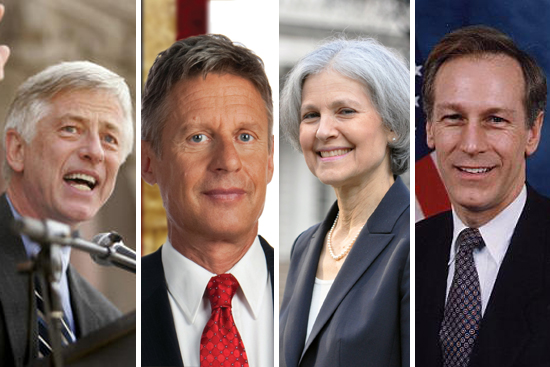
Representatives of the Libertarian, Green, Constitution, and Justice parties have held a presidential debate in Chicago.
Four third-party candidates, who were not invited to the presidential debates between President Barack Obama and former Massachusetts Governor Mitt Romney, have faced eachother in Chicago.
Tuesday’s debate was hosted by the Free and Equal Elections Foundation, a group promoting a more open electoral process, and moderated by talk show host Larry King.
“It’s a two-party system, but not a two-party system by law,” King said. Obama and Romney were also invited, but declined to attend.
The participants included former Salt Lake City mayor Rocky Anderson, former Virginia congressman Virgil Goode, former New Mexico governor Gary Johnson, and Green Party nominee Jill Stein, who ran against Romney in Massachusetts in 2002.
When asked about the Pentagon’s budget, during the debate, all four candidates agreed that military spending should be cut. Goode was perhaps the most circumspect; the other candidates called for big cuts.
For instance, Johnson said military spending should be cut by 43 per cent.
Goode, who voted to authorise the war in Iraq in 2003, said: “If I’m elected president … part of the cuts have to be in the Deparmtent of Defence. We cannot do as Mitt Romney and Paul Ryan suggest. I support a strong defence but we need to retrench rather than being the policeman of the world.”
In response, Johnson said: “The biggest threat to our national security is the fact that we’re bankrupt.” He supports a 43 per cent reduction in military spending – 2003 spending levels, he pointed out.
Stein, the Green Party nominee, said: “A foreign policy based on militarism … is making us less secure, not more secure. We need to cut the budget and bring the troops home.”
Since 1988, candidates have only been invited by the Commission on Presidential Debates to participate if polls find they have more than 15 per cent support.
So far, only one candidate has met that criterion, the billionaire Ross Perot, who debated Bill Clinton and George H W Bush in 1992.
Alternative presidential debates for third-party candidates have been held since 1996, but George Farah, author of No Debate: How the Republican and Democratic Parties Secretly Control the Presidential Debates, says he “[doesn’t] remember one getting this much attention, having Larry King moderate it.”
A second third-party match-up will be held on October 30.
High threshold
Farah describes the 15 per cent threshold as “just substantially too high”.
He notes that in order to receive federal matching funds, parties only have to have received five per cent of the vote in the previous election. “It doesn’t make any sense. It’s an arbitrary figure,” he told Al Jazeera.
Farah says third-party or independent candidates face “Herculean structural barriers”, arguing they face a fundraising disadvantage compared to Republican and Democratic candidates, and have to collect huge numbers of signatures in some states to get their names printed on the ballot.
Another hurdle is the structure of the US winner-take-all electoral system. Research shows third-party candidates perform better in countries that have proportional representation or instant runoff voting systems.
Although most public opinion polls of the presidential race do not ask whether voters support third-party candidates, one Gallup survey released in September found that three per cent nationally say they will vote for either Stein, Johnson, or Goode.
In many states, citizens will not be able to vote for third-party candidates even if they want to.
“It’s a two-party system, but not a two-party system by law.“
– Larry King
The US has a highly complex patchwork of ballot access laws, and all 50 states have somewhat different requirements for candidates’ names to be printed on the ballot.
Candidates not affiliated with either major party must collect a certain number of signatures from voters in order for their names to be automatically printed on ballots.
If they fail to meet this threshold, some states allow third-party candidates’ names to be manually written in by voters instead.
Certain states, like North Carolina and Oklahoma, are notoriously difficult for third-party candidates to gain access; others, like Louisiana, are much easier.
Only Obama and Romney are on the ballot in all 50 states and Washington, although Johnson is close, with 48 state ballots listing his name.
Records broken
Richard Winger, who runs the website Ballot Access News, thinks third-party candidates are likely to receive a higher share of the vote this year than in 2008.
He attributes this partly to the high enthusiasm for Barack Obama in 2008.
“There was so much optimism and happiness” about Obama and about electing the country’s first black president, he told Al Jazeera. As a result, less than 1.5 per cent of the vote went to minor parties.
Winger said the state which will deliver the highest share of its vote to third-party candidates “may very well be Alaska”.
Because it is four time zones behind the East Coast, many voters already know who will win, explains Winger.
He notes that Ralph Nader, who ran in every presidential election from 1992 to 2008, received a greater share of the vote there in 2004 than in any other state.
Farah also predicts a higher share of voters in New Mexico than in other states will choose third-party candidates as Johnson used to govern the state and “remains quite popular” there.
Third-party candidates have already broken one record this year: Winger says that there are 27 individuals this year whose names are on the ballot in at least one state. The previous record was 23, set in the 1992 election.
The debate was broadcast by Al Jazeera and Russia Today but on no major US cable news networks
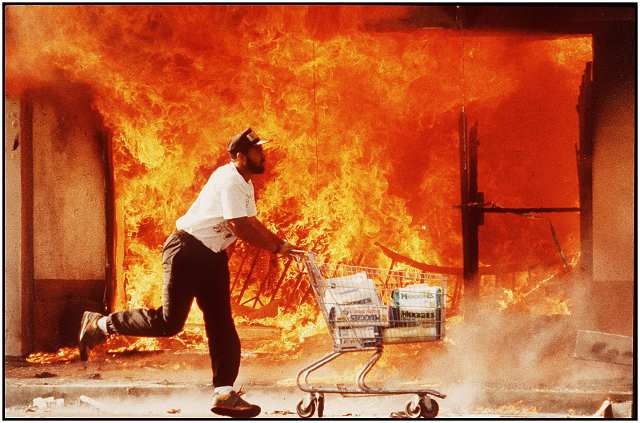
You’ve probably seen the news all over the ‘net: If Romney wins the election on November 6, many Obama supporters plan to riot in the streets. A surprising number have announced their plans to “kill Romney.” Simultaneously, FEMA has announced it is preparing for an event involving “mass casualties.”
Regardless of who you support in the coming election, the possibility of post-election riots is a reality. Here are 12 things you need to realize right now if you hope to stay safe should such an outcome unfold.
#1) The riots will likely occur in the inner cities. If at all possible, get out of the inner cities. In fact, you might want to think about moving out of the city altogether. Middle-class and upper-class suburbs will be safe, by the way. It’s mostly the inner cities that are likely to riot.
#2) The police will be almost instantly overwhelmed. Local peace officers are ridiculously short-staffed in cities all across the country, largely due to budget cuts. They have very little capacity to deal with any real outbreak of riots, so don’t expect calling 911 to have any impact at all.
#3) One of the greatest risks from riots is FIRES. Rioters love to set things on fire, as if burning down your own neighborhood is somehow an act of defiance against “The Man.” Even worse, rioters tend to shoot firearms at firemen who are trying to put out the fires. This causes firemen to evacuate the scene, after which fires burn out of control and do a lot more damage than they would have otherwise caused. The risk of fires spreading out of control in the inner city is surprisingly high.
#4) Innocent bystanders may be targeted with violence. Don’t be a “bystander” and you won’t be targeted (because you’re not around). The primary strategy is to simply not be in the wrong place at the wrong time.
#5) Don’t join in the riots. Even if you’re angry at the election outcome, taking part in any sort of violent protest or riot is only asking for trouble. Even if you don’t bring weapons to the riot, somebody from the other side very well might. You could easily find yourself arrested, beaten, pepper sprayed or even shot. STAY HOME and find other outlets for expressing your frustration (such as tweeting all your friends to say how much the winner “sucks bad!” which is always a sign of astounding intelligence).
#6) Think long and hard about the possible ramifications of having an Obama sign (or a Romney sign) in your yard or on your property. If your candidate wins, the haters on the other side of the aisle may take revenge on you and your property. You may wish to pull the signs on election day, before the results are publicized, in order to avoid being vandalized. Everybody has already made up their mind by that time anyway. Only a tiny percentage of the U.S. population is undecided even right now.
#7) Stock up on at least a 72-hour supply of extra necessities such as water, food, medicine and so on. Because if there are riots, there may be fires. And if there are fires, there may be infrastructure damage which could cause a 3-day outage of power, water, food supplies and so on. Election day in the inner city is not the time to be running out of food in the pantry and needing to head to the grocery store.
#8) If you’re in an at-risk area, stock up on pepper spray and bear spray. Pepper spray devices are not my favorite self defense item, but they can be surprisingly effective in crowd control. In fact, you can even buy “pepper spray grenades” online, which are really just canisters of pepper spray that you activate and then lob into, say, your apartment’s entryway if it’s under attack from a crowd of rioters. It will clear out the crazies in just a few seconds, giving you time to call 911.
Oh wait, 911 will be flooded with calls and police won’t be responding, so you’d better have a revolver or some other self defense weapon at the ready just in case you’re threatened with violence. This is the moment you’ll wish you had something more powerful than pepper spray…
#9) On election day, stay tuned in to not just the mainstream media but also the alternative media like Natural News and Info Wars. While the mainstream media may censor stories for political reasons, alternative news websites will be providing uncensored reporting throughout the day.
#10) Don’t be stupid enough to actually make threats against anybody on your Twitter feed or your Facebook page. The act of threatening a Presidential candidate is, of course, a felony crime, and those who make such threats on their own accounts should expect a visit from the U.S. Secret Service. Making such threats online only makes you look like a complete moron, providing yet more evidence to the other side that “supporters of candidate X are all complete morons” and thus furthering the divide.
As you may have noticed, neither Obama nor Romney has a monopoly on moronic supporters, although from what I can see so far, Obama supporters seem to be making a lot more violent threats online so far.
For the record, I’m not voting for either one. What you wish to do on election day is up to you, but I’ve decided to stop participating in the two-party fraud which operates much like a gang. Neither the DemoCRIPS nor the ReBLOODlicans gets my vote.
Additional predictions
If OBAMA wins:
• Expect gun sales to immediately surge to all-time highs.
• Watch for a revolt by small business owners who are fed up with healthcare mandates that are putting them out of business.
• Watch for a surge in gold prices and a sharp drop in the stock market.
• Get ready for mass arrests of government whistleblowers, journalists and critics who will be rounded up under the NDAA and sent to secret military prisons.
• Watch out for a massive increase in the signing of executive orders, where Obama will bypass Congress on everything from gun control to immigration.
If ROMNEY wins:
• Expect to see inner city riots in cities like L.A., Detroit and possibly even Houston.
• Watch for a joint U.S.-Israeli military attack on Iran to happen before February.
• Watch for a temporary DROP in gold prices to occur as the business sector experiences a (short-lived) surge in confidence.
• Expect a temporary stock market surge, reflecting optimism in business and finance sectors.
No matter who wins…
… expect MORE banker bailouts, MORE expansion of big government, MORE prosecutions against farmers and home gardeners, MORE fiat currency creation by the Fed, MORE welfare handouts to the masses, MORE TSA roadside checkpoints, MORE abuses of civil liberties by the government and MORE erosion of the Bill of Rights, which is already largely ignored by the government.
ProPublica rounds up the best investigative reporting on campaign finance.
This week, we’re exposing the world of campaign finance post-Citizens United, the 2010 Supreme Court case that opened the door to super PACs. The stories fall into three categories: donor profiles, pieces on super PACs, and scandals (though as Michael Kinsley said, “The scandal in Washington isn’t what’s illegal; it’s what’s legal”).
This roundup focuses on national stories, but you can find more under our Campaign Finance tag on MuckReads. Did we miss any? Email [email protected]
The Donors
CovertOperations,The New Yorker, August 2010
This 2011 National Magazine Award finalist profiles the billionaire Koch brothers, who are using their money to try to promote libertarian ideals. The resulting “ideological network” of foundations, think tanks, and political movements has become so sprawling that in political circles it’s known as the “Kochtopus.”
Advertisement
Is Gingrich’s Hard Line on Palestine Paid for by Sheldon Adelson?, Daily Beast,January 2012
Sheldon Adelson is the seventh–richestman in the United States, and the largest donor to the pro-Gingrich super PAC Winning Our Future. As this 2008 New Yorker profile shows, he also opposes a two-state solution to the Israeli-Palestinian conflict and wields enormous political influence in Israel. Some wonder if his views affected Gingrich’s “hard-line” stance on Palestine.
TheOperator, New Republic, April 2012
Harold Simmons is the 2012 campaign’s biggest donor. So what does he want from all his political giving?
Contributed by @Jake_Bernstein
TheAttackDog, The New Yorker, February 2012
Larry McCarthy, the media consultant who helps run the pro-Romney super PAC Restore Our Future, is Washington’s go-to guy for negative ads. He rose to prominence for the racially charged Willie Horton ad that helped George H.W. Bush get elected in 1988.
Super PACs
FirmGives $1 MilliontoPro–RomneyGroup, ThenDissolves, MSNBC, August 2011 Need a good example of the secret money fueling the 2012 election? This mystery company donated $1 million to the pro-Romney super PAC Restore Our Future—and then promptly dissolved. At the time, it was one of the biggest contributions of the election cycle.
Contributed by @SteveEngelberg
MostIndependentAdsfor 2012 ElectionAreFromGroupsThatDon’tDiscloseDonors, Washington Post, April 2012
You can thank anonymous donors for 90 percent of the total spent on advertising so far in the 2012 presidential election. The funds are funneled through social welfare nonprofits, also known as 501(c)4s, that do not have disclose their donors.
The 2012 MoneyRace: CompareTheCandidates,New York Times
If you want to track super PAC money, we’re going to point you to PACTrack. But when it comes to candidates’ fundraising, the New York Times’ news app is pretty sweet.
BundlersOntheInside, iWatch/ABC News, September 2011
Several of Obama’s top political supporters went to work within the Energy Department as it pumped stimulus money into alternative energy firms. Some supporters were also investors in companies that applied for government loans. (Part of a series on the stimulus-backed, and now bankrupt, Solyndra.)
Contributed by @paulkiel
DoubtsRaisedonDonationstoComptroller, New York Times, October 2011
New York City comptroller John C. Liu was considered a contender to succeed Mayor Michael Bloomberg, thanks in part to his robust fundraising machine. But when the New York Times canvassed nearly 100 homes and workplaces of donors listed in Mr. Liu’s campaign finance reports, they found several irregularities, including some that raised questions about whether some donors actually existed. Liu’s campaign is now under federal investigation.
Contributed by @srubenfeld
HouseFreshmenPushBillsthatBenefitBigDonors,USA Today, August 2011
Despite promises to change Washington, several House freshmen began their terms by pushing legislation that benefited some of their biggest donors.
Contributed by @rlocker12
(how politicians are ‘purchased’ by powerful men with an agenda)
The official trailer for ‘The Campaign’ starring Will Ferrell and Zach Galifianakis as political rivals in a race for Congress in a North Carolina district. Ferrell plays incumbent congressman Cam Brady who makes a major public goof that forces a bunch of wealthy CEOs to put up a rival for his seat in Congress in the form of Galifianakis’ Marty Huggins, the director of the local Tourism Center.