Aug 6, 2012 | Activism, Government Agenda
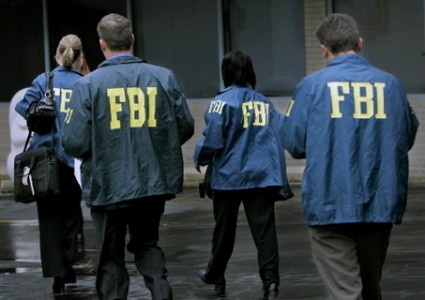
 Often, when folks find themselves having been visited or otherwise solicited for information by law enforcement, their reaction is to keep the fact that they’ve been targeted for government harassment quiet. In reality, however, the worst thing (next to cooperating!) that you can do in this situation is to keep it to yourself. In doing so, you deprive yourself of community support at a time that may be stressful and even terrifying and, simultaneously, you help the government maintain a veil of secrecy around the harassment and surveillance they use to destroy resistance movements.
Many people who’ve been harassed by law enforcement officers report having been threatened with negative consequences should they choose to go public about the incident. This, like so much of what they’ll tell you, is utter and complete bullshit. YOU ARE NOT LEGALLY BOUND TO KEEP THEIR SECRETS, and the fact that they often lie and try to convince you that you are only speaks to the fact that doing so benefits them, while spreading the word benefits us. Part of their strategy for repressing dissent is to quietly isolate individuals from their communities and terrorize them into cooperating in their efforts. If we expose what they’re doing every time they do it, we strip them of the freedom and protection that secrecy offers- think of it as a little counter-counter-insurgency tactic.
Publicizing government harassment is a protective measure. As we build a culture where people talk about and prepare for government repression, and support those facing it, we reduce the number of people who will turn on their comrades to save their own asses. If you come from a community where everyone is informed about incidents of harassment and knows how to deal with them calmly and effectively, and where not cooperating is the norm, you’ll be better equipped to deal with more serious situations as they arise. Whether or not you ever have been or ever will be involved in illegal activity, it’s possible that you, or someone you care about, or someone they care about, will at some point find themselves sitting in a jail cell being given the option of cooperating in exchange for some sort of leniency in charges or sentencing. And even if you don’t support ELF actions or other things that people are being indicted for these days, the old adage holds true with law enforcement: “give ’em an inch, and they’ll take down every poor fucker they can get their hands on.” That is, acquiescing to law enforcement demands that we remain silent about the things they do is just like giving a mouse a vegan cookie- who wants just one vegan cookie, after all?
Lastly, letting your community know that you’ve been visited is important because law enforcement visits are dangerous for everyone, not just the particular person who’s been visited, and you owe your community any information that may keep them safer. You don’t and can’t necessarily know exactly who may be endangered by government activity, but you can be sure that making it possible for those people it may affect to find out about it will help them. When you get visited, you may not have any idea why they’re asking what they’re asking- this could be because they’re wacked out creepers who don’t know what they’re talking about, or it could be that their asking about things that you had no involvement in. It’s not uncommon for visits to be made in a desperate attempt to find any in into radical circles that may, eventually, lead to a suspect. Thus, it’s important to be cautious about acting rashly and publicizing details (e.g., names mentioned, actions, etc.) of a visit in a way that will only incite open and potentially incriminating speculation in your community, and to balance that against the need to get as much information as possible out into the public realm so that people who it may affect can take appropriate actions to protect themselves. So, while there’s no doubt that you should go public immediately with your experience of government harassment, you should also take the time to consult with trusted friends and support networks to determine the best way to do so and still avoid unwittingly getting others in trouble.
http://midwestgreenscare.files.wordpress.com/2008/06/mgs-zine-30.pdf
May 21, 2012 | Activism
 One of the more extreme government abuses of the post-9/11 era targets U.S. citizens re-entering their own country, and it has received far too little attention. With no oversight or legal framework whatsoever, the Department of Homeland Security routinely singles out individuals who are suspected of no crimes, detains them and questions them at the airport, often for hours, when they return to the U.S. after an international trip, and then copies and even seizes their electronic devices (laptops, cameras, cellphones) and other papers (notebooks, journals, credit card receipts), forever storing their contents in government files. No search warrant is needed for any of this. No oversight exists. And there are no apparent constraints on what the U.S. Government can do with regard to whom it decides to target or why.
In an age of international travel — where large numbers of citizens, especially those involved in sensitive journalism and activism, frequently travel outside the country — this power renders the protections of the Fourth Amendment entirely illusory. By virtue of that amendment, if the government wants to search and seize the papers and effects of someone on U.S. soil, it must (with some exceptions) first convince a court that there is probable cause to believe that the objects to be searched relate to criminal activity and a search warrant must be obtained. But now, none of those obstacles — ones at the very heart of the design of the Constitution — hinders the U.S. government: now, they can just wait until you leave the country, and then, at will, search, seize and copy all of your electronic files on your return. That includes your emails, the websites you’ve visited, the online conversations you’ve had, the identities of those with whom you’ve communicated, your cell phone contacts, your credit card receipts, film you’ve taken, drafts of documents you’re writing, and anything else that you store electronically: which, these days, when it comes to privacy, means basically everything of worth.
This government abuse has received some recent attention in the context of WikiLeaks. Over the past couple of years, any American remotely associated with that group — or even those who have advocated on behalf of Bradley Manning — have been detained at the airport and had their laptops, cellphones and cameras seized: sometimes for months, sometimes forever. But this practice usually targets people having nothing to do with WikiLeaks.
A 2011 FOIA request from the ACLU revealed that just in the 18-month period beginning October 1, 2008, more than 6,600 people — roughly half of whom were American citizens — were subjected to electronic device searches at the border by DHS, all without a search warrant. Typifying the target of these invasive searches is Pascal Abidor, a 26-year-old dual French-American citizen and an Islamic Studies Ph.D. student who was traveling from Montreal to New York on an Amtrak train in 2011 when he was stopped at the border, questioned by DHS agents, handcuffed, taken off the train and kept in a holding cell for several hours before being released without charges; those DHS agents seized his laptop and returned it 11 days later when, the ACLU explains, “there was evidence that many of his personal files, including research, photos and chats with his girlfriend, had been searched.” That’s just one case of thousands, all without any oversight, transparency, legal checks, or any demonstration of wrongdoing.
* * * * *
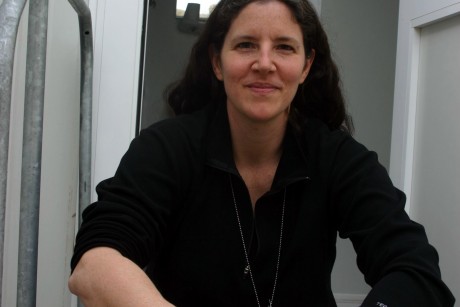
But the case of Laura Poitras, an Oscar-and Emmy-nominated filmmaker and intrepid journalist, is perhaps the most extreme. In 2004 and 2005, Poitras spent many months in Iraq filming a documentary that, as The New York Times put it in its review, “exposed the emotional toll of occupation on Iraqis and American soldiers alike.” The film, “My Country, My Country,” focused on a Sunni physician and 2005 candidate for the Iraqi Congress as he did things like protest the imprisonment of a 9-year-old boy by the U.S. military. At the time Poitras made this film, Iraqi Sunnis formed the core of the anti-American insurgency and she spent substantial time filming and reporting on the epicenter of that resistance. Poitras’ film was released in 2006 and nominated for the 2007 Academy Award for Best Documentary.

In 2010, she produced and directed “The Oath,” which chronicled the lives of two Yemenis caught up in America’s War on Terror: Salim Hamdan, the accused driver of Osama bin Laden whose years-long imprisonment at Guantanamo led to the 2006 Supreme Court case, bearing his name, that declared military commissions to be a violation of domestic and international law; and Hamdan’s brother-in-law, a former bin Laden bodyguard. The film provides incredible insight into the mindset of these two Yemenis. TheNYT feature on “The Oath” stated that, along with “My Country, My Country,” Poitras has produced ”two of the most searching documentaries of the post-9/11 era, on-the-ground chronicles that are sensitive to both the political and the human consequences of American foreign policy.” At the 2010 Sundance film festival, “The Oath” won the award for Best Cinematography.
Poitras’ intent all along with these two documentaries was to produce a trilogy of War on Terror films, and she is currently at work on the third installment. As Poitras described it to me, this next film will examine the way in which The War on Terror has been imported onto U.S. soil, with a focus on the U.S. Government’s increasing powers of domestic surveillance, its expanding covert domestic NSA activities (includingconstruction of a massive new NSA facility in Bluffdale, Utah), its attacks on whistleblowers, and the movement to foster government transparency and to safeguard Internet anonymity. In sum, Poitras produces some of the best, bravest and most important filmmaking and journalism of the past decade, often exposing truths that are adverse to U.S. government policy, concerning the most sensitive and consequential matters (a 2004 film she produced for PBS on gentrification of an Ohio town won the Peabody Award and was nominated for an Emmy).
But Poitras’ work has been hampered, and continues to be hampered, by the constant harassment, invasive searches, and intimidation tactics to which she is routinely subjected whenever she re-enters her own country. Since the 2006 release of “My Country, My Country,” Poitras has left and re-entered the U.S. roughly 40 times. Virtually every timeduring that six-year-period that she has returned to the U.S., her plane has been met by DHS agents who stand at the airplane door or tarmac and inspect the passports of every de-planing passenger until they find her (on the handful of occasions where they did not meet her at the plane, agents were called when she arrived at immigration). Each time, they detain her, and then interrogate her at length about where she went and with whom she met or spoke. They have exhibited a particular interest in finding out for whom she works.

She has had her laptop, camera and cellphone seized, and not returned for weeks, with the contents presumably copied. On several occasions, her reporter’s notebooks were seized and their contents copied, even as she objected that doing so would invade her journalist-source relationship. Her credit cards and receipts have been copied on numerous occasions. In many instances, DHS agents also detain and interrogate her in the foreign airport before her return, on one trip telling her that she would be barred from boarding her flight back home, only to let her board at the last minute. When she arrived at JFK Airport on Thanksgiving weekend of 2010, she was told by one DHS agent — after she asserted her privileges as a journalist to refuse to answer questions about the individuals with whom she met on her trip — that he “finds it very suspicious that you’re not willing to help your country by answering our questions.” They sometimes keep her detained for three to four hours (all while telling her that she will be released more quickly if she answers all their questions and consents to full searches).
Poitras is now forced to take extreme steps — ones that hamper her ability to do her work — to ensure that she can engage in her journalism and produce her films without the U.S. Government intruding into everything she is doing. She now avoids traveling with any electronic devices. She uses alternative methods to deliver the most sensitive parts of her work — raw film and interview notes — to secure locations. She spends substantial time and resources protecting her computers with encryption and password defenses. Especially when she is in the U.S., she avoids talking on the phone about her work, particularly to sources. And she simply will not edit her films at her home out of fear — obviously well-grounded — that government agents will attempt to search and seize the raw footage.
That’s the climate of fear created by the U.S. Government for an incredibly accomplished journalist and filmmaker who has never been accused, let alone convicted, of any wrongdoing whatsoever. Indeed,documents obtained from a FOIA request show that DHS has repeatedly concluded that nothing incriminating was found from its border searches and interrogations of Poitras. Nonetheless, these abuses not only continue, but escalate, after six years of constant harassment.
* * * * *
Poitras has been somewhat reluctant to speak publicly about the treatment to which she is subjected for fear that doing so would further impede her ability to do her work (the NYT feature on “The Oath” included some discussion of it). But the latest episode, among the most aggressive yet, has caused her to want to vociferously object.

On Thursday night, Poitras arrived at Newark International Airport from Britain. Prior to issuing her a boarding pass in London, the ticket agent called a Customs and Border Patrol (CBP) agent (Yost) who questioned her about whom she met and what she did. Upon arriving in Newark, DHS/CBP agents, as always, met her plane, detained her, and took her to an interrogation room. Each time this has happened in the past, Poitras has taken notes during the entire process: in order to chronicle what is being done to her, document the journalistic privileges she asserts and her express lack of consent, obtain the names of the agents involved, and just generally to cling to some level of agency.
This time, however, she was told by multiple CBP agents that she was prohibited from taking notes on the ground that her pen could be used as a weapon. After she advised them that she was a journalist and that her lawyer had advised her to keep notes of her interrogations, one of them, CBP agent Wassum, threatened to handcuff her if she did not immediately stop taking notes. A CBP Deputy Chief (Lopez) also told her she was barred from taking notes, and then accused her of “refusing to cooperate with an investigation” if she continued to refuse to answer their questions (he later clarified that there was no “investigation” per se, but only a “questioning”). Requests for comment from the CBP were not returned as of the time of publication.
Just consider the cumulative effect of this six years of harrassment and invasion. Poitras told me that it is “very traumatizing to come home to your own country and have to go through this every time,”and described the detentions, interrogations and threats as “infuriating,” “horrible” and “intimidating.” She told me that she now “hates to travel” and avoids international travel unless it is absolutely necessary for her work. And as she pointed out, she is generally more protected than most people subjected to similar treatment by virtue of the fact that she is a known journalist with both knowledge of her rights and the ability to publicize what is done to her. Most others are far less able to resist these sorts of abuses. But even for someone in Poitras’ position, this continuous unchecked government invasion is chilling in both senses of the word: it’s intimidating in its own right, and deters journalists and others from challenging government conduct.
* * * * *
As is true for so many abuses of the Surveillance State and assaults on basic liberties in the post-9/11 era, federal courts have almost completely abdicated their responsibility to serve as a check on these transgressions. Instead, federal judges have repeatedly endorsed the notion that the U.S. Government can engage in the most invasive border searches of citizens, including seizures and copying of laptops, without any reasonable suspicion of wrongdoing whatsoever, let alone probable cause.
That has happened in part because federal courts have become extremely submissive to assertions of Executive authority in the post-9/11 era, particularly when justified in the name of security. It’s also in part because anyone with a record of anti-authoritarianism or a willingness to oppose unrestrained government power, with very rare exception, can no longer get appointed to the federal bench; instead, it’s an increasingly homogeneous lot with demonstrated fealty to institutional authority. And it’s also in part because many life-tenured federal judges have been cloistered on the bench for decades, are technologically illiterate, and thus cannot apprehend the basic difference between having your suitcase searched at the airport and having the contents of your laptop and cellphone copied and stored by the U.S. Government.
One potentially important and encouraging exception to this trend was a ruling two weeks ago by U.S. District Judge Denise Casper, an Obama-appointed judge in the District of Massachusetts. As I’ve reported previously, David House, an activist who helped found the Bradley Manning Support Network, was detained by DHS when returning from a vacation in Mexico and had all of his electronic devices, including his laptop, seized; those devices were returned to him after almost two months only after he retained the ACLU of Massachusetts to demand their return. The ACLU then represented him in a lawsuit he commenced against the U.S. Government, alleging that his First and Fourth Amendment rights were violated by virtue of being targeted for his political speech and advocacy.
The DOJ demanded dismissal of the lawsuit, citing the cases approving of its power to search without suspicion, and also claimed that House was targeted not because of his political views but because of his connection to the criminal investigation of Manning and WikiLeaks. But the court refused to dismiss House’s lawsuit, holding that if he were indeed targeted by virtue of his protected activities, then his Constitutional rights have been violated:
Before even questioning House, the agents seized his electronic devices and in seizing them for forty-nine days, reviewed, retained, copied and disseminated information about the Support Network. Although the agents may not need to have any particularized suspicion for the initial search and seizure at the border for the purpose of the Fourth Amendment analysis, it does not necessarily follow that the agents, as is alleged in the complaint, may seize personal electronic devices containing expressive materials, target someone for their political association and seize his electronic devices and review the information pertinent to that association and its members and supporters simply because the initial search occurred at the border. . . .
When agents Santiago and Louck stopped House while he was en route to his connecting flight, they directed him to surrender the electronic devices he was carrying. They questioned him for an extended period of time only after seizing his devices. When the agents questioned House, they did not ask him any questions related to border control, customs, trade, immigration, or terrorism and did not suggest that House had broken the law or that his computer may contain illegal material or contraband. Rather, their questions focused solely on his association with Manning, his work for the Support Network, whether he had any connections to WikiLeaks, and whether he had contact with anyone from WikiLeaks during his trip to Mexico. Thus, the complaint alleges that House was not randomly stopped at the border; it alleges that he was stopped and questioned solely to examine the contents of his laptop that contained expressive material and investigate his association with the Support Network and Manning. . . .
That the initial search and seizure occurred at the border does not strip House of his First Amendment rights, particularly given the allegations in the complaint that he was targeted specifically because of his association with the Support Network and the search of his laptop resulted in the disclosure of the organizations, members, supporters donors as well as internal organization communications that House alleges will deter further participation in and support of the organization. Accordingly, the Defendants’ motion to dismiss House’s First Amendment claim is DENIED. [emphasis added]
As Kevin Gosztola notes in an excellent report on this ruling, the court — although it dubiously found that “the search of House’s laptop and electronic devices is more akin to the search of a suitcase and other closed containers holding personal information travelers carry with them when they cross the border which may be routinely inspected by customs and require no particularized suspicion” – also ruled that the length of time DHS retained House’s laptop (six weeks) may render the search and seizure unreasonable in violation of the Fourth Amendment.
But thus far, very few efforts have been made to restrain this growing government power. More than a year ago, Democratic Rep. Loretta Sanchez described to me legislation she proposed just to impose someminimal rules and safeguards governing what DHS can do at the airport, but it’s gone nowhere. A much stronger bill, proposed by then-Sen. Feingold, would have barred laptop seizures entirely without a search warrant, but it suffered the same fate. Apparently, the Small Government faction calling itself the “Tea Party” has no greater interest in restraining this incredibly invasive government power than the Democratic Party which loves to boast of its commitment to individual rights.
It’s hard to overstate how oppressive it is for the U.S. Government to be able to target journalists, film-makers and activists and, without a shred of suspicion of wrongdoing, learn the most private and intimate details about them and their work: with whom they’re communicating, what is being said, what they’re reading. That’s a radical power for a government to assert in general. When it starts being applied not randomly, but to people engaged in activism and journalism adverse to the government, it becomes worse than radical: it’s the power of intimidation and deterrence against those who would challenge government conduct in any way. The ongoing, and escalating, treatment of Laura Poitras is a testament to how severe that abuse is.
If you’re not somebody who films the devastation wrought by the U.S. on the countries it attacks, or provides insight into Iraqi occupation opponents and bin Laden loyalists in Yemen, or documents expanding NSA activities on U.S. soil, then perhaps you’re unlikely to be subjected to such abuses and therefore perhaps unlikely to care much. As is true for all states that expand and abuse their own powers, that’s what the U.S. Government counts on: that it is sending the message that none of this will affect you as long as you avoid posing any meaningful challenges to what they do. In other words: you can avoid being targeted if you passively acquiesce to what they do and refrain from interfering in it. That’s precisely what makes it so pernicious, and why it’s so imperative to find a way to rein it in.
SOURCE:
http://www.salon.com/2012/04/08/u_s_filmmaker_repeatedly_detained_at_border/singleton/
By: Glenn Greenwald, April 8, 2012
Apr 26, 2012 | Abuses of Power, News
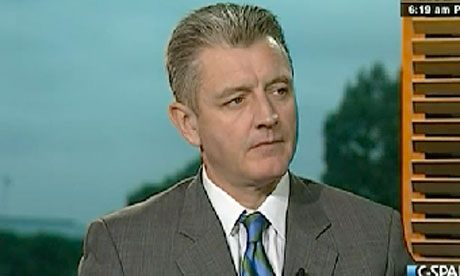
(Left) Tom Vanden Brook (on C-Span in 2010), a senior reporter for USA Today apparently targeted by a cyber-attack of misinformation and harassment. Photograph: guardiannews.com
The report by USA Today in which two of the paper’s employees became targets of a widespread and dishonest online disinformation campaign immediately after making inquiring calls to several intelligence contractors with ties to the US military might be very surprising to those of the nation’s journalists who only pay attention to our intelligence and security community and its conduct when some of its members are caught with prostitutes. The other dozen or so will not be surprised at all.
In the case that the guilty party is found, and does indeed turn out to be one of the private firms that the Pentagon has hired to provide “information operations” for use in Afghanistan, what are the consequences likely to be?
To judge from the last known incident in which several government contractors were actually caught planning a far more sophisticated campaign of intimidation against yet another journalist, the consequences will not be so bad as to prevent others from doing the same thing. It’s easy enough, especially for those firms that are encouraged by their government clients to produce new and better ways by which to lie and discredit. And there’s money in it.
Early in 2011, four contracting firms with strong government ties – HBGary Federal, Palantir, Berico and Endgame Systems – decided to combine their capabilities and set up a high-end private info warfare unit called Team Themis. Bank of America asked them to write a proposal for a covert campaign against WikiLeaks. Aside from hacking the group’s European servers, the team raised the possibility of going after Salon contributor Glenn Greenwald, a prominent WikiLeaks supporter. “These are established professionals that have a liberal bent, but ultimately most of them if pushed will choose professional preservation over cause, such is the mentality of most business professionals,” wrote HBGary Federal CEO Aaron Barr. He resigned with a severance package a few weeks after the affair was exposed by Anonymous; soon afterwards, he got a new job with another government contractor.
What of the others? Berico simply broke ties with HBGary Federal, as if it were merely a bad influence. Endgame Systems, whose execs explicitly noted in internal emails that their government clients didn’t want its name appearing in a press release, was barely noted by the press at all – until, a few months later, Business Week discovered that their shyness may stem from the fact that they have the capability to take out West European airports via cyber attacks (if you’ve got a couple of million dollars to pay for that).
Palantir, which received seed money from the CIA’s investment arm, In-Q-Tel, and shares founders with PayPal, made a public apology to the effect that the cyber-plotting did not reflect the company’s values, and put one of the employees involved, Matthew Steckman, on leave. A few months later, when the press had lost interest, Palantir brought him back on. Nothing at all seems to have happened to another employee, Eli Bingham, who was also heavily involved. When Palantir throws its annual convention, it still attracts keynote speakers like former DHS Secretary Michael Chertoff – who happens to be on the board of another huge contractor, BAE Systems, which, in turn, happened to have done some business with HBGary Federal, as well.
To be fair, these sorts of companies provide valuable services to the US and its allies. For instance, when US Central Command (CentCom)needed software that would allow 50 of its information warfare people to pretend to be 500 entirely fake people who don’t exist outside the internet, it had the USAF put out a call for bids. A number of contractors were up for the job – including the ethically challenged HBGary Federal – but only one of them could actually win.
Perhaps the others can provide this sort of “persona management” capability to other, private clients with a need to discredit their enemies in a clandestine fashion. I can think of about a dozen journalists they might want to go after. The rest won’t be a problem.
Source: http://www.guardian.co.uk/commentisfree/cifamerica/2012/apr/20/cyber-misinformation-campaign-against-usa-today
Apr 24, 2012 | News

F.B.I. targets peaceful anti-fracking and Rising Tide activists, Washington Post reveals
Rising Tide North Texas subject of intimidation campaign by federal government
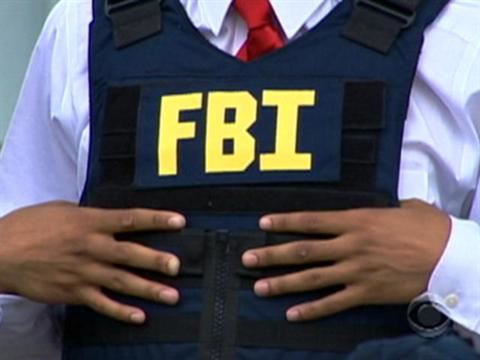
In today’s Washington Post, it was revealed that the Federal Bureau of Investigation (FBI) has been investigating peaceful climate and anti-fracking activists as a threat. In response to anonymous complaints Rising Tide North Texas, a part of the Rising Tide North America network, has been the subject of an ongoing FBI investigation. The FBI has visited and called for an interview Rising Tide organizer, University of North Texas (UNT) student and a marine veteran of the Afghan war Ben Kessler, as well as UNT philosophy professor Adam Briggle.
“If all I have done to be investigated as a threat is to peacefully express my opinions, then we are in serious trouble,” said Ben Kessler. “Activism is not terrorism. The only dangerous threat in North Texas is the threat that hydro-fracturing, or “fracking,” has on the health and lives of the residents of our communities.”
The article also revealed cooperation between the F.B.I. and local police in Moscow Idaho around repeated protests organized by Wild Idaho Rising Tide around the tar sands heavy haul truck shipments.
Here is the article:
As eco-terrorism wanes, governments still target activist groups seen as threat
By Juliet Eilperin, Updated: Saturday, March 10, 5:12 PM
Ben Kessler, a student at the University of North Texas and an environmental activist, was more than a little surprised that an FBI agent questioned his philosophy professor and acquaintances about his whereabouts and his sign-waving activities aimed at influencing local gas drilling rules.“It was scary,” said Kessler, who is a national organizer for the nonviolent environmental group Rising Tide North America. He said the agent approached him this past fall and said that the FBI had received an anonymous complaint and were looking into his opposition to hydraulic fracturing, also known as “fracking.” The bureau respected free speech, the agent told him, but was “worried about things being taken to an extreme level.”
Even as environmental and animal rights extremism in the United States is on the wane, officials at the federal, state and local level are continuing to target groups they have labeled a threat to national security, according to interviews with numerous activists, internal FBI documents and a survey of legislative initiatives across the country.
Iowa Gov. Terry Brandstad (R) signed a law this month, backed by the farm lobby, that makes it a crime to pose as an employee or use other methods of misrepresentation to get access to operations in an attempt to expose animal cruelty. Utah passed a similar bill, nicknamed an “ag-gag” law, on Wednesday. Last month, Victor VanOrden, an activist in his mid-20s, received the maximum sentence of five years in prison under a separate Iowa law for attempting to free minksfrom one of the state’s fur farms.
At the same time, though, acts that might be defined as eco-terrorism are down. In recent years, the broad definition has included arson, setting mink free at fur farms, campaigns to financially bankrupt animal testing firms and protests in front of the homes of some of those firms’ executives.
Michael Whelan, executive director of Fur Commission USA, estimated that in the 1990s “there were close to 20 attacks per year on our farmers” and that since 2003 there have been fewer than two attacks a year on American mink farms.
“Overall we’ve seen a decline in activity, in terms of violent criminal activity,” FBI intelligence analyst Erin Weller said in an interview.
FBI officials say two factors contribute to the reduced threat.
One is their successful prosecutions of several activists, in particular the 15 convictions in 2007 for members of the Earth Liberation Front. The national sweep of radical environmentalists was chronicled in the Oscar-nominated 2011 documentary “If a Tree Falls.” Not only did several ELF members get long prison sentences — Stanislas Meyerhoff got 13 years — but also many activists testified against others to get lighter punishments.
“That’s had an impact on the movement as a whole,” Weller said.
The second factor is that environmental and animal rights activists may view a Democratic administration as more sympathetic to their goals and be less inclined to take radical steps.
“Obviously if you think there is going to be support for your position, you’re going to use legal means rather than illegal means,” Weller said.
Despite the decline in activity, the level of scrutiny has continued, say several who track state and federal enforcement.“There’s been very little change under the Obama administration,” said Will Potter, author of the book “Green is the New Red: An Insider’s Account of a Movement Under Siege.” After factoring in several state initiatives on top of federal enforcement, Potter said, “The political climate as a whole has gotten a lot worse.”
Read the rest of the article here
SOURCE:
http://www.risingtidenorthamerica.org/2012/03/f-b-i-targets-peaceful-anti-fracking-and-rising-tide-activists-washington-post-reveals/#
By: Scott Parkin, March 11, 2012