El Chapo Guzman Didn’t Escape, He Was Released

El Chapo Guzman Didn’t Escape, He Was Released

El Chapo Guzman’s Release

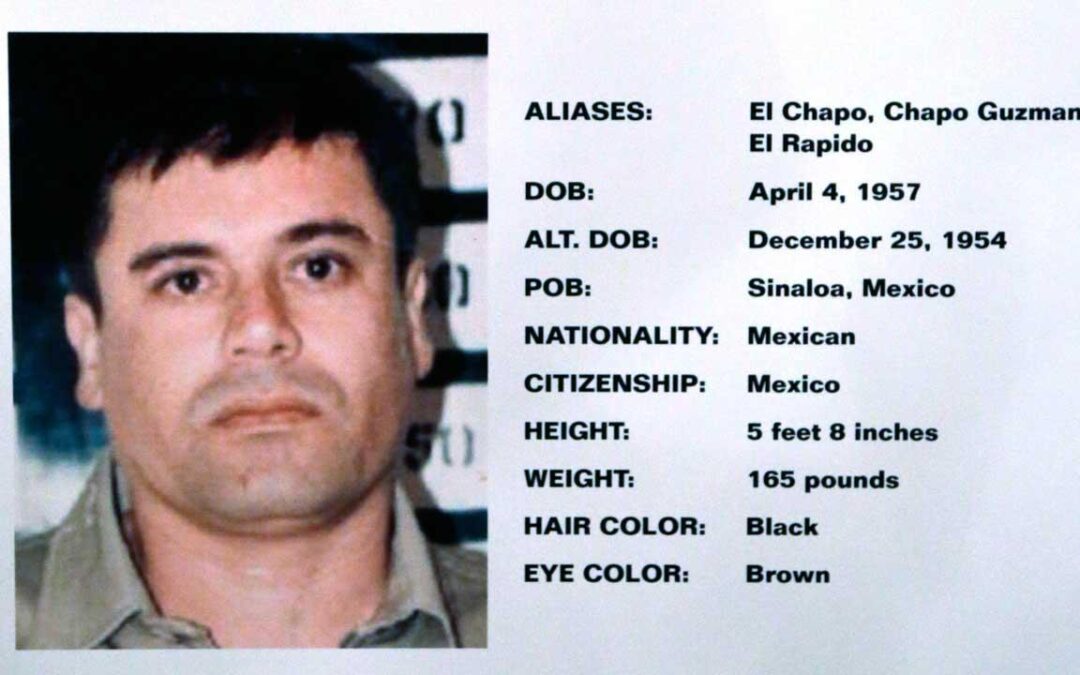
So I’m certain you’ve seen the news non stop, Chapo escaped, again. Happened on a Saturday night, he disappeared from the view of a surveillance camera in his cell and went underground into a tunnel under the Altiplano maximum security prison and wasn’t seen again. That’s the summary of the official story, and the video does appear to show that he went out through the tunnel dug where his shower was located. The story being spun is that since they couldn’t see him escape because Chapo was in a blind spot for the cameras. The authorities stated that out of respect for “human rights” they didn’t want to invade a prisoner’s privacy by placing a surveillance camera that could look into the shower area. That’s their trick up their sleeve, and the one that brings the story down.

An ex prisoner of the very same jail Chapo was doing time in said there is no respect for human rights let alone privacy rights in that prison. The authorities made it seem like they thought Chapo might have just been getting ready to shower. The ex prisoner explained that showers at night are not allowed. You can only shower once, at six in the morning. So there goes that part. He also states that there are indeed cameras that can see into the shower, even the toilet. That you’re only allowed ten minutes in the shower but really about 8 since the guards rush the prisoners to finish. He says the only blind spot in a jail cell at Altiplano is under your bed. You have to take into account that the authorities have stressed that the reason for these so called blind spots, is their concern for human rights. Okay.

If you’ve read enough about the Mexican government and their many hands, then you know that the last thing on their mind is a concern for human rights for its citizens. You can look at a photo of what police did to a young student that will verify that, Google that if you would like to but a face ripped off isn’t something I recommend you look at. The Mexican authorities aren’t concerned with human rights for its citizens let alone prisoners. The conditions at that jail and many others throughout Mexico are nightmarish. Put aside that we all know they don’t care about privacy, because don’t forget about this right here.

Secretary of the Interior Osorio Chong had repeatedly stated that the reason for the blind spots was out of respect for human rights, that turned into backlash as people began to say they looked the other way. He had to state that respecting human rights for a prisoner is not the same as helping them escape. That is true, it isn’t the same thing, but he wasn’t respecting human rights, so let’s get that straight.

It was obvious from the beginning of the story that Chapo must have had help from the inside, and you could ask any Mexican if they thought he had bought his way out and they’ll laugh and explain to you how reasoning works. It was confirmed that several prison workers including the director of Altiplano were detained for their alleged roles in Chapo’s escape. The former prisoner however stated that Chapo needed to have four departments under his control in that prison because of its maximum security status. He needed to control the federal, the prison guards, the prison officials and the special guards. So obviously he was able to do that, since he’s out of prison. Outside the prison is another link of the story of how Chapo was released.

The house at the end of the tunnel had no permit to be built. How could a maximum security prison not notice a building being built not far from its walls? You can say that Mexican authorities are very relaxed with their regulations, but a maximum security prison that houses the most wanted criminals is something else. Not only did it house Chapo, it had the leader of The Zetas Cartel, leader of the Knights Templar Cartel, “La Barbie” of the Beltran-Leyva Cartel, it is the prison of the most high profile cartel leaders. Surely they would notice a house being built about a mile from their walls, right? People familiar with the area have stated how secure that entire area is, you can’t even pick up radio signals there. With regards to how Chapo could’ve pulled this off, again, it isn’t how but why. Chapo didn’t escape if the authorities allowed all the pieces to be put into place for him to leave. He didn’t escape, he just left. He left behind a nice gift at least. That little bracelet used to monitor his location.

The bracelet that kept track of him doesn’t work outside the prison walls, pretty neat feature there for a maximum security prison. That’s another story in itself, the bracelet isn’t of importance because he removed it before going down the tunnel. How did he remove it so easily? What kind of bracelet for prisoner monitoring be so easily removable? Well, it was left behind and even if he couldn’t remove it, it would have stopped working once he was out. To be honest, he could have a huge lighthouse blaring out his location on top of his head and the authorities will still not find him, because they’re not looking for him. They released him. Well, for certain the local authorities did.

Shit rolls downhill, and so does money. This is an embarrassment for the upper echelons of power. President Enrique Peña Nieto is looking like quite the fool for being en route to France as the most prolific drug trafficker in the world just slipped out of prison on a motorcycle through a tunnel. Secretary of the Interior Osorio Chong looked like he was about to suffer an anxiety attack as he held a press conference over Chapo’s escape. They might not be happy about it, but certainly the lower level officials have quite a nice family retirement plan because of this. Sorry, us Mexicans usually think about, “I hope my family is taken care of” not, “I hope the president and the top brass is happy.” I can assure you, anyone involved in letting Chapo go aren’t worrying about the future of their family. They might go to jail, but just like those who sacrifice their being to work endlessly in the US to send money back home to ensure their families are taken care of, that’s all that matters. Speaking of money, that might be the key to the whole story.

Not going to get into specifics here, but the biggest buzz from the Left in Mexico on this story is, the bigger picture.  Yeah Chapo is the head of arguably the biggest and most powerful cartel in the world. It was that way when he was in jail, and when he wasn’t in jail. So why all the effort to find him, arrest him, jail him? Well, the biggest bit on that has to do with a general goal with the EPN administration. Privatization and more oversight from the US government over Mexico. There has been talks about the need to privatize Mexican prisons, among other neoliberal proposals such as in the education sector which has met with fierce resistance from education workers. There’s lots of quotes in US media from law enforcement agents saying this is an embarrassment for the corrupt and weak Mexican judicial system, that it needs more US assistance, and you get the idea. This of course is the US lead war on drugs, and they have the final say and if need be, final action. Loretta Lynch went as far to say that the US is ready to “help” Mexico find and capture Chapo. Anytime the US says they’re ready to help another country find “justice” well you know how that story ends. Sovereignty or any resemblance to it not only flies out the window, it leaves a bloody mess. Wow, sorry but I’m looking at this post and it is rather long and tedious to write and I’m certain it’s getting tedious to read as well so I’ll break this down to the core, just a moment.

The rumors, Chapo was allowed to walk right out the front door of the prison. Let’s say that was the truth, that the tunnel was just a prop to assist this novela like story streaming from the TV networks. Even if it wasn’t, his release, yes release, serves a powerful purpose. Either the Mexican state is weak and corrupt, it is. Or, it’s another excuse for a “soft” intervention from the US. It can be both, it most certainly feels that way. We forget the War on Drugs is an actual war, and propaganda is a tool of war. You can point to the bad guy and say that’s enough reason to go to war, but at least recognize that this is part of a war. So treat it like one. Bin Laden was sought after in the War on Terror and many innocent people died going after the bad guy. Remember that lives are a factor here, it’s war after all.

source: MexicanAnarchist.WordPress.com

Mexican Government Releases Proof of E.T.s and Ancient Space Travel

Mexican Government Releases Proof of E.T.s and Ancient Space Travel

IN WHAT WILL SOON BE CONSIDERED AS THE HOLY GRAIL OF EXTRATERRESTRIAL RESEARCH, THE MEXICAN GOVERNMENT HAS RELEASED ANCIENT DOCUMENTS PROVING THE EXISTENCE OF E.T.’S ONCE AND FOR ALL

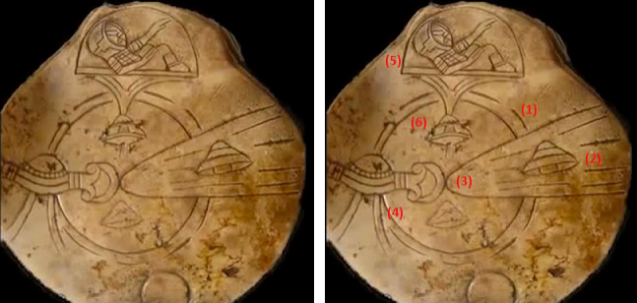
mexican-artifactsCALAKMUL, MEXICO (INTELLIHUB) — Newly released Mayan documents, i.e. artifacts, dating back at least 1300-years reveal that the human race is not alone and highly advanced technologies including space travel have likely existed for quite some time.

Not only does this documentation released by the Mexican government show the existence of an explorer race, it may also reveal the roots of mankind.

Some consider the government’s presentation of the information to be a major step forward for humanity as the truth is finally being slowly let out. Hopefully this will prompt other governments around the world to be more forthcoming with such information, turning the tide in the UFO and extraterrestrial research community for good.

Sundance winner Juan Carlos Rulfo’s Revelations of the Mayans 2012 and Beyond also touches on such technology. “Producer Raul Julia-Levy said the documentary-makers were working in cooperation with the Mexican government for what he said was “the good of mankind”. He said the order to collaborate had come directly from the country’s president, Álvaro Colom Caballeros.

Mexico will release codices, artifacts and significant documents with evidence of Mayan and extraterrestrial contact, and all of their information will be corroborated by archaeologists,” he said. “The Mexican government is not making this statement on their own – everything we say, we’re going to back it up.”

Caballeros himself was conspicuous by his absence from the statement released by Julia-Levy. So far, the minister of tourism for the Mexican state of Campeche, Luis Augusto García Rosado, appears to be the highest-ranking government official to go on record confirming the discovery of extraterrestrial life, but he’s not holding back.

In a statement, Rosado spoke of contact “between the Mayans and extraterrestrials, supported by translations of certain codices, which the government has kept secure in underground vaults for some time”. In a telephone conversation with the Wrap, he also spoke of “landing pads in the jungle that are 3,000 years old”.[2]

These secrets have been said to be “protected” by the mexican government for as long as 80-years.

Sources:

[1] The Mexican government reveals Mayan documents proving extraterrestrial contacts – Arcturius.org

[2] Mayan documentary to show ‘evidence’ of alien contact in ancient Mexico – TheGuardian.com

[3] Aliens and UFOs Depicted In Mayan Artifacts Released By Mexican Government – ConciusLifeNews.com

BY SHEPARD AMBELLAS

High-Ranking Mexican Drug Cartel Member makes Explosive Allegation: ‘Fast and Furious is not what you think it is’

High-Ranking Mexican Drug Cartel Member makes Explosive Allegation: ‘Fast and Furious is not what you think it is’

The Blaze  A high-ranking Mexican drug cartel operative currently in U.S. custody is making startling allegations that the failed federal gun-walking operation known as “Fast and Furious” isn’t what you think it is.

It wasn’t about tracking guns, it was about supplying them — all part of an elaborate agreement between the U.S. government and Mexico’s powerful Sinaloa Cartel to take down rival cartels.

Jesus-Vincente-Zambada-NieblaThe explosive allegations are being made by Jesus Vicente Zambada-Niebla, known as the Sinaloa Cartel’s “logistics coordinator.” He was extradited to the Chicago last year to face federal drug charges.

Zambada-Niebla claims that under a “divide and conquer” strategy, the U.S. helped finance and arm the Sinaloa Cartel through Operation Fast and Furious in exchange for information that allowed the DEA, U.S. Immigration and Customs Enforcement (ICE) and other federal agencies to take down rival drug cartels. The Sinaloa Cartel was allegedly permitted to traffic massive amounts of drugs across the U.S. border from 2004 to 2009 — during both Fast and Furious and Bush-era gunrunning operations — as long as the intel kept coming.

This pending court case against Zambada-Niebla is being closely monitored by some members of Congress, who expect potential legal ramifications if any of his claims are substantiated. The trial was delayed but is now scheduled to begin on Oct. 9.

Zambada-Niebla is reportedly a close associate of Sinaloa Cartel kingpin Joaquin “El Chapo” Guzman and the son of Ismael “Mayo” Zambada-Garcia, both of which remain fugitives, likely because of the deal made with the DEA, federal court documents allege.

Based on the alleged agreement  ”the Sinaloa Cartel under the leadership of defendant’s father, Ismael Zambada-Niebla and ‘Chapo’ Guzman, were given carte blanche to continue to smuggle tons of illicit drugs into Chicago and the rest of the United States and were also protected by the United States government from arrest and prosecution in return for providing information against rival cartels which helped Mexican and United States authorities capture or kill thousands of rival cartel members,” states a motion for discovery filed in U.S. District Court by Zambada-Niebla’s attorney in July 2011.

A source in Congress, who spoke to TheBlaze on the condition of anonymity, said that some top congressional investigators have been keeping “one eye on the case.”  Another two members of Congress, both lead Fast and Furious Congressional investigators, told TheBlaze they had never even heard of the case.

One of the Congressmen, who also spoke to TheBlaze on the condition of anonymity because criminal proceedings are still ongoing, called the allegations “disturbing.” He said Congress will likely get involved once Zambada-Niebla’s trial has concluded if any compelling information surfaces.

“Congress won’t get involved in really any criminal case until the trial is over and the smoke has cleared,” he added. “If the allegations prove to hold any truth, there will be some serious legal ramifications.”

Earlier this month, two men in Texas were sentenced to 70 and 80 months in prison after pleading guilty to attempting to export 147 assault rifles and thousands of rounds of ammunition to Mexico’s Los Zetas cartel. Compare that to the roughly 2,000 firearms reportedly “walked” in Fast and Furious, which were used in the murders of hundreds of Mexican citizens and U.S. Border Agent Brian Terry, and some U.S. officials could potentially face jail time if they knowingly armed the Sinaloa Cartel and allowed guns to cross into Mexico.


If proven in court, such an agreement between U.S. law enforcement agencies and a Mexican cartel could potentially mar both the Bush and Obama administrations. The federal government is denying all of Zambada-Niebla’s allegations and contend that no official immunity deal was agreed upon.

To be sure, Zambada-Niebla is a member of one of the most ruthless drug gangs in all of Mexico, so there is a chance that he is saying whatever it takes to reduce his sentence, which will likely be hefty. However, Congress and the media have a duty to prove without a reasonable doubt that there is no truth in his allegations. So far, that has not been achieved.

Zambada-Niebla was reportedly responsible for coordinating all of the Sinaloa Cartel’s multi-ton drug shipments from Central and South American countries, through Mexico, and into the United States. To accomplish this, he used every tool at his disposal: Boeing 747 cargo planes, narco-submarines, container ships, speed boats, fishing vessels, buses, rail cars, tractor trailers and automobiles. But Guzman and Zambada-Niebla’s overwhelming success within the Sinaloa Cartel was largely due to the arrests and dismantling of many of their competitors and their booming businesses in the U.S. from 2004 to 2009 — around the same time ATF’s gun-walking operations were in full swing. Fast and Furious reportedly began in 2009 and continued into early 2011.

According Zambada-Niebla, that was a product of the collusion between the U.S. government and the Sinaloa Cartel.

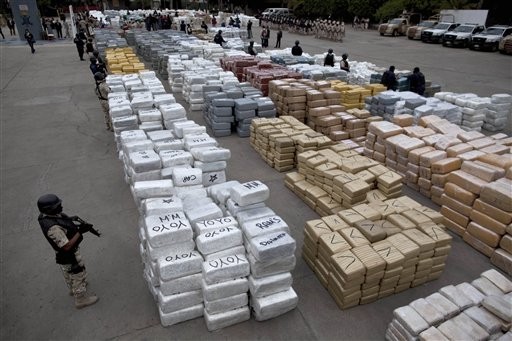
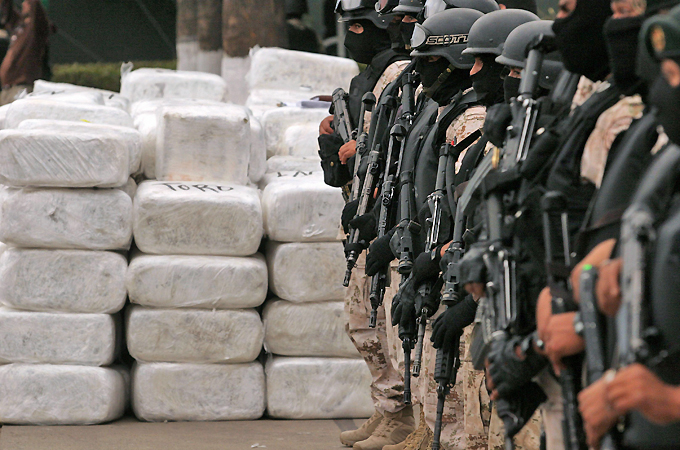
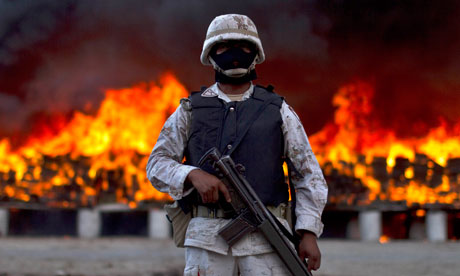
Mexico Drug WarSoldiers and police officers guard packages of seized marijuana during a presentation for the media in Tijuana, Mexico. (AP Photo/Guillermo Arias)

The claims seem to fall in line with statements made last month by Guillermo Terrazas Villanueva, a spokesman for the Chihuahua state government in northern Mexico who said U.S. agencies ”don’t fight drug traffickers,“ instead ”they try to manage the drug trade.”

Also, U.S. officials have previously acknowledged working with the Sinaloa Cartel through another informant Humberto Loya-Castro. He is also allegedly a high-ranking member of the Sinaloa Cartel as well as a close confidant and lawyer of “El Chapo” Guzman.

Loya-Castro was indicted along with Chapo and Mayo in 1995 in the Southern District of California in a massive narcotics trafficking conspiracy (Case no. 95CR0973). The case was dismissed in 2008 at the request of prosecutors after Loya became an informant for the United States government and subsequently provided information for years.

In 2005, “the CS (informant Loya-Castro) signed a cooperation agreement with the United States Attorney’s Office for the Southern District of California,” states an affidavit filed in the Zambada-Niebla case by Loya-Castro’s handler, DEA agent Manuel Castanon.

“Thereafter, I began to work with the CS. Over the years, the CS’ cooperation resulted in the seizure of several significant loads of narcotics and precursor chemicals. The CS’ cooperation also resulted in other real-time intelligence that was very useful to the United States government.”

Under the alleged agreement with U.S. agencies, “the Sinaloa Cartel, through Loya-Castro, was to provide information accumulated by Mayo, Chapo, and others, against rival Mexican Drug Trafficking Organizations to the United States government,” a motion for discovery states.

In return, the United States government allegedly agreed to dismiss the charges in the pending case against Loya-Castro (which they did), not to interfere with his drug trafficking activities and those of the Sinaloa Cartel and not actively prosecute him or the Sinaloa Cartel leadership.

Taken directly from the motion filed in federal court:

“This strategy, which he calls ‘Divide & Conquer,’ using one drug organization to help against others, is exactly what the Justice Department and its various agencies have implemented in Mexico. In this case, they entered into an agreement with the leadership of the Sinaloa Cartel through, among others, Humberto Loya-Castro, to receive their help in the United States government’s efforts to destroy other cartels.”

“Indeed, United States government agents aided the leaders of the Sinaloa Cartel.”

The government has denied this and says the deal did not go past Loya-Castro.

Zambada-Niebla was arrested by Mexican soldiers in late March of 2009 after he met with DEA agents at a Mexico City hotel in a meeting arranged by Loya-Castro, though the U.S. government was not involved in his arrest. He was extradited to Chicago to face federal drug charges on Feb. 18, 2010. He is now being held in a Michigan prison after requesting to be moved from Chicago.

“Classified Materials”

During his initial court proceedings, Zambada-Niebla continually stated that he was granted full immunity by the DEA in exchange for his cooperation. The agency, however, argues that an “official” immunity deal was never established though they admit he may have acted as an informant.

Zambada-Niebla and his legal council also requested records about Operation Fast and Furious, which permitted weapons purchased in the United States to be illegally smuggled into Mexico, sometimes by paid U.S. informants and cartel leaders. Their request was denied. From the defense motion:

“It is estimated that approximately 3,000 people were killed in Mexico as a result of ‘Operation Fast and Furious,’ including law enforcement officers in the state of Sinaloa, Mexico, the headquarters of the Sinaloa cartel. The Department of Justice’s leadership apparently saw this as an ingenious way of combating drug cartel activities.”

“It has recently been disclosed that in addition to the above-referenced problems with ‘Operation Fast & Furious,’ the DOJ, DEA, and the FBI knew that some of the people who were receiving the weapons that were being allowed to be transported to Mexico, were in fact informants working for those organizations and included some of the leaders of the cartels.”

Zambada’s attorney has filed several motions for discovery to that effect in Illinois Federal District Court, which were summarily denied by the presiding judge who claimed the defendant failed to make the case that he was actually a DEA informant.

In April, 2012, a federal judge refused to dismiss charges against him.

From a Chicago Sun Times report: “According to the government, [Zambada-Niebla] conveyed his interest and willingness to cooperate with the U.S. government, but the DEA agents told him they ‘were not authorized to meet with him, much less have substantive discussions with him,’” the judge wrote.

Sinaloa Cartel Operative Jesus Vincente Zambada Niebla Makes Explosive Allegation About Operation Fast and Furious

In this courtroom artist’s drawing Jesus Vincente Zambada-Niebla appears before U.S. District Judge Ruben Castillo Tuesday, Feb. 23, 2010, in Chicago. (AP Photo/Verna Sadock)

In their official response to Zambada-Niebla’s motion for discovery, the federal government confirmed the existence of “classified materials” regarding the case but argued they “do not support the defendant’s claim that he was promised immunity or public authority for his actions.”

Experts have expressed doubts that Zambada-Niebla had an official agreement with the U.S. government, however, agree Loya Castro probably did. Either way, the defense still wants to obtain DEA reports that detail the agency’s relationship with the Sinaloa Cartel and put the agents on the stand, under oath to testify.

The documents that detail the relationship between the federal government and the Sinaloa Cartel have still not been released or subjected to review — citing matters of national security.

via

William Cooper’s “Behold A Pale Horse” Book Foretold Schoolyard Shootings

William Cooper’s “Behold A Pale Horse” Book Foretold Schoolyard Shootings

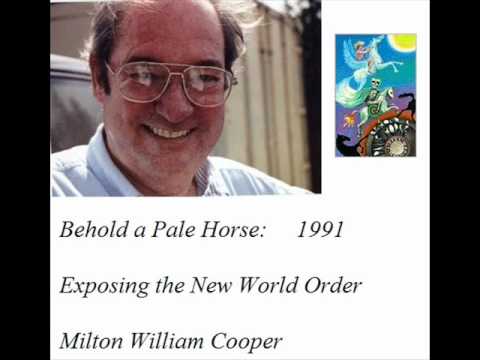
Below is found in Chapter 12 of Milton William Cooper’s 1991 book Behold A Pale Horse:

“The government encouraged the manufacture and importation of firearms for the criminals to use. This is intended to foster a feeling of insecurity, which would lead the American people to voluntarily disarm themselves by passing laws against firearms. Using drugs and hypnosis on mental patients in a process called Orion, the CIA inculcated the desire in these people to open fire on schoolyards and thus inflame the anti-gun lobby. This plan is well under way, and so far is working perfectly. The middle class is begging the government to do away with the 2nd Amendment.”

behold_a_pale_horse_school_shootings_conspiracy_gun_confiscation_2nd_amendment


BACKGROUND:

William Cooper was reared in an Air Force family. As a child he lived in many different countries, graduating from Yamato High School in Japan. Since he has traveled through or lived in many different foreign countries Mr. Cooper has a world view much different than most Americans.

William served with the Strategic Air Command, United States Air Force. He held a secret clearance working on B-52 bombers, KC-135 refueling aircraft, and Minuteman missiles. William received his Honorable Discharge from the United States Air Force in 1965.

William joined the United States Navy fulfilling a dream previously frustrated by chronic motion sickness. He served aboard the submarine USS Tiru (SS-416), USS Tombigbee (AOG-11), Naval Support Activity Danang RVN, Naval Security and Intelligence Camp Carter RVN, Danang Harbor Patrol RVN, Dong Ha River Security Group RVN, USS Charles Berry (DE-1035), Headquarters Commander in Chief Pacific Fleet, USS Oriskany (CVA-34).

Cooper was a member of the Office of Naval Security and Intelligence serving as a Harbor and River Patrol Boat Captain at Danang and the Dong Ha River Security Group, Cua Viet, Republic of Vietnam. William Cooper was awarded several medals for his leadership and heroism during combat including two with “V” for Valor.

He served on the Intelligence Briefing Team for the Commander In Chief of the Pacific Fleet. William was the Petty Officer of the Watch and designated KL-47 SPECAT operator in the CINCPACFLT Command Center at Makalapa Hawaii. There he held a Top Secret, Q, SI, security clearance.

William Cooper achieved the rank of First Class Petty Officer, QM1, E- 6 after only 8 years of Naval service, a difficult task in any branch of the United States military. William Cooper received an Honorable Discharge from the United States Navy on December 11, 1975.

William attended Long Beach City College where he picked up an Associate of Science Degree in Photography. He founded the Absolute Image Studio and Gallery of Fine Art Photography in Long Beach, California.

William held the position of Executive Director of Adelphi Business College, Pacific Coast Technical Institute, and National Technical College. Mr. Cooper was the National Marketing Coordinator for National Education and Software.

He produced several documentaries covering subjects such as the Kennedy assassination and secret black projects that have built flying disk shaped craft. William is an internationally acclaimed radio personality broadcasting the Hour Of The Time on WBCQ worldwide short-wave 7.415 MHz from 10 PM until 11 PM Eastern Standard Time (0300 to 0400 UTC) Monday through Thursday nights.

William Cooper is the author of Behold A Pale Horse. The book has become the best selling underground book of all time. It is read and promoted by word of mouth by People of all races, religions, and nationalities.

Mr. Cooper is a world class lecturer, one of the few other than superstars, monarchs, and Popes who have appeared at Wembly in London. William Cooper has lectured for 10 years in every State.

William Cooper, Trustee, has founded for Harvest Trust, the CAJI News Service, VERITAS national full size newspaper, The Intelligence Service, Harvest Publications, and has helped over 700 low power FM affiliate stations get equipped and on the air… including the station he managed as Trustee for the Independence Foundation Trust, 101.1 FM Eagar, Arizona, broadcasting to 7,000 people.

Under his leadership Harvest Trust ventured into the publishing trade. The first book under the Harvest Trust imprint was Oklahoma City: Day One by Michele Marie Moore… the definitive classic on the Oklahoma City bombing of the Alfred P. Murrah Federal Building on April 19, 1995.

Shortly after the bombing of the Alfred P. Murrah federal building Rush Limbaugh read a White House memo on the air during his broadcast which named William Cooper, “…the most dangerous radio host in America”. Mr. Cooper considers William Clinton’s pronouncement the greatest compliment that he has ever received.

William Cooper’s FBI file, promulgated by the investigation required by his security clearances while in military service, was one of those unlawfully in possession of the White House in what has become known as, “Filegate”. Shortly after this discovery President Clinton ordered all federal agencies to begin investigation, persecution, and prosecution of Mr. Cooper to shut him up.

After years of filing FOIA requests and researching the IRS William Cooper brought suit against the IRS in Federal District Court in Phoenix Arizona to force the IRS to produce proof of jurisdiction and delegation of authority which the IRS was unable to do. To short circuit Mr. Cooper’s attempt to reveal the true nature of the criminal IRS, and to carry out the orders of the White House, the agency lied to a Grand Jury, not allowing William Cooper to testify, and secured indictments against Mr. Cooper and his wife Annie. This ploy successfully stopped Mr. Cooper from continuing his suit against the criminal IRS for fear of being arrested.

In 1998 VERITAS and Harvest Publications was sold to Hallmark Creative Corporation along with the copyright and all rights to all written material produced or ever to be produced by William Cooper including Behold A Pale Horse and Oklahoma City: Day one. Hallmark Creative Corporation has contracted to insure this material is always available to the public.

In 1998 copyrights and all rights to all audio and video material produced or ever to be produced by William Cooper was sold to Excel Studios Corporation including the Hour Of The Time broadcast. Excel Studios has contracted to insure this material is always available to the public.

In March of 1999, Cooper William Sent his family out of the United States for their security. He lived and worked alone with his two dogs, one rooster, and one chicken.


DEATH:

William Cooper was killed by an Apache County  sheriff’s deputy wounded in a shootout, authorities claim (Eager, Arizona USA).

Details surrounding his demise were highly suspicious and may never be fully determined.

“…God bless my family. I love my wife & children more than life itself. Everything I do is for the future of all my children. They may not understand why I have sacrificed so much, why I am so dedicated to this work; but someday they will. I want them to know they are the most important People in my life, and how very, very much I love them…” – William Cooper


Mexican Official: CIA ‘Manages’ Drug Trade

Mexican Official: CIA ‘Manages’ Drug Trade

Juarez, Mexico– The US Central Intelligence Agency and other international security forces “don’t fight drug traffickers”, a spokesman for the Chihuahua state government in northern Mexico has told Al Jazeera, instead “they try to manage the drug trade”.Allegations about official complicity in the drug business are nothing new when they come from activists, professors, campaigners or even former officials. However, an official spokesman for the authorities in one of Mexico’s most violent states – one which directly borders Texas – going on the record with such accusations is unique.

“It’s like pest control companies, they only control,” Guillermo Terrazas Villanueva, the Chihuahua spokesman, told Al Jazeera last month at his office in Juarez. “If you finish off the pests, you are out of a job. If they finish the drug business, they finish their jobs.”

A spokesman for the CIA in Washington wouldn’t comment on the accusations directly, instead he referred Al Jazeera to an official website.

Accusations are ‘baloney’

Villanueva is not a high ranking official and his views do not represent Mexico’s foreign policy establishment. Other more senior officials in Chihuahua State, including the mayor of Juarez, dismissed the claims as “baloney”.

“I think the CIA and DEA [US Drug Enforcement Agency] are on the same side as us in fighting drug gangs,” Hector Murguia, the mayor of Juarez, told Al Jazeera during an interview inside his SUV. “We have excellent collaboration with the US.”

Under the Merida Initiative, the US Congress has approved more than $1.4bn in drug war aid for Mexico, providing attack helicopters, weapons and training for police and judges.

More than 55,000 people have died in drug related violence in Mexico since December 2006. Privately, residents and officials across Mexico’s political spectrum often blame the lethal cocktail of US drug consumption and the flow of high-powered weapons smuggled south of the border for causing much of the carnage.

Drug war ‘illusions’

“The war on drugs is an illusion,” Hugo Almada Mireles, professor at the Autonomous University of Juarez and author of several books, told Al Jazeera. “It’s a reason to intervene in Latin America.”

“The CIA wants to control the population; they don’t want to stop arms trafficking to Mexico, look at [Operation] Fast and Furious,” he said, referencing a botched US exercise where automatic weapons were sold to criminals in the hope that security forces could trace where the guns ended up.

The Bureau of Alcohol Tobacco and Firearms lost track of 1,700 guns as part of the operation, including an AK-47 used in 2010 the murder of Brian Terry, a Customs and Border Protection Agent.

Blaming the gringos for Mexico’s problems has been a popular sport south of the Rio Grande ever since the Mexican-American war of the 1840s, when the US conquered most of present day California, Utah, Nevada, Arizona and New Mexico from its southern neighbour. But operations such as Fast and Furious show that reality can be stranger than fiction when it comes to the drug war and relations between the US and Mexico. If the case hadn’t been proven, the idea that US agents were actively putting weapons into the hands of Mexican gangsters would sound absurd to many.

‘Conspiracy theories’

“I think it’s easy to become cynical about American and other countries’ involvement in Latin America around drugs,” Kevin Sabet, a former senior adviser to the White House on drug control policy, told Al Jazeera. “Statements [accusing the CIA of managing the drug trade] should be backed up with evidence… I don’t put much stake in it.”

Villanueva’s accusations “might be a way to get some attention to his region, which is understandable but not productive or grounded in reality”, Sabet said. “We have sort of ‘been there done that’ with CIA conspiracy theories.”

In 1996, the San Jose Mercury News published Dark Alliance, a series of investigative reports linking CIA missions in Nicaragua with the explosion of crack cocaine consumption in America’s ghettos.

In order to fund Contra rebels fighting Nicaragua’s socialist government, the CIA partnered with Colombian cartels to move drugs into Los Angeles, sending profits back to Central America, the series alleged.

“There is no question in my mind that people affiliated with, or on the payroll of, the CIA were involved in drug trafficking,” US Senator John Kerry said at the time, in response to the series.

Other newspapers, including the Washington Post and the Los Angeles Times, slammed Dark Alliance, and the editor of the Mercury News eventually wrote that the paper had over-stated some elements in the story and made mistakes in the journalistic process, but that he stood by many of the key conclusions.

Widespread rumours

US government has neglected border corruption

“It’s true, they want to control it,” a mid-level official with the Secretariat Gobernacion in Juarez, Mexico’s equivalent to the US Department of Homeland Security, told Al Jazeera of the CIA and DEA’s policing of the drug trade. The officer, speaking on the condition of anonymity, said he knew the allegations to be correct, based on discussions he had with US officials working in Juarez.

Acceptance of these claims within some elements of Mexico’s government and security services shows the difficulty in pursuing effective international action against the drug trade.

Jesús Zambada Niebla, a leading trafficker from the Sinaloa cartel currently awaiting trial in Chicago, has said he was working for the US Drug Enforcement Agency during his days as a trafficker, and was promised immunity from prosecution.

“Under that agreement, the Sinaloa Cartel under the leadership of [Jesus Zambada’s] father, Ismael Zambada and ‘Chapo’ Guzmán were given carte blanche to continue to smuggle tonnes of illicit drugs… into… the United States, and were protected by the United States government from arrest and prosecution in return for providing information against rival cartels,” Zambada’s lawyers wrote as part of his defence. “Indeed, the Unites States government agents aided the leaders of the Sinaloa Cartel.”

The Sinaloa cartel is Mexico’s oldest and most powerful trafficking organisation, and some analysts believe security forces in the US and Mexico favour the group over its rivals.

Joaquin “El Chapo”, the cartel’s billionaire leader and one of the world’s most wanted men, escaped from a Mexican prison in 2001 by sneaking into a laundry truck – likely with collaboration from guards – further stoking rumours that leading traffickers have complicit friends in high places.

“It would be easy for the Mexican army to capture El Chapo,” Mireles said. “But this is not the objective.” He thinks the authorities on both sides of the border are happy to have El Chapo on the loose, as his cartel is easier to manage and his drug money is recycled back into the broader economy. Other analysts consider this viewpoint a conspiracy theory and blame ineptitude and low level corruption for El Chapo’s escape, rather than a broader plan from government agencies.

Political changes

In Depth
More from Mexico’s drug war
Cartels cast shadow over
Mexico polls
Dirty money thrives despite
Mexico drug war
As PRI wins, Mexico looks
forward to its past
Mexicans make beeline
for ‘bandit saint’
US-trained cartel terrorises
Mexico

After an election hit by reported irregularities, Enrique Pena Nieto from the Institutional Revolutionary Party (PRI) is set to be sworn in as Mexico’s president on December 1.

He wants to open a high-level dialogue with the US about the drug war, but has said legalisation of some drugs is not an option. Some hardliners in the US worry that Nieto will make a deal with some cartels, in order to reduce violence.

“I am hopeful that he will not return to the PRI party of the past which was corrupt and had a history of turning a blind eye to the drug cartels,” said Michael McCaul, a Republican Congressman from Texas.

Regardless of what position a new administration takes in order to calm the violence and restore order, it is likely many Mexicans – including government officials such as Chihuahua spokesman Guillermo Villanueva – will believe outside forces want the drug trade to continue.

The widespread view linking the CIA to the drug trade – whether or not the allegations are true – speaks volumes about officials’ mutual mistrust amid ongoing killings and the destruction of civic life in Mexico.

“We have good soldiers and policemen,” Villanueva said. “But you won’t resolve this problem with bullets. We need education and jobs.”

Follow Chris Arsenault on Twitter: @AJEchris

Source:


How a big US bank laundered billions from Mexico’s murderous drug gangs

How a big US bank laundered billions from Mexico’s murderous drug gangs

As the violence spread, billions of dollars of cartel cash began to seep into the global financial system. But a special investigation by the Observer reveals how the increasingly frantic warnings of one London whistleblower were ignored


A soldier guards marijuana that is being incinerated in Tijuana, Mexico. Photograph: Guillermo Arias/AP

On 10 April 2006, a DC-9 jet landed in the port city of Ciudad del Carmen, on the Gulf of Mexico, as the sun was setting. Mexican soldiers, waiting to intercept it, found 128 cases packed with 5.7 tons of cocaine, valued at $100m. But something else – more important and far-reaching – was discovered in the paper trail behind the purchase of the plane by the Sinaloa narco-trafficking cartel.

During a 22-month investigation by agents from the US Drug Enforcement Administration, the Internal Revenue Service and others, it emerged that the cocaine smugglers had bought the plane with money they had laundered through one of the biggest banks in the United States: Wachovia, now part of the giant Wells Fargo.

The authorities uncovered billions of dollars in wire transfers, traveller’s cheques and cash shipments through Mexican exchanges into Wachovia accounts. Wachovia was put under immediate investigation for failing to maintain an effective anti-money laundering programme. Of special significance was that the period concerned began in 2004, which coincided with the first escalation of violence along the US-Mexico border that ignited the current drugs war.

Criminal proceedings were brought against Wachovia, though not against any individual, but the case never came to court. In March 2010, Wachovia settled the biggest action brought under the US bank secrecy act, through the US district court in Miami. Now that the year’s “deferred prosecution” has expired, the bank is in effect in the clear. It paid federal authorities $110m in forfeiture, for allowing transactions later proved to be connected to drug smuggling, and incurred a $50m fine for failing to monitor cash used to ship 22 tons of cocaine.

More shocking, and more important, the bank was sanctioned for failing to apply the proper anti-laundering strictures to the transfer of $378.4bn – a sum equivalent to one-third of Mexico’s gross national product – into dollar accounts from so-called casas de cambio (CDCs) in Mexico, currency exchange houses with which the bank did business.

“Wachovia’s blatant disregard for our banking laws gave international cocaine cartels a virtual carte blanche to finance their operations,” said Jeffrey Sloman, the federal prosecutor. Yet the total fine was less than 2% of the bank’s $12.3bn profit for 2009. On 24 March 2010, Wells Fargo stock traded at $30.86 – up 1% on the week of the court settlement.

The conclusion to the case was only the tip of an iceberg, demonstrating the role of the “legal” banking sector in swilling hundreds of billions of dollars – the blood money from the murderous drug trade in Mexico and other places in the world – around their global operations, now bailed out by the taxpayer.

At the height of the 2008 banking crisis, Antonio Maria Costa, then head of the United Nations office on drugs and crime, said he had evidence to suggest the proceeds from drugs and crime were “the only liquid investment capital” available to banks on the brink of collapse. “Inter-bank loans were funded by money that originated from the drugs trade,” he said. “There were signs that some banks were rescued that way.”

Wachovia was acquired by Wells Fargo during the 2008 crash, just as Wells Fargo became a beneficiary of $25bn in taxpayers’ money. Wachovia’s prosecutors were clear, however, that there was no suggestion Wells Fargo had behaved improperly; it had co-operated fully with the investigation. Mexico is the US’s third largest international trading partner and Wachovia was understandably interested in this volume of legitimate trade.

José Luis Marmolejo, who prosecuted those running one of the casas de cambio at the Mexican end, said: “Wachovia handled all the transfers. They never reported any as suspicious.”

“As early as 2004, Wachovia understood the risk,” the bank admitted in the statement of settlement with the federal government, but, “despite these warnings, Wachovia remained in the business”. There is, of course, the legitimate use of CDCs as a way into the Hispanic market. In 2005 the World Bank said that Mexico was receiving $8.1bn in remittances.

During research into the Wachovia Mexican case, the Observer obtained documents previously provided to financial regulators. It emerged that the alarm that was ignored came from, among other places, London, as a result of the diligence of one of the most important whistleblowers of our time. A man who, in a series of interviews with the Observer, adds detail to the documents, laying bare the story of how Wachovia was at the centre of one of the world’s biggest money-laundering operations.

Martin Woods, a Liverpudlian in his mid-40s, joined the London office of Wachovia Bank in February 2005 as a senior anti-money laundering officer. He had previously served with the Metropolitan police drug squad. As a detective he joined the money-laundering investigation team of the National Crime Squad, where he worked on the British end of the Bank of New York money-laundering scandal in the late 1990s.

Woods talks like a police officer – in the best sense of the word: punctilious, exact, with a roguish humour, but moral at the core. He was an ideal appointment for any bank eager to operate a diligent and effective risk management policy against the lucrative scourge of high finance: laundering, knowing or otherwise, the vast proceeds of criminality, tax-evasion, and dealing in arms and drugs.

Woods had a police officer’s eye and a police officer’s instincts – not those of a banker. And this influenced not only his methods, but his mentality. “I think that a lot of things matter more than money – and that marks you out in a culture which appears to prevail in many of the banks in the world,” he says.

Woods was set apart by his modus operandi. His speciality, he explains, was his application of a “know your client”, or KYC, policing strategy to identifying dirty money. “KYC is a fundamental approach to anti-money laundering, going after tax evasion or counter-terrorist financing. Who are your clients? Is the documentation right? Good, responsible banking involved always knowing your customer and it still does.”

When he looked at Wachovia, the first thing Woods noticed was a deficiency in KYC information. And among his first reports to his superiors at the bank’s headquarters in Charlotte, North Carolina, were observations on a shortfall in KYC at Wachovia’s operation in London, which he set about correcting, while at the same time implementing what was known as an enhanced transaction monitoring programme, gathering more information on clients whose money came through the bank’s offices in the City, in sterling or euros. By August 2006, Woods had identified a number of suspicious transactions relating to casas de cambio customers in Mexico.

Primarily, these involved deposits of traveller’s cheques in euros. They had sequential numbers and deposited larger amounts of money than any innocent travelling person would need, with inadequate or no KYC information on them and what seemed to a trained eye to be dubious signatures. “It was basic work,” he says. “They didn’t answer the obvious questions: ‘Is the transaction real, or does it look synthetic? Does the traveller’s cheque meet the protocols? Is it all there, and if not, why not?'”

Woods discussed the matter with Wachovia’s global head of anti-money laundering for correspondent banking, who believed the cheques could signify tax evasion. He then undertook what banks call a “look back” at previous transactions and saw fit to submit a series of SARs, or suspicious activity reports, to the authorities in the UK and his superiors in Charlotte, urging the blocking of named parties and large series of sequentially numbered traveller’s cheques from Mexico. He issued a number of SARs in 2006, of which 50 related to the casas de cambio in Mexico. To his amazement, the response from Wachovia’s Miami office, the centre for Latin American business, was anything but supportive – he felt it was quite the reverse.

As it turned out, however, Woods was on the right track. Wachovia’s business in Mexico was coming under closer and closer scrutiny by US federal law enforcement. Wachovia was issued with a number of subpoenas for information on its Mexican operation. Woods has subsequently been informed that Wachovia had six or seven thousand subpoenas. He says this was “An absurd number. So at what point does someone at the highest level not get the feeling that something is very, very wrong?”

In April and May 2007, Wachovia – as a result of increasing interest and pressure from the US attorney’s office – began to close its relationship with some of the casas de cambio. But rather than launch an internal investigation into Woods’s alerts over Mexico, Woods claims Wachovia hung its own money-laundering expert out to dry. The records show that during 2007 Woods “continued to submit more SARs related to the casas de cambio“.

In July 2007, all of Wachovia’s remaining 10 Mexican casa de cambio clients operating through London suddenly stopped doing so. Later in 2007, after the investigation of Wachovia was reported in the US financial media, the bank decided to end its remaining relationships with the Mexican casas de cambio globally. By this time, Woods says, he found his personal situation within the bank untenable; while the bank acted on one level to protect itself from the federal investigation into its shortcomings, on another, it rounded on the man who had been among the first to spot them.

On 16 June Woods was told by Wachovia’s head of compliance that his latest SAR need not have been filed, that he had no legal requirement to investigate an overseas case and no right of access to documents held overseas from Britain, even if they were held by Wachovia.

Woods’s life went into freefall. He went to hospital with a prolapsed disc, reported sick and was told by the bank that he not done so in the appropriate manner, as directed by the employees’ handbook. He was off work for three weeks, returning in August 2007 to find a letter from the bank’s compliance managing director, which was unrelenting in its tone and words of warning.

The letter addressed itself to what the manager called “specific examples of your failure to perform at an acceptable standard”. Woods, on the edge of a breakdown, was put on sick leave by his GP; he was later given psychiatric treatment, enrolled on a stress management course and put on medication.

Late in 2007, Woods attended a function at Scotland Yard where colleagues from the US were being entertained. There, he sought out a representative of the Drug Enforcement Administration and told him about the casas de cambio, the SARs and his employer’s reaction. The Federal Reserve and officials of the office of comptroller of currency in Washington DC then “spent a lot of time examining the SARs” that had been sent by Woods to Charlotte from London.

“They got back in touch with me a while afterwards and we began to put the pieces of the jigsaw together,” says Woods. What they found was – as Costa says – the tip of the iceberg of what was happening to drug money in the banking industry, but at least it was visible and it had a name: Wachovia.

In June 2005, the DEA, the criminal division of the Internal Revenue Service and the US attorney’s office in southern Florida began investigating wire transfers from Mexico to the US. They were traced back to correspondent bank accounts held by casas de cambio at Wachovia. The CDC accounts were supervised and managed by a business unit of Wachovia in the bank’s Miami offices.

“Through CDCs,” said the court document, “persons in Mexico can use hard currency and … wire transfer the value of that currency to US bank accounts to purchase items in the United States or other countries. The nature of the CDC business allows money launderers the opportunity to move drug dollars that are in Mexico into CDCs and ultimately into the US banking system.

“On numerous occasions,” say the court papers, “monies were deposited into a CDC by a drug-trafficking organisation. Using false identities, the CDC then wired that money through its Wachovia correspondent bank accounts for the purchase of airplanes for drug-trafficking organisations.” The court settlement of 2010 would detail that “nearly $13m went through correspondent bank accounts at Wachovia for the purchase of aircraft to be used in the illegal narcotics trade. From these aircraft, more than 20,000kg of cocaine were seized.”

All this occurred despite the fact that Wachovia’s office was in Miami, designated by the US government as a “high-intensity money laundering and related financial crime area”, and a “high-intensity drug trafficking area”. Since the drug cartel war began in 2005, Mexico had been designated a high-risk source of money laundering.

“As early as 2004,” the court settlement would read, “Wachovia understood the risk that was associated with doing business with the Mexican CDCs. Wachovia was aware of the general industry warnings. As early as July 2005, Wachovia was aware that other large US banks were exiting the CDC business based on [anti-money laundering] concerns … despite these warnings, Wachovia remained in business.”

On 16 March 2010, Douglas Edwards, senior vice-president of Wachovia Bank, put his signature to page 10 of a 25-page settlement, in which the bank admitted its role as outlined by the prosecutors. On page 11, he signed again, as senior vice-president of Wells Fargo. The documents show Wachovia providing three services to 22 CDCs in Mexico: wire transfers, a “bulk cash service” and a “pouch deposit service”, to accept “deposit items drawn on US banks, eg cheques and traveller’s cheques”, as spotted by Woods.

“For the time period of 1 May 2004 through 31 May 2007, Wachovia processed at least $$373.6bn in CDCs, $4.7bn in bulk cash” – a total of more than $378.3bn, a sum that dwarfs the budgets debated by US state and UK local authorities to provide services to citizens.

The document gives a fascinating insight into how the laundering of drug money works. It details how investigators “found readily identifiable evidence of red flags of large-scale money laundering”. There were “structured wire transfers” whereby “it was commonplace in the CDC accounts for round-number wire transfers to be made on the same day or in close succession, by the same wire senders, for the … same account”.

Over two days, 10 wire transfers by four individuals “went though Wachovia for deposit into an aircraft broker’s account. All of the transfers were in round numbers. None of the individuals of business that wired money had any connection to the aircraft or the entity that allegedly owned the aircraft. The investigation has further revealed that the identities of the individuals who sent the money were false and that the business was a shell entity. That plane was subsequently seized with approximately 2,000kg of cocaine on board.”

Many of the sequentially numbered traveller’s cheques, of the kind dealt with by Woods, contained “unusual markings” or “lacked any legible signature”. Also, “many of the CDCs that used Wachovia’s bulk cash service sent significantly more cash to Wachovia than what Wachovia had expected. More specifically, many of the CDCs exceeded their monthly activity by at least 50%.”

Recognising these “red flags”, the US attorney’s office in Miami, the IRS and the DEA began investigating Wachovia, later joined by FinCEN, one of the US Treasury’s agencies to fight money laundering, while the office of the comptroller of the currency carried out a parallel investigation. The violations they found were, says the document, “serious and systemic and allowed certain Wachovia customers to launder millions of dollars of proceeds from the sale of illegal narcotics through Wachovia accounts over an extended time period. The investigation has identified that at least $110m in drug proceeds were funnelled through the CDC accounts held at Wachovia.”

The settlement concludes by discussing Wachovia’s “considerable co-operation and remedial actions” since the prosecution was initiated, after the bank was bought by Wells Fargo. “In consideration of Wachovia’s remedial actions,” concludes the prosecutor, “the United States shall recommend to the court … that prosecution of Wachovia on the information filed … be deferred for a period of 12 months.”

But while the federal prosecution proceeded, Woods had remained out in the cold. On Christmas Eve 2008, his lawyers filed tribunal proceedings against Wachovia for bullying and detrimental treatment of a whistleblower. The case was settled in May 2009, by which time Woods felt as though he was “the most toxic person in the bank”. Wachovia agreed to pay an undisclosed amount, in return for which Woods left the bank and said he would not make public the terms of the settlement.

After years of tribulation, Woods was finally formally vindicated, though not by Wachovia: a letter arrived from John Dugan, the comptroller of the currency in Washington DC, dated 19 March 2010 – three days after the settlement in Miami. Dugan said he was “writing to personally recognise and express my appreciation for the role you played in the actions brought against Wachovia Bank for violations of the bank secrecy act … Not only did the information that you provided facilitate our investigation, but you demonstrated great personal courage and integrity by speaking up. Without the efforts of individuals like you, actions such as the one taken against Wachovia would not be possible.”

The so-called “deferred prosecution” detailed in the Miami document is a form of probation whereby if the bank abides by the law for a year, charges are dropped. So this March the bank was in the clear. The week that the deferred prosecution expired, a spokeswoman for Wells Fargo said the parent bank had no comment to make on the documentation pertaining to Woods’s case, or his allegations. She added that there was no comment on Sloman’s remarks to the court; a provision in the settlement stipulated Wachovia was not allowed to issue public statements that contradicted it.

But the settlement leaves a sour taste in many mouths – and certainly in Woods’s. The deferred prosecution is part of this “cop-out all round”, he says. “The regulatory authorities do not have to spend any more time on it, and they don’t have to push it as far as a criminal trial. They just issue criminal proceedings, and settle. The law enforcement people do what they are supposed to do, but what’s the point? All those people dealing with all that money from drug-trafficking and murder, and no one goes to jail?”

One of the foremost figures in the training of anti-money laundering officers is Robert Mazur, lead infiltrator for US law enforcement of the Colombian Medellín cartel during the epic prosecution and collapse of the BCCI banking business in 1991 (his story was made famous by his memoir, The Infiltrator, which became a movie).

Mazur, whose firm Chase and Associates works closely with law enforcement agencies and trains officers for bank anti-money laundering, cast a keen eye over the case against Wachovia, and he says now that “the only thing that will make the banks properly vigilant to what is happening is when they hear the rattle of handcuffs in the boardroom”.

Mazur said that “a lot of the law enforcement people were disappointed to see a settlement” between the administration and Wachovia. “But I know there were external circumstances that worked to Wachovia’s benefit, not least that the US banking system was on the edge of collapse.”

What concerns Mazur is that what law enforcement agencies and politicians hope to achieve against the cartels is limited, and falls short of the obvious attack the US could make in its war on drugs: go after the money. “We’re thinking way too small,” Mazur says. “I train law enforcement officers, thousands of them every year, and they say to me that if they tried to do half of what I did, they’d be arrested. But I tell them: ‘You got to think big. The headlines you will be reading in seven years’ time will be the result of the work you begin now.’ With BCCI, we had to spend two years setting it up, two years doing undercover work, and another two years getting it to trial. If they want to do something big, like go after the money, that’s how long it takes.”

But Mazur warns: “If you look at the career ladders of law enforcement, there’s no incentive to go after the big money. People move every two to three years. The DEA is focused on drug trafficking rather than money laundering. You get a quicker result that way – they want to get the traffickers and seize their assets. But this is like treating a sick plant by cutting off a few branches – it just grows new ones. Going after the big money is cutting down the plant – it’s a harder door to knock on, it’s a longer haul, and it won’t get you the short-term riches.”


The office of the comptroller of the currency is still examining whether individuals in Wachovia are criminally liable. Sources at FinCEN say that a so-called “look-back” is in process, as directed by the settlement and agreed to by Wachovia, into the $378.4bn that was not directly associated with the aircraft purchases and cocaine hauls, but neither was it subject to the proper anti-laundering checks. A FinCEN source says that $20bn already examined appears to have “suspicious origins”. But this is just the beginning.

Antonio Maria Costa, who was executive director of the UN’s office on drugs and crime from May 2002 to August 2010, charts the history of the contamination of the global banking industry by drug and criminal money since his first initiatives to try to curb it from the European commission during the 1990s. “The connection between organised crime and financial institutions started in the late 1970s, early 1980s,” he says, “when the mafia became globalised.”

Until then, criminal money had circulated largely in cash, with the authorities making the occasional, spectacular “sting” or haul. During Costa’s time as director for economics and finance at the EC in Brussels, from 1987, inroads were made against penetration of banks by criminal laundering, and “criminal money started moving back to cash, out of the financial institutions and banks. Then two things happened: the financial crisis in Russia, after the emergence of the Russian mafia, and the crises of 2003 and 2007-08.

“With these crises,” says Costa, “the banking sector was short of liquidity, the banks exposed themselves to the criminal syndicates, who had cash in hand.”

Costa questions the readiness of governments and their regulatory structures to challenge this large-scale corruption of the global economy: “Government regulators showed what they were capable of when the issue suddenly changed to laundering money for terrorism – on that, they suddenly became serious and changed their attitude.”

Hardly surprising, then, that Wachovia does not appear to be the end of the line. In August 2010, it emerged in quarterly disclosures by HSBC that the US justice department was seeking to fine it for anti-money laundering compliance problems reported to include dealings with Mexico.


“Wachovia had my résumé, they knew who I was,” says Woods. “But they did not want to know – their attitude was, ‘Why are you doing this?’ They should have been on my side, because they were compliance people, not commercial people. But really they were commercial people all along. We’re talking about hundreds of millions of dollars. This is the biggest money-laundering scandal of our time.

“These are the proceeds of murder and misery in Mexico, and of drugs sold around the world,” he says. “All the law enforcement people wanted to see this come to trial. But no one goes to jail. “What does the settlement do to fight the cartels? Nothing – it doesn’t make the job of law enforcement easier and it encourages the cartels and anyone who wants to make money by laundering their blood dollars. Where’s the risk? There is none.

“Is it in the interest of the American people to encourage both the drug cartels and the banks in this way? Is it in the interest of the Mexican people? It’s simple: if you don’t see the correlation between the money laundering by banks and the 30,000 people killed in Mexico, you’re missing the point.”

Woods feels unable to rest on his laurels. He tours the world for a consultancy he now runs, Hermes Forensic Solutions, counselling and speaking to banks on the dangers of laundering criminal money, and how to spot and stop it. “New York and London,” says Woods, “have become the world’s two biggest laundries of criminal and drug money, and offshore tax havens. Not the Cayman Islands, not the Isle of Man or Jersey. The big laundering is right through the City of London and Wall Street.

“After the Wachovia case, no one in the regulatory community has sat down with me and asked, ‘What happened?’ or ‘What can we do to avoid this happening to other banks?’ They are not interested. They are the same people who attack the whistleblowers and this is a position the [British] Financial Services Authority at least has adopted on legal advice: it has been advised that the confidentiality of banking and bankers takes primacy over the public information disclosure act. That is how the priorities work: secrecy first, public interest second.

“Meanwhile, the drug industry has two products: money and suffering. On one hand, you have massive profits and enrichment. On the other, you have massive suffering, misery and death. You cannot separate one from the other.

“What happened at Wachovia was symptomatic of the failure of the entire regulatory system to apply the kind of proper governance and adequate risk management which would have prevented not just the laundering of blood money, but the global crisis.”

http://www.guardian.co.uk/world/2011/apr/03/us-bank-mexico-drug-gangs