
Sep 17, 2012 | News
 The average American today is exposed to a whole lot more fluoride than he or she is probably aware. Conventional produce, it turns out, is one of the most prevalent sources of fluoride exposure besides fluoridated water, as conventional crops are not only irrigated with fluoride-laced water in many cases, but also sprayed with pesticide and herbicide chemicals that have been blended with fluoride, and later processed once again with fluoridated water.
This fact may come as a surprise to many who have bought into the idea that eating more fresh produce is automatically beneficial for health, regardless of how that produce was grown. Thinking that they are doing their bodies a favor, millions of Americans have incorporated conventional fruits and vegetables into their everyday diets, not realizing that the resulting cumulative effect of fluoride exposure from these foods could be harming their health.
Many food crops uptake fluoride chemicals from water, soil
According to the U.S. Centers for Disease Control and Prevention (CDC), nearly 75 percent of the U.S. population is being forcibly medicated with fluoride chemicals via their water supplies. This means that a significant percentage of U.S. crops are also irrigated using this same fluoridated water, particularly in the “Bread Belt” states, many of which are almost entirely fluoridated. (http://www.cdc.gov/fluoridation/statistics/2010stats.htm)
While not all crops uptake fluoride from water in the same amounts, many absorb significant amounts of fluoride through their root systems every time they are watered. Tea plants, for instance, are among the worst when it comes to absorbing fluoride from soil and water, and storing it in their leaves (http://lpi.oregonstate.edu/infocenter/phytochemicals/tea/). Grapes are another crop that tends to accumulate fluoride in high levels as well.
According to data collected by the U.S. Department of Agriculture (USDA) for its National Fluoride Database of Selected Beverages and Foods, fresh fruits and vegetables have relatively low levels of fluoride compared to what is found in fluoridated water, reconstituted juices, dried fruit, and other sources (http://www.fluoridealert.org/content/fresh_foods/). But levels can vary, and particularly in the case of conventional produce, fluoridated pesticides and herbicides can add to overall fluoride exposure and intake levels.
Fluoridated pesticide, herbicide residues often lurk on conventional food
Because of its extreme toxicity, fluoride is often added to pesticides and herbicides in order to protect conventional crops from insect damage and disease. But just like with fluoridated irrigation water, fluoridated crop chemicals often absorb directly into plants, or at the very least, linger on the skins of the fruits and vegetables they produce, which adds to their fluoride toxicity.
Sulfuryl fluoride is one such pesticide that is commonly used to treat conventional cereal grains, dried fruit, tree nuts, cocoa beans, coffee beans, and other foods. Though the U.S. Environmental Protection Agency (EPA) is said to currently be in the process of phasing out the use of sulfuryl fluoride (http://www.ewg.org/release/epa-bar-fluoride-based-pesticide), the chemical is still being used on a wide variety of conventional food crops, unbeknownst to consumers.
There are, in fact, more than 150 different fluoridated pesticides currently approved for use on conventional crops, none of which are typically indicated on produce labels. Chances are that if you eat conventional fruit, vegetables, or nuts, you are more than likely eating varieties that have been sprayed or fumigated with fluoride chemicals, which are prohibited from use on organic crops.
As we reported on recently, conventional grapes are often sprayed with the fluoride-based chemical pesticide cryolite, which is often sold under the trade name Kryocide. This particular pesticide actually contains substances that facilitate the passing of fluoride across the blood-brain barrier and directly into brain tissue, which makes it exceptionally toxic. (http://www.naturalnews.com/036753_fluoride_pesticides_grapes.html)
This compounded exposure to fluoride from fluoridated irrigation water, fluoridated pesticides and herbicides, airborne fluoride chemicals, and fluoridated water used during processing or reconstitution after harvest renders many conventional fruits and vegetables fluoride saturated.
Admittedly, many organic crops are also exposed to fluoride via irrigated water just like conventional crops are. But at least organic crops are not sprayed with fluoridated pesticides after harvest, and many organic foods are processed after harvest using purified water, as indicated on their ingredient labels, which means they contain less overall fluoride than their conventional counterparts.
The Fluoride Action Network (FAN) has also created a helpful guide entitled 7 Ways to Avoid Fluoride in Beverages and Food that will help you discern how best to avoid fluoride when shopping for other types of food: http://www.fluoridealert.org/content/grocery_guide/
Mar 12, 2012 | Nature Body Mind

© Alliance for Natural Health
Why are some states simply ignoring the latest studies, and passing new laws that will hurt your teeth and harm your health?
Water fluoridation was introduced to the United States in the 1940s as a way to use waste product from the manufacture of aluminum, a waste product that was expensive to dispose of and which was harming cattle and farmland. Since then, the federal government has taken the stance that the fluoridation of drinking water, which conveniently disposed of the waste, is vitally important to help prevent tooth decay; the CDC called it one of the ten great public health achievements of the 20th century. But the the latest scientific studies have finally made the US Department of Health and Human Services (HHS) and the US Environmental Protection Agency (EPA) change their tune on how much fluoride is safe.
The data indicates that dental fluorosi – damage to the teeth from fluoride, ranging from lacy white markings or spots on the enamel to staining and pitting of the tooth surface – happens when fluoride levels are too high. Water is only one of several sources of fluoride. Other common sources include dental products such as toothpaste and mouth rinses, prescription fluoride supplements, fluoride applied by dental professionals, and exposure through our food, which is often sprayed with fluoride-based pesticides.
Today the fluoride in your water mostly comes from the phosphate fertilizer industry – but it’s still toxic waste, containing other byproducts such as arsenic, lead, cadmium, and mercury. And two studies show that fluoride increases the accumulation of lead in bone, teeth, and other calcium-rich tissues, transporting heavy metals into areas of your body they normally would not be able to go – like your brain.
Another study revealed that prolonged, high intake of fluoride can increase the risk of brittle bones, fractures, and crippling bone abnormalities. Longtime readers may recall our 2008 article on the effects of fluoride on teeth and bones (harming kidney patients worst of all); we also noted that fluoride is a known neurotoxin, and can have detrimental effects on the thyroid, which could affect intelligence.
Moreover, fluoride can combine with other chemicals in the water to make them even more harmful. For example, when chloramines combine with the fluoride in water, they work together to extract lead from old plumbing systems, which leads to the accumulation of lead in the water supply.
EPA and HHS now recommend the level of fluoride in drinking water to be set “at the lowest end of the current optimal range” – that is, no more than 0.7 milligrams of fluoride per liter of water instead of the current recommended range which goes as high as 1.2 milligrams.
Despite studies so compelling that the federal government has started back-pedaling, the states of New Jersey and Vermont are attempting to mandate the fluoridation of water supply. Unfortunately, the New Jersey bill is very close to being passed. By contrast, Illinois and New Hampshire have introduced bills to prohibit fluoride in drinking water.
In New Jersey, both S959 in the Senate and A1811 in the Assembly are on red alert – they have been reported out of committee and are already on the floor, so they can be voted upon at any time. These bills mandate the fluoridation of water. At minimum, this is a freedom of choice issue – citizens should be able to choose whether they want to ingest fluoride or not. Write your legislators and ask them to oppose these bills – take action now!
In Vermont, H615 (currently in the Health Care Committee) contains many provisions to do with oral care – so we are specifically opposing section 108a, which mandates fluoridation of water. It requires that any municipality, government agency, or other entity that owns or controls a water system shall maintain fluoride in the water supply. Write your representative and request an amendment to strike out that part of the bill – take action now!
In New Hampshire: HB1529 would amend current law to say, “No fluoride, nor any chemical containing fluoride, shall be introduced into the public water supply,” as well as other specific provisions against the the use of herbicides within ten miles upgradient (that is, uphill) from a water intake of a domestic water supply. Write your representative and express your strong support for this bill – take action now!
In Illinois: HB5383 would do one thing: repeal the current fluoridation mandate. The bill is now in the Environmental Health Committee. Write your representative and express your strong support for this bill – take action now!
Oct 18, 2011 | Nature Body Mind
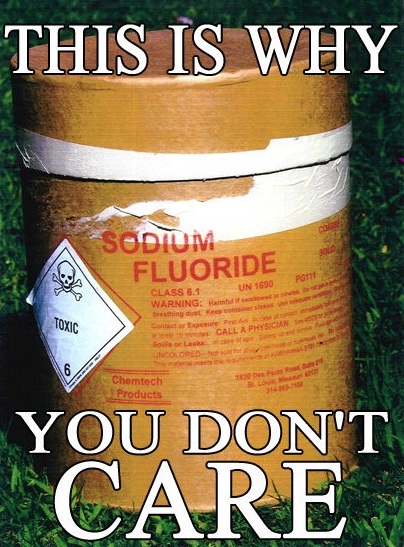
Fluoride compounds which are put in water (fluoridation), toothpaste and supplement tablets (including some vitamins) were never tested for safety before approval. Recent independent research by scientists not associated with dental trade organizations has shown the following:
- Neurotoxic and Lowers IQ
In 1995, neurotoxicologist and former Director of toxicology at Forsyth Dental Center in Boston, Dr. Phyllis Mullenix published research showing that fluoride built up in the brains of animals when exposed to moderate levels. Damage to the brain occured and the behavior patterns of the animals was adversely effected. Offspring of pregnant animals receiving relatively low doses of fluoride showed permanent effects to the brain which were seen as hyperactivity (ADD-like symptoms). Young animals and adult animals given fluoride experienced the opposite effect — hypoactivity or sluggishness. The toxic effects of fluoride on the central nervous system was subsequently confirmed by previously-classified government research. Two new epidemiological studies which tend to confirm fluoride’s neurotoxic effects on the brain have shown that children exposed to higher levels of fluoride had lower IQs. (more…)

 The average American today is exposed to a whole lot more fluoride than he or she is probably aware. Conventional produce, it turns out, is one of the most prevalent sources of fluoride exposure besides fluoridated water, as conventional crops are not only irrigated with fluoride-laced water in many cases, but also sprayed with pesticide and herbicide chemicals that have been blended with fluoride, and later processed once again with fluoridated water.