Andrew Sullivan says he’ll use it less scrupulously than the president. But based on what evidence? Current policy is plenty unscrupulous already.
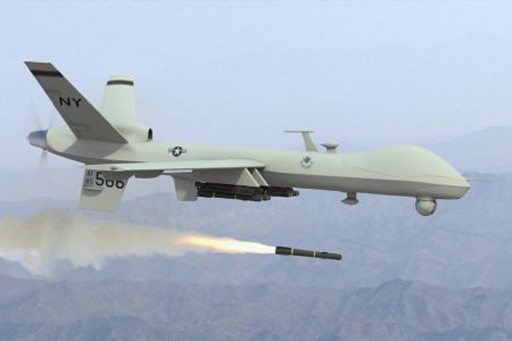
Asked about drone strikes during Monday’s foreign policy debate, Mitt Romney basically said that President Obama is right to use them. Expect more drone warfare in 2013 regardless of who wins the election. Does that mean that the two candidates are indistinguishable on the issue? My friend and former boss Andrew Sullivan doesn’t think so. “Memo to Conor Friedersdorf,” he wrote while live-blogging at The Dish. “You think Romney would be as scrupulous in drone warfare as Obama?” Implicit is the judgment that Obama has been “scrupulous.”
But it isn’t so.
Sullivan and I agree that Obama won last night’s debate, and that he’d be likely to preside over a more prudent, reality-based foreign policy than Romney, based on the respective campaigns that they’ve run. On drones, however, Romney appears to have the exact same position as Obama. And Obama has been egregiously unscrupulous. I don’t want to hear the dodge about how drone strikes are necessary. It’s beside the point. This is about the specific ways Obama has waged the drone war. Even if you agree in theory with drone strikes, Obama’s actions ought to bother you.
Let me be specific:
As Jane Mayer noted when describing the CIA’s drone strikes, “The program is classified as covert, and the intelligence agency declines to provide any information to the public about where it operates, how it selects targets, who is in charge, or how many people have been killed.”
The Obama Administration avoids judicial accountability by arguing that the drone program is secret, even as it acknowledges the existence of the program when bragging about killing terrorists.
As the Mayer article goes on to state, “because of the C.I.A. program’s secrecy, there is no visible system of accountability in place, despite the fact that the agency has killed many civilians inside a politically fragile, nuclear-armed country with which the U.S. is not at war. Should something go wrong in the C.I.A.’s program — last month, the Air Force lost control of a drone and had to shoot it down over Afghanistan — it’s unclear what the consequences would be.”
According to The New York Times, “Mr. Obama embraced a disputed method for counting civilian casualties that did little to box him in. It in effect counts all military-age males in a strike zone as combatants, according to several administration officials, unless there is explicit intelligence posthumously proving them innocent.”
The Obama Administration permits the CIA to carry out “signature strikes” even though they don’t know the identity of the people they’re trying to kill!
As Glenn Greenwald explained, “In February, the Bureau of Investigative Journalism documented that after the U.S. kills people with drones in Pakistan, it then targets for death those who show up at the scene to rescue the survivors and retrieve the bodies, as well as those who gather to mourn the dead at funerals.”
As a report published by the law clinics at NYU and Standford document, innocent people in Waziristan are being terrorized and traumatized daily by Obama’s drone war. And the policy has killed, at minimum, hundreds of innocent people, a judgment that is supported even by data from the New America Foundation, whose methods almost certainly under-count dead innocents.
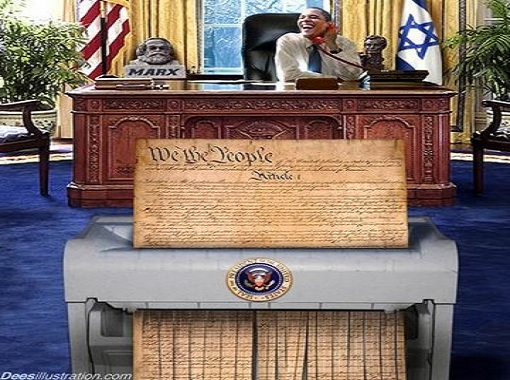
So to sum up, Obama has implemented a global killing program with zero checks and balances; he’s operated it out of the CIA rather than the Department of Defense; he invokes the state-secrets privilege to avoid defending it in court, even as he brags about its efficacy; it includes killing people whose identities we don’t even know; all military-aged males we kill are presumed to be “militants”; the Pakistani government reportedly gets to pick some of the targets; at minimum, hundreds of innocents have been killed, including rescuers and funeral-goers; a 16-year-old American citizen was among those killed; and Sullivan, having been exposed many times to all the information I’ve just included, thinks its accurate to call Obama’s drone program “scrupulous,” though it could easily be made more transparent, accountable, and lawful.
What really gets me is that, in addition to arguing that Obama has run this program scrupulously (something implied in Sullivan’s question, and explicitly argued in threads like this one), Sullivan has also himself articulated almost all of the reasons why the program has been unscrupulous — that is to say, why Obama’s drone policy “disregards, or has contempt for, laws of right or justice with which he is perfectly well acquainted, and which should restrain his actions.”
“One thing I’ve learned this past decade is that the CIA is pretty much its own judge, jury and executioner,” Sullivan wrote. “It is much less accountable to the public, more likely to break the laws of war and destroy the evidence, more likely to do things that could escalate rather than ameliorate a conflict.” Is it scrupulous to pick an organization like that to run your drone program?
Says Sullivan’s post from June of 2011 (emphasis added):
Obama is now engaged in two illegal wars — in Libya and in Yemen. There was no Congressional debate or vote on these wars — and one is being waged by the CIA with unmanned drones. I think we have learned a little about what happens when you give the CIA carte blanche to run a war with no accountability except to a president who has a vested interest in covering up errors.
Said Sullivan on another occasion, “Put drones in the hands of an executive who is empowered to do anything without any input from the other branches of government … and we have a problem indeed.” He is also on record stating that “counting every military-age man in the vicinity of a Jihadist as a terrorist is a total cop-out,” and he even wrote that “if the CIA, based on its own intelligence, can launch a war or wars with weapons that can incur no US fatalities, the propensity to be permanently at war, permanently making America enemies, permanently requiring more wars to put out the flames previous wars started, then the Founders’ vision is essentially over. I think it’s a duty to make sure their vision survives this twenty-first century test.”
So let’s get back to Sullivan’s debate night question. “You think Romney would be as scrupulous in drone warfare as Obama?” My best guess is that, on drone warfare, their policies would be about the same — that is to say, alarmingly unscrupulous, with unpredictable consequences. That’s what happens when you give someone the power to kill without checks in secret.
I have no reason to think one or the other would predictably kill more innocent people with drones. Does Sullivan? If Romney wins, what odds would Sullivan give on the proposition that Romney ultimately kills more civilians with drones than Obama has? Based on what evidence? Obama has already killed an American citizen without trial and conducted drone strikes in a country where no war has been declared, so I don’t see how Romney would set any precedents that are even more alarming. (What precedent would that be?) Overall, I have no idea whose drone war would be more damaging. Having watched Sullivan strongly denounce and other times defend Obama’s drone war in posts that cannot be reconciled with one another, I don’t think he knows either.
So what if Romney is elected and turns out to be much worse on drones? It could totally happen. I wouldn’t be surprised. I’ll be opposing his unaccountable killing policy from day one regardless, just as I’ve opposed Obama’s policy due to its manifold flaws. And if Romney’s drone policy turns out to have all sorts of catastrophic consequences? I hope Sullivan remembers that Obama established the bipartisan consensus behind a worldwide drone-strike strategy and set all the necessary precedents without losing the support of backers like Sullivan. (He didn’t even lose support for continuing his current drone policy itself.) A Romney drone fleet, operating in numerous countries with zero oversight from the judiciary or Congress, with American citizens in the crosshairs? Obama and his supporters built that. It would be ready for President Romney on day one.
Indefinite detention, targeted killing and warrantless wiretapping are hot issues in the courts this week. Here’s the latest:
INDEFINITE DETENTION // The National Defense Authorization Act (NDAA) of 2012 provision that allows the government to indefinitely detain US citizens without charge or trial is once again in effect, after a Second Circuit Court overturned Judge Katherine Forrest’s permanent injunction against Section 1021 (b)(2). The fight over the widely-despised authority appears to be far from over. Read more.
UPDATE: Chris Hedges, one of the plaintiffs in the NDAA indefinite detention lawsuit, spoke with live stream journalist Tim Pool at Occupy Wall Street on Monday, September 17 about his case and the Obama administration’s appeal. Hedges put forward the thesis that the Obama administration may already be holding US citizens without due process — otherwise they wouldn’t have acted so quickly to overturn Forrest’s permanent injunction. The administration doesn’t want to be held in contempt, Hedges said, and so immediately moved to appeal her verdict. Note: This was filmed before the court overturned Forrest’s injunction, so it’s obsolete in that sense.
Watch:
TARGETED KILLING // Can the federal government talk publicly about its targeted killing drone program on television, in interviews with journalists, and before audiences of hundreds, and then turn around and deny the existence of the program in court to ensure that the public remains in the dark about its legal justifications for pursuing it? The ACLU says ‘no’:
The American Civil Liberties Union will be in federal appeals court Thursday to argue that the CIA cannot deny the existence of the government’s targeted killing program and refuse to respond to Freedom of Information Act requests about the program while officials continue to make public statements about it.
The ACLU’s FOIA request, filed in January 2010, seeks to learn when, where and against whom drone strikes can be authorized, and how the U.S. ensures compliance with international laws relating to extrajudicial killings.
“The notion that the CIA’s targeted killing program is a secret is nothing short of absurd,” said ACLU Deputy Legal Director Jameel Jaffer, who will argue the case before a three-judge panel of the D.C. Circuit Appeals Court. “For more than two years, senior officials have been making claims about the program both on the record and off. They’ve claimed that the program is effective, lawful and closely supervised. If they can make these claims, there is no reason why they should not be required to respond to requests under the Freedom of Information Act.”
WARRANTLESS SPYING // A 2005 class action lawsuit brought by AT&T customers who say the NSA illegally spied on their communications is slowly winding itself through the court system. In 2008, Congress immunized AT&T and other telecoms from lawsuits related to companies turning over customer information to the NSA, but the government still faces a number of challenges to the warrantless spying program, among them the AT&T class action suit. A judge first threw the case out in 2010, claiming that the plaintiffs didn’t have standing to bring the lawsuit because they couldn’t prove they were spied on. Another court reversed that decision a year later, instructing the court to look at whether the state secrets privilege bars the court from considering the case at all — regardless of whether there’s evidence of spying or not. As a result, the main plaintiff in the case, Carolyn Jewel, filed for summary judgment in July, providing the court with testimony from NSA whistleblowers and former AT&T employees to prove the existence of vacuum style, dragnet surveillance. The NSA makes some contradictory and utterly confusing arguments about why the plaintiffs shouldn’t have a right to challenge its spying programs. From Courthouse News:
The government has amply demonstrated in the DNI and NSA public and classified declarations that disclosure of the privileged information reasonably could be expected to cause exceptionally grave damage to national security,” a 48-page memorandum states. “The disclosure of information concerning whether plaintiffs have been subject to alleged NSA intelligence activity would necessarily reveal NSA intelligence sources and methods, including whether certain intelligence collection activities existed and the nature of any such activity. The disclosure of whether specific individuals were targets of alleged NSA activities would also reveal who is subject to investigative interest – helping that person to evade surveillance – or who is not – thereby revealing the scope of intelligence activities as well as the existence of secure channels for communication.
But those statements thoroughly contradict something else the government says:
The DNI explains that, as the government has previously indicated, the NSA’s collection of content of communications under the now inoperative TSP was directed at international communications in which a participant is reasonably believed to be associated with al Qaeda or an affiliate terrorist organization, and thus plaintiffs’ allegation that the NSA has indiscriminately collected the content of millions of communications sent or received by people inside the United States after 9/11 under the TSP is false.
The national security establishment first tells the public that it cannot disclose who is and who is not a target of its surveillance programs because doing so would tip off the bad guys, and then goes on to say that the program “was directed at…al Qaeda[.]” In other words, the government will readily admit that al Qaeda and “affiliate terrorist organization[s]” are targets of its surveillance programs, but it can’t acknowledge whether or not non-terrorist US citizens are also targets of that program because disclosure of whether non-terrorist US citizens are being spied on without constitutional protections would “cause exceptionally grave harm to national security.” As BoingBoing observed: the NSA says it can’t tell us if it is spying on us because “REASONS.”
WARRANTLESS SPYING // The ACLU has its own warrantless wiretapping lawsuit in the works to challenge the constitutionality of the FISA Amendments Act of 2008, and the government has thrown up similar roadblocks to prevent the case from being heard on the merits. Here’s the ACLU answer to the government’s claims that our clients — journalists, human rights workers and academics — don’t have a right to bring the lawsuit:
The government’s insistence that plaintiffs cannot establish standing without proving the certainty of surveillance is at bottom not a standing argument but a bid for a kind of immunity. This is because its proposed standard is one that neither plaintiffs nor anyone else will ever be able to meet—not because the surveillance they fear will never take place but because they will be unaware of it when it does…
The government theory of standing would render real injuries nonjusticiable and insulate the government’s surveillance activities from meaningful judicial review.
…
More than forty years ago, when surveillance technology was comparatively primitive, this Court recognized that “few threats to liberty exist which are greater than that posed by the use of eavesdropping devices” … and it cautioned that the threat to core democratic rights was especially pronounced where surveillance authority was exercised in the service of national security…. To accept the government’s theory of standing would be to accept that the courts are powerless to address the threat presented by surveillance authorities exercised in secret, and powerless to protect Americans’ most fundamental rights against the encroachment of increasingly sophisticated and intrusive forms of government power.
Read more about the ACLU’s challenge, which will go before the Supreme Court in late October to decide the standing issue once and for all. Just last week the House passed a reauthorization of the FISA Amendments Act, which would extend the law through December 31, 2017. Read the brief in the ACLU’s challenge, Clapper v. Amnesty, et al., here.
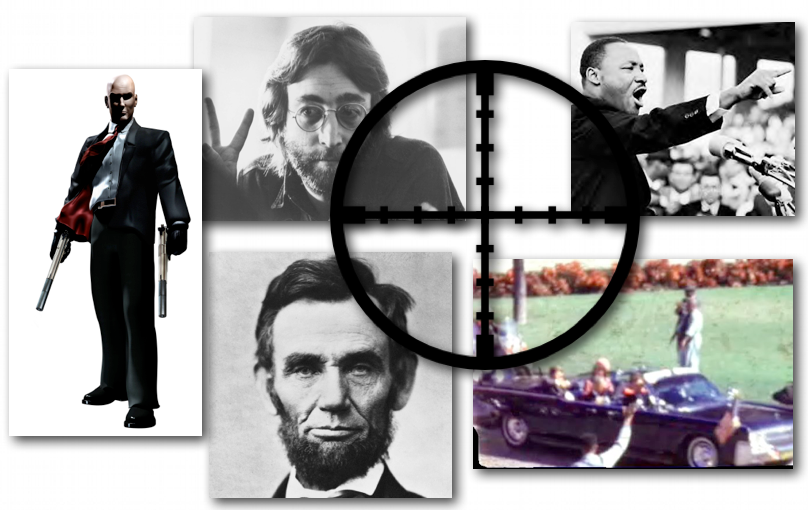
Political Assassinations throughout history, Targeted killing and the Obama ‘hit list’, Black Ops, Conspiracy, Drones, and the technology that makes it all possible.