Anonymous #OpNSA – A Message to Intel Puppet Saxby Chambliss
We do not forgive
We do not forget
Expect Us

We do not forgive
We do not forget
Expect Us
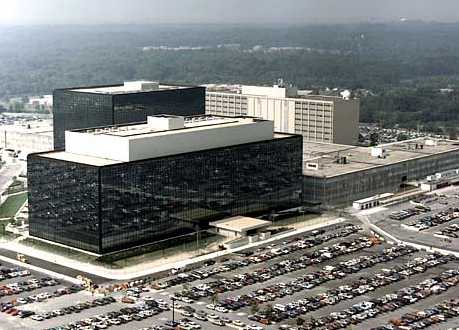
The Obama regime which was already in the midst of three high profile scandals now has a fourth one to deal with. Top secret documents were recently leaked to the Washington Post and the London Guardian detailing a vast government surveillance program code named PRISM. According to the leaked documents, the program allows the National Security Agency (NSA) back door access to data from the servers of several leading U.S. based Internet and software companies. The documents list companies such as Google, Facebook, Yahoo, Microsoft, AOL and Apple as some of the participants in the program. There have also been other reports indicating that the NSA is able to access real-time user data from as many as 50 separate American companies. Under the program, the NSA is able to collect information ranging from e-mails, chats, videos, photographs, VoIP calls and more. Most importantly is the fact that PRISM allows the NSA to obtain this data without having to make individual requests from the service providers or without having to obtain a court order. To say that this is a violation of the Fourth Amendment which forbids unreasonable searches and seizures would be a gross understatement. This is actually much more than that. This is a program designed specifically to serve as a Big Brother like control grid and to end privacy as we know it.

The NSA is quickly building a real life version of 1984’s Big Brother.
It is now painfully obvious that James Clapper the Director of National Intelligence when testifying before the Senate this past March blatantly lied when asked by Senator Ron Wyden if the NSA was involved in collecting data from the American people. Clapper flatly denied that the NSA was engaged in these types of domestic surveillance activities. What makes the situation such a joke is that the Obama regime is not focused on the fact that Clapper lied to the Senate which in of itself is unlawful. Instead they have been more focused on determining the source of the leak that exposed these broad abuses of power. This is probably not surprising considering that this is a regime that rewards corruption by promoting people involved in all sorts of questionable activity. The promotion of Susan Rice as Obama’s new National Security Advisor is a perfect example of this considering her involvement in spreading bogus Benghazi related talking points. On the other hand, the Obama regime has severely punished a variety of whistleblowers who have dared to expose any wrong doing.
At least the Obama regime won’t have to spend much time and energy trying to identify the whistleblower as this person who leaked these documents has already come forward publically. At his own request the Guardian revealed his identity as Edward Snowden a 29-year old Information Technology specialist who has been working at the NSA for different contractors including Booz Allen Hamilton and Dell. Snowden had previously worked at an NSA office in Hawaii but boarded a flight to Hong Kong a few weeks ago where he has stayed since turning over these documents to the media. He expects that he will never set foot on U.S. soil again and may possibly seek political asylum in a country like Iceland. The Guardian interviewed Snowden over several days and has recently posted an interview transcript that provides more detail on the abuses he became aware of and why he decided to come forward as a whistleblower. In the interview Snowden confirms that the NSA has the infrastructure that allows them to intercept almost any type of data that you can imagine from phone records, e-mails to credit cards. He also reveals how the U.S. government is engaged in hacking systems everywhere around the world and how the NSA has consistently lied to Congress about their activities. There is little doubt that Snowden is thus far one of the most important whistleblowers to come along in the 21st century and he will likely face retaliation considering the vast reach and capabilities of the U.S. intelligence community.
Many individuals within the Obama regime including Obama himself have claimed that this type of widespread data collection is needed to fight terrorism and is used for national security purposes. Even if we were to assume that the war on terror is real, this claim is ridiculous and absurd on its face. It would be one thing if they were collecting information based upon a specific criteria identified by legitimate human intelligence. Instead they are collecting indiscriminate amounts of information which makes it much more difficult to analyze and target anything that might indicate a potential threat. If the NSA’s goal is really to detect and target terrorism than all they are doing is making their job more difficult by vastly increasing the noise they have to filter through. Either the people running the NSA are incredibly stupid or the goal of this program is to establish the infrastructure necessary to centrally collect data from communications everywhere around the world.
Other evidence to support this notion is the fact that the NSA is building a huge new facility in Utah that is being designed to store an enormous amount of data. A Fox News report indicates that when completed the facility will be able to store billions of terabytes worth of information. It is hard to fathom how the NSA would need this much storage space unless it was being used to collect and store any and all communications.
The Obama regime has tried to justify all of this by saying that PRISM helped stop an alleged New York City subway bomb plot back in 2009. This has been proven to be factually incorrect as regular police work and help from the British were larger factors in stopping the plot. This is assuming you even believe the official story of this terror plot to begin with. The government and more specifically the FBI have manufactured so many fake terror plots that it is difficult to determine fact from fiction at this point. So with this said, there is really no proof that PRISM has even helped to stop any so-called terror plot. They are collecting information simply for the sake of collecting information with no probable cause or reasonable justification.
At this point it is an undeniable fact that the NSA has been illegally collecting information on the American people. For years what has been dismissed as conspiracy theory is now without question a conspiracy fact. It is laughable that Obama and his assorted cronies are even trying to defend this program as a useful tool to fight terrorists. It is more likely that this program is being used to help find people domestically who dislike the government and would potentially fight back against it. A striking similarity to what is depicted in George Orwell’s dystopic novel 1984 where political dissidents are identified as thought criminals. A tool the NSA uses called Boundless Informant which counts and categorizes the information they collect shows that more data is actually gathered from domestic sources in the U.S. than from Russia. So based off of this one could argue that the NSA almost seems to view the American people as more of a threat to national security than the Russians.
The three scandals the Obama regime was dealing with prior to this new scandal are all grounds for impeachment and one could easily argue that this one is many times worse than the previous three. Obama should resign in disgrace but being that he’s a narcissist who seems unwilling to admit making any mistakes it is highly doubtful he will do this. Obama and the rest of the useful idiots in his regime who have tried to defend and justify this and other criminal programs need to be forcibly removed from office and put on trial. The criminal activity from the Obama regime is so vastly transparent it has become a complete and total joke to anyone who is even remotely paying attention.
Source: Lee Rogers, Blacklisted News
Sgt Bales Pleads Guilty to Murdering 16 Afghan Civilians??
David Icke’s Initiative to Create “The People’s Voice” Broadcasting Network
Billionaires Dumping Stocks, Economist Knows Why
Two-Thirds of Uninsured Americans Don’t Know If They Will Buy Insurance Under Obamacare
Crowdfunded Stenographer Denied Press Pass To Cover Transcript-less Bradley Manning Trial
Anonymous – Message to the Turkish Government (Gezi Park Demonstration – #OccupyTurkey)
Secret Court Documents: NSA Collecting Phone Records of Millions of Americans Daily
DHS: Laptops, Phones Can Be Searched Based On Hunches
The Five Elements of Lasting Inner Peace

– Click Image to Listen LIVE –
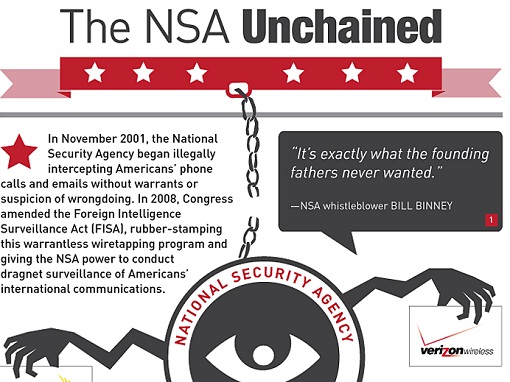

“Its exactly what the founding fathers never wanted.” -Bill Binney, NSA Whistleblower
 “Why I Hate Android”
Why do I hate Android? It’s definitely one of the questions I get asked most often these days. And most of those that don’t ask probably assume it’s because I’m an iPhone guy. People see negative take after negative take about the operating system and label me as “unreasonable” or “biased” or worse.
I should probably explain.
Believe it or not, I actually don’t hate Android. That is to say, I don’t hate the concept of Android — in fact, at one point, I loved it. What I hate is what Android has become. And more specifically, what Google has done with Android.
Let’s turn back the clock. In 2006, the mobile landscape in the United States was almost unfathomably shitty. Motorola’s RAZR had been the top-selling device for something ridiculous like five straight years — and the only thing that didn’t suck about it was its physical size. The carriers completely controlled the industry. This cannot be overstated.
Then on January 9, 2007 — exactly 5 years ago today — Steve Jobs took the stage at Macworld to unveil the iPhone. Six months later it was released. While some laughed it off at the time, the mobile landscape completely changed.
Apple and Google were great allies at the time. They united over a common enemy: Microsoft. Then-Google CEO Eric Schmidt was even on Apple’s board of directors. Google was a huge part of original iPhone OS (before it was called iOS): Google Maps, YouTube, Google Search, etc. Apple could have launched the iPhone without Google, but it wouldn’t have been as good. And if they had to do something like build their own maps from scratch, it would have taken longer.
A few months later, on November 5, 2007, Google teamed up with many of the big players in the mobile/telecom space to announce the Open Handset Alliance. At the time it sounded promising, but perhaps it should have been the first warning sign. The first product of this partnership: Android. A beta was released, but it would take almost another year before the software was actually ready to go.
The initial Android prototypes looked a lot like BlackBerry devices (both in hardware and software). But the first device (the G1) and OS actually released was more of a cross between a T-Mobile Sidekick (which Android head Andy Rubin helped create while still a co-founder at Danger) and the iPhone OS.
In hindsight, Steve Jobs was clearly not happy about this and the subsequent iPhone-ification of Android. But great artists steal, etc, etc. The only thing I didn’t like about Android at the time was that it was a shitty copy of the iPhone. It was something you couldn’t pay me to use. And most people seemed to feel the same way.
Jobs probably didn’t say much at the time because he didn’t have to. The market was saying it.
Time went on and it was pretty clear that despite the major players involved in the OHA, Android wasn’t getting a lot of traction. Meanwhile, the iPhone, after a price-cut and addition of 3G technology, was soaring. So Google did the logical thing, they went to see Verizon, the largest U.S. carrier, and struck a deal.
Remember, Apple still had an agreement with AT&T for exclusive iPhone rights in the U.S. at the time. Verizon and Google needed each other. But Google clearly needed Verizon more. This was the first real problem. A deal with the devil was struck.
Let’s back up for a second.
Even before Android’s launch, Google clearly had big dreams for the mobile space. “Your mobile phone should be free,” Eric Schmidt told Reuters in late 2006. He envisioned a world in which consumers didn’t have to pay for their mobile phones — advertising (served by Google, naturally) would subsidize the cost. And we’re not talking “free” with a two-year carrier contract. We’re talking free free.
In the pre-iPhone world this may have sounded like crazy-talk. But remember, as an Apple board member and having purchased Android for Google in 2005, Schmidt knew what was coming down the pipe. He absolutely intended to disrupt the mobile market.
But again, the initial releases of Android simply didn’t have the traction needed to come close to fulfilling Schmidt’s (and Google’s) dream. So deals with the carriers had to be made.
Still, Google hung on to the hope of a free phone. That phone was called the Nexus One.
At an event in January of 2010, Google unveiled their plan for Nexus One — the first real “Google Phone” as it were. While they were cautious and cagey with some details, the goal seemed clear: Google intended to blow up the carrier market (in the U.S. first) by moving phone distribution online, flattening it in the process. The idea was that you’d go to a website and pick the phone you wanted, then pick the carrier you wanted, pay, and you’d be done.
Think about this for a second. Instead of going to the store of a single carrier and having a dozen shitty phones shoved in your face by salespeople that made commission, you’d be in total control of the process. The end result of consumers getting to choose their carriers (and phones and plans) was clear: major competition and subsequently a rush of better deals from said carriers to ensure customer activation and retention.
Or, you could buy whatever phone you wanted unlocked. Eventually, pay-as-you-go SIM cards would pop up in the U.S. as a result.
This was to be the dawn of the golden age of mobile in this country. As I wrote at the time: Apple And Google Just Tag Teamed The U.S. Carriers. I loved it.
But it was never meant to be.
What should have been obvious at the time but for whatever reason wasn’t (maybe because carrier representatives were at the event), the carriers hated this plan. And for good reason — it was going to turn them into dumb pipes that competed on price. There was no way they were going to let this fly, and they didn’t. Within a few months, citing weak sales of the Nexus One, Google scrapped their ambitious website and instead got fully in bed with the carriers.
But there was more.
What no one knew at the time, and I only heard months later, was Google’s original vision for the Nexus One. Google intended to sell it for $99 without a contract and unlocked. Yes, a $99 unlocked phone, subsidized by Google ads.
But the plan had one little problem: Google didn’t operate their own cellular network. They needed Verizon or AT&T or Sprint or T-Mobile to help them out. Google probably thought their open spectrum deal “win” in early 2008 gave them the leverage they needed here. Sadly, it did not.
All of the carriers laughed in Google’s face when presented with the ambitious Nexus One plan. And given that Google had just signed the all-important deal with Verizon, it was never going to happen.
So instead, at the Nexus One launch we got a website where you could indeed buy an unlocked Android phone — for $529. Nonstarter.
Better yet, while they said they were committed at the time, Verizon and Sprint never even got around to supporting the Nexus One at all. That’s how much they were behind the project.
To complicate matters further, behind the scenes, Verizon and Google were arguing over Net Neutrality rules. Verizon was opposed, Google was in favor. Then a funny thing happened. Google started supporting Verizon’s viewpoint on the matter! If you’re looking for the first post where I’m really, truly, pissed off at Google, look no further.
It. Was. Total. Fucking. Bullshit.
A few months later, guess what happened? Thanks to the Google/Verizon alliance on the matter, the FCC decided the compromised vision of Net Neutrality was just fine also. To be clear: Net Neutrality was thrown out in the wireless space because Google sided with Verizon’s ridiculous and horribly conflicted stance on the matter.
The open spectrum enemy, turned Net Neutrality enemy, became Google’s bedmate thanks to a business deal. Straight up. Greed, for lack of a better word, is good.
We got all of this thanks to Google’s desire for Android to take over the world. I commented earlier that they signed a deal with the devil — I wasn’t being facetious. They actually did! And they got away with it!
I think about these things everyday that I see positive news about Android. It’s so wonderful that the platform which helped cripple Net Neutrality and is keeping the evil carriers in control is taking off. Make no mistake: Android is now the carriers’ best friend.
Because Google sloppily decided to do the Motorola deal (driven by the full-on patent war, for which Apple and Microsoft, and not Google, are largely to blame), and because the model isn’t great for all but the biggest player, now the OEMs may be our best hope against the carrier/Android alliance.
Eventually, many of them will try to do their own thing (perhaps even using Android as a base) because they’re not idiots, they see where the real money is: controlling the entire experience. Like Apple.
All of this backstory knowledge fuels my rage. When I see Google talk about how “open” the platform is, setting it up as the foil to the “closed” (and framed as “evil”) iPhone, I want to scream and rip someone’s head off. It’s not only the most extreme example of being disingenuous that I can ever recall seeing — it’s nuclear bullshit.
Apple, for all the shit they get for being “closed” and “evil”, has actually done far more to wrestle control back from the carriers and put it into the hands of consumers. Google set off to help in this goal, then stabbed us all in the back and went the complete other way, to the side of the carriers. And because they smiled the entire time they were doing it and fed us this “open” bullshit, we thanked them for it. We’re still thanking them for it!
When you think about it in the context of this election season we’re entering, it’s a brilliant political maneuver that Google has pulled off with Android. They’ve taken something they’ve done that’s actually bad for us and spun it in such a way that most people actually buy into it being good for us.
And for the carriers, Android is the best thing ever because it’s the new “opiate for the masses”. Everything shitty they’re doing is great because they’re doing it with Android — at least it’s not iOS. What a load of horseshit.
I realize that the Android team at Google has a lot of good people doing great work. I know some of them. I respect them. But I cannot respect their decision to continue to work on this platform that perpetuates our imprisonment. I have to believe most simply chose not to think about these things. But they should. They really should.
There’s no denying that there are upsides to open — a lot of them. But in the case of Android, “open” has been hijacked and wildly contorted so as to mask the shady side of what’s really been going on. And it’s working.
So that, ladies and gentleman, is why I hate Android. It has nothing to do with the actual product (which continues to improve every year and is quite good now). It has to do with a promise that was broken and swept under the rug.
As crazy as it may sound to some of you, beyond a full OEM revolt (which could ultimately benefit the carriers as well), our hope now lies with Apple and Microsoft.
Apple, because they put the consumer first and have proven time and time again that they will not bend to carrier bullshit and will often work against them behind the scenes. And they control the all-important Apple stores for distribution (and, of course, the App Store).
Microsoft, because they have a model (many handsets on all carriers) that can potentially scale better than Apple’s can while still giving control (mostly) to the users. And they have Nokia on board with their plan. And they have intersections with products like Xbox. (Though it may be too late in the U.S.)
Perhaps more people will relate to this: I hate Android for the same reason that Severus Snape hates Harry Potter — the very sight reminds me of something so beautiful, that was taken. Except it’s worse. It’s as if Harry Potter has grown up to become Voldemort.
 <
<