Dec 9, 2014 | Anonymous, Whistleblowers & Dissidents
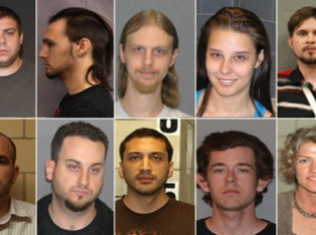
The PayPal 14 are a group of defendants allegedly connected with the hacktivist group Anonymous, thirteen of whom pled guilty in a San Jose court in California, United States in December 2013, to charges of conspiring to disrupt access to the PayPal payment service.are a group of defendants allegedly connected with the hacktivist group Anonymous, thirteen of whom pled guilty in a San Jose court in California, United States in December 2013, to charges of conspiring to disrupt access to the PayPal payment service.are a group of defendants allegedly connected with the hacktivist group Anonymous, thirteen of whom pled guilty in a San Jose court in California, United States in December 2013, to charges of conspiring to disrupt access to the PayPal payment service.are a group of defendants allegedly connected with the hacktivist group Anonymous, thirteen of whom pled guilty in a San Jose court in California, United States in December 2013, to charges of conspiring to disrupt access to the PayPal payment service.
Aug 6, 2012 | Activism, Government Agenda
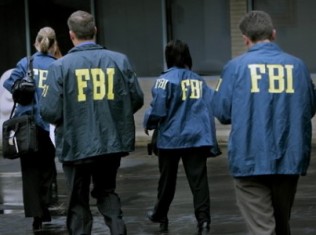
Often, when folks find themselves having been visited or otherwise solicited for information by law enforcement, their reaction is to keep the fact that they’ve been targeted for government harassment quiet. In reality, however, the worst thing (next to cooperating!) that you can do in this situation is to keep it to yourself. In doing so, you deprive yourself of community support at a time that may be stressful and even terrifying and, simultaneously, you help the government maintain a veil of secrecy around the harassment and surveillance they use to destroy resistance movements.
Many people who’ve been harassed by law enforcement officers report having been threatened with negative consequences should they choose to go public about the incident. This, like so much of what they’ll tell you, is utter and complete bullshit. YOU ARE NOT LEGALLY BOUND TO KEEP THEIR SECRETS, and the fact that they often lie and try to convince you that you are only speaks to the fact that doing so benefits them, while spreading the word benefits us. Part of their strategy for repressing dissent is to quietly isolate individuals from their communities and terrorize them into cooperating in their efforts. If we expose what they’re doing every time they do it, we strip them of the freedom and protection that secrecy offers- think of it as a little counter-counter-insurgency tactic.
Publicizing government harassment is a protective measure. As we build a culture where people talk about and prepare for government repression, and support those facing it, we reduce the number of people who will turn on their comrades to save their own asses. If you come from a community where everyone is informed about incidents of harassment and knows how to deal with them calmly and effectively, and where not cooperating is the norm, you’ll be better equipped to deal with more serious situations as they arise. Whether or not you ever have been or ever will be involved in illegal activity, it’s possible that you, or someone you care about, or someone they care about, will at some point find themselves sitting in a jail cell being given the option of cooperating in exchange for some sort of leniency in charges or sentencing. And even if you don’t support ELF actions or other things that people are being indicted for these days, the old adage holds true with law enforcement: “give ’em an inch, and they’ll take down every poor fucker they can get their hands on.” That is, acquiescing to law enforcement demands that we remain silent about the things they do is just like giving a mouse a vegan cookie- who wants just one vegan cookie, after all?
Lastly, letting your community know that you’ve been visited is important because law enforcement visits are dangerous for everyone, not just the particular person who’s been visited, and you owe your community any information that may keep them safer. You don’t and can’t necessarily know exactly who may be endangered by government activity, but you can be sure that making it possible for those people it may affect to find out about it will help them. When you get visited, you may not have any idea why they’re asking what they’re asking- this could be because they’re wacked out creepers who don’t know what they’re talking about, or it could be that their asking about things that you had no involvement in. It’s not uncommon for visits to be made in a desperate attempt to find any in into radical circles that may, eventually, lead to a suspect. Thus, it’s important to be cautious about acting rashly and publicizing details (e.g., names mentioned, actions, etc.) of a visit in a way that will only incite open and potentially incriminating speculation in your community, and to balance that against the need to get as much information as possible out into the public realm so that people who it may affect can take appropriate actions to protect themselves. So, while there’s no doubt that you should go public immediately with your experience of government harassment, you should also take the time to consult with trusted friends and support networks to determine the best way to do so and still avoid unwittingly getting others in trouble.
http://midwestgreenscare.files.wordpress.com/2008/06/mgs-zine-30.pdf
Jan 27, 2012 | Activism, News
By NICK SCHWELLENBACH
Last month, The New Yorker magazine reported on how POGO Executive Director Danielle Brian told President Obama to his face that “prosecuting whistleblowers would undermine his legacy.”
One of those whistleblowers being targeted is Tom Drake, a National Security Agency (NSA) whistleblower who is less than a week away from his first day in court. Drake is being prosecuted not for sharing classified information with the media, but instead is being charged with having information—including UNclassified materials—in his possession that he used in cooperation with a Defense Department Inspector General audit of a program that wasted hundreds of millions of dollars and may have put your civil liberties at risk. As Danielle told the President, “Drake was exactly the kind of whistleblower who deserved protection.”
Prosecuting whistleblowers for their cooperation with authorities will have a chilling effect throughout the federal government at a time when we need whistleblowers to identify waste, fraud, abuse, threats to our civil liberties, and other misconduct.
There is not (or there should not be) a national security exemption to accountability in a democratic society—yet going after a whistleblower like Drake is the antithesis of accountability. The White House should tell the Justice Department to exercise prosecutorial discretion and drop its case against Drake.
In addition, the White House should redouble its efforts from last year and prioritize passage of a new whistleblower protection bill that affords whistleblowers, including those in the national security field, better protections. Despite a new policy issued by the Justice Department in 2009, the state secrets privilege continues to be used in excess. The privilege is invoked to shut down lawsuits, including some that seek accountability from the U.S. government in cases that allege unlawful activities ranging from wrongful kidnapping and imprisonment to a massive warrantless wiretapping operation that violated the U.S. Constitution and the law.
If you don’t know much about the Drake case, or want to know more, there is a plethora of resources available:
- The Government Accountability Project (GAP) is representing Drake (although not as his criminal defense). Some of GAP’s efforts and other information on Drake can be viewed here.
- Steven Aftergood, who runs the Project on Government Secrecy for the non-profit Federation of American Scientists, has been diligently chronicling significant filings during the pre-trial phase of the case and presumably will continue to do so if the trial begins. His archive gives the public free access to the court filings. Aftergood has also closely tracked other developments in the Drake case. He recently wrote that there is “a growing consensus that the prosecution of Drake on charges of unauthorized retention of classified information is a mistake, and that the Obama Administration has mishandled the case.”
Whether you are pro-Obama, anti-Obama, or apolitical, it is clear that the framework for handling national security whistleblowers is fundamentally flawed, and is generally hostile to them. The Drake case is a line in the sand.
Nick Schwellenbach is POGO’s Director of Investigations.
http://pogoblog.typepad.com/pogo/2011/06/obama-administration-prosecuting-exactly-the-kind-of-whistleblower-who-deserves-protection.html