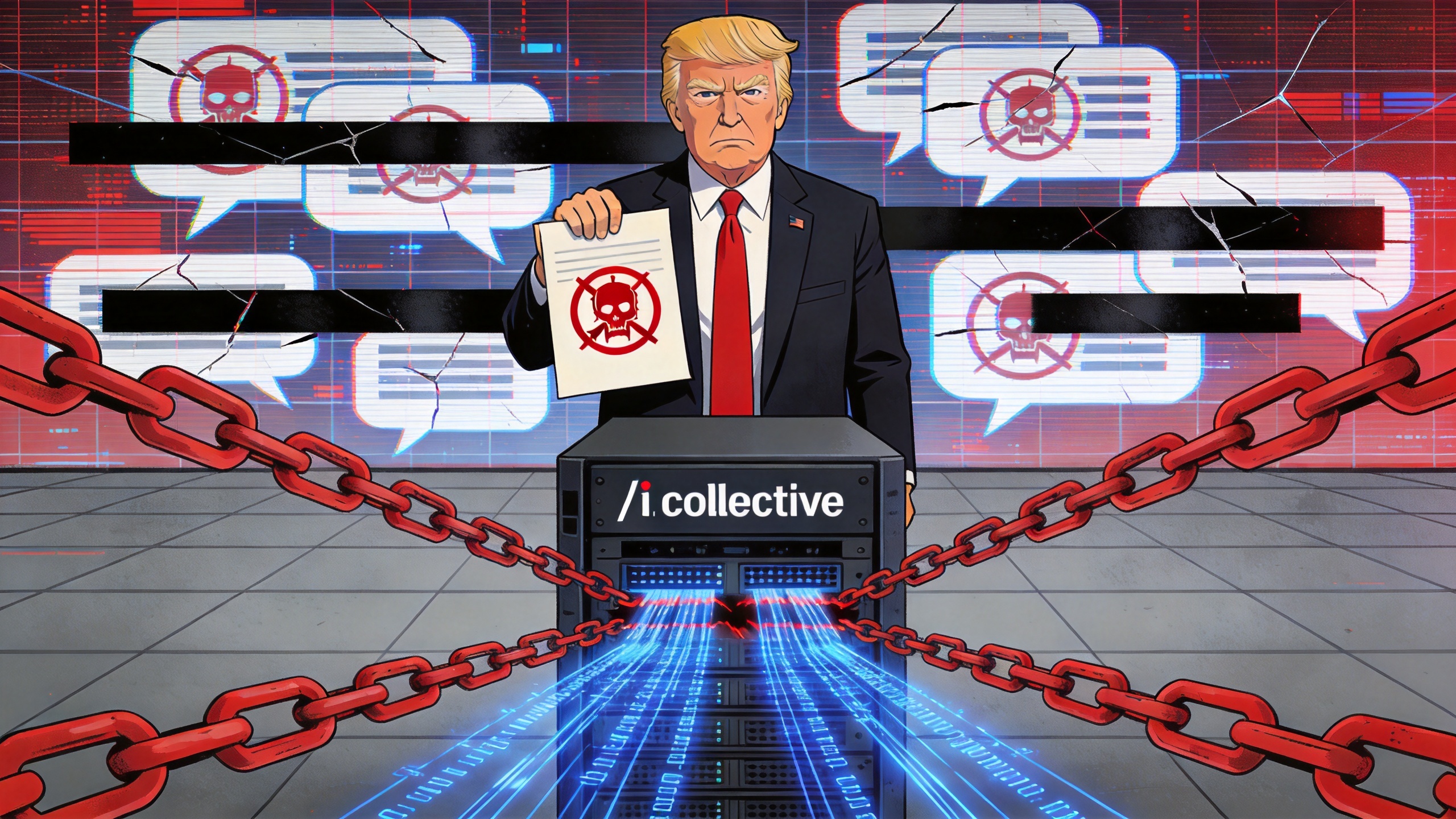
The Trump administration has taken an extraordinary step in its ongoing campaign against the American left, designating a privacy-focused Italian internet infrastructure provider as a terror organization, a move that legal experts and digital rights advocates warn could silence a broad swath of political speech online. Secretary of State Marco Rubio and Treasury Secretary Scott Bessent announced terror sanctions against the Italy-based A/I Collective, a group that provides anonymous email services and hosts the popular noblogs.org blogging platform used by anarchist, antifascist, and far-left organizations across the United States and abroad.
The practical consequences are already unfolding: the Seattle Anarchist Bookfair warned publicly that its website would “most likely go down soon because of US sanctions on Noblogs.” The action marks a significant escalation, not targeting individuals accused of violence, but the digital infrastructure that enables anonymous political communication itself.
Sanctioning the Platform, Not the Actor
What separates this action from previous government counterterrorism measures is its target. Rather than designating individuals or groups accused of committing violent acts, the administration has applied the terror label to a web hosting and email provider. The A/I Collective’s users include a wide range of groups: an anarchist radio show based in Asheville, North Carolina; a blog operating under the Jane’s Revenge moniker that documents attacks on anti-abortion crisis pregnancy centers; and various international antifascist organizations.
Jillian York, the director of international freedom of expression at the Electronic Frontier Foundation, told The Intercept that the implications are “huge” for the future of free speech on the internet. “They are going after the messenger,” York said. “I don’t think that the members of the group would necessarily condone the actions of the people that they hosted. What they do condone is the freedom to host, the ability to be anonymous, the ability to be private.”
Federal law gives the Treasury Department broad discretion to apply the terror label to foreign groups. Once applied, U.S. citizens and companies are legally blocked from providing the designated group with financial support, a mechanism that can effectively cut off a foreign-based digital service provider from the American market and, by extension, from American users who depend on its services.
The Legal and Political Road to This Moment
The sanctions against the A/I Collective did not emerge in isolation. They follow a series of escalating executive actions targeting antifascist organizing in the United States. In September 2025, President Trump signed an executive order formally designating Antifa as a domestic terrorist organization. The order described Antifa as “a militarist, anarchist enterprise that explicitly calls for the overthrow of the United States Government” and directed all relevant executive departments and agencies to “investigate, disrupt, and dismantle” operations conducted by Antifa or anyone providing it material support.
The White House’s own June 2026 release framed subsequent enforcement actions as delivering “another crushing blow to the Antifa terrorist network”, language that signals the administration views these measures as part of a sustained, coordinated campaign rather than isolated responses to specific threats.
Critics note that the breadth of such designations, applying to anyone “claiming to act on behalf of Antifa” or providing “material support”, creates a legal architecture capable of sweeping in journalists, platform providers, and ordinary political activists who have no connection to violent activity.
Anonymous Speech Under Mounting Pressure
The sanctions against A/I Collective arrive amid a broader government effort to erode online anonymity. As The Intercept has documented, the U.S. government has been flooding social media platforms with subpoenas seeking to unmask hundreds of anonymously run anti-ICE social media accounts. The Department of Homeland Security has sought to identify the operators of accounts that merely criticize immigration enforcement policy.
Simultaneously, Congress is considering a package of roughly a dozen “child online safety” bills that would require social media platforms to implement invasive identity verification measures. As digital rights advocates have pointed out, there is no reliable way to verify a user’s age without also verifying their identity, meaning any such law would functionally link a person’s offline identity to their online behavior, eliminating meaningful anonymity for all users, not just minors.
The Electronic Frontier Foundation and other civil liberties organizations have warned that stripping anonymity from the internet would enable unprecedented government surveillance of political dissidents, whistleblowers, activists, undocumented immigrants seeking legal advice, and others whose safety depends on the ability to communicate without identification. “Stripping anonymity from the internet would constitute one of the most sweeping rollbacks of civil rights in recent history,” Taylor Lorenz noted in reporting for The Intercept.
The A/I Collective Responds
The targeted organization has not accepted the designation quietly. In an unsigned statement, the A/I Collective denied the U.S. government’s allegations and indicated it is exploring legal options to contest the sanctions. “Antifascism and anticapitalism are not terrorism,” the group stated. “Protesting is not terrorism. And everyone has the right to speak out and to struggle for humanity.”
The group’s framing points to a core tension in the government’s position: the terror designation rests on characterizations of a political ideology, not documented evidence of the provider itself organizing or facilitating violence. The A/I Collective offers email and web hosting, the same category of services provided by major commercial platforms, but does so with an explicit commitment to user privacy and anonymity.
A Pattern of Viewpoint-Based Enforcement
The Authors Guild, which maintains a censorship tracker monitoring threats to free speech under the current administration, has documented a broader pattern of viewpoint-based speech suppression. The organization notes that while the administration has issued executive orders framed around “restoring freedom of speech,” it has simultaneously engaged in targeted enforcement against political viewpoints it opposes, banning certain terms from federal agencies, purging concepts from government websites, and pursuing legal action against organizations and platforms associated with left-wing politics.
“The First Amendment was adopted precisely to protect against this form of viewpoint censorship,” the Authors Guild stated in its analysis. The organization noted that international bodies, including the International Bar Association, have published formal analyses documenting concerns about the administration’s approach to free expression.
What Comes Next
The designation of the A/I Collective represents a test case for how far the government can stretch existing terror sanction law to reach foreign internet infrastructure providers based on the political content they host. If the sanctions hold and survive legal challenge, they establish a precedent: that a web host or email provider can be designated a terror organization, and effectively destroyed in the American market, not because it committed violence, but because it provided privacy services to groups the government has labeled politically undesirable.
The ripple effects extend beyond radical left organizing. Every journalist, activist, whistleblower, or ordinary citizen who relies on privacy-preserving digital infrastructure has a stake in whether the government can weaponize terror law against the platforms that protect anonymous speech. The A/I Collective has said it will fight the designation. The outcome will help define the boundaries of digital free expression in the United States for years to come.
This article draws on reporting from The Intercept, the White House, the Authors Guild Censorship Tracker, and The Intercept’s coverage of online anonymity legislation.