Border Searches Without Warrants: A Growing Threat to Press Freedom
Among the most troubling government overreach of the post-September 11 era was the practice of detaining American citizens at border crossings and airports without any suspicion of criminal activity. The Department of Homeland Security routinely singled out individuals, questioned them for hours upon re-entering the United States after international travel, and copied or seized their electronic devices — laptops, cameras, cellphones — along with physical papers such as notebooks and credit card receipts. All of this was stored indefinitely in government files.
No search warrant was required. No judicial oversight existed. And there were no apparent constraints on whom the government chose to target or why.
The Fourth Amendment Loophole
Under the Fourth Amendment, the government generally must obtain a warrant supported by probable cause before searching a person’s papers and effects on American soil. However, a legal gray zone at the border effectively nullified these protections. Federal authorities could simply wait until a citizen left the country, then search, seize, and copy all electronic files upon their return.
This included emails, browsing history, online conversations, contact lists, credit card records, photographs, film footage, document drafts, and essentially everything stored digitally — which in modern life meant virtually all private information of consequence.
The Scale of the Problem
A 2011 Freedom of Information Act request filed by the American Civil Liberties Union revealed that in just the eighteen-month period beginning October 1, 2008, more than 6,600 people were subjected to electronic device searches at the border by DHS. Roughly half were American citizens. None required a search warrant.
One representative case involved Pascal Abidor, a 26-year-old dual French-American citizen and Islamic Studies doctoral student. While traveling from Montreal to New York by Amtrak in 2011, Abidor was stopped at the border, questioned by DHS agents, handcuffed, removed from the train, and held in a cell for several hours before being released without charges. His laptop was seized and returned eleven days later with evidence that personal files — including research materials, photographs, and private conversations — had been searched.
The WikiLeaks connection intensified the practice. Over the preceding years, any American remotely associated with the transparency organization, or even those who had advocated on behalf of alleged source Chelsea Manning, faced detention at airports with their electronic devices seized — sometimes for months, sometimes permanently.
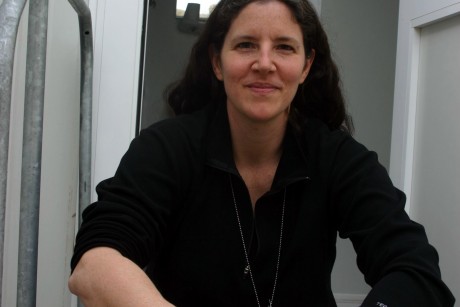
Laura Poitras: A Filmmaker Under Constant Surveillance

Perhaps no case illustrated the problem more starkly than that of Laura Poitras, an Oscar-and Emmy-nominated filmmaker whose award-winning documentaries chronicled the human costs of American foreign policy.
In 2004 and 2005, Poitras spent months in Iraq filming “My Country, My Country,” which documented the emotional toll of occupation on both Iraqis and American soldiers. The film focused on a Sunni physician running for the Iraqi Congress who protested actions such as the U.S. military’s imprisonment of a nine-year-old boy. Released in 2006, it earned a nomination for the Academy Award for Best Documentary.
Her 2010 film “The Oath” chronicled the lives of two Yemenis caught in the War on Terror: Salim Hamdan, whose imprisonment at Guantanamo led to the landmark Supreme Court case declaring military commissions a violation of domestic and international law, and Hamdan’s brother-in-law, a former bodyguard. The film won the Best Cinematography award at the Sundance Film Festival.
Poitras was working on a third installment examining how War on Terror surveillance apparatus had been deployed domestically, including the NSA’s expanding activities and the construction of a massive new facility in Bluffdale, Utah.
Six Years of Systematic Harassment

Since the 2006 release of “My Country, My Country,” Poitras had left and re-entered the United States roughly forty times. On virtually every occasion during that six-year period, her plane was met by DHS agents who inspected passports of every departing passenger until they located her. Each time, she was detained and interrogated at length about her destinations, contacts, and employer.
Her laptop, camera, and cellphone were repeatedly seized and not returned for weeks. Reporter’s notebooks were confiscated and copied over her objections that doing so violated journalist-source privilege. Credit cards and receipts were copied on numerous occasions.
On foreign soil before return flights, DHS agents sometimes told her she would be barred from boarding, only to relent at the last moment. At JFK Airport on Thanksgiving weekend of 2010, an agent told her he found it “very suspicious” that she was “not willing to help your country by answering our questions.” Detentions sometimes lasted three to four hours, with agents telling her she would be released more quickly if she answered all questions and consented to full searches.
The Chilling Effect on Journalism

The cumulative impact forced Poitras to adopt extreme countermeasures that hampered her ability to work. She stopped traveling with electronic devices. She used alternative methods to deliver sensitive materials — raw film and interview notes — to secure locations. She invested substantial time and resources in encryption and password protection for her computers. While in the United States, she avoided discussing work on the telephone, particularly with sources. She refused to edit films at home out of well-founded fear that government agents would attempt to search and seize raw footage.
Documents obtained through FOIA showed that DHS had repeatedly concluded nothing incriminating was found from its searches and interrogations of Poitras. Yet the harassment not only continued but escalated.
In one of the most aggressive incidents, Poitras arrived at Newark International Airport from Britain. After being questioned before boarding in London, she was met at Newark by DHS agents, detained, and taken to an interrogation room. When she began taking notes — a practice she maintained to document the process, assert her journalistic privileges, and record agents’ names — she was told her pen could be used as a weapon. A CBP agent threatened to handcuff her if she did not stop writing. A deputy chief accused her of “refusing to cooperate with an investigation” if she declined to answer questions, though he later acknowledged there was no formal investigation, only a “questioning.”
Courts and Congress Largely Failed to Act
Federal courts had almost entirely abdicated their role as a check on these practices. Judges repeatedly endorsed the government’s authority to conduct the most invasive border searches of citizens, including laptop seizures, without any reasonable suspicion of wrongdoing.
One encouraging exception came in a 2012 ruling by U.S. District Judge Denise Casper in the case of David House, an activist who founded the Bradley Manning Support Network. House had been detained upon returning from Mexico, his electronic devices seized for nearly seven weeks. The court refused to dismiss his lawsuit, holding that if he was targeted for his protected political activities, his Constitutional rights had been violated. The ruling noted that DHS agents had asked House nothing about border control, customs, trade, immigration, or terrorism — their questions focused exclusively on his association with Manning and WikiLeaks.
Legislative efforts fared no better. Democratic Representative Loretta Sanchez proposed minimal rules governing DHS airport authority, but the bill went nowhere. A stronger measure from Senator Russ Feingold would have barred laptop seizures without a search warrant, but it met the same fate.
The Broader Implications for Civil Liberties
The power to target journalists, filmmakers, and activists — and without any suspicion of wrongdoing, access the most private details of their lives and work — represented a fundamental threat to democratic accountability. When such powers were applied not randomly but specifically to individuals whose work challenged government conduct, the effect went beyond mere inconvenience. It became a tool of intimidation and deterrence.
The implicit message was clear: those who passively acquiesced to government actions would be left alone, while those who documented, questioned, or opposed official conduct could expect their privacy to be systematically invaded. For a society dependent on press freedom and civic engagement to function, that dynamic posed a danger that extended far beyond any individual case.
Poitras herself would later play a central role in one of the most significant journalism events of the century, serving as a key intermediary in Edward Snowden’s 2013 revelations about NSA mass surveillance — work that vindicated her documentary focus and demonstrated precisely why the government had been so determined to monitor her activities.