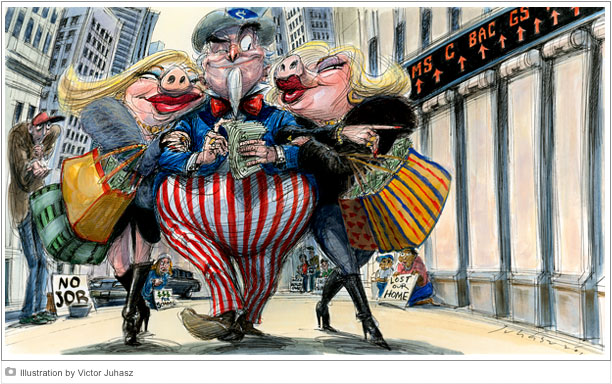
The United States effectively operates with two budgets. One is the official federal budget, publicly debated and funded through taxation, covering everything from military spending and agricultural subsidies to Medicare and public-sector salaries. The other is an unofficial shadow budget that ballooned to extraordinary proportions following the 2008 financial crisis, channeling trillions of dollars from the Federal Reserve to banks, hedge funds, and financial institutions through a labyrinth of acronym-laden programs with minimal public oversight.
The Shadow Budget Revealed
For decades, congressional inquiries into Federal Reserve spending were largely rebuffed. That changed when legislation forced the Fed to open its books from the bailout period. Senate and House staffers began combing through more than 21,000 transactions, uncovering a pattern of extraordinary financial assistance directed at entities that appeared to need it least. The Fed extended billions in bailout funds to foreign banks in Mexico, Bahrain, and Germany, along with Japanese automobile manufacturers. Citigroup and Morgan Stanley each received more than two trillion dollars in loans. Billions more flowed to wealthy individuals and entities registered in offshore jurisdictions like the Cayman Islands.
The Waterfall TALF Opportunity Case
One transaction that drew particular scrutiny involved a firm called Waterfall TALF Opportunity, which received nine loans totaling approximately 220 million dollars through a Fed bailout program. The firm’s principal investors included Christy Mack, wife of Morgan Stanley chairman John Mack, and Susan Karches, widow of former Morgan Stanley investment-banking division president Peter Karches. Neither woman had a substantial background in finance or business management. The loans were issued through the Term Asset-Backed Securities Loan Facility, known as TALF, and were structured in a way that critics said virtually guaranteed risk-free profits for the recipients.
How the TALF Program Operated
The TALF program was designed by Federal Reserve Chairman Ben Bernanke and Treasury Secretary Timothy Geithner ostensibly to restart frozen credit markets. Under its terms, borrowers could obtain low-interest government loans to purchase securities, with the potential upside flowing to the borrower while much of the downside risk remained with taxpayers. The Waterfall TALF case illustrated what critics described as a broader pattern within the bailout architecture: public funds being deployed in ways that disproportionately benefited those already at the top of the financial hierarchy.
Questions About Accountability
The revelations raised fundamental questions about democratic oversight of monetary policy. While the official federal budget undergoes rigorous debate in Congress, the shadow budget operated largely through executive discretion at the Federal Reserve, with lending decisions made by unelected officials using methodologies that remained opaque even to lawmakers. The disclosure of these transactions provided the first significant window into a parallel financial system that, at its peak, rivaled the official budget in scale and scope.