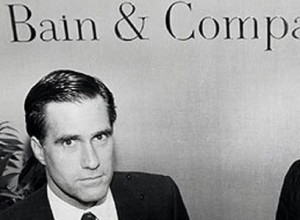
Bain’s First Assignment: Rebranding Monsanto
In 1977, fresh out of Harvard, Mitt Romney joined Bain & Company and was assigned to a project that would reshape one of America’s most controversial corporations. Monsanto, at the time, was reeling from multiple crises. Congress had just passed legislation banning PCB (polychlorinated biphenyl), an odorless, tasteless carcinogen that had been a core revenue driver for the company. Monsanto was already facing massive public backlash over its role in producing Agent Orange, the dioxin-contaminated defoliant used extensively during the Vietnam War.
The consulting engagement aimed to chart a new strategic direction for Monsanto — one that would pivot the company away from its toxic chemical legacy and toward a new identity in agricultural biotechnology.
The Pivot to Agricultural Biotechnology
Romney and the Bain team recommended that Monsanto refocus its business around genetically engineered crops and Roundup, its glyphosate-based herbicide. The company had been developing and patenting the glyphosate molecule, and Bain’s strategic guidance helped position Roundup as the centerpiece of Monsanto’s future revenue model.
The rebranding effort was designed to distance Monsanto from its chemical warfare reputation and recast it as a forward-looking agricultural sciences company. Over the following decades, this strategy proved enormously profitable, transforming Monsanto into one of the most powerful players in the global food supply chain.
The Agent Orange Litigation Shadow
The transition was far from smooth. Throughout this period, Monsanto faced relentless litigation related to its chemical products. The company eventually participated in a $180 million settlement covering claims from over 50,000 military veterans who developed cancer after exposure to Agent Orange during the Vietnam War. Agent Orange contamination is documented to have affected approximately 10 million Vietnamese and American civilians and soldiers, including children — making it one of the largest chemical exposure events in modern history.
Romney’s Subsequent Career and Monsanto’s Influence
Romney leveraged his early success at Bain into a career in private equity, eventually becoming known for corporate restructuring deals that often resulted in significant workforce reductions. His trajectory from consulting for Monsanto to private equity powerhouse illustrated the revolving door between corporate strategy and political influence.
By 2012, when Romney ran for president, the Monsanto connection raised pointed questions. One of Romney’s advisory co-chairs spoke at the Biotechnology Industry Organization conference, stating it was “vital for the United States and other countries to support science-based standards and systems that will bring agricultural biotechnology products to the market.”
Bipartisan Support for Biotech Agriculture
The 2012 presidential race highlighted that support for agricultural biotechnology was not confined to one party. During his 2008 campaign, Barack Obama had pledged transparency on genetically modified foods, stating, “We’ll let folks know whether their food has been genetically modified because Americans should know what they’re buying.” However, his administration appointed former Monsanto executive Michael Taylor to a senior position at the FDA, signaling continuity in biotech-friendly policy.
This bipartisan alignment meant that regardless of election outcomes, the regulatory framework favoring large agricultural biotechnology firms remained largely intact. Critics argued that the concentration of lobbying power in the biotech industry effectively removed GMO policy from meaningful democratic debate.
The GMO Labeling Battle
The question of GMO labeling became a focal point of public resistance. In California, Proposition 37 — a ballot initiative that would have required labeling of genetically modified foods — represented one of the most significant grassroots efforts to challenge the biotech industry’s influence over food policy. Members of Congress including Dennis Kucinich and Ron Paul supported not only labeling requirements but broader restrictions on genetically modified crops.
The debate over Monsanto’s products, from Agent Orange to Roundup to genetically modified seed patents, illustrated how corporate strategy decisions made decades earlier continued to shape public health policy and agricultural markets well into the twenty-first century.