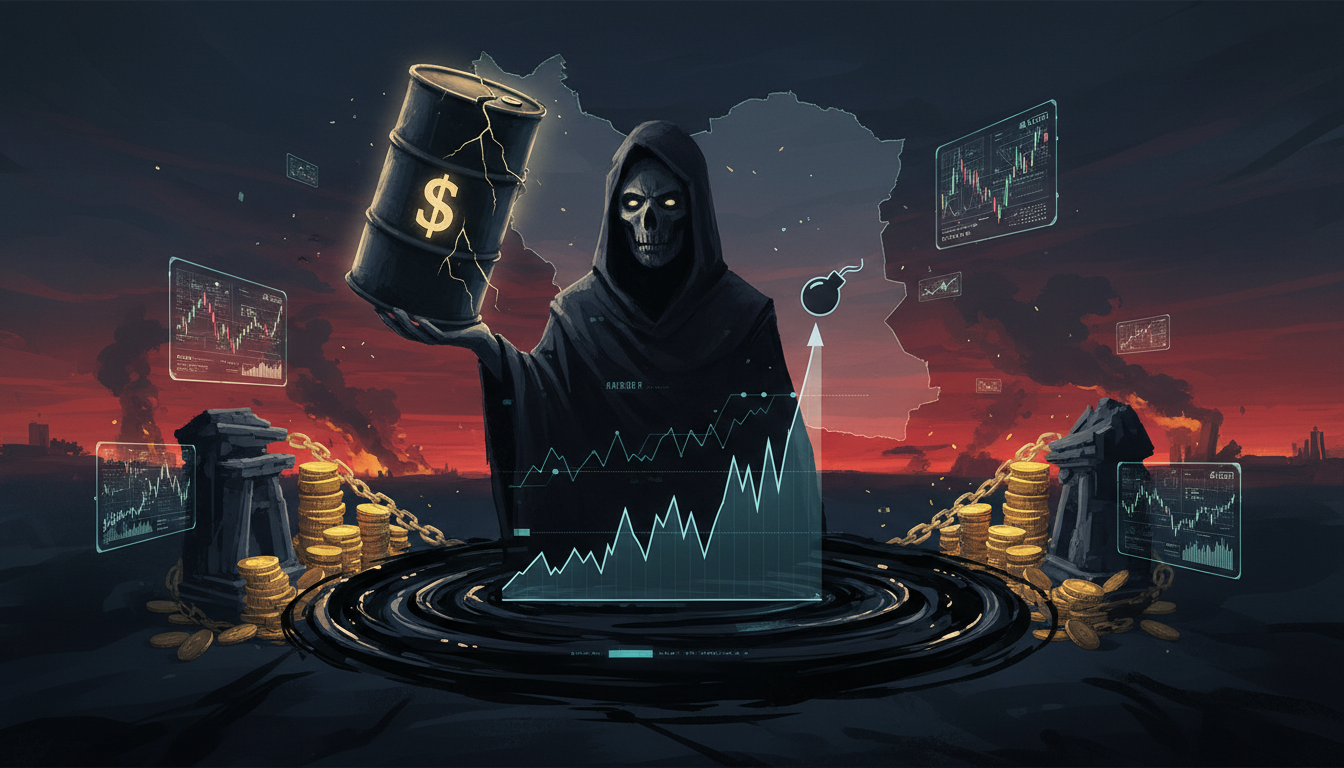
A pattern of suspicious trading activity worth billions has emerged around President Trump’s most consequential Iran war decisions, with federal investigators now probing what appears to be systematic insider trading on a massive scale.
According to multiple reports, traders have consistently placed enormous bets on oil futures markets just minutes before major policy announcements, generating estimated profits exceeding $2.6 billion across several incidents. The timing has become so precise and profitable that regulators can no longer ignore what Professor Jack Rasmus of Saint Mary’s College of California describes as a “very well organized” operation.
The Scale of Suspicious Activity
The most striking example occurred on May 8, 2026, when approximately 10,000 oil futures contracts worth an estimated $920 million were opened less than an hour before media reports indicated Washington and Tehran were nearing an agreement. This perfectly timed bet generated an estimated $125 million profit when oil prices subsequently dropped more than 12%.
But this represents just the latest in a series of suspiciously well-timed trades. On March 23, 2026, $580 million in oil futures flooded the market during a sudden spike roughly 16 minutes before Trump announced a pause in strikes on Iranian power plants. Similar patterns emerged on April 17, when $760 million worth of oil futures were traded within a two-minute span exactly 20 minutes before the announcement of Strait of Hormuz operations.
Professor Rasmus told RT that trades are consistently placed “within minutes” of Trump’s announcements, calling the pattern “pretty constant” with “no other explanation” other than inside information. “Somebody in the government is telling their friends,” he stated, estimating that traders generated approximately $7 billion in March and April alone.
Regulatory Response Intensifies
The Commodity Futures Trading Commission (CFTC) has launched investigations into multiple instances of suspicious trading activity, according to Bloomberg reports. The Justice Department has also joined the probe, examining at least four suspicious transactions that collectively made more than $2.6 billion in profits.
Congressman Ritchie Torres of New York has called for joint SEC and CFTC investigations, writing to regulatory chairs about the “highly unusual trading activity in crude oil futures markets” that occurred hours before the Iran ceasefire announcement. Torres emphasized that such patterns “erode public trust, distort price discovery, and threaten the credibility of the financial system itself.”
Beyond Traditional Markets
The suspicious activity extends beyond oil futures into prediction markets and other financial instruments. Before the Iran war began, more than 150 Polymarket accounts placed hundreds of bets predicting U.S. strikes on Iran. On January 2, a trader turned $32,000 into over $400,000 by betting on Venezuela’s Nicolás Maduro’s capture before it was announced the next morning.
Notably, Donald Trump Jr. serves as an investor advisor to both Kalshi and Polymarket prediction platforms, adding another layer of concern about potential conflicts of interest.
Market Impact and Systemic Concerns
The scale of these trades has grown so large that they’re affecting entire oil and stock markets, according to financial analysts. Josh Rogan of WP Intelligence noted that “the corruption is endemic, it’s systemic, and it’s growing,” with the scale of suspected insider trading reaching levels “no one’s ever seen anything like it.”
Professor Rasmus described commodity exchanges including the Chicago Mercantile Exchange and ICE as knowing “who this is” but being unwilling to announce findings because “some people in the government got their hands in this pie.” He characterized the Trump administration as facilitating what he called “a big grift” extending beyond oil into cryptocurrency and other “shady deals.”
Enforcement Challenges
Despite mounting evidence, enforcement faces significant obstacles. The SEC’s main enforcement prosecutor resigned in protest over restrictions on investigating cases related to the Trump organization and associates. The DOJ’s public integrity unit has been reduced from 36 lawyers to just two under the current administration.
The CME Group has defended itself by pointing to the broader ecosystem of suspicious trading, stating that “any review of market behavior must include all venues, including prediction markets like Polymarket and Kalshi.” However, critics argue that widespread violations don’t negate the criminal nature of the activity.
Pattern of Precision
The consistency of the trading patterns suggests sophisticated coordination rather than lucky guesses. Every time Trump makes statements that could affect oil prices, corresponding trades appear within minutes, generating massive profits for those with apparent advance knowledge.
As Democrats prepare to potentially take control of the House, they’re already laying groundwork for comprehensive investigations into whether government insiders are systematically trading on Trump’s market-moving decisions. The question remains whether regulatory agencies will have the resources and independence necessary to pursue what may be the largest insider trading scandal in modern financial history.
This article draws on reporting from RT World News, Axios, MS NOW, Bloomberg Podcasts, and Congressman Ritchie Torres.