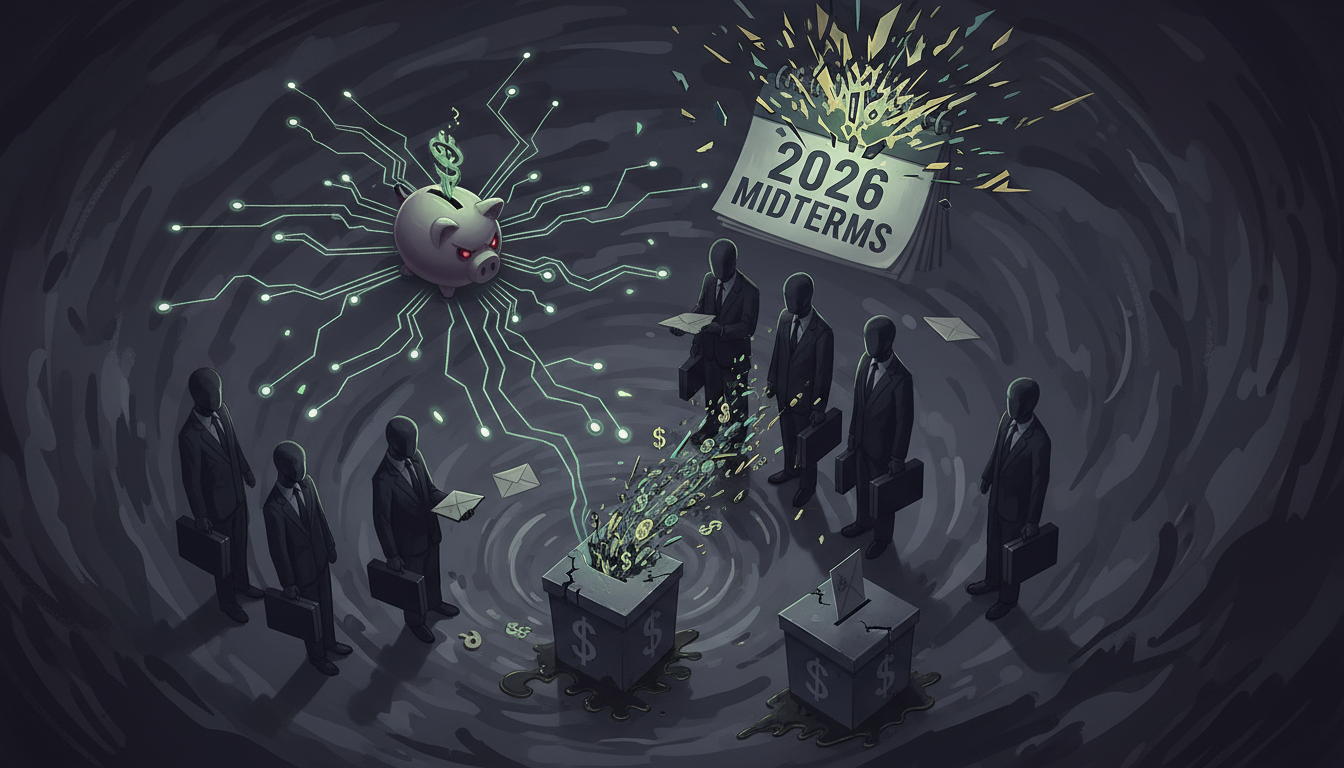
As the 2026 midterm elections approach, a sophisticated network of front groups and shell organizations is channeling unprecedented amounts of undisclosed money into congressional races, with the American Israel Public Affairs Committee (AIPAC) leading the charge in perfecting techniques to obscure the true sources of campaign spending.
The emergence of mystery groups like the Center for Democratic Priorities, which spent $5 million on Michigan Senate primary ads despite having no track record in state politics, represents a new evolution in dark money tactics that campaign finance experts warn is undermining electoral transparency at a critical moment for American democracy.
The Pop-Up Super PAC Strategy
AIPAC has pioneered the use of “pop-up” super PACs that appear suddenly in key races, spend heavily, then vanish. The Center for Democratic Priorities exemplifies this approach – incorporated in Delaware just seven months before deploying $5 million in television advertisements supporting AIPAC’s preferred candidate in Michigan’s Democratic Senate primary.
Online investigators traced the group’s operations to the same consulting firm used by AIPAC’s established super PAC network, yet the organization’s true funding sources remain hidden behind Delaware’s corporate secrecy laws. Despite mounting evidence of connections, AIPAC issued a denial of direct involvement in the spending.
“All their spending on election ads immediately before a primary or general election is anonymous to voters — particularly when they use names that have no meaning and have no indication of the broader groups they are tied to,” explained Shanna Ports, senior legal counsel at the Campaign Legal Center and former Federal Election Commission enforcement attorney.
Congressional Super PACs Flooded With Anonymous Money
The four main super PACs focused on congressional control have collected nearly $120 million from affiliated dark money groups between January 2025 and March 2026, according to analysis by Issue One. This represents roughly 24% of their total $492 million raised during this period.
Senate Majority PAC received $25 million from its dark money affiliate Majority Forward in March alone, accounting for 44% of its quarterly fundraising. The Republican-aligned Senate Leadership Fund collected $11.18 million from One Nation, while House-focused groups Congressional Leadership Fund and House Majority PAC received $7.5 million and $4 million respectively from their dark money partners.
These contributions flow through organizations that never disclose their ultimate donors, creating what campaign finance experts describe as a “black hole” in electoral transparency. The Supreme Court’s Citizens United decision assumed robust disclosure would accompany unlimited spending, yet that vision has been systematically undermined by legal loopholes and regulatory inaction.
Tech Industry Adopts AIPAC Playbook
Cryptocurrency and artificial intelligence industries have begun emulating AIPAC’s sophisticated approach to political influence, establishing party-specific front groups to attract partisan donors while obscuring their corporate backing. These tech-aligned organizations split operations between Democratic and Republican affiliates, creating dual pathways for industry influence that appear grassroots but serve corporate interests.
The strategy offers multiple benefits: attracting donations from partisan funders who prefer supporting only one party, while simultaneously masking the ultimate source of political spending. This approach allows industries to maintain influence across party lines without appearing to play both sides publicly.
Billionaire Networks Drive Mega-Donations
Ultra-wealthy donors have become an unrivaled force in American elections, with billionaires pouring over $3 billion into 2024 contests alone. Elon Musk’s record $290 million in Republican spending demonstrated the outsized influence individual mega-donors can wield over electoral outcomes.
Democratic billionaires like hedge fund manager Stephen Mandel and his wife Susan have contributed nearly $10 million toward 2026 federal races, channeling funds through organizations like Majority Democrats PAC. More than 90% of this group’s disclosed funding traces to contributions from the Mandels and fellow billionaire Mark Heising.
These donor networks operate through interconnected webs of political committees with overlapping personnel, making it difficult to track ultimate funding sources even when basic disclosure occurs. The complexity serves to obscure accountability while maximizing political influence for the ultra-wealthy.
Gaming Disclosure Deadlines
Groups are increasingly exploiting Federal Election Commission reporting deadlines to maximize the impact of undisclosed spending. By timing major expenditures strategically, organizations can influence primaries and general elections while keeping donors anonymous until well after voters have cast ballots.
This timing manipulation ensures that “all their spending on election ads immediately before a primary or general election is anonymous to voters,” as Ports noted, fundamentally undermining the transparency principles that were supposed to balance unlimited political spending under Citizens United.
The Future of Electoral Transparency
Campaign finance experts warn that these sophisticated influence networks will continue proliferating without decisive action from Congress or the FEC. The current system allows unlimited spending through unlimited layers of organizational complexity, creating a maze of financial flows that even dedicated investigators struggle to untangle.
The 2026 midterms represent a critical test case for whether American voters will be able to identify the true sources of political messaging flooding their airwaves and social media feeds. With congressional control hanging in the balance, the stakes for transparent democracy have never been higher.
As front groups proliferate across industries from pro-Israel lobbying to cryptocurrency promotion, the American electoral system faces a fundamental question: whether voters deserve to know who is actually funding the political messages attempting to influence their democratic choices.
This article draws on reporting from The Intercept, Issue One, and CBS News.