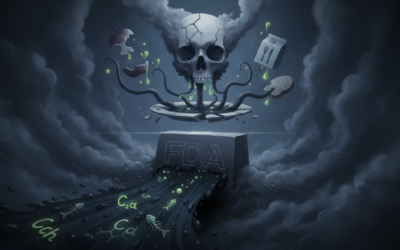
In a 7-2 decision handed down on June 25, 2026, the U.S. Supreme Court ruled that federal pesticide law shields Bayer’s Monsanto from state-level lawsuits alleging the company failed to warn consumers that its glyphosate-based herbicide Roundup could cause cancer. The ruling in Monsanto Co. v. Durnell is expected to effectively block tens of thousands of pending claims against the agrochemical giant, claims that had already produced multibillion-dollar jury verdicts and settlements over the course of nearly a decade of litigation.
The Case at the Center of a Decade of Litigation
The case originated with John Durnell, a Missouri man who alleged he developed non-Hodgkin’s lymphoma after approximately 20 years of exposure to Roundup products. A Missouri jury agreed with Durnell’s failure-to-warn theory and awarded him more than $1.25 million in damages. The Missouri Court of Appeals affirmed that verdict. The Supreme Court then granted certiorari, setting the stage for a ruling that legal observers recognized would have sweeping consequences for thousands of similar claims filed across the country.
Bayer, the German pharmaceutical and agrochemical conglomerate, acquired Roundup manufacturer Monsanto in 2018. At the time of the acquisition, Bayer inherited a growing legal liability tied to Roundup’s active ingredient, glyphosate. The company has since spent years battling litigation and has paid billions of dollars to settle claims alleging that glyphosate causes cancer.
The Legal Mechanism: Federal Preemption Under FIFRA
The core of the Court’s decision rests on a provision of the Federal Insecticide, Fungicide and Rodenticide Act (FIFRA), the federal statute that governs pesticide regulation in the United States. FIFRA contains a uniformity clause stating that a state “shall not impose or continue in effect any requirements for labeling or packaging in addition to or different from those required” under federal law.
Associate Justice Brett Kavanaugh, writing for the seven-justice majority, concluded that this clause expressly preempts state-law failure-to-warn claims like Durnell’s. The reasoning centers on the role of the Environmental Protection Agency (EPA), which is responsible for approving pesticide labels under FIFRA. To register a pesticide, the EPA must determine that the product’s label contains all warnings “necessary and adequate to protect health and the environment” and that the label does not include any “false or misleading” statements.
The EPA has repeatedly evaluated glyphosate and, according to the majority opinion, has repeatedly concluded that glyphosate is “not likely to cause cancer.” The agency has never required a cancer warning on Roundup labels. Because federal law requires Monsanto to sell Roundup with the EPA-approved label, a label without a cancer warning, and because Durnell’s state tort claim would have required the company to add such a warning, Kavanaugh wrote that the claim is preempted.
“In sum, federal law requires Monsanto to sell Roundup with the label that EPA approved at the initial registration and that EPA has subsequently re-approved on multiple occasions, that is, the label without a cancer warning,” Kavanaugh wrote. “Durnell’s state tort claim, by contrast, would require Monsanto to add a cancer warning to its labels.”
The majority further cited the Court’s prior ruling in Riegel v. Medtronic, Inc., which addressed a nearly identical preemption clause in the Medical Device Amendments of 1976, as additional support for its conclusion.
The Dissent: A Different Reading of Federal Supremacy
Justice Ketanji Brown Jackson, joined by Justice Neil Gorsuch, dissented. Jackson argued that the majority’s ruling “departs from the near unanimous view of the many state and federal courts” that had previously weighed in on the preemption question in FIFRA cases.
“In my view, the majority should have joined that chorus,” Jackson wrote. The dissent reflects a concern that the ruling effectively eliminates a layer of legal accountability, state tort law, that has historically served as a check when individuals allege harm from products that federal regulators have deemed safe.
Bayer’s Exposure and the Stakes of the Ruling
The practical consequences for Bayer are substantial. The company stated that the ruling “should result in the dismissal of current warning-based claims and bar future failure-to-warn claims,” describing it as good for “science, farmers, and industries that depend on regulatory clarity for innovation.” Bayer CEO Bill Anderson said in a statement, “The decision brings overdue justice on an issue that should have been clarified much earlier. It’s time to put it behind us.”
Bayer’s shares rose sharply following the announcement of the ruling. The company had previously indicated that if glyphosate litigation continued at its prior pace, it might be forced to stop selling glyphosate to U.S. farmers, a prospect that major agricultural groups warned would pose significant risk to domestic food production. Bayer has already stopped using glyphosate in Roundup products sold for residential use.
The Trump Administration’s Role and the MAHA Fault Line
The Trump administration filed briefs supporting Bayer’s position, arguing that state failure-to-warn claims were preempted by FIFRA. The administration’s alignment with Bayer proved politically complicated, however. According to reporting from CNBC and USA Today, the ruling represents a significant blow to the Make America Healthy Again (MAHA) movement, which supported Trump in the 2024 election but has expressed opposition to glyphosate and pesticide use more broadly. The administration’s support for Bayer’s legal position placed it in direct tension with MAHA advocates who have long raised concerns about glyphosate’s health effects.
Health and environmental advocates have also warned that the ruling’s implications reach well beyond Roundup, potentially limiting the ability of plaintiffs to bring state-level failure-to-warn claims against manufacturers of other federally regulated products where federal agencies have not required specific safety warnings.
What Remains: Claims the Ruling Leaves Open
Durnell’s attorney, Ashley Keller of Keller Postman, acknowledged the ruling’s impact but indicated that litigation would continue on other legal theories. “We will fight on for Mr. Durnell and the scores of other victims by bringing claims this opinion leaves entirely untouched,” Keller said.
The decision specifically addresses failure-to-warn claims under state tort law. Legal analysts note that other types of claims, such as those based on product defect theories not directly implicating labeling requirements, may survive FIFRA preemption, though the ruling significantly narrows the landscape for Roundup plaintiffs.
The Underlying Science: A Contested Landscape
Central to the legal dispute is a scientific question that regulatory bodies and independent researchers have not resolved uniformly. The EPA’s conclusion that glyphosate is “not likely to cause cancer in humans” is, according to the Court’s syllabus, shared by “many other regulatory bodies around the world.” However, the International Agency for Research on Cancer (IARC), a branch of the World Health Organization, has classified glyphosate as “probably carcinogenic to humans”, a classification that formed the evidentiary basis for many of the thousands of lawsuits Bayer has faced.
This divergence between the EPA’s assessment and the IARC’s classification has been at the heart of Roundup litigation for years. The Supreme Court’s ruling does not resolve that scientific debate. It instead determines that, as a matter of law, the EPA’s determination controls for the purposes of federal preemption, and that state courts cannot second-guess that determination through tort liability for failure to warn.
Conclusion: Regulatory Authority as Legal Shield
The decision in Monsanto Co. v. Durnell establishes a significant precedent: when a federal regulatory agency has reviewed a product and declined to require a specific warning, companies may be shielded from state-law claims arguing that such a warning was necessary. For the tens of thousands of Americans who have filed suit alleging Roundup caused their cancer, the ruling closes off a primary avenue of legal recourse. What remains is a question that the courts, scientists, and regulators will continue to contest: whether the most widely used weedkiller in American agriculture poses a cancer risk that the public has a right to know about, and who bears responsibility when federal and state standards of protection diverge.
This article draws on reporting from Activist Post / Children’s Health Defense, USA Today, CNBC, and the Supreme Court’s opinion in Monsanto Co. v. Durnell (No. 24-1068).