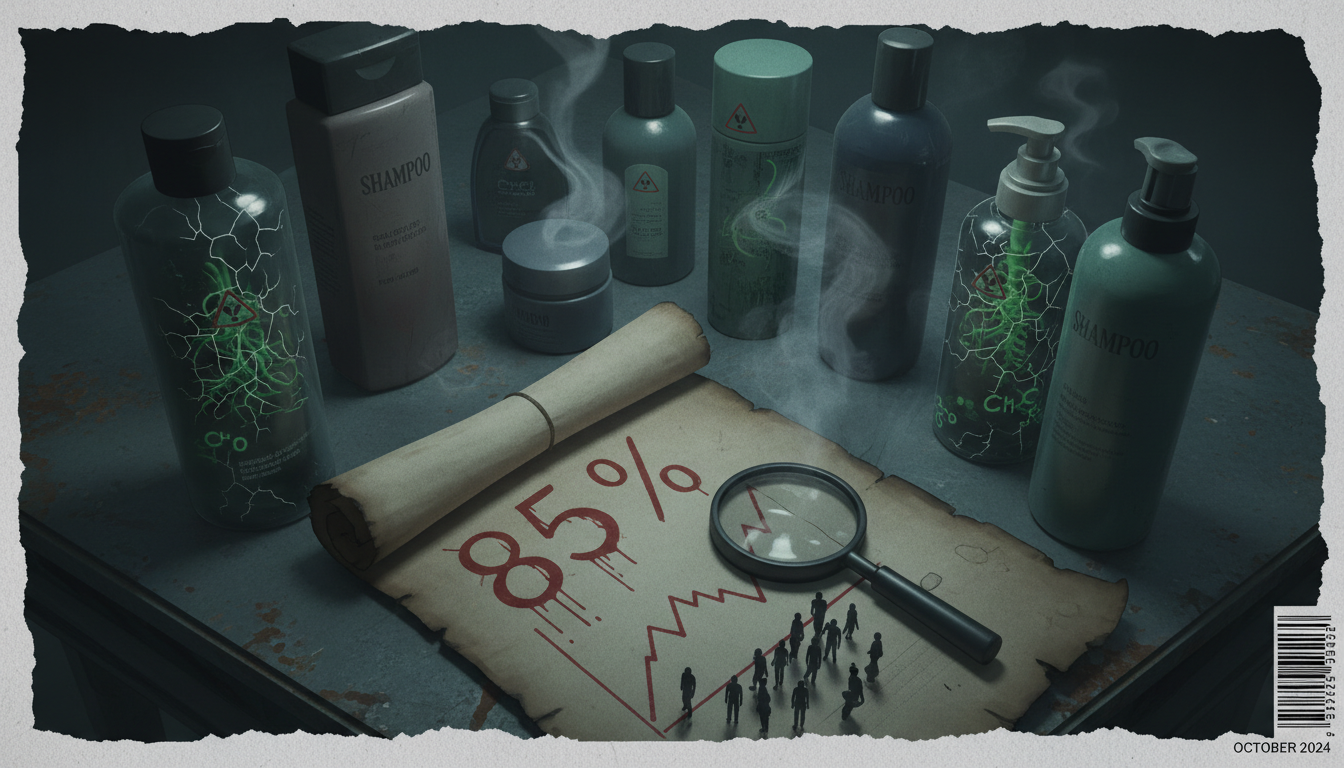
The shampoo in your shower, the lotion on your nightstand, the baby wash beside the tub, a new peer-reviewed study suggests that roughly 85% of common personal care products contain toxic chemicals that never appear on their ingredient labels. Products averaged more than three times as many chemicals as were disclosed to consumers, and even items marketed as “eco,” “green,” or “natural” were not exempt from contamination.
What the Study Found
Researchers tested more than 110 personal care products purchased from major retailers including Target and Amazon. The product categories spanned baby lotions, moisturizers, soaps, shampoos, toothpaste, feminine hygiene products, body washes, and cleaning products. Using a non-targeted chemical analysis, a methodology that scans for thousands of substances rather than a predetermined list, the team identified 303 chemicals they considered worthy of concern.
The results, published in a peer-reviewed journal, were striking: approximately 85% of the 113 items tested showed evidence of unlabeled toxic chemicals. Even more unsettling, 26% of products specifically labeled “eco,” “green,” or “natural” contained at least one dangerous compound. On average, products contained more than three times the number of chemicals listed on their labels.
Jenna Hua, a lead author with Million Marker, a San Francisco-based company that offers at-home testing for exposure to toxic chemicals, said that while researchers anticipated finding some unlabeled substances, they were still “shocked” by the scale of what turned up. “I spend my money, and I want to get a good product, why am I being lied to?” Hua said.
The Chemicals Involved
Among the compounds detected were some of the most scrutinized chemical families in environmental health research. These include phthalates, parabens, PFAS (per- and polyfluoroalkyl substances), and formaldehyde, many of which are sometimes intentionally added to personal care products and are linked to cancer, neurological disease, reproductive harm, and developmental damage in children. Studies over recent decades have found that personal care product chemicals can be absorbed directly into the body through the skin.
PFAS: The Forever Chemicals
PFAS, often called “forever chemicals” because of how slowly they break down, were among the compounds detected. These man-made substances are known to accumulate in the body over time. Their presence in personal care products, even without disclosure on ingredient labels, raises questions about long-term cumulative exposure from daily use.
Phthalates and Parabens: Hormone Disruptors
Phthalates and parabens are classified as endocrine disruptors, chemicals that interfere with the body’s hormone systems. Their detection in unlabeled quantities across a wide range of product types is particularly concerning given that products like baby lotions and children’s shampoos are applied regularly to developing bodies.
Formaldehyde: A Known Carcinogen
Formaldehyde, a recognized carcinogen, was also among the unlabeled chemicals identified. Its presence in everyday personal care items, products that sit on bathroom shelves in homes with children, underscores the gap between what consumers are told a product contains and what it actually holds.
The Fragrance Loophole
One of the most significant structural contributors to the problem is what the study’s authors describe as the “fragrance” loophole. When a product lists “fragrance” or “parfum” among its ingredients, current law does not require manufacturers to specify what that fragrance consists of. According to the study, that single catch-all term can encompass any of approximately 1,200 hazardous chemicals. The most widespread undisclosed toxicants found in the study fell under this fragrance umbrella, making label reading an exercise that falls far short of providing full disclosure.
How These Chemicals End Up Unlabeled
The study’s authors explored several pathways by which toxic chemicals can find their way into products without appearing on labels. Some ingredients may be added illegally. Others may form through unintended chemical reactions between listed ingredients. Plastic packaging is another documented source, containers frequently leach compounds into the products they hold.
The situation is further complicated for small businesses that genuinely aim to produce clean, safe products. Some unknowingly purchase contaminated raw materials or are misled by their ingredient suppliers. Hua noted that Million Marker has spoken with some of these companies, who want to remediate their products but are also concerned about exposure to predatory lawsuits if contamination is discovered. This dynamic creates a chilling effect on voluntary transparency.
A Regulatory Framework That Has Not Kept Pace
The study’s findings arrive in a broader context of longstanding criticism directed at the regulatory framework governing personal care products in the United States. FDA oversight of cosmetics and personal care items has historically been less stringent than oversight of pharmaceuticals, with many chemical ingredients permitted on the market without pre-market safety testing. The “generally recognized as safe” (GRAS) designation, which has been applied to various cosmetic ingredients, does not necessarily reflect long-term safety data, particularly for use on infants and young children.
The study’s authors say the findings highlight the need for stricter oversight and mandatory testing requirements. Hua called for regulatory intervention: “There needs to be some regulations and a testing component to ensure it’s safe.” Million Marker is actively fundraising to expand its testing program.
Products Targeting the Most Vulnerable
Perhaps the most troubling dimension of the study is what it implies for the youngest consumers. Baby products, items specifically formulated and marketed for infants, were among the 113 tested. The presence of compounds linked to developmental harm in products designed for developing bodies represents the sharpest edge of this issue.
Infants and toddlers face compounded risk: their skin is more permeable than adult skin, their bodies are still developing critical systems including neurological and endocrine function, and they have no capacity to advocate for themselves in the marketplace. When a product labeled “natural” for a baby contains undisclosed toxic compounds, the breach of consumer trust is not abstract, it carries documented health implications.
What Consumers Can Do Now
Given that regulatory reform moves slowly and the products currently on shelves have already passed through existing oversight, the practical burden of protection falls largely on individual consumers. Understanding the limitations of label reading is a necessary first step. The “fragrance” listing on any product is effectively a black box containing potentially hundreds of chemicals, none of which must be individually disclosed.
The study’s methodology, non-targeted chemical analysis, is not available to individual shoppers at the point of purchase. What consumers can do is reduce reliance on products with long ingredient lists they cannot verify, approach “natural” and “eco” marketing claims with documented skepticism, and support policy efforts calling for mandatory pre-market safety testing of cosmetic and personal care ingredients.
The Larger Pattern
This study does not exist in isolation. It joins a growing body of research and advocacy, including work by organizations like the Environmental Working Group, documenting the presence of hazardous substances in everyday consumer products. The peer-reviewed finding that 85% of tested personal care items contain unlabeled toxic chemicals is not a fringe claim; it is a documented result from a scientific study using a rigorous detection methodology, published for the research community to examine and replicate.
The question the study leaves open is not whether the problem exists, it demonstrably does, but whether the systems designed to protect public health will respond to the evidence with the urgency the data demands. Until mandatory testing and full ingredient disclosure become legal requirements rather than industry aspirations, consumers will continue to absorb chemicals they were never told were there.
This article draws on reporting from The Guardian and the peer-reviewed study published in ACS Environmental Health.