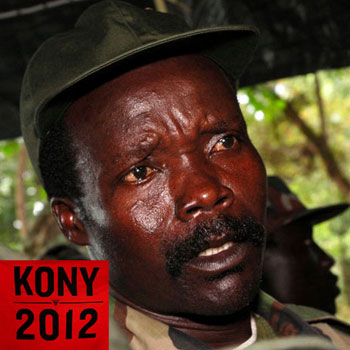
In early 2012, the Kony 2012 viral campaign generated unprecedented public attention toward Joseph Kony, leader of the Lord’s Resistance Army in Uganda. While the campaign presented itself as a humanitarian effort to bring a war criminal to justice, a number of analysts and authors raised questions about the deeper geopolitical interests at play in Central Africa and the intelligence community’s alleged connections to the very conflicts the campaign sought to address.
Allegations of Intelligence Agency Involvement
Richard Cottrell, a former European Member of Parliament, journalist, and author of “Gladio: NATO’s Dagger At The Heart of Europe,” published analysis in October 2011 claiming that the Lord’s Resistance Army was backed by Western intelligence agencies. Cottrell alleged that the LRA functioned as a destabilizing force in mineral-rich regions of Central Africa, including Uganda, the Congo, and Sudan. He described a pattern in which Western intelligence services, including the CIA, MI6, Belgian intelligence, and Mossad, supported opposing factions in regional conflicts to create conditions that would justify intervention and facilitate access to natural resources including copper, diamonds, gold, uranium, and oil.
Historical Context in the Congo
These allegations were framed within a longer historical trajectory of Western intervention in Central Africa. Cottrell drew a direct line from the 2012 situation to the CIA and Belgian-backed Katanga secession crisis of the 1960s, when Western powers supported Moise Tshombe’s breakaway movement from the newly independent Congo. That period also saw the assassination of Congolese Prime Minister Patrice Lumumba in 1961, an event in which U.S. and Belgian intelligence agencies were later confirmed to have played a role. Frank Carlucci, who was stationed in the Congo during that period as a U.S. diplomat, went on to serve as Secretary of Defense under President Reagan and later chaired the Carlyle Group from 1992 to 2003.
The Viral Campaign Under Scrutiny
Critics of the Kony 2012 campaign argued that it oversimplified a complex regional conflict and served to manufacture public consent for expanded U.S. military presence in Central Africa. They noted that Ugandan President Yoweri Museveni, who had been in power since 1986, had his own well-documented record of human rights concerns, yet received consistent U.S. support. The campaign’s slick production values and massive funding raised questions about whether its true purpose was humanitarian awareness or the cultivation of public opinion favorable to intervention in a strategically valuable region.

The Resource Competition Framework
The broader analytical framework suggested by Cottrell and others positioned the Kony situation within what they described as a new scramble for Africa, in which major powers competed for control of the continent’s vast mineral wealth under the cover of humanitarian missions. Whether or not specific claims about intelligence agency relationships proved verifiable, the underlying pattern of Western powers intervening in resource-rich African nations while citing humanitarian justifications had extensive historical precedent, from the Congo Crisis through the Libyan intervention of 2011. Understanding this context was essential for evaluating the Kony 2012 phenomenon beyond its surface-level narrative.