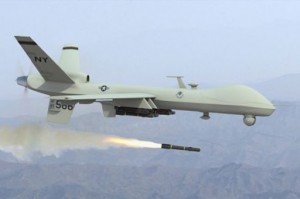
The rapid expansion of America’s unmanned aerial warfare program represents one of the most consequential shifts in modern military strategy. What began as an experimental capability in the early 2000s has grown into the centerpiece of U.S. counterterrorism operations, fundamentally reshaping how the government wages war, who it targets, and what accountability looks like when killing happens at the push of a button from thousands of miles away.
Origins of America’s Drone Assassination Program
The first confirmed lethal drone strike carried out by the United States took place in Yemen in November 2002, when a CIA-operated Predator destroyed a vehicle carrying suspected Al Qaeda operatives. That inaugural operation immediately established a pattern that would define the program for years to come: among those killed was an American citizen. From its very inception, the technology sold as a shield protecting Americans was simultaneously being used to end American lives without trial or due process.
Michael Hastings documented the drone program’s evolution in a detailed 2012 Rolling Stone investigation, revealing how unmanned warfare had become the preferred instrument of a military-intelligence apparatus increasingly comfortable with remote-controlled killing. The appeal was straightforward: drones made sustained combat operations cheaper, quieter, and politically easier to sustain than deploying ground troops.
The “Bug Splat” Mentality: How Drone Operators View Their Targets
Perhaps nothing captures the moral disconnect at the heart of drone warfare more starkly than the internal language used by those who carry it out. Military personnel adopted the term “bug splat” to describe a person killed by a drone missile, a reference to the way a human body appears when viewed through grainy green surveillance footage after a strike. The target looks less like a person and more like an insect crushed against a surface.
This dehumanizing vocabulary reflected a broader cultural attitude within the national security establishment. For operators raised on video games, piloting a drone and firing its weapons bore an uncomfortable resemblance to the gaming experiences of their youth. The physical separation between killer and killed, with operators seated in climate-controlled facilities on domestic military bases, created a psychological buffer that made taking human life feel routine and abstract.
Civilian Casualties and Mistaken Identity Strikes
The drone program’s record of collateral destruction undercuts the narrative of surgical precision that its advocates promote. Hastings cataloged a series of devastating errors that illustrated the program’s lethal imprecision.
In Afghanistan in 2010, U.S. forces tracked what they believed was a senior Taliban leader’s cellphone for months. When they finally authorized a strike, the missile killed Zabet Amanullah, a well-known human rights advocate who actively supported the American-backed Afghan government. The military had been following the wrong phone the entire time.
The campaign to eliminate Baitullah Mehsud, head of the Pakistani Taliban, required five separate drone strike attempts before succeeding in 2009. The successful strike killed Mehsud at his father-in-law’s home, vaporizing his wife alongside him. But the four previous failed attempts had killed dozens of civilians who had nothing to do with the intended target. One missed strike alone killed 35 people, including nine civilians. Reports indicated that flying shrapnel from that attack killed an eight-year-old boy as he slept. Another errant strike in June 2009 took the lives of 45 civilians according to credible news accounts.
By the time Hastings published his investigation, at least 174 children had been killed in American drone operations.
The Killing of Anwar al-Awlaki and His Teenage Son
No episode better illustrates the unchecked reach of the drone program than the targeted killing of Anwar al-Awlaki, a U.S. citizen, in September 2011. Al-Awlaki was never formally charged with any crime in an American court, yet the Obama administration placed him on a secret kill list and authorized his execution by drone strike in Yemen.
Two weeks after al-Awlaki’s death, his 16-year-old son Abdulrahman, also an American citizen, was killed in a separate drone strike in southern Yemen. The teenager had run away from home weeks earlier in an attempt to find his father. After learning of his father’s death, Abdulrahman called his grandparents to offer condolences. They urged him to come home, and he agreed. He never made it.
Abdulrahman was sitting with a cousin when a drone missile obliterated them both along with seven other people. The boy had no known connection to Al Qaeda or any other militant organization. The actual target of the strike, a member of Al Qaeda in the Arabian Peninsula, reportedly survived and may not have even been present at the location.
Nasser al-Awlaki, Abdulrahman’s grandfather and a former senior Yemeni government official, described the boy as gentle and fond of swimming. In his words, there was no justification for killing his grandson other than the fact that he happened to be the son of Anwar al-Awlaki.
Signature Strikes: Killing People Without Knowing Who They Are
Abdulrahman’s death likely resulted from what intelligence agencies call a “signature strike,” one of the most troubling components of the entire drone apparatus. In a signature strike, CIA analysts observe individuals in a foreign country through drone surveillance feeds. If the observed behavior matches certain secret, internally defined criteria deemed suspicious, those individuals can be killed by missile even when the operators have absolutely no idea who they are.
The analysts watching could not distinguish between people planning an attack and people attending a wedding. They could not tell the difference between someone building an explosive device and someone eating lunch. The targets were simply anonymous figures on a screen whose movements triggered an algorithm of suspicion, and that was enough to authorize lethal force.
Bipartisan Support and the Expansion of Domestic Drone Use
What made the drone program especially remarkable was not merely its brutality but the near-total absence of political opposition to it. Polling data showed that members of both major political parties overwhelmingly supported drone operations. The administration faced virtually no meaningful pushback for killing an American citizen who had never been charged with a crime.
Congress went further, passing legislation in February 2012 directing the Federal Aviation Administration to speed up the integration of unmanned aerial systems into American airspace. Drones already in use for wildfire response and border surveillance were being tested by police departments in Miami and Houston for domestic law enforcement purposes. New York authorities expressed eagerness to deploy them as well.
The same technology designed to hunt suspected militants in distant countries was rapidly being repurposed for surveillance of American citizens on American soil.
What Drone Warfare Reveals About Power and Accountability
The normalization of remote-controlled killing without judicial oversight, transparent targeting criteria, or meaningful public debate represents a striking historical anomaly. A powerful nation facing no existential threat, no invasion, no armed uprising, and no societal collapse voluntarily expanded its government’s authority to kill individuals, including its own citizens, based on secret evidence evaluated through secret processes.
The drone program laid bare a fundamental contradiction in American political culture. A society that prizes individual liberty and constitutional rights simultaneously accepted, with minimal protest, a framework in which the executive branch could designate any person on earth as a target for extrajudicial killing. The infrastructure of accountability that democratic governance supposedly guarantees was quietly bypassed, and the public largely acquiesced.
Hastings’ 2012 Rolling Stone investigation documented these realities with the kind of straightforward, fact-driven reporting that refused to simply amplify official talking points. The full scope of what he revealed about the drone program, its casualties, its internal culture, and its political insulation from scrutiny remains essential reading for anyone seeking to understand how modern state violence operates behind a screen of technological distance and bureaucratic euphemism.
Originally published April 18, 2012. Reporting by Michael Hastings for Rolling Stone. EPIC FOIA documents provided additional source material on government surveillance practices.