
The State of the American Economy in 2012
The American electoral landscape of 2012 was shaped by economic forces that few voters fully understood. President Obama inherited two wars, a collapsed stock market, and massive national debt. While the Dow had climbed back above 13,000, pension funds remained depleted and the housing market stagnated. Rents, food prices, and gasoline costs continued climbing even as the index recovered.
The recovery itself was largely cosmetic. The companies comprising the new Dow were different from the pre-2008 blue chips that had collapsed. The old stalwarts were replaced with new entries, creating the appearance of progress while underlying economic fundamentals told a different story.

The banking sector’s ambiguity had previously enabled trade and investment to generate real employment. Loans were extended against collateral of dubious value — derivatives, overvalued real estate, and speculative instruments. Yet the jobs those loans created were genuine, supporting home purchases, tax revenue, and consumer spending. When the inflated currency systems faltered, so did employment.
The Federal Reserve and Unauthorized Currency Creation
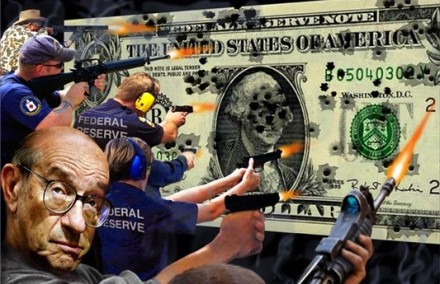
A partial congressional audit of the Federal Reserve Bank of New York revealed that approximately $31 trillion in currency had been created and distributed to European banks without formal authorization. This staggering figure raised questions about the viability of the entire monetary system.
The foreign-owned banks within the Federal Reserve System had accumulated private debts of almost incomprehensible scale. Their insolvency meant that only the United States possessed the institutional capacity to generate the currency needed to keep them operational. Critics estimated that roughly one-third of these funds were diverted to organized crime, while another third could not be accounted for at all.
Suppressed Energy Technologies

Senior military officials were reportedly consulted about the deployment of cold fusion, hydrogen-boron fusion, and other aneutronic energy devices capable of providing abundant power at minimal cost. These technologies, according to insider accounts, could produce usable electric current directly without the conversion processes required by conventional nuclear plants.

Wind and solar energy were characterized as transitional technologies that would be rendered obsolete once fusion systems entered practical deployment. The claim was that working models already existed, with only design optimization and construction scaling remaining as obstacles.
More controversially, sources alleged that gravity-nullifying propulsion technology had been developed decades earlier, implying that conventional aerospace programs — including guided missiles and advanced aircraft — had served primarily as cover for classified alternatives.

For nearly sixty years, entertainment media had incorporated themes of advanced propulsion, interdimensional travel, and suppressed technology into popular narratives. Some researchers argued this represented a form of soft disclosure, gradually acclimating the public to realities that official channels refused to acknowledge.
Black Budget Programs and Accountability Gaps
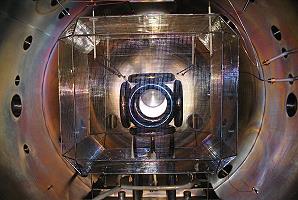
Documents reportedly outlined the existence of a highly secretive committee overseeing the divestment of trillions of dollars into programs whose stated purpose was defensive capability development. However, the technological stagnation visible in the consumer sector — new mobile phones and little else — suggested that breakthroughs in physics involving field and energy systems were being withheld from public application.
Critics pointed to the incompatibility between advanced capabilities and a planet where vastly different levels of civilization coexisted. The argument was that moral and ethical frameworks had been systematically degraded through propagandized education systems, while genuine creativity and advancement were contained by labeling truth-tellers as conspiracy theorists and innovative thinkers as eccentric elitists.
Political Corruption and Institutional Cover-ups

The article raised allegations of systemic corruption reaching the highest levels of American government. Historical accusations described networks that exploited vulnerable individuals, with cover-ups orchestrated through elements within the FBI and intelligence agencies.
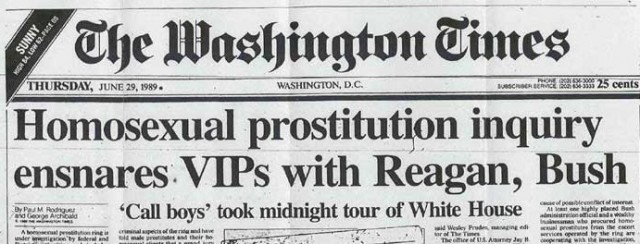

A pattern of suspicious deaths involving senators, government scientists, and FBI agents was cited as evidence of systematic silencing. The cases of Chandra Levy, Dr. David Kelly, John Wheeler III, Vince Foster, and Senator Paul Wellstone were referenced as examples where official explanations failed to satisfy independent investigators.
The release of photographs purportedly showing Lee Harvey Oswald standing in the doorway of the Texas School Book Depository at the moment of the Kennedy assassination added to longstanding questions about the official narrative of that event.
Secret Prisons and the Absence of Oversight
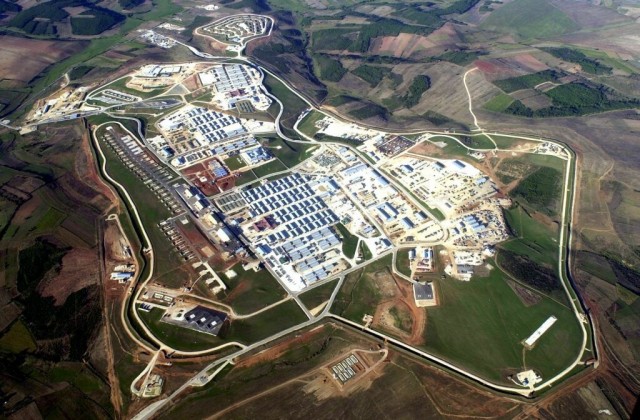
The existence of large, secretive detention facilities around the world raised troubling questions about accountability. These installations were described as enormous — larger than major military bases — yet no prisoners had ever publicly emerged from them, no Red Cross inspections had been conducted, and no formal accusations or trials were associated with their operations.
Camp Bondsteel in Kosovo was cited as one such facility, with allegations that it served as a hub for narcotics distribution managed through partnerships with regional criminal organizations. The sheer scale and secrecy surrounding these installations exceeded anything documented during previous eras of state-sponsored detention.
The Diamond Trade and Money Laundering

Investigations reportedly uncovered that more than half of diamonds entering the United States were connected to terrorism financing and organized crime. Scientific papers and testimony documenting these connections had been submitted to both the FBI and State Department.
Equipment used by American customs officials was allegedly sabotaged to prevent detection of illegal diamonds, including sophisticated manufactured stones more advanced than simple cloning techniques. Diamonds from Tel Aviv were specifically identified as problematic, with both customs agencies and industry quality organizations alleged to be financially compromised.
The broader implication was that the diamond market, vastly larger than gold in total value, had been fundamentally undermined by undetectable manufactured stones grown from seed crystals with unique characteristics that no government inspection equipment could identify.
China’s Gold Manufacturing Claims
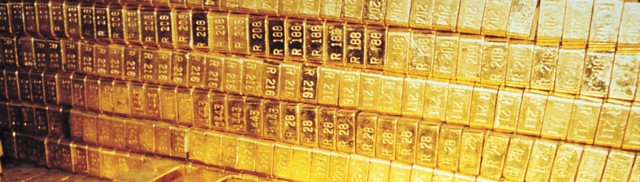
China’s claims about extracting forty times more gold from ore using tailings processing technology were questioned. The actual development, according to the analysis, originated in South Korea, where a methodology for manufacturing gold had been developed years earlier.
China’s relatively small gold reserves for a nation of its economic stature, combined with concerns about counterfeit gold found in Hong Kong holdings, drove efforts to establish alternative value stores. The licensing of South Korean gold production technology was masked by a global campaign of purchasing non-producing mines and promoting misleading scientific claims.
This created two fundamental problems: gold became a derivative of subjective rather than intrinsic value, and any currency backed by gold would eventually lose trade value once the manufacturing process became public knowledge.
Geopolitical Realignment and the Path Forward

With currencies, debt instruments, gold, and diamonds all facing credibility crises, nations were increasingly turning to narcotics, weapons, and hydrocarbons as expressions of political power and economic value. The analysis warned that this trajectory would continue until one of these bubbles burst or a major conflict erupted.
Syria was identified as a likely flashpoint, with US missile base expansion into Central Europe serving as a catalyst. Serbian electoral realignment with Moscow threatened to flank NATO, while deteriorating Turkish-Israeli relations and India’s ICBM development further complicated the strategic landscape.

China’s expansion into Africa, arriving by the planeload daily, was expected to leave it overextended and dependent on an American military presence quietly establishing itself along Africa’s west coast.
Domestically, the Supreme Court’s activist posture in usurping legislative authority, combined with foreign money in congressional politics, was identified as the most crippling institutional threat. The assessment concluded that emergency presidential powers might become necessary following the 2012 election, as conventional political mechanisms proved insufficient to address the scale of systemic dysfunction.
The ultimate question remained whether democratic institutions could adapt quickly enough to address these compounding crises, or whether the concentration of unaccountable power would continue to erode the foundations of public governance.