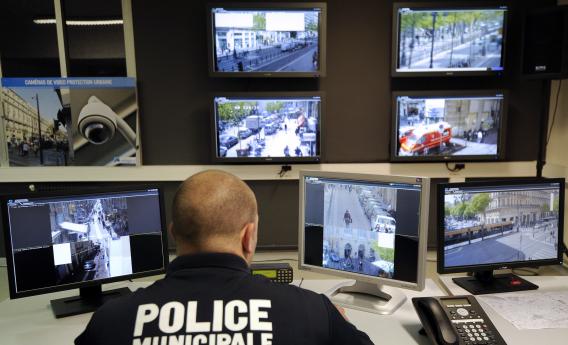
A Covert Surveillance Network Hidden in Plain Sight
Leaked emails obtained by the hacktivist collective Anonymous revealed the existence of a sprawling surveillance apparatus operating across the United States, largely without public knowledge. The system, known as TrapWire, was developed by Abraxas, a Northern Virginia firm packed with veterans of the CIA, the Pentagon, and other intelligence agencies.
TrapWire operates by capturing data from monitoring stations positioned at high-value targets and major urban centers throughout the country. This information is digitized on-site, encrypted, and transmitted instantly to a secure centralized database at an undisclosed facility, where it is cross-referenced with intelligence gathered from other nodes in the network.
How the Stratfor Hack Exposed TrapWire
The program came to light through the 2011 breach of Stratfor, a private intelligence firm, carried out by Anonymous-affiliated hackers on Christmas Eve. The group claimed to have extracted more than five million internal emails. WikiLeaks subsequently began publishing these messages as the Global Intelligence Files in early 2012.
Security researcher Justin Ferguson drew widespread attention to several emails describing TrapWire deployments across public spaces in the United States. Almost immediately after these revelations gained traction online, WikiLeaks suffered massive distributed denial-of-service (DDoS) attacks that took down the site and its mirrors, severely limiting access to the leaked documents.
A group calling itself AntiLeaks claimed responsibility for the cyber assault, characterizing it as opposition to WikiLeaks editor Julian Assange. Australian activist Asher Wolf reported on social media that the DDoS traffic was hitting the WikiLeaks servers at rates exceeding 40 gigabytes per second.
Behavioral Pattern Detection Beyond Facial Recognition
According to a June 2012 company document, TrapWire was engineered to offer a streamlined method for gathering and logging reports of suspicious activity. Interconnected surveillance nodes flag unusual behavior, feed it into the system, and cross-analyze it against data from other locations to detect patterns consistent with pre-attack reconnaissance.
In a leaked 2009 email, Stratfor Vice President for Intelligence Fred Burton reportedly described the technology as a solution built around identifying behavioral patterns within designated security zones, capable of linking observations across both geography and time.
Abraxas founder Richard Helms, in a 2005 interview, stated the system could gather intelligence about individuals and vehicles with greater precision than standard facial recognition, identify emerging threat patterns, and deliver automated alerts to local law enforcement. He emphasized that the platform could scale to protect an unlimited number of sites as efficiently as a single one.
A separate internal Stratfor message from early 2011 attributed to Burton suggested TrapWire could be paired with facial recognition software to retroactively trace and track suspects from the point of initial detection.
Nationwide Deployment Across Cities and Military Installations
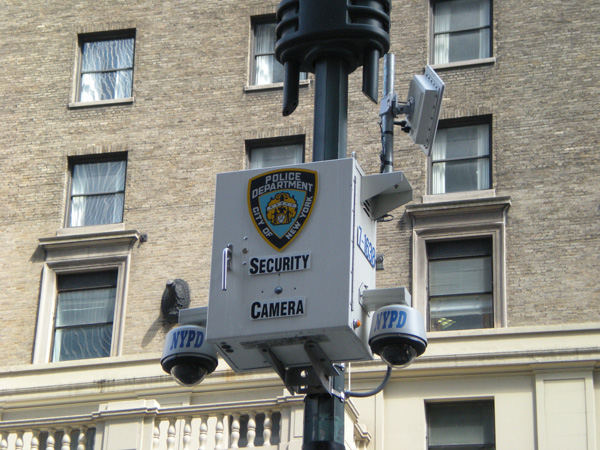
Since its creation, TrapWire was deployed at high-value targets in most major American cities and extended internationally. The Los Angeles Police Department integrated TrapWire with its iWatch monitoring program. Washington, D.C. adopted the system, as did New York City’s well-known “See Something, Say Something” initiative, which had roughly 500 surveillance cameras connected to TrapWire by 2010.
Private sector clients included Las Vegas casino operators. The State of Texas reportedly invested half a million dollars plus a $150,000 annual licensing fee. The Pentagon and various military facilities were also identified as subscribers in the leaked correspondence.
In one 2010 email, Burton allegedly wrote that the company had secured contracts with every major high-value target across the continental United States, the United Kingdom, Canada, Las Vegas, Los Angeles, and New York City. Federal spending records showed that the Department of Homeland Security and Department of Defense together awarded Abraxas and TrapWire more than one million dollars in an eleven-month period alone.
Revelations Amid a Government Crackdown on Whistleblowers
The TrapWire disclosures emerged during an aggressive federal campaign to prosecute leakers. Thomas Drake, a former NSA employee, faced Espionage Act charges after publicly discussing the Trailblazer surveillance program designed to monitor private communications. Meanwhile, former NSA technical director William Binney and other ex-agency officials alleged that intelligence services maintained comprehensive dossiers on every American citizen, a claim NSA Chief Keith Alexander publicly denied at the Def-Con hacking conference in Las Vegas.
Key Details from the Leaked Stratfor Emails
The leaked Global Intelligence Files contained numerous references to TrapWire operations, including details about a centralized database linking Las Vegas hotels and other sites, deployments in New York City circa 2010, installations along the Texas border in 2009, and connections to the Pentagon, Army, Marine Corps, and Navy.
Additional emails referenced integration with the FBI’s eGuardian system and the National Suspicious Activity Reporting Initiative, deployments at the London Stock Exchange and Nigerian Presidential Palace, and presence on the desks of the U.S. Secret Service, MI5, the Royal Canadian Mounted Police, and counter-terrorism units within the LAPD and NYPD.
The State of Texas Department of Public Safety reportedly allocated $1.8 million for TrapWire equipment. Other referenced locations included Scotland Yard, 10 Downing Street, the White House, Walmart, and Dell corporate facilities.