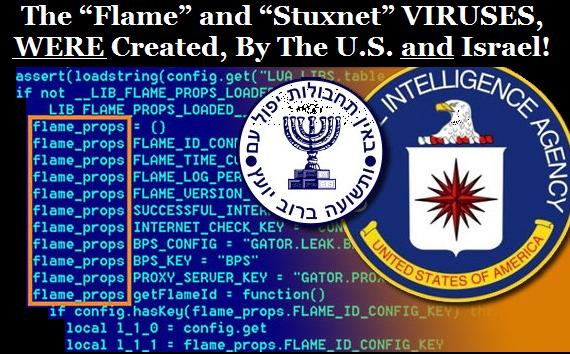
The surveillance state is no longer a theoretical concern. Google itself began issuing warnings that government-sponsored operatives might be monitoring user accounts. Some analysts connected these alerts to the discovery of an extraordinarily sophisticated data-mining virus called Flame. As reported by the New York Times, Eugene Kaspersky, founder of Europe’s largest antivirus firm, identified Flame as a piece of malware so technologically advanced that only a nation-state could have built it.
Kaspersky drew direct parallels between Flame and the Stuxnet worm, which had been developed by programmers working for the United States and Israel. He characterized cyber weapons as the most perilous technological innovation of the 21st century. While the U.S. and Israel deployed these tools to hamper Iran’s nuclear enrichment capabilities, the same technologies could just as easily cripple electrical grids, destabilize financial markets, or compromise military defense networks.
Flame Virus Capabilities and Bluetooth Surveillance Threat
Kaspersky was reportedly brought in to examine the new virus at the request of the International Telecommunication Union, a United Nations agency. The malware had allegedly been wiping files from computers belonging to Iran’s oil ministry.
What elevated Flame from a regional concern to a global threat was its unprecedented ability to propagate wirelessly by latching onto Bluetooth-enabled devices. Once embedded, the virus could trace and exfiltrate stored data. Even more alarming, the program included a command function capable of silently activating any microphone on an infected device, recording ambient audio regardless of whether the device was actively in use, and transmitting those recordings back to the operator. The privacy ramifications of deploying such a tool against civilian populations would be staggering.
Stuxnet and Flame Share Common Origins
Although cybersecurity researchers initially insisted that no connection existed between the Stuxnet worm and the Flame virus, subsequent analysis by Kaspersky Lab reversed that conclusion entirely. A previously unexamined module within an earlier Stuxnet variant turned out to be nearly identical to a component used by an early version of Flame. The resemblance was so striking that Kaspersky’s automated classification system initially tagged it as Stuxnet.
Researcher Alexander Gostev concluded that this shared module likely served as the seed from which both malware programs evolved. He proposed the existence of a unified “Flame platform” and suggested that the shared module had been constructed from the same source code base.
The emerging picture indicated that Stuxnet and Flame represented complementary aspects of a single cyber offensive: Stuxnet was engineered for sabotage, while Flame was designed for intelligence gathering. Researchers also determined that the Flame platform predated both Stuxnet and its sibling malware, Duqu, with development likely commencing in the summer of 2008.
In response to the threat, Microsoft moved swiftly to address the certificate vulnerability that Flame exploited. The company issued an emergency update for Windows Server Update Services 3.0 SP2, strengthening communication channels to accept only files authenticated by Microsoft’s own certification authority. A subsequent Patch Tuesday release extended protection to all supported Windows versions.
Security experts at the SANS Institute urged all users to install the certificate patch immediately, warning that attackers would likely attempt to leverage the vulnerability before widespread patching could take effect. They also cautioned against applying updates while connected to untrusted networks, noting that hotel networks and public hotspots frequently employ poorly configured proxies vulnerable to man-in-the-middle attacks. For users who needed to update while traveling, a VPN connection back to a trusted corporate network was strongly recommended.
NSA Utah Data Center and Mass Surveillance Infrastructure
Concurrent with the Flame revelations, Wired Magazine exposed the construction of an enormous surveillance facility in Bluffdale, Utah. Once completed, the complex would dwarf the U.S. Capitol building by a factor of five.
Built under top-secret clearances for the National Security Agency, the Utah Data Center represented the culmination of a decade-long intelligence infrastructure project. Its mission was to intercept, decrypt, analyze, and archive vast quantities of global communications captured from satellites, undersea fiber-optic cables, and domestic network infrastructure. The facility, budgeted at two billion dollars, was slated for activation in September 2013.
The center was designed to process and store every conceivable form of digital communication: private emails, mobile phone conversations, search engine queries, financial records, travel itineraries, purchase histories, and countless other data trails. In many respects, it represented the fulfillment of the Total Information Awareness program that Congress had shut down in 2003 following public backlash over privacy concerns.
Beyond its massive storage capabilities, the facility was intended to serve as a cryptanalysis center. A senior intelligence official revealed that the NSA had achieved a major breakthrough in its ability to crack previously impenetrable encryption systems used by governments and ordinary citizens alike. The implication was unambiguous: every person who communicates electronically had become a potential target.
Warrantless Wiretapping and the Stellar Wind Program
The NSA had simultaneously undergone its largest expansion in history, including the installation of secret monitoring rooms inside major U.S. telecommunications facilities. These classified spaces enabled the agency to tap directly into domestic communications networks, a practice that surfaced publicly during the Bush administration but was never officially acknowledged.
The 2008 FISA Amendments Act effectively legalized these surveillance activities and granted retroactive immunity to cooperating telecom companies. What remained hidden until Wired’s reporting was the true scale of domestic surveillance.
William Binney, a former senior NSA official and co-founder of the agency’s Signals Intelligence Automation Research Center, provided the first on-record description of the program, codenamed Stellar Wind. Binney explained that while the NSA could have confined its monitoring to international communications by installing equipment at the roughly two dozen coastal cable landing stations where fiber-optic lines enter the country, it instead chose to place wiretapping infrastructure at key junction points throughout the domestic network, capturing both international and domestic traffic.
The intercept network extended far beyond the single AT&T facility in San Francisco exposed by a whistleblower in 2006. Binney estimated the existence of 10 to 20 such installations. Satellite communications were also monitored through AT&T’s earth stations. Binney had proposed a targeted surveillance model that would reduce monitoring intensity based on a subject’s distance from an initial target, but the agency rejected this approach. Given the Utah facility’s storage capacity, he suspected the NSA had opted to simply collect everything.
Google Warns Users About State-Sponsored Cyber Attacks
Beginning in early June 2012, Google implemented a warning system to alert users when their accounts appeared to be targeted by government-affiliated attackers. The notification, displayed prominently across Gmail, Google’s homepage, and the Chrome browser, read: “Warning: We believe state-sponsored attackers may be attempting to compromise your account or computer.”
Google’s VP of Security Engineering, Eric Grosse, clarified that the warning did not necessarily indicate a successful breach but rather that the user had been identified as a likely target of phishing or malware campaigns. Recommended immediate actions included creating strong unique passwords with mixed characters and symbols, enabling two-step verification, and keeping all software current. Users were also advised to exercise caution when signing into Google, verifying the legitimate HTTPS URL in the browser bar.
Legislative Threats to Internet Freedom and Privacy
The surveillance revelations coincided with an aggressive legislative push to expand government authority over online communications. In January 2012, Congress introduced the Stop Online Piracy Act (SOPA) and the Protect IP Act (PIPA). While framed as anti-piracy measures, both bills contained provisions capable of severely restricting online speech and damaging web communities of all sizes. Massive public protests forced both bills into indefinite postponement, though many observers warned they would resurface.
By April, the Cyber Intelligence Sharing and Protection Act (CISPA) emerged as what opponents called an even more dangerous threat to digital liberty than its predecessors. Co-sponsor Representative Dutch Ruppersberger argued the bill was essential for defending against catastrophic attacks on critical infrastructure, including power grids and water systems.
The timing proved notable: Ruppersberger’s warnings about infrastructure attacks arrived barely a month before the discovery of the Flame virus, which had targeted precisely such systems in Iran. Both Flame and the earlier Stuxnet worm had evaded detection by the entire existing Western security apparatus and were ultimately identified by a Russian antivirus firm, which happened to employ the same researcher who had first discovered Stuxnet in 2010.
Meanwhile, the United Nations announced plans to convene in December 2012 to develop recommendations for international internet governance, adding another layer of concern for digital freedom advocates.
Domestic Surveillance Expansion Beyond the Digital Realm
The surveillance buildup extended well past data collection. Reports documented approximately 63 drone launch sites operating within U.S. borders. The military acknowledged developing micro-drone technology in the form of tiny mechanical insects outfitted with cameras, microphones, and even DNA sampling capabilities.
An expanding arsenal of directed-energy weapons, categorized as “active denial systems,” was already being deployed by domestic law enforcement for crowd dispersal. More provocative was the Department of Homeland Security’s acquisition of 450 million rounds of hollow-point ammunition, a purchase that raised pointed questions given the agency’s primarily domestic mission. The ammunition was specifically engineered for maximum penetration and terminal performance, with deliveries scheduled over a five-year period.
These developments unfolded against the backdrop of legislation that had progressively broadened the government’s definition of domestic threats. H.R. 347 and the National Defense Authorization Act, which authorized indefinite detention of U.S. citizens without charge, created a legal framework in which virtually any dissenting voice could be characterized as a security concern.
Why Internet Freedom and Health Freedom Are Inseparable
The convergence of mass surveillance capabilities, cyber weapons that can leap between wireless devices harvesting every conversation and contact, and legislative efforts to restrict online speech created a profoundly troubling landscape. A law like CISPA, which permitted information sharing between corporations and government agencies, became exponentially more dangerous when paired with malware capable of migrating across computers, phones, and tablets, collecting social network data and audio recordings from every device it touched. The Utah Data Center provided the infrastructure to store and process all of it.
Access to independent information online has become inseparable from virtually every other civil liberty. Websites that publish analysis contradicting official government positions on health policy, scientific research, or national security could easily be classified as threats to public welfare and silenced under sufficiently broad legislation. Without independent, alternative voices, the public would be left with only officially sanctioned viewpoints on matters ranging from medical treatment to foreign policy.
This article is based on reporting originally published by Mercola.com. All factual claims are attributed to the sources cited.