Pentagon General Directed Manning’s Solitary Confinement
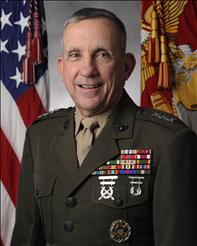
Leaked emails uncovered during pretrial proceedings revealed that the decision to subject PFC Bradley Manning to prolonged solitary confinement was not made by Quantico brig officials, prison psychologists, or even the base commander. Instead, the order came directly from Lieutenant General George Flynn, a three-star Marine Corps general stationed at the Pentagon.
Flynn served as Commanding General of the Marine Corps Combat Development Command during Manning’s detention. He was one of just 60 three-star generals across the entire Marine Corps, a position requiring presidential nomination, Defense Secretary endorsement, Joint Chiefs of Staff recommendation, and Senate confirmation.
Over 1,300 Hidden Emails Concealed by Prosecutors
The defense motion to dismiss for unlawful pretrial punishment was repeatedly delayed after prosecutors were caught withholding critical evidence. Defense attorney David Coombs had requested all documents related to Manning’s confinement at Quantico but initially received nothing.
Shortly before the filing deadline, the government turned over just 84 emails, describing them as material that was “obviously” relevant to the defense. Coombs, suspicious of the precise wording, pressed further. Two prosecutors maintained those 84 emails were everything that existed.
When Coombs filed a motion challenging this claim, the prosecution abruptly acknowledged the existence of 1,374 total emails concerning Manning’s confinement while insisting only the original 84 were discoverable. After continued pressure, approximately 600 emails were handed over on the first day of the hearing with no explanation for the dramatic reversal. Judge Denise Lind granted a motion to review the remaining 700 disputed messages.
Nine Months of Extreme Isolation and Degradation
Manning’s treatment during nine months at Quantico was documented in detail in the 109-page defense motion. He was confined to a windowless 6-by-8-foot cell without personal belongings, forced awake from 5:00 AM until 10:00 PM daily, and subjected to conditions including:
- No exercise permitted within his cell
- Prohibited from lying down during waking hours
- Required to sit upright on his rack without leaning against any wall
- Guards checked on him every five minutes around the clock, requiring a verbal response each time and logging every interaction
- Lights remained on throughout the night; guards woke him whenever they could not clearly see his face
- Issued only a coarse, tear-proof security blanket that caused skin rashes and failed to retain warmth
- Ate every meal alone in his cell using only a spoon
- Shackled in metal hand and leg restraints any time he left the cell, with the entire facility locked down during movement
- Forbidden from speaking to other detainees
- Limited to 20 minutes of outdoor time per day, spent walking figure-eights in a small concrete yard while shackled, with a guard’s hand on his back and two to three additional guards observing
Following a public protest held outside Quantico in Manning’s support, conditions deteriorated further. Guards escalated their harassment to the point of triggering a panic attack. Manning was placed on suicide watch and, from March 3 through March 7, 2011, was stripped of his clothing each night and forced to stand naked outside his cell during morning inspection.
Flynn’s Direct Control Over Every Detail of Confinement
The leaked emails showed the extent of Flynn’s involvement. He received detailed reports on even minor aspects of Manning’s daily life, including notifications whenever defense attorney Coombs visited his client. One email from the Quantico commander stated explicitly that all decisions to relax Manning’s confinement conditions required Flynn’s personal approval.
As the defense motion described, brig personnel had received clear instructions to maintain the most severe conditions possible. Regardless of what prison psychiatrists recommended week after week, month after month, nothing changed because everyone at the facility was following orders that originated above the Quantico chain of command.
The assigned psychiatrist expressed deep frustration over the situation, calling it “bizarre” and unprecedented. He questioned why officials had become so intrusive without documentation, noting that a pretrial detainee is supposed to be presumed innocent and that the heavy-handed approach carried significant legal risk.
Flynn’s Intelligence Background Raises Troubling Questions
Flynn’s career included a stint as Chief of Staff at the United States Special Operations Command from 2004 to 2006, a period when that unit was expanding its role in counterterrorism and deepening collaboration with the CIA. He later served as Deputy Commanding General of Multi-National Corps-Iraq in 2008 and Director for Joint Force Development on the Joint Staff.
His close ties to intelligence operations fueled widespread speculation that Manning’s harsh treatment was designed to psychologically break him into pleading guilty and cooperating as a witness against WikiLeaks editor Julian Assange. The revelation that a senior Pentagon general personally controlled the confinement conditions lent substantial weight to those suspicions.
The question of higher authorization loomed large. Given that the Bush Administration’s White House had approved every step of enhanced interrogation for high-profile detainees, it strained credibility that a three-star general would risk his career by ordering such treatment of an American soldier without political approval from Pentagon and White House leadership.
Military Law and the Case for Dismissal
Under military legal precedent, pretrial confinement may only serve two legitimate purposes: ensuring the accused appears at trial and maintaining facility security. In United States v. Fricke (2000), the Court of Appeals for the Armed Forces held that coercing a confession does not qualify as a legitimate government objective. In United States v. Crawford (2006), the same court ruled that confinement conditions become unconstitutional when they bear no reasonable relationship to either permissible purpose.
Manning had been an exemplary inmate who never exhibited flight-risk behavior, making the extreme restrictions imposed from the Pentagon legally indefensible. The abrupt and dramatic improvement in his conditions upon transfer to Fort Leavenworth further demonstrated that the Quantico treatment had been unnecessary.
Beyond military law, the United Nations Special Rapporteur on torture, Juan Mendez, formally determined after a 14-month investigation that the United States government had subjected Manning to cruel, inhuman, and degrading treatment in violation of the International Covenant on Civil and Political Rights.
Multiple military court precedents established dismissal of all charges as an appropriate remedy for unlawful pretrial punishment. Combined with the prosecution’s pattern of concealing material evidence and the resulting delays pushing Manning’s trial toward nearly 1,000 days after his initial confinement, the case for dismissal grew increasingly difficult to rebut.
Based on reporting by Kevin Zeese for the Bradley Manning Support Network, September 2012. Content rewritten and adapted by DecryptedMatrix editorial staff.