The Miracle Plant: Cannabis & Hemp Production History, Industry Suppression, Restrictive Legislation, Unknown Facts, Competing (Profitable) Synthetics, Links to USA’s Founding Fathers, Medical Applications, Homeopathic Uses, Ecological Benefits, Significant Activists, Pro-Hemp Lobbying Groups, and more!
Show Transcript
The Cannabis Plant: A Thousand Uses
Tonight we’re talking about the cannabis plant. Mother nature has provided us with a plant right under our noses that has a million uses for it. We could go for a couple hours on this topic if we wanted to. On top of the documentaries, we’ll talk about the influential activists that have been pushing for legalization, or at least a more fair approach to the cannabis situation. It really badly influences the prison industrial complex, because people are going to jail for something that was only recently made illegal in the last hundred years.
Most people do not have the correct perception of why cannabis is illegal. Most people think it’s for safety reasons, but that is not the case. If you look at the modern uses of the cannabis plant, it will blow your mind how green and how friendly to the earth this plant really is.
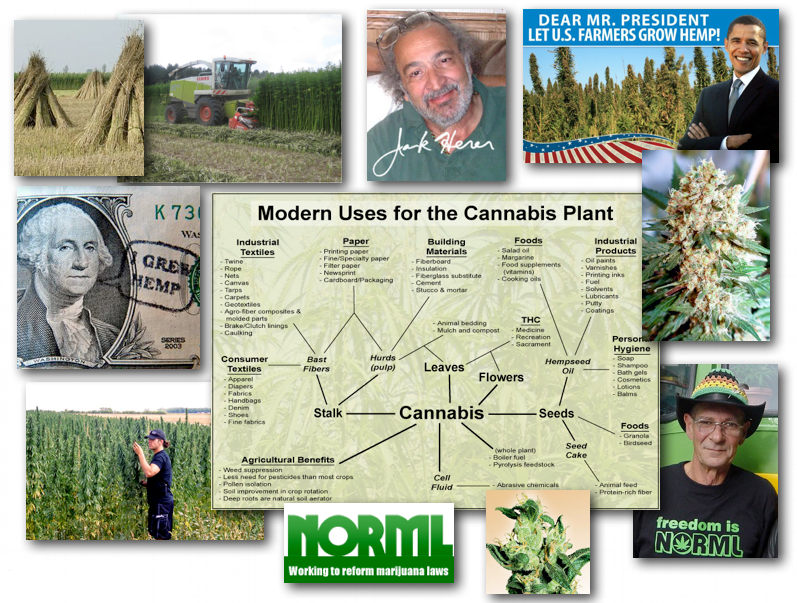
There’s the stalk, there’s the seeds, there’s the leaves, the flowers, and the rest of the plant. You can see an image from today’s post about the show. The modern uses of the cannabis plant include textiles, paper products, personal hygiene, obviously medicine, animal feed, and protein-rich fibers from the hemp seed. You can make granola bars, bird seed, and the plant can actually produce biofuel. With the cannabis plant you can produce a whole new range of chemicals. You can make cellulose from the plant’s cellular fluid. There are consumer textiles, agricultural benefits — the list goes on and on. The position being pushed on the general public is that this is the most dangerous plant on earth. The opposite is actually true, and that statement could not be more false. Cannabis is absolutely not dangerous. It’s not dangerous to humans, it’s not dangerous to minds, and it’s certainly not dangerous to the ecosystem. You know what it’s dangerous to? It’s dangerous to business and profits.
Alcohol vs. Cannabis: The Facts
Alcohol is addictive, definitely addictive. Cannabis is actually not addictive. The addictive part of cannabis is actually more mental than physical. Doctors are confirming that. Alcohol is a depressant — it will make you depressed ultimately. Cannabis is an antidepressant. Most people who partake in cannabis a couple times a month or so, sometimes more, will say that it actually does the opposite of depression. It allows them to de-stress, and there are some benefits to the mental state as well.
Alcohol causes cancer — throat cancer, liver cancer, stomach cancer — you name it. Cannabis actually cures cancer. There are cases around the world where the oils and extractions have been used to treat cancer with amazing results. Millions of deaths can be attributed to alcohol. That is an absolutely astronomical number for something that is sold on every corner everywhere. Yet cannabis has zero deaths in history. Not one death directly attributed to cannabis.
You can’t smoke too much of it. The temporary effect it has on the mind, doctors have reported, is fully reversible after an extended period of time. The brain rebuilds itself, and they have confirmed it does have cancer-curing elements. Alcohol — you can definitely overdose. Cannabis — it is impossible. You cannot overdose. Alcohol kills brain cells. Cannabis actually grows brain cells.
The History of Prohibition: Racism, Greed, and Yellow Journalism
Cannabis in human history was completely legal until recently. Within the last hundred years it was made illegal, but it’s been in use going back further than 7,000 B.C. When Ronald Reagan was a boy, it was still legal. That puts it into perspective.
Hemp was well known from the early 1600s, but recreational use did not really take hold until the early 1900s. The first marijuana law was enacted in Jamestown Colony, Virginia, in 1619 — a law ordering all farmers to grow hemp. There were several pro-hemp laws over the next two hundred years. You could be jailed for not growing hemp during times of shortage in Virginia between 1763 and 1767. During most of that time, hemp was legal tender — you could even pay your taxes with it. It was such a critical crop for a number of purposes, including war requirements like rope, that the government went out of its way to encourage growth. The United States Census of 1850 counted 8,327 hemp plantations, which were minimum two-thousand-acre farms growing hemp for cloth, canvas, and even the cord used for baling cotton.
In the early 1900s, the western states saw a significant influx of Mexican Americans fleeing the revolution in Mexico around 1910. General Pershing was clashing with Pancho Villa, and later in the decade bad feelings developed between small farmers and the large farms that used cheaper Mexican labor. When the Depression came, it increased tensions as jobs and resources became scarce. The difference seized upon during this time was the fact that many Mexicans smoked marijuana and had brought that plant with them. California really passed the first marijuana law banning preparations of “loco weed.” Some of the first state laws outlawing marijuana may have been influenced not just by Mexicans using the drug, but oddly enough because Mormons were using it. Mormons traveled to Mexico in 1910 and came back to Salt Lake City with marijuana.
Other states quickly followed suit with marijuana prohibition laws: Wyoming in 1915, Texas in 1919, Iowa in 1923, Oregon in 1923, Washington in 1923, and Nebraska in 1927. Those laws tended to be used to surgically target the Mexican-American population. In 1927, a Montana legislator was quoted saying, “When somebody is killed by a person who takes a few traces of the stuff, he starts to execute his political enemies.” In Texas, a senator stated on the floor: “All Mexicans are crazy, and this stuff — marijuana — is what makes them crazy.” Racist comments from a senator, and it’s bogus information.
Harry Anslinger, William Randolph Hearst, and the Marijuana Tax Act
In the eastern states, the core problem was attributed to a combination of Latin Americans and African Americans — jazz musicians. Marijuana and jazz traveled from New Orleans to Chicago to Harlem, where marijuana became an indispensable part of the music scene. This was known. Louis Armstrong was always talking about it. Racism was part of the charge against marijuana. Newspapers in 1934 ran editorials like: “Marijuana influences Negroes to look at white people in the eye, step on white man’s shadow, and look at a white woman twice.” This was actually being printed.
In 1930, a new division in the Treasury Department was established: the Federal Bureau of Narcotics. Harry J. Anslinger was named director. He recognized the Bureau of Narcotics as an amazing career opportunity. A new government agency — the opportunity to find both the problem and the solution. He realized opium and cocaine wouldn’t be enough to help build his empire, so he turned to marijuana and started working on making it illegal.
The story of marijuana would not be complete without William Randolph Hearst, owner of a huge newspaper chain of the time. First, he hated Mexicans. Second, he invested heavily in the timber industry to support his newspaper chain and didn’t want to see the development of hemp paper as competition. Hemp is an awesome solution for paper — its fibers are much, much stronger. It’s the world’s strongest natural fiber. Anchor lines for ships were made of hemp rope, it was so strong. The sails, the masts, and everything else — all hemp. The United States Constitution and Declaration of Independence were written on hemp. Third, Hearst had lost 800,000 acres of timberland to Pancho Villa, so he really hated Mexicans. Fourth, telling lurid lies about Mexicans and marijuana causing violence sold newspapers, and selling newspapers made William Randolph Hearst rich.
Anslinger and Hearst were supported by DuPont Chemical Company and various pharmaceutical companies. DuPont had patented nylon, and hemp would have been competition. Nylon is synthetic plastic that ends up in the ocean and your body. Pharmaceuticals wanted standardized dosages, and cannabis — folks could grow their own medicine instead of purchasing it from a large company.
This set the stage for the Marijuana Tax Act of 1937. Over two years, Anslinger brought his case to Congress, complete with a scrapbook of sensational Hearst editorial stories about axe murderers who were mostly marijuana smokers, plus racial slurs. It was remarkably short hearings. The one dissenting voice was Dr. William C. Woodward, legislative counsel of the American Medical Association. Woodward slammed Anslinger and the Bureau of Narcotics for distorting earlier AMA statements and making them appear to be an endorsement. He also criticized the legislation for using the term “marijuana” instead of publicizing it as hemp or cannabis. At that point, “marijuana” was a slang word used in Mexican culture for smoking the drug and had not been connected in most people’s minds to the existing hemp plant.
The AMA opposed the legislation, and Woodward further questioned the approach of the hearings, coming close to an accusation of misconduct. But the legislation passed anyway. On the floor, when a member asked if the American Medical Association supported this bill, a member of the committee jumped up and said, “Their doctor came down here and supported this bill one hundred percent” — a complete lie. On the basis of that lie, in 1937, marijuana became illegal at the federal level. Roosevelt signed the bill to curb traffic through heavy taxes on transactions.
Celebrity Advocates and the Movement
There are some people out there who are super active and well known in this circle. Willie Nelson, the country singer and entertainer, has been out there for a while. Montel Williams, the talk show host, is a huge proponent. He deals with a debilitating disease that causes significant problems with his body and a brain tumor. Cannabis allows him to better cope with his situation, and he would adamantly state that marijuana has been crucial to his recovery.
Joe Rogan, the UFC commentator and host — he used to host Fear Factor — is obviously a huge proponent. He’s absolutely aware of the history of prohibition. He talks about it and jokes about it in his comedy all the time.
Doug Benson made a documentary called “Super High Me.” He’s so down to earth with a great attitude. He decided to do a documentary in the style of “Super Size Me.” He’s a regular daily smoker, so he took thirty days completely off to get clear, then had a solid thirty days of testing. He was monitored with various tests — memory tests, physical tests, breathing tests, lung capacity tests — all of these different tests on him physically and mentally while he was not under the influence for thirty days. Then on the thirty-first day, he starts smoking as much as he possibly can for the next thirty days. He does the same round of testing all over again. The variations were mind-boggling. He did a little worse on some tests, but then on the ESP tests — premonition testing where you guess what’s on the key cards someone is holding — he actually does better under the influence. He had better memory in some tests when under the influence. There’s some interesting data there.
Jack Herer, the Emperor of Hemp, had some beautiful documentaries out there. He passed away, unfortunately — rest in peace. He was critical to the movement. And of course Tommy Chong, who has been in the news multiple times. He got in trouble for his water pipes business and actually went to jail for selling what were essentially tobacco pipes that could also be used for cannabis. Then there’s Snoop Dogg, obviously huge, and Adam Carolla, the comedian with his own show, who is also an avid proponent.
Cannabis and the Brain
There’s an important figure: Dr. Michael Persinger, a PhD professor at Laurentian University. She has an incredibly interesting lecture about psychotropic drugs. Cannabis is considered a psychotropic drug — what effect these substances have on the brain, how they work, and how you can actually mimic those effects. She created this thing called the God Helmet, which sends electrical signals tweaked just the right way to attempt to duplicate the signals your brain creates under the influence. In the lecture, she talks about psychotropic drugs, how they affect the brain, why marijuana makes you hungry, what areas of the brain it affects, and why it impacts certain parts of your memory.
Her research uncovered that psychotropic drugs are effective because they imitate the chemicals the brain already produces itself. All of us have the ability to make these compounds, or else the drugs would have no effect. Some people produce more of these substances than others, which is why some people are more susceptible to the effects than others. The implication is that anyone who can control consciousness using drugs can control the population, because they can control the sense of self.
It’s not just about persecution and making it illegal for capitalistic reasons. It’s also because of what cannabis does to your mind. It unlocks your mind, allows you to think about your life in different ways, allows you to think outside the box. The brain has unique receptors that are specifically designed to bind with the compounds in cannabis. The cannabinoids are absorbed into the blood, carried to the brain, and the receptors are already there waiting with the right key for that binding to occur. How is that possible? The brain was designed to receive these compounds. It’s a perfect match in the architecture of the cells in the brain. That in itself is fascinating.
Hemp: The Full Spectrum of Products
As a recap, here is what you should know. There are so many things that can be created from hemp: art supplies like paints and varnishes, canvas, carpets, geo-textiles, fiber composites, brake clutch linings — and those are all items that currently use plastics. Then there’s newspaper, printing paper, fine paper, filter paper, cardboard — all that from the strongest natural fiber on earth. Hemp is super strong. There’s also fiberboard, insulation, and a fiberglass substitute that is organic and natural called hempcrete or hemp cement.
For food, there’s salad oil, margarine, vitamins, and hemp seed meal. For industrial uses: oil paints, varnishes, printing inks, fuel, solvents, lubricants, and putty coatings. With the THC, obviously that’s the medicine, the recreational element, and for some people a sacrament that allows them to expand their mind and see themselves and their situation as a form of meditation.
For consumer textiles: a diverse range of fabrics, bags, shoes, and leather alternatives. All of this is stuff that people could be creating themselves by growing the plant — that’s the threat. There’s animal bedding, mulch, and compost. For personal hygiene: soap, shampoo, bath gels, cosmetics, lotions, and balms. You can actually find hemp balms and hemp lotions with trace amounts of the extract. There are hemp seasonings, food, bird seed, granola, and animal feed, all of which are protein-rich. There is so much protein in the hemp plant — why did you not know that? Because the system doesn’t want you to.
There are also agricultural benefits. Hemp suppresses weeds, meaning there’s less need for pesticides. There’s pollen isolation, soil improvement, and benefits for crop rotation because of the deep roots. It’s a natural soil aerator. There are a million reasons to embrace this plant. We’ve only gone over the tip of the iceberg tonight.