The Unraveling Official Story
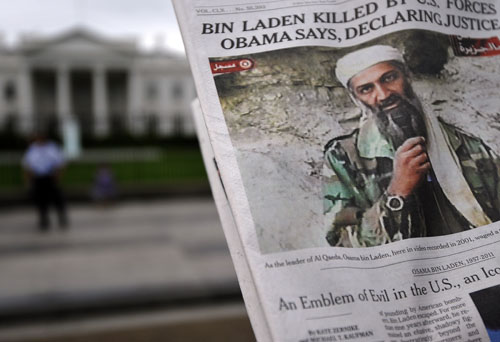
Within days of President Obama’s dramatic announcement that U.S. Navy SEALs had killed Osama bin Laden in Abbottabad, Pakistan, a mountain of contradictions and suspicious circumstances began piling up. The speed at which the narrative shifted, evidence was disposed of, and the event was leveraged for political purposes raised serious questions about what actually happened on May 1, 2011. Here are ten significant issues that cast doubt on the official account.
1. Years of Prior Intelligence Suggesting Bin Laden Had Already Died
Long before the 2011 raid, a broad range of intelligence professionals, political leaders, and geopolitical analysts had publicly stated their belief that Bin Laden was no longer alive. Former CIA officer Robert Baer, ex-Pakistani Prime Minister Benazir Bhutto, and former FBI counterterrorism chief Dale Watson all expressed this view at various points. Dr. Steve R. Pieczenik, a senior government official who served as Deputy Assistant Secretary of State under Presidents Nixon, Ford, and Carter, stated publicly that Bin Laden had succumbed to Marfan syndrome not long after reportedly receiving treatment from CIA-connected doctors at the American Hospital in Dubai during July 2001.
2. A Story That Could Not Keep Its Details Straight
The White House’s account of the raid underwent multiple dramatic revisions within its first 72 hours. Initial reports described a 40-minute firefight; this was later reduced to just one armed individual. Bin Laden was first said to have been armed, then unarmed. He allegedly used his wife as a human shield, then he did not. The compound was initially characterized as a million-dollar mansion before being revealed as a run-down property worth a fraction of that amount. Virtually every major detail of the original narrative was walked back or contradicted by subsequent briefings.
3. Rapid Disposal of the Body at Sea
Perhaps the most striking decision was the swift burial of the purported remains at sea. Administration officials stated this followed Islamic burial customs, but Islamic scholars worldwide objected, noting that sea burial is reserved for those who die at sea. Although DNA and facial recognition analysis were cited as confirming the identity, none of this evidence was ever made publicly available. The White House also declined to release any photographic documentation of the body, fueling speculation that independent verification was deliberately prevented.
4. The Staged Situation Room Photographs
Widely circulated images showed President Obama, Secretary of State Hillary Clinton, Vice President Joe Biden, and other senior officials apparently watching the operation unfold in real time. These photographs were presented as historic documentation of a pivotal national security moment. However, CIA Director Leon Panetta later acknowledged that the live video feed had been cut before the SEALs actually entered the compound. The dramatic scene captured in those images, including Clinton’s anxious hand-over-mouth gesture, could not have corresponded to the moment of the raid itself. The carefully composed photographs served as powerful public relations material rather than authentic documentation.
5. Confirmation Routed Through a Pentagon-Connected Organization
When journalists began questioning the official account, reports emerged claiming that al-Qaeda itself had validated every element of the President’s public address. The source of this supposed confirmation was SITE Intelligence Group, an organization that functioned as a U.S. government contractor receiving approximately $500,000 annually in federal funding. SITE was run by the daughter of an executed Israeli intelligence operative and had a documented history of releasing dubious al-Qaeda media materials at politically convenient moments for successive administrations. The supposed al-Qaeda acknowledgment traced back to an anonymous post on an Islamic forum to which SITE directed reporters.
6. Neighbors Who Never Saw Him
Journalists who visited Abbottabad and interviewed residents living near the compound found near-unanimous agreement: no one had ever seen Bin Laden there. The town served as a Pakistani military hub, with a training facility located in close proximity to the alleged hideout. Residents were required to present identification upon moving into the area. Local military personnel and counterterrorism police declined to confirm Bin Laden had lived in the house. Even President Obama acknowledged to CBS that his administration had assessed only a 55 percent probability that Bin Laden was actually present before authorizing the operation, with concerns raised that the target might have been someone else entirely.
7. Recycled and Questionable Video Evidence
Videos released by the White House purportedly showing Bin Laden recording messages in late 2010 bore a striking resemblance to footage that had surfaced through SITE nearly four years earlier. A 2010 Washington Post report had previously revealed that the CIA acknowledged producing fabricated Bin Laden videos. In the newly released material, Bin Laden appeared younger and healthier than in recordings from almost a decade prior, with a suspiciously dark-dyed beard. A separate clip showing a figure watching satellite television depicted a noticeably older man with a gray beard. Independent analysts noted discrepancies in ear shape between the videos and authenticated photographs from 2001. Medical observers pointed out that the man in the newer footage moved his left arm freely, despite documented evidence that Bin Laden had suffered permanent nerve damage limiting that arm’s mobility. Abbottabad residents who viewed the footage claimed the man watching television was not Bin Laden but a local neighbor.
8. The World’s Most Wanted Man Was Not Questioned
Despite years of rhetoric about the intelligence value of capturing senior terrorist figures, and despite the fact that Bin Laden was reportedly unarmed at the time of the encounter, no attempt was made to take him alive for interrogation. Some political commentators had previously argued that harsh interrogation methods used at detention facilities had contributed to locating the compound. Yet when faced with supposedly the most valuable intelligence target on the planet, the decision was made to kill rather than capture, eliminating any possibility of extracting information directly.
9. A Pattern of Fabricated Military Narratives
The U.S. government had already been exposed for manufacturing heroic military stories during the War on Terror. The widely publicized “rescue” of Private Jessica Lynch was later revealed to have been heavily embellished and staged. The circumstances surrounding NFL star Pat Tillman’s death, initially presented as a heroic combat engagement, turned out to be a friendly fire incident that was deliberately covered up. Both episodes were orchestrated as psychological operations designed to generate public support for ongoing military campaigns. Given this established pattern of scripted military narratives, the demand for independent verification of the Bin Laden account was not unreasonable.
10. Immediate Exploitation for Political and Security Expansion
Despite the President’s assurance that the world was now safer, his administration and allied media outlets immediately pivoted to warning of imminent retaliatory attacks on American soil. Reports emerged of a supposed al-Qaeda plan to target U.S. rail systems, described as “aspirational rather than operational,” referencing train speeds that no American rail system could actually achieve. Security commentators used the moment to advocate for expanding screening procedures into shopping centers and other public venues. Legislative proposals emerged to extend no-fly list restrictions to trains and subways. The administration organized a ground zero visit as a public relations event. Other political figures attempted to leverage the moment for entirely unrelated policy initiatives. The rapidity with which the event was converted into justification for expanded surveillance and security measures, combined with its transparent utility as a political tool ahead of the 2012 election cycle, suggested to many observers that the timing and presentation had been carefully orchestrated.
This analysis draws on contemporaneous media reports, the public record of official statements, and documented inconsistencies in the White House’s account of the May 2011 Abbottabad raid.