
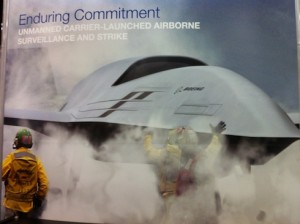
Boeing Advances Unmanned Carrier Drone for the Navy
Boeing announced in 2012 that it was nearing completion of its design submission for the Navy’s Unmanned Carrier-launched Airborne Surveillance and Strike program, known as UCLASS. Chris Chadwick, then president of Boeing’s military aircraft division, stated that the company had developed what it considered a highly capable design, while emphasizing that the proposal was not a derivative of the earlier X-45 platform.
From the X-45 to the Phantom Ray
The X-45, which later evolved into the Phantom Ray stealth UAV, was Boeing’s entry in the Navy’s earlier Unmanned Combat Air Vehicle Demonstrator program. That contract ultimately went to Northrop Grumman, whose X-47B was selected to test the feasibility of conducting aircraft carrier operations with large stealth drones. Boeing’s UCLASS proposal represented a fresh design intended to move beyond the lessons of the X-45 era.
The UCLASS Program and Its Strategic Goals
UCLASS aimed to deliver a fighter-sized, low-observable unmanned aircraft capable of long-range intelligence gathering and strike missions, with a target operational date of 2018. The Navy positioned the program as the natural successor to its carrier drone demonstration efforts, seeking to integrate autonomous aircraft into the carrier air wing for the first time.
Boeing had previously shared concept imagery showing a blended-wing body design, though company officials at the time described it as one of several configurations under evaluation rather than a final submission.
A Competitive Field of Defense Contractors
The UCLASS competition attracted several major defense contractors. Northrop Grumman was expected to offer an evolved version of its X-47B demonstrator. General Atomics proposed the Sea Avenger, a carrier-capable variant of its Predator C Avenger drone, reinforced to withstand catapult launches, arrested landings, and the corrosive marine environment. Lockheed Martin was also reported to be preparing a bid with an undisclosed design.
Boeing maintained that despite Northrop’s head start with the X-47B demonstration program, all competitors would have equal access to the operational data gathered during those carrier trials, leveling the playing field for the final competition.