British Intelligence Figures Embedded in LSE Study Centre Tied to Gaddafi Regime
A study centre at the London School of Economics maintained striking connections to both the highest levels of British intelligence and the Gaddafi regime in Libya. The advisory board of LSE Ideas, a foreign policy think tank established within the university, included at least four individuals who had held senior positions in the UK intelligence community.
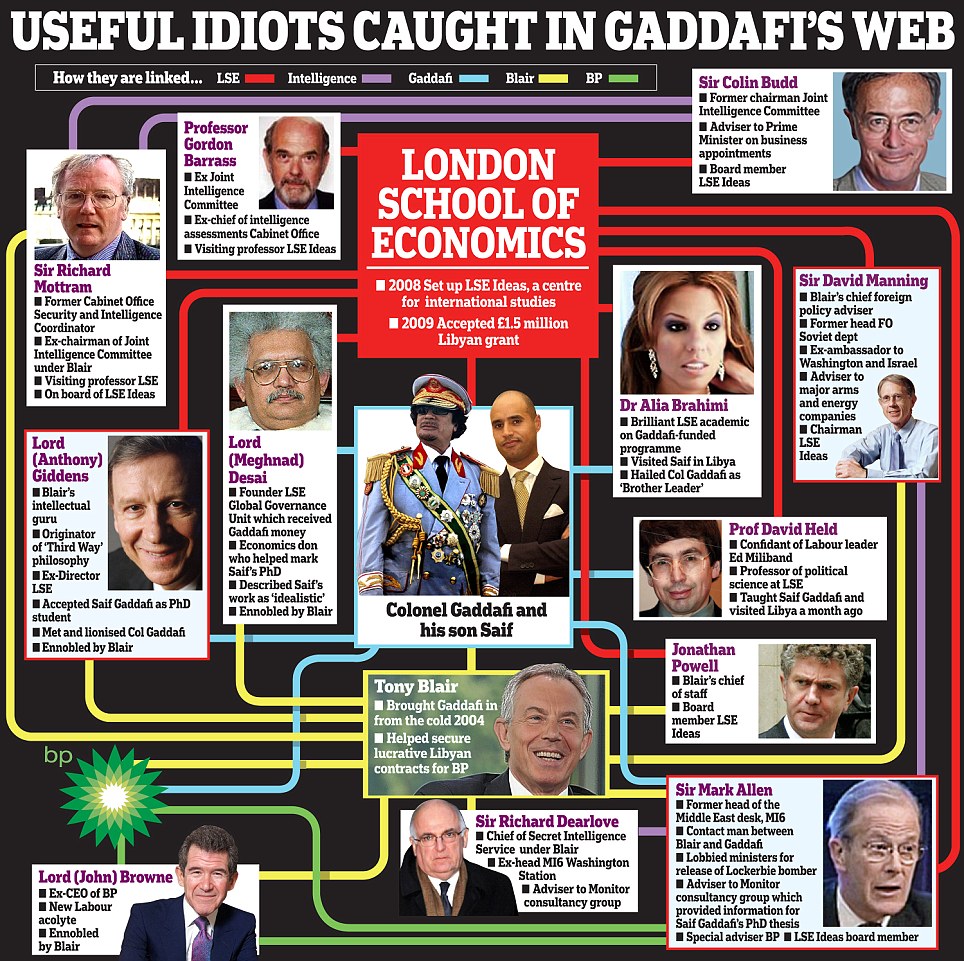
Among them was Sir Mark Allen, former head of MI6’s Middle East desk, who played a central role in brokering the diplomatic relationship between Tony Blair and Colonel Muammar Gaddafi. Allen later lobbied UK ministers to secure the release of the convicted Lockerbie bomber. The board also included two former chairmen of the Joint Intelligence Committee — the secret Cabinet Office body that coordinates national security assessments for government ministers.
Sir Colin Budd served as JIC chairman from 1996 to 1997, while Sir Richard Mottram held the position of Cabinet Office permanent secretary for intelligence, security, and resilience between 2005 and 2007, simultaneously chairing the JIC. Gordon Barrass, a visiting professor at the centre and Soviet expert, had served as a JIC member during the final years of the Cold War.
Controversy Over Libyan Funding and a Questionable PhD
LSE Ideas became the focal point of a broader scandal involving the university’s relationship with the Gaddafi family. The LSE had accepted a 1.5 million pound donation from Saif al-Islam Gaddafi, the colonel’s son, approximately one year after awarding him a PhD that drew widespread academic criticism.
Sir David Manning, the centre’s chairman and a former British ambassador to Washington who served as Tony Blair’s closest adviser during the lead-up to the Iraq war, attempted to minimize his involvement. He described his role as a “very small association” with the university and suggested the donation was motivated by efforts to integrate Libya into the international community.
Extensive Political and Intelligence Connections
The advisory board of LSE Ideas read like a directory of Blair-era power brokers. In addition to the intelligence figures, members included Jonathan Powell, Blair’s former chief of staff, and Baroness Symons, a former Foreign Office minister who was forced to resign from Libya’s National Economic Development Board as the controversy intensified.
The centre reported an income of just over 2.5 million pounds between 2008 and 2010, with 94 percent of that funding derived from external sources. Despite these figures, the LSE maintained that the centre itself had received no money directly from Libya.
Student Demands and Broader Questions
As the connections between LSE Ideas, the Blair government, the intelligence services, and Libyan interests became public, students organized demands for a full-scale inquiry into the university’s Libyan funding arrangements. The revelations raised fundamental questions about the intersection of academic institutions, intelligence agencies, and authoritarian regimes — and the extent to which prestigious universities served as vehicles for political and diplomatic objectives during the Blair era.