
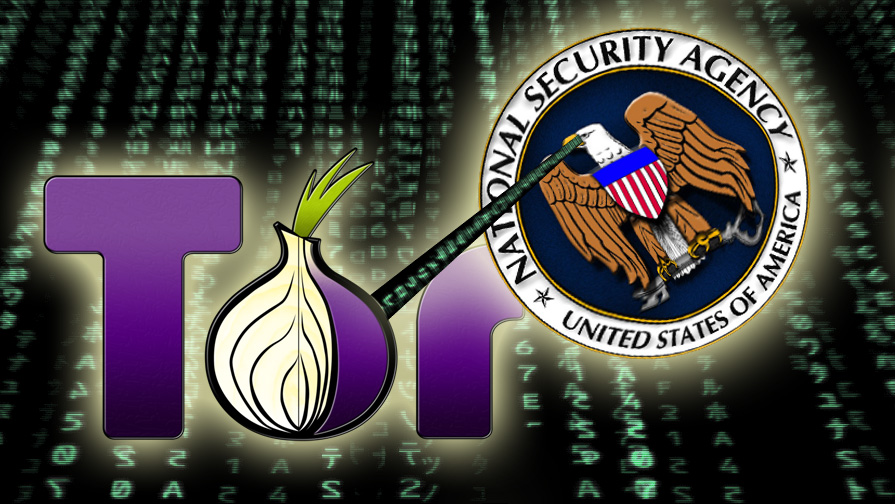
The Tor anonymity network has long been promoted as one of the most effective tools for protecting online privacy. After the Snowden revelations exposed the breadth of NSA surveillance, calls for widespread adoption of Tor and similar technologies intensified. But a closer examination of the intelligence community’s own documents and the technical realities of network security suggests that Tor may provide far less protection than its advocates claim, particularly for individuals facing state-level adversaries.
Why the NSA Wants People to Keep Using Tor
Tor supporters frequently cite leaked NSA documents acknowledging that “Tor Stinks,” meaning the network makes surveillance more labor-intensive. What receives less attention is another line from those same internal documents: the NSA expressed concern that scaring users away from Tor might be counterproductive, because a “critical mass of targets” were already using the network.
This is a significant admission. Tor usage functions as a signal to intelligence agencies, effectively flagging users for closer scrutiny. While certain aspects of Tor complicate surveillance operations, the network simultaneously concentrates persons of interest in one observable system. Security services including the FBI have developed sophisticated tools to strip away the anonymity Tor is designed to provide.
Leaked documents revealed that the NSA’s Remote Operations Center claimed the capability to target anyone visiting certain websites through Tor. The Washington Post reported that this included visitors to specific extremist-linked sites, demonstrating that Tor did not render users invisible to determined intelligence operations.
Traffic Confirmation and Cookie Tracking
Tor is known to be vulnerable to traffic confirmation attacks, also called end-to-end correlation. If an entity can monitor network traffic entering and exiting a Tor session simultaneously, statistical analysis can identify specific communication paths. Given that roughly 90 percent of global internet traffic flows through infrastructure in the United States, American intelligence agencies are well positioned to execute this type of monitoring.
Another documented technique involves marking network traffic with digital watermarks. The NSA has purchased advertising space from companies like Google, using the resulting browser cookies to create persistent identifiers on target machines. While IP addresses may change, these cookie identifiers remain stable, allowing continued tracking regardless of Tor usage.
Perhaps most concerning, researchers preparing to present at Black Hat in 2014 announced that a persistent adversary with a handful of powerful servers and a modest budget of under three thousand dollars could de-anonymize hundreds of thousands of Tor clients within a couple of months.
Why Encryption Alone Is Not Enough
The concept of Client Network Exploitation illustrates why strong encryption does not guarantee security. In 2009, security researcher Joanna Rutkowska demonstrated the “Evil Maid” attack against TrueCrypt disk encryption, capturing passphrases by compromising the boot environment. The principle generalizes: if an adversary can compromise the endpoint device, the strength of the network encryption becomes irrelevant.
The NSA developed this approach at industrial scale through programs codenamed QUANTUM and FOXACID. QUANTUM servers could impersonate legitimate websites and redirect user requests to FOXACID servers, which then infected target machines with malware. A subsequent program called TURBINE aimed to automate this process for deployment against millions of machines simultaneously.
The logic is straightforward: why invest in breaking Tor encryption when you can compromise the devices at either end of the connection and access the data directly?
This reality prompted some governments to consider dramatic countermeasures. The Kremlin reportedly returned to typewriters for sensitive communications, and German officials considered similar measures for parliamentary committees investigating NSA activities.
The Limits of Software Trust
The fundamental challenge extends beyond any single tool. Software systems contain thousands of potential insertion points where vulnerabilities can be introduced, whether accidentally or deliberately. Hardware presents even greater challenges for verification. Even air-gapped systems, physically isolated from networks, have been shown to be vulnerable to sophisticated radio-frequency and cellular-based attacks.
As one security commentator observed, simple technologies like typewriters are trustworthy precisely because they are simple enough that their behavior can be fully understood. Modern computing devices, by contrast, cannot provide guarantees that they will not do something their users did not intend.
Security as Deception
John Young, the operator of the leaks site Cryptome, expressed a view that many in the security community considered extreme but that the Snowden revelations increasingly validated: that security tools can function as traps, creating a false sense of safety that actually aids surveillance by concentrating targets in monitored systems.
This perspective was dismissed by some Tor advocates, but the documented capabilities of intelligence agencies lent it considerable weight. For individuals engaged in activities that could result in imprisonment or worse, treating any single technology as a reliable shield against state-level surveillance represented a potentially fatal miscalculation.
Assessing the Risk
None of this means Tor is useless. For casual privacy protection against commercial tracking and low-level surveillance, it provides meaningful benefits. But for anyone facing a well-resourced intelligence adversary, Tor alone is insufficient. The Snowden documents demonstrated that the most cynical assessments of state surveillance capabilities were not paranoid enough.
The responsible conclusion is not to abandon privacy tools but to understand their limitations honestly, to use defense in depth rather than relying on any single technology, and to recognize that the organizations promoting these tools sometimes have institutional incentives to overstate their effectiveness.