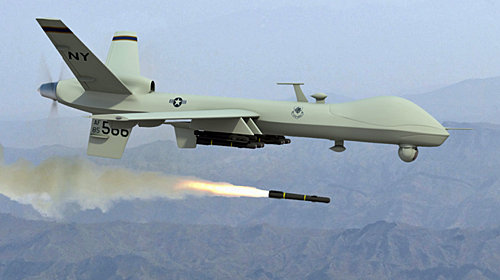
The CIA’s drone strike program operated as one of the worst-kept secrets in American national security — acknowledged by senior officials in public statements yet shielded from legal scrutiny through claims that the program’s very existence could neither be confirmed nor denied. This paradox became a focal point of legal battles over government transparency and accountability for targeted killings.
The FOIA Legal Challenge
The American Civil Liberties Union filed two Freedom of Information Act lawsuits seeking documents related to the CIA’s targeted killing program, including the legal framework used to justify drone strikes against US citizens. The government’s response was to invoke the “Glomar” defense — a legal doctrine allowing agencies to refuse to confirm or deny the existence of records. In this case, the CIA argued it could not acknowledge the existence of any drone strike policy or program.
The ACLU’s legal brief documented thirteen pages of examples showing that senior government officials had already publicly acknowledged the program. The targeted killing of Anwar al-Awlaki, a US citizen killed by a drone strike in Yemen in September 2011, had been widely reported and discussed by administration officials. The disconnect between public acknowledgment and legal stonewalling struck legal analysts as untenable.
The Secrecy Contradiction
Government secrecy serves legitimate purposes — protecting military operations, nuclear security codes, intelligence sources, and undercover agents. But secrecy can also serve to avoid embarrassment, evade oversight, and escape legal accountability. The drone program fell into a gray area where the operational details were widely known but the legal reasoning remained hidden.
Senior officials from the president down had discussed drone operations publicly. News organizations had published extensive reporting on individual strikes, casualty figures, and targeting criteria. Yet when the ACLU sought the legal memoranda justifying these killings — particularly the targeting of American citizens without trial — the government maintained that even acknowledging such documents existed would compromise national security.
Continuity of Secrecy Across Administrations
The Obama administration had campaigned on a promise of greater transparency, explicitly contrasting itself with Bush-era secrecy around torture memos, extraordinary rendition, and warrantless surveillance. Yet on the question of targeted killings, observers noted that the Obama administration’s secrecy posture was in some respects more aggressive than its predecessor’s.
The Bush administration’s secrecy abuses had eventually been exposed through a combination of leaks, FOIA litigation, and congressional investigation. The drone program’s legal architecture, by contrast, remained almost entirely hidden from public view, shielded by classification and the government’s refusal to engage with transparency requests.
The Accountability Gap
The fundamental concern was not merely about government secrecy in the abstract. The CIA’s drone program represented a global campaign of extrajudicial killing conducted by an intelligence agency with minimal congressional oversight and no judicial review. The legal memoranda the ACLU sought would have revealed the government’s own interpretation of when it could lawfully kill people — including its own citizens — without charge or trial.
Without access to these documents, the public had no way to evaluate whether the program operated within legal boundaries or whether the government had constructed a secret legal framework that authorized killings that would otherwise violate domestic and international law.
A Broad Coalition for Transparency
The push for disclosure drew support from across the political spectrum. Civil liberties organizations, media outlets, legal scholars, and members of Congress called for the government to release the legal justifications for targeted killing. The argument was straightforward: a democracy cannot meaningfully debate the legality and wisdom of a killing program if the legal reasoning behind it remains classified. The government’s position — that a program discussed openly by the president could not be officially acknowledged in court — tested the limits of how far secrecy doctrines could be stretched before they became absurd.