What Is Coltan and Why Does It Matter?
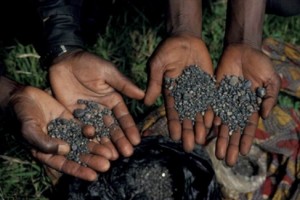
Columbite-tantalite — commonly known as coltan — is a dark, tar-like mineral found in enormous concentrations within the Democratic Republic of the Congo (DRC). The Congo holds approximately 80 percent of global coltan reserves. Once refined, this mineral transforms into a heat-resistant metallic powder capable of storing significant electrical charges. These properties make refined coltan an essential component in capacitors — the energy-storage elements found inside mobile phones, laptops, pagers, and countless other compact electronic devices.
Who Profits from Congo’s Coltan Extraction?
Rwanda, Uganda, Burundi, and their allied proxy militias have served as the principal actors extracting coltan from Congolese territory. Over a single 18-month stretch, Rwanda generated an estimated $250 million from Congolese coltan operations. Despite possessing little to no domestic coltan deposits, both Rwanda and Uganda saw their export volumes spike dramatically during the Congo conflict. Rwanda’s coltan shipments jumped from fewer than 50 tons in 1995 to roughly 250 tons by 1998. Uganda received zero cassiterite shipments from the Congo in 1998, yet by 2000 that figure had reached 151 drums.
A 2001 United Nations investigation into illegal natural resource exploitation in the Congo concluded that the consequences were twofold. First, the Rwandan Patriotic Army gained access to massive financial resources while senior Ugandan military commanders and connected civilians enriched themselves personally. Second, illicit networks run by top military officers and well-connected businessmen emerged and entrenched themselves across the region.
Multinational Corporate Involvement in the Supply Chain
Beyond the neighboring states directly involved in extraction, multinational corporations played a deep and significant role in the coltan trade. Minerals extracted by rebel groups and foreign armed forces flowed directly to international buyers. While the United Nations stopped short of holding these companies directly responsible for the violence, its reports characterized multinational involvement as functioning as the driving force behind the ongoing conflict in the DRC.
Among the prominent U.S.-based companies implicated in this supply chain were Cabot Corporation (Boston, MA), OM Group (Cleveland, OH), AVX (Myrtle Beach, SC), Eagle Wings Resources International (Ohio), Trinitech International (Ohio), Kemet Electronics Corporation (Greenville, SC), and Vishay Sprague (Malvern, PA).
International corporations also participated at various points in the exploitation chain, including Germany’s HC Starck and EPCOS, China’s Ningxia, and Belgium’s George Forrest International.
After processing and conversion into capacitors, the refined coltan was then sold to consumer electronics giants including Nokia, Motorola, Compaq, Alcatel, Dell, Hewlett-Packard, IBM, Lucent, Ericsson, and Sony for incorporation into products ranging from mobile phones to computer processors and gaming consoles.
Everyday Products Built on Coltan
The mineral’s unique properties make it indispensable across a staggering range of applications: laptop computers, cellular phones, jet engines, rockets, precision cutting tools, camera lenses, X-ray film, inkjet printers, hearing aids, cardiac pacemakers, automotive airbag systems, ignition and motor control modules, GPS units, ABS braking systems, gaming consoles (PlayStation, Xbox, Nintendo), video and digital still cameras, sputtering targets for semiconductor manufacturing, chemical processing equipment, cathodic protection systems for steel infrastructure (bridges, water tanks), medical prosthetics (hip replacements, cranial plates, bone repair mesh), surgical suture clips, corrosion-resistant fasteners, high-temperature furnace components, and turbine alloys for both aviation and power generation.
How Mobile Phone Demand Fuels Armed Conflict
The electrical flow-control components inside every mobile phone depend on refined coltan. As global mobile phone adoption accelerated, demand for this mineral surged in parallel. The DRC’s eastern provinces, home to the richest coltan deposits on Earth, became ground zero for resource-driven warfare. A substantial portion of the financing that sustained civil wars across Africa — particularly within the DRC — traced directly back to coltan revenues. Workers in these mines, many of them children, endured horrific conditions.
United Nations reporting documented significant increases in child labor within African coltan mining operations. In certain Congolese regions, roughly 30 percent of school-age children were pulled from classrooms and forced into mine labor.
The Deadly Cost of Asking Questions
Antony Grange, a DanChurchAid country coordinator with direct experience in the DRC, described how local militia groups maintained control over mining operations by exploiting cheap labor. Grange noted that challenging these practices at the local level was extraordinarily dangerous. DanChurchAid’s former partner organization, Heritiers de la Justice, suffered multiple staff assassinations in the years leading up to this reporting. According to Grange, only sustained international pressure had any realistic chance of disrupting these entrenched systems of exploitation.
International Advocacy and the Push for Accountability
When Denmark secured a seat on the UN Security Council, the Danish government elevated African peace and stability initiatives to the top of its agenda, pledging particular focus on how natural resource extraction perpetuated armed conflicts. Revenues from oil, diamonds, and timber exports continued fueling violence across the continent.
Despite these commitments, Denmark was unable to persuade the Security Council to strengthen its existing enforcement mechanisms. Danish development NGOs subsequently called on the Minister for Foreign Affairs to escalate the issue diplomatically and push for more effective UN tools to hold conflict-resource profiteers accountable. These organizations also advocated for the creation of a permanent UN position dedicated to preventing resource-financed armed conflicts involving oil, timber, and strategic minerals.
Originally published by DecryptedMatrix. Content has been revised and updated for clarity.