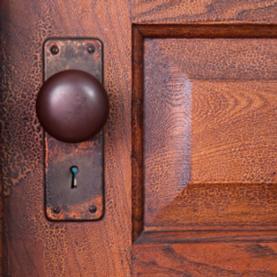
Most people have experienced the peculiar sensation of walking into a room and immediately forgetting why they went there. It happens at home, at work, and everywhere in between. The usual explanations involve distraction, insufficient attention, or simple irrelevance. But research from the University of Notre Dame offered a fundamentally different explanation: the physical act of passing through a doorway may itself be responsible for the memory lapse.
The Doorway Effect Explained
Psychologist Gabriel Radvansky and colleagues Sabine Krawietz and Andrea Tamplin designed a series of experiments to test whether doorways function as what they termed “event boundaries” in the mind. Their hypothesis was that the brain uses physical transitions, like walking through a door, as signals to compartmentalize and file away information, making recently acquired details harder to retrieve once a person crosses that threshold.
In their virtual reality experiments, participants navigated a computer-generated environment, picking up colored geometric objects from tables and carrying them to other locations. The objects became invisible once picked up, simulating a backpack. Periodically, participants received surprise quizzes asking them to identify the object they were currently carrying.
What the Experiments Revealed
The results were consistent and striking. When participants had to walk through a doorway to reach the next table, their responses to the memory quizzes were both slower and less accurate compared to when they walked the same distance within a single room. The simple act of crossing a doorway produced a measurable decline in recall.
The research team found the effect to be robust across different conditions. Screen size did not matter: the results held whether participants viewed the virtual environment on a large 66-inch display or a standard 17-inch monitor. The effect also replicated in real-world settings. When participants carried physical objects in shoeboxes through actual rooms and doorways in a laboratory, the same memory impairment appeared after crossing thresholds.
Ruling Out Context-Matching Explanations
One possible alternative explanation was the well-established encoding specificity principle, which holds that memory retrieval is most effective when the testing environment matches the environment in which the information was originally learned. If this were the sole driver, then returning to the original room should restore memory performance.
To test this, the researchers designed a third experiment in which participants walked through one door and then through a second door that either led to a new room or brought them back to the room where they first picked up the object. Returning to the original room did not restore memory accuracy. This finding suggested that the doorway effect was not simply about context mismatch but about the doorway itself triggering the brain to partition information.
Why the Brain Compartmentalizes at Doorways
The researchers proposed that doorways serve as event boundaries, natural markers that the brain uses to segment continuous experience into discrete episodes. When a person passes through a doorway, the brain essentially closes one mental chapter and opens another. The information from the previous chapter becomes harder to access, even though it was learned only moments earlier.
This cognitive architecture likely serves useful purposes in everyday life. By organizing experience into manageable segments, the brain can prioritize current, relevant information over details from a completed episode. The downside is that occasionally important information gets filed away prematurely, leaving a person standing in a kitchen with no idea why they walked in.
Practical Implications
The research offered a scientific basis for a universally familiar frustration. It also carried implications for fields like architecture, workplace design, and user interface development, where understanding how physical and virtual transitions affect cognition could inform better design decisions. At minimum, it suggested that the next time a doorway steals a thought, the experience reflects a fundamental feature of how human memory organizes the continuous stream of daily life.