Over the course of the past decade, a troubling pattern emerged within American law enforcement. The Federal Bureau of Investigation repeatedly announced the disruption of domestic terrorism plots — plots that, upon closer examination, the Bureau itself had conceived, funded, and guided to the brink of execution before swooping in to make arrests.
How the FBI Manufactured Its Own Terror Plots
The operational template was remarkably consistent. FBI agents and informants would identify individuals — typically young, impressionable Muslims harboring grievances against U.S. foreign policy — and then spend weeks or months cultivating them. The Bureau provided the motivation, the materials, the technical expertise, and often the financial support needed to advance toward an attack. At the final moment, agents intervened, made arrests, and issued press releases celebrating another foiled threat.
None of these operations involved the FBI discovering an existing conspiracy and infiltrating it. In each instance, the target had taken no independent steps toward violence before the Bureau selected them.
A Timeline of FBI Sting Operations
The case of 19-year-old Somali-American Mohamed Osman Mohamud illustrated the pattern clearly. After months of encouragement and material support from undercover operatives, Mohamud attempted to detonate what he believed was a bomb at a crowded Christmas celebration in Portland, Oregon. The device was inert — supplied by the FBI itself.
In late 2009, the Bureau persuaded 19-year-old Jordanian citizen Hosam Maher Husein Smadi to place a fake explosive device at a Dallas skyscraper. Separately, agents convinced Farooque Ahmed, a 34-year-old naturalized American citizen originally from Pakistan, to target the Washington, D.C. Metro system.
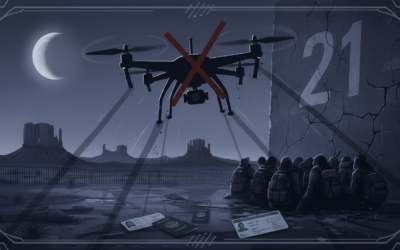
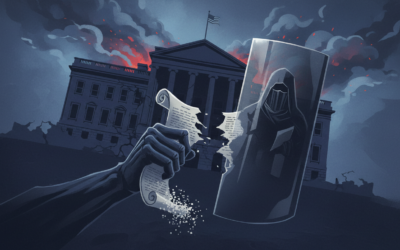
The most recent case at that time involved 26-year-old American citizen Rezwan Ferdaus. The FBI spent months supplying him with plans and components to attack the Pentagon and potentially the Capitol Building using remote-controlled model aircraft packed with explosives.
Questions About Targeting Military Versus Civilian Sites
The Ferdaus case raised uncomfortable questions about how the United States defined terrorism. The primary targets — the Pentagon and military personnel deployed overseas — were purely military objectives. The U.S. government had itself attacked identical categories of targets across multiple countries, including deliberate strikes against military headquarters and attempts to eliminate heads of state during conflicts in Iraq and Libya.
Regarding the Capitol Building, the U.S. and its allies had established expansive precedents. The “shock and awe” campaign against Baghdad leveled government buildings. NATO strikes in Libya repeatedly hit non-military government structures. Israeli airstrikes in Gaza targeted police stations under the rationale that political institutions providing resources to combatants constituted valid objectives.
The Scale Problem: Model Planes Versus Military Ordnance
Media coverage routinely described these plots in apocalyptic terms. Major outlets reported that Ferdaus planned to “blow up” the Pentagon and the Capitol. The actual charging affidavit told a different story: Ferdaus intended to deploy model aircraft — roughly one-tenth the size of an actual fighter jet — each carrying approximately five pounds of explosives.
For context, the U.S. military routinely deploys 500-pound and 1,000-pound bombs from full-size combat aircraft. Even under ideal conditions with a competent operator, Ferdaus’s scheme could not have achieved anything remotely close to what the headlines suggested.
Blowback and the Roots of Radicalization
Nearly every domestic terrorism case from this era shared a common thread: the suspect’s stated motivation was fury over sustained U.S. military operations in Muslim-majority countries. According to the FBI’s own affidavit, Ferdaus expressed his reasoning in stark terms — referencing the killing of innocent men, women, and children, and framing his planned attack as retaliation.
A decade of continuous warfare, drone campaigns, military occupations, and civilian casualties across multiple nations had produced a predictable, if small, cohort of individuals willing to contemplate striking back. The scarcity of genuinely self-directed plots arguably explained why the FBI felt compelled to manufacture them — providing the justification for expansive security measures that might otherwise lack supporting evidence.
Resource Allocation and Civil Liberties Concerns
Critics raised pointed questions about whether the FBI’s resources would be better spent identifying and disrupting genuine conspiracies rather than constructing artificial ones. Harboring resentment toward a government is not a criminal act; it becomes one only when concrete steps are taken toward violence. Many of the individuals targeted in these stings would likely never have progressed beyond angry rhetoric without the FBI’s sophisticated prodding.
Equally important was the question of selective enforcement. Observers noted that the Bureau did not appear to devote comparable resources to infiltrating anti-abortion extremist networks, radical Christian movements, or right-wing anti-government groups — despite documented histories of violence from those communities.
Each time the FBI announced another disrupted plot, media coverage followed a predictable arc: sensational headlines, heightened public anxiety, and calls for additional security powers. The D.C. Metro sting, for example, prompted Metro Police to implement random bag searches of passengers — a lasting policy change triggered by a threat that never independently existed.
Originally published March 1, 2012. Analysis draws on reporting by Glenn Greenwald for Salon and court documents including the Ferdaus complaint affidavit.