The Rise of Implantable RFID Technology
Radio Frequency Identification (RFID) technology has evolved from simple inventory tracking into a sophisticated system capable of monitoring individuals in real time. Originally designed to replace barcodes on consumer goods, RFID chips have steadily expanded into healthcare, education, law enforcement, and personal identification, raising serious questions about privacy, autonomy, and the architecture of modern surveillance.
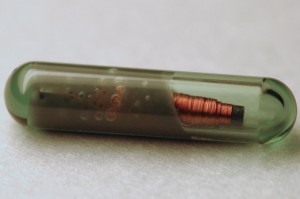
At its core, an RFID chip is a tiny device that transmits a unique identification code via radio waves. These chips can be embedded in products, cards, badges, and even implanted beneath human skin. Unlike barcodes, RFID does not require line-of-sight scanning. A reader can detect an RFID tag through clothing, wallets, and walls, enabling remote tracking without the knowledge of the person carrying the chip.
Human Microchip Implants: From Concept to Reality
The notion of implanting microchips in human beings moved from speculative fiction to documented practice in the early 2000s. VeriChip Corporation, later rebranded as PositiveID, developed the first FDA-cleared implantable RFID chip for humans in 2004. The device, roughly the size of a grain of rice, was injected under the skin and contained a 16-digit identification number linked to a medical database.
In July 2004, Mexico’s attorney general and approximately 160 staff members received VeriChip implants, ostensibly to control access to secure document rooms. The event marked one of the first large-scale deployments of human microchipping by a government entity.
Former Wisconsin Governor and U.S. Health and Human Services Secretary Tommy Thompson publicly advocated for VeriChip implants, suggesting every American should be chipped for medical record access. Thompson held over 150,000 shares of VeriChip stock at the time of his endorsement, a conflict of interest that drew criticism from privacy advocates.
RFID in Retail and Consumer Goods
Major retailers recognized RFID’s potential for inventory management early on. Walmart launched a large-scale initiative to place removable RFID smart tags on individual clothing items, enabling employees to scan entire shelves instantly with handheld readers. The system allowed real-time tracking of stock levels down to individual sizes and styles.
Proponents argued the technology would reduce waste, improve supply chain efficiency, and lower consumer prices. Critics countered that RFID-tagged clothing could be tracked after purchase, especially if tags were not removed, effectively turning everyday garments into surveillance beacons.
The same technology appeared in other consumer contexts. Biometric vending machines developed by Next Generation Vending and Food Service linked credit card payments to thumbprint scans, allowing users to purchase items with a fingerprint. While marketed as a convenience, the system established a precedent for tying biometric data to routine commercial transactions.
Surveillance in Schools and Public Spaces
School districts in Texas, California, and Connecticut introduced RFID-embedded identification badges for students. The Spring Independent School District and Santa Fe Independent School District in Texas were among the earliest adopters, using the technology to track student locations on campus in real time.
Administrators praised the system for improving attendance tracking and security. Parents and civil liberties organizations raised concerns about normalizing constant surveillance of minors and the potential for data breaches that could expose children’s location histories to unauthorized parties.
In New York City, the NYPD began collecting iris scans of crime suspects alongside traditional fingerprints and photographs. The department installed handheld iris-scanning devices across all five boroughs, adding another layer of biometric data to law enforcement databases.
Smartphones as Tracking Devices
The proliferation of smartphones introduced a form of voluntary, always-on tracking that surpassed dedicated RFID systems in scope and detail. A Wall Street Journal investigation examining 101 popular iPhone and Android applications found that 56 transmitted the phone’s unique device identifier to third-party companies without user awareness or consent. Forty-seven apps transmitted location data, and five shared personal details including age and gender.
The TextPlus 4 app sent device IDs to eight advertising companies simultaneously, along with zip codes, age, and gender data. Both iPhone and Android versions of the Pandora music app transmitted similar information to multiple ad networks. These findings revealed that everyday smartphone use generated a continuous stream of personal data flowing to entities unknown to the user.
Apple filed patents for systems capable of photographing users without visible indication, recording ambient audio regardless of call status, detecting individual heartbeat signatures, monitoring internet activity, and photographing surroundings to determine device location. The patent described these functions as security measures, but the capabilities they outlined amounted to comprehensive personal surveillance.
Biometric Data and Government Programs
Mexico became the first country to incorporate iris scan technology into national identity cards in 2011. The program began with 28 million minors at a cost of $25 million, with adult enrollment planned for subsequent years. The cards combined iris images with fingerprints, photographs, and signatures, creating what officials described as a 99 percent reliable identification system.
Mexico’s National Human Rights Commission objected to the program, arguing that compiling such extensive biometric data into a single system created unacceptable risks to individual rights.
In the United States, the Ninth Circuit Court of Appeals ruled that government agents could place GPS tracking devices on vehicles parked in private driveways without obtaining a search warrant. The court reasoned that individuals had no reasonable expectation of privacy in movements on public roads. Dissenting judges warned the ruling moved the country toward the kind of pervasive state monitoring associated with authoritarian regimes.
Communications Surveillance and Data Retention
The United Kingdom moved to require communications providers to store records of every email, phone call, text message, and website visit for at least a year. The policy, introduced despite coalition government promises to end mass data storage, granted security services and police broad access to the digital activities of every citizen.
The proposal stopped short of creating a centralized database, instead distributing storage responsibilities across service providers. Privacy advocates argued the distinction was largely cosmetic, since the practical effect was identical: comprehensive surveillance of all digital communications, accessible to authorities with minimal oversight.
Pharmaceutical and Medical Applications
Swiss pharmaceutical giant Novartis developed a “smart pill” containing an embedded microchip designed to confirm medication compliance. The initial application targeted transplant patients taking anti-rejection drugs. When the pill reached the stomach, the chip transmitted a signal to an external receiver confirming ingestion.
Novartis sought regulatory approval in Europe, with plans to expand the technology to other medications. The concept raised questions about the boundary between medical monitoring and personal autonomy, particularly if such technology were ever mandated for patients receiving government-funded healthcare.
The Convergence of Tracking Technologies
What makes modern surveillance infrastructure notable is not any single technology but the convergence of multiple systems. RFID chips, biometric scanners, GPS tracking, smartphone data harvesting, communications monitoring, and smart medical devices each collect different types of personal information. Connected through shared databases and cross-referenced by unique identifiers, they form an increasingly comprehensive picture of individual behavior.
The technical capability now exists to link a person’s financial transactions, physical movements, communications, health data, biometric markers, and social connections into a single profile. Whether this capability is deployed for commercial advertising, law enforcement, public health, or political control depends entirely on the policies and institutions governing its use.
The trajectory of RFID and related surveillance technologies suggests that the question is not whether comprehensive tracking systems will exist, but who will control them, what oversight will apply, and whether individuals will retain meaningful ability to opt out.