Rapper, Entertainer, Social Justice Activist.
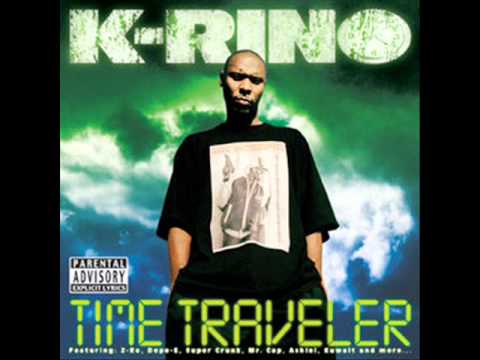
Storytelling is a lost art in rap. Not many do it anymore. Storytelling is a testament to a writer’s creativity, all great writers have a great imagination. So you have to be able to create a plot that people can visualize. With a movie, you can see whats going on but when you can make someone see what you’re saying as you’re saying it, then thats a special talent. The knowledge comes from my roots in Hip Hop. In the beginning there were songs like “The Message”, “The Breaks”, then Public Enemy, KRS, X-Clan…those groups raised social consciousness in rap and thats the era i came up in, so naturally i understand the obligation to teach in my music, words are powerful and the things you say carry weight. I had to evolve and im still growing to where i dont get too wild anymore because i’ve corrupted enough minds. -KRino
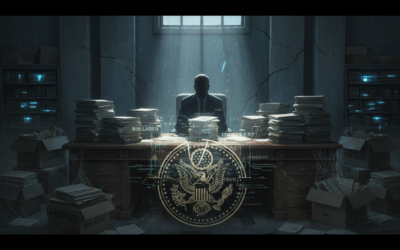
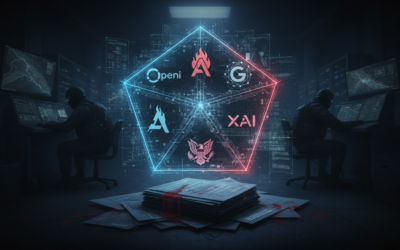
In “K-Rino – Rapper, Activist,” we are presented with an allegorical narrative detailing a profound battle against a shadowy, pervasive force known simply as “The Machine.” The video, a lyrical and visual odyssey, frames the artist K-Rino as a chosen warrior tasked with confronting this entity that has usurped artistic control from the “gifted” and plunged the masses into “ignorance overload.” This isn’t just about rap; it’s a commentary on systemic manipulation and the struggle for intellectual liberation.
The story begins with a foundational claim: “The balance of the world’s power shifted when artistic control was given to the wicked and lifted from the gifted.” K-Rino is depicted as having a prophetic encounter where he learns of his destiny to expose the “motives of the soul.” He notes a societal degeneration, attributing it to a “slow-going entity” that drives people to ignorance through “every audio visual object we digest.” This is a stark critique of modern media and its role in shaping public consciousness, a common thread in independent analysis.
Reluctant at first, K-Rino accepts his mission to combat this “deadly force.” His training involves an accelerated period of enlightenment, leading to the revelation that the “Machine” filters thought streams, rendering them “ill meaning and bewildering.” The core of the problem, he discovers, lies in “lying governments and sick media outlets” that “douse” the schools, streets, and homes with venom, rerouting and ousting intelligent thought. The implication is clear: much of what society consumes is designed to control, not to inform or inspire.
The confrontation with the “robotic contraption” is framed as a “modern day David and Goliath,” a battle against a “technologically supreme object” that openly admits its intent to “deceive the wise” and “make people believe the lies.” K-Rino’s “Medulla Oblongata Lava Fire”—a metaphorical representation of awakened intellect and critical thought—destroys this primary machine. However, the victory is short-lived as the machine fragments into a “whole army” of smaller entities, “imprisioners of listeners,” signifying the hydra-like persistence of systemic control. Yet, with a “G-719 skill gun” (a symbol of self-made, specialized knowledge), he obliterates them all, leading to a collective “mental redemption” and the re-emergence of “conscious thinking.” The ultimate message, recorded by a “thought probe,” is one of hope: future generations can learn from this “total annihilation of the evil machine.”