Monarch programming refers to a reported method of covert psychological manipulation said to have evolved from the CIA’s documented MK-ULTRA program. According to researchers and alleged survivors, the technique relies on inducing severe trauma to fragment a subject’s personality into controllable alternate identities. While government agencies have acknowledged elements of MK-ULTRA through declassified documents, the full scope of these programs remains a subject of intense debate and investigation.

Historical Roots of Organized Mind Control
Accounts of psychological manipulation through ritualistic practices appear throughout history. Ancient texts, including the Egyptian Book of the Dead, describe methods involving intimidation, substances, and hypnotic techniques that bear structural similarities to modern trauma-based conditioning. These historical precedents suggest that attempts to control human consciousness through systematic methods have existed for millennia.
The twentieth century brought these practices into the realm of formal scientific inquiry. Documented experiments began producing systematic observations, records, and data on human psychological responses to extreme conditions.
Josef Mengele and the Nazi Experiments
Among the earliest documented practitioners of trauma-based experimentation was Josef Mengele, a physician at Nazi concentration camps. Known as the “Angel of Death,” Mengele conducted extensive human experiments on prisoners, including twins and children. His research into the psychological effects of extreme trauma would later become relevant to postwar intelligence programs.

Following World War II, Operation Paperclip brought thousands of German scientists and researchers into the United States. According to multiple researchers, Mengele’s work on trauma and dissociation influenced the development of subsequent American intelligence programs focused on behavioral modification and psychological control.
Project MK-ULTRA: The CIA’s Mind Control Program

Project MK-ULTRA operated from the early 1950s through at least the late 1960s, using American and Canadian citizens as unwitting test subjects. Declassified documents confirm the program employed numerous methods to alter brain function and manipulate mental states, including covert drug administration, sensory deprivation, isolation, electroshock, and physical and verbal abuse.
The program’s most widely known experiments involved administering LSD to unsuspecting individuals, including CIA employees, military personnel, doctors, government agents, hospital patients, and members of the general public. Researchers studied subjects’ reactions to gauge the drug’s potential for interrogation and behavioral control.

Beyond LSD experiments, MK-ULTRA encompassed violent electroshock treatments, physical torture, and psychological abuse administered systematically to numerous subjects, including children. While the program’s stated objectives involved developing interrogation techniques, historians have noted that some aspects appeared designed to create programmable individuals capable of carrying out specific tasks without conscious awareness.
Congressional investigations in the 1970s, including the Rockefeller Commission of 1975, exposed MK-ULTRA to public scrutiny. The CIA maintained that such programs were discontinued. However, whistleblowers have alleged that the research continued covertly, with Monarch programming emerging as MK-ULTRA’s classified successor. When former CIA Director William Colby was asked directly about Monarch by journalist Anton Chaitkin, he reportedly replied, “We stopped that between the late 1960s and the early 1970s.”
How Monarch Programming Allegedly Works
While no government has formally acknowledged the existence of Monarch programming, researchers and therapists working with alleged survivors have documented patterns of systematic trauma used for psychological conditioning. Some survivors, through extensive therapeutic work, have reportedly recovered memories and provided detailed accounts of their experiences.
According to these accounts, programmed individuals are used by organizations for covert operations requiring operatives who follow orders without question, retain no conscious memory of their actions, and are conditioned to self-destruct if discovered. Researchers describe applications ranging from intelligence operations and covert assassinations to exploitation within the entertainment industry.
The programming process reportedly involves inducing extreme trauma through electroshock, torture, and psychological manipulation to force the subject’s mind to dissociate from reality. This dissociative response, a documented psychological defense mechanism, allows handlers to create separate personality compartments that can be individually programmed and accessed through specific trigger words or symbols.
According to researcher Ellen P. Lacter, trauma-based programming exploits the victim’s dissociative capacity through systematic torture including pain, terror, drugs, sensory manipulation, and near-death experiences. The objective is to implant directives in newly formed dissociated identities that compel the victim to act without conscious awareness, even in violation of their own moral principles.
Children from families with multigenerational histories of abuse are said to exhibit the highest susceptibility to dissociation, making them primary targets for programmers seeking subjects who can be reliably fragmented into controllable alternate personalities.
Why the Name “Monarch”
The program’s name reportedly derives from the Monarch butterfly. The insect’s metamorphosis from caterpillar to butterfly symbolically mirrors the programming process: an undeveloped subject undergoes a cocooning period of conditioning before emerging as a transformed, controlled individual.
Additionally, the Monarch butterfly’s ability to pass migratory knowledge genetically across generations reportedly attracted the interest of researchers studying whether behavioral programming could similarly be transmitted through hereditary lines.
Documented Methods of Trauma Induction
Accounts from alleged survivors describe an extensive catalog of trauma techniques used in the programming process. These reportedly include confinement in enclosed spaces, physical restraint, near-drowning, temperature extremes, electroshock, forced ingestion of harmful substances, sensory deprivation, sleep deprivation, drug-induced confusion and amnesia, physical torture, forced witnessing of violence, and spiritual abuse designed to destroy the subject’s existing belief systems and sense of personal identity.
The goal of these methods is to shatter the subject’s core personality into multiple compartmentalized identities separated by amnesia barriers. This fragmentation allows the same individual to function normally in everyday life while harboring hidden programmed personalities that can be activated by specific triggers known only to the handler.
Programming Through Media and Symbolism

Once dissociation is achieved, handlers reportedly use cultural media including films, music, and fairy tales to construct an internal psychological framework within the subject’s mind. Movies such as The Wizard of Oz, Alice in Wonderland, Pinocchio, and Sleeping Beauty are cited as commonly used programming tools.
In the case of The Wizard of Oz, subjects are reportedly taught that “somewhere over the rainbow” represents the dissociative state they must enter to escape pain. This creates a conditioned association between the film’s imagery and the psychological act of splitting from conscious awareness. Handlers use the film’s narrative structure to guide subjects into specific dissociative states on command.
Common symbols observed in survivor accounts include butterflies, mirrors, shattered glass, spider webs, infinity loops, trees, masks, castles, mazes, hourglasses, and clocks. Researchers note that many of these symbols appear frequently in mainstream entertainment media.
Classification Levels of Monarch Programming
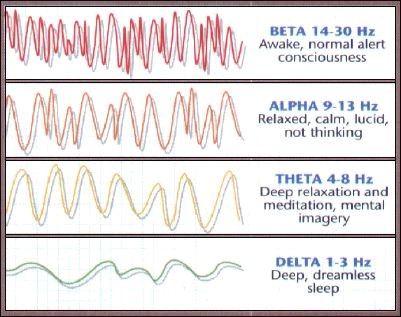
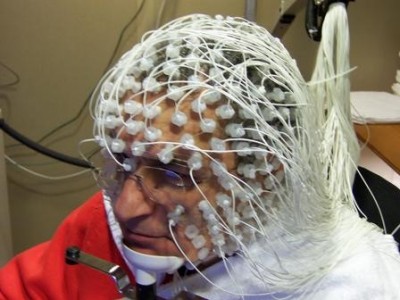
According to researchers, Monarch programming operates on multiple levels named after electroencephalography (EEG) brainwave patterns:
Alpha Programming: Considered the base-level general programming within the core personality. It is characterized by enhanced memory retention, increased physical strength, and heightened visual perception. This level involves deliberate partitioning of the personality to create a left-brain/right-brain division.
Beta Programming: Referred to as sexual programming, this level reportedly eliminates learned moral boundaries and activates primitive behavioral responses. Known colloquially as “Kitten programming,” it is considered the most publicly visible form, with researchers pointing to certain patterns in the entertainment industry as potential indicators.
Delta Programming: Described as “killer” programming, originally developed for elite military and intelligence operatives. Subjects at this level reportedly exhibit controlled aggression, absence of fear, and systematic execution of assigned tasks. Self-destruct instructions are embedded at this level.
Theta Programming: Designated as “psychic” programming. Individuals from multigenerational families are said to demonstrate heightened susceptibility. Due to the inherent limitations of this approach, electronic mind-control systems including biomedical implants, directed-energy technologies, and advanced computer-satellite tracking systems were reportedly developed as supplements.
The Broader Implications
The documented history of MK-ULTRA, confirmed through congressional investigations and declassified government files, establishes that intelligence agencies did conduct extensive human experimentation in psychological manipulation. Over two million Americans may have been subjected to trauma-based mind control since 1947, according to some researchers’ estimates.
Films like The Manchurian Candidate have depicted techniques that closely parallel documented methods, including electroshock, trigger-word activation, and implant technology. Public figures including model Candy Jones and assassin Sirhan Sirhan have been cited as potential subjects of mind control programming.
Beyond individual programming, researchers argue that many techniques refined through these experiments have been adapted for broader application through mass media. The methods developed to manipulate individual consciousness may now inform the design of news broadcasts, entertainment content, advertising, and digital media, representing a scaled application of behavioral conditioning principles to entire populations.