Mount Shasta: A Mountain Steeped in Ancient Significance
Mount Shasta, rising over 14,000 feet in Northern California, has long occupied a unique place in both indigenous spiritual traditions and modern mystery lore. For the Native American peoples of the region, Shasta was considered a sacred site. Traditional beliefs held that the mountain was inhabited by a spirit chief called Skell, who was said to have descended from the heavens to its summit.
The mountain sits near Lake Shastina on its northern side, in an area where the natural landscape intersects with layers of human history that remain only partially understood. Among the lesser-known features of the Mount Shasta area are remnants of ancient megalithic stone structures whose origins and purposes have never been conclusively determined.
Unusual Atmospheric Phenomena and Cultural Significance
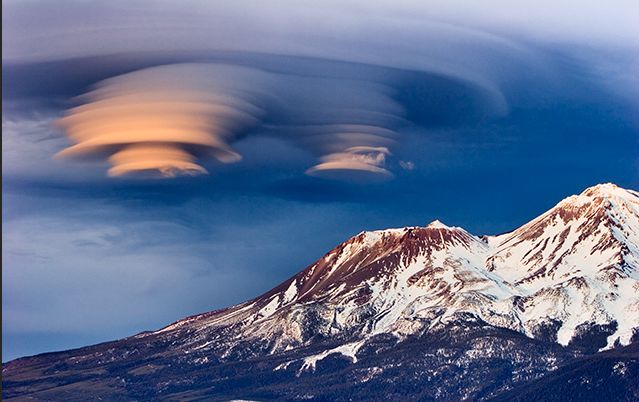
In more recent decades, Mount Shasta has drawn attention for its distinctive atmospheric conditions. The mountain is particularly known for producing lenticular clouds — smooth, lens-shaped formations that form when stable moist air flows over the peak. These unusual cloud formations, combined with the mountain’s imposing presence, have contributed to its reputation as a place of unusual natural energy.
Various groups have attributed metaphysical significance to the location, with some claiming the mountain serves as a dimensional portal or energy vortex. Reports of unusual aerial phenomena in the area have added to this reputation, though such claims remain firmly outside mainstream scientific consensus. What is verifiable is that the mountain’s combination of geological prominence, atmospheric effects, and cultural history has made it a persistent point of interest across multiple communities.
Unexplained Stone Structures Near the Mountain
Less publicized than the mountain’s spiritual associations are the physical archaeological features found in the surrounding area. Stone formations near Mount Shasta display characteristics of deliberate construction — arranged and shaped in ways that suggest human design rather than natural geological processes. However, these structures have received limited formal archaeological study, and their age, builders, and purpose remain subjects of speculation.
The stones raise questions about the depth of human activity in the region and whether ancient inhabitants of the area engaged in monumental construction that has since been largely forgotten. Without systematic excavation and dating, the megaliths remain an archaeological curiosity — interesting enough to warrant attention but insufficiently studied to support definitive conclusions.
Documentary Efforts to Investigate the Mountain
Independent filmmaker Dustin Neff, who relocated to the Mount Shasta area in 2004, began production on a feature-length documentary titled “Mount Shasta: California’s Mystical Mountain” in late 2011. The project aimed to document both the natural beauty of the mountain across all seasons and the various unexplained phenomena associated with the location.
Neff spent over a year filming in high definition, capturing the mountain’s landscapes and investigating the stone structures and other features that have drawn curiosity over the years. His project represented one of the few systematic attempts to document the full range of Mount Shasta’s natural and archaeological features in a single production.
The mountain continues to attract researchers, spiritual practitioners, hikers, and the simply curious — each drawn by different aspects of a place where geological grandeur, indigenous tradition, unexplained stone structures, and atmospheric anomalies converge in a landscape unlike any other in North America.