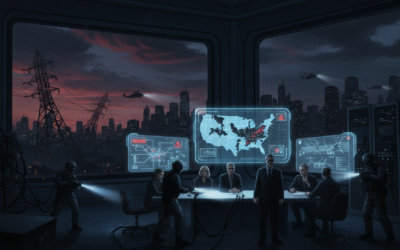
Anonymous National Guard Soldier Reveals Civil Unrest Briefing
In a revealing account that surfaced during the 2012 election cycle, an anonymous Army National Guard member — identified only as “Soldier X” — described a unit briefing that outlined how the military would respond to potential civil unrest following the presidential election.
According to the guardsman, the briefing addressed scenarios in which widespread rioting could erupt in American cities, prompted by a contentious election outcome. The instructions reportedly went beyond standard crowd-control procedures, venturing into territory that raised constitutional concerns among rank-and-file soldiers.
Preppers Allegedly Classified as Priority Targets
Among the most striking claims was that individuals identified as “doomsday preppers” — people who stockpile food, water, and survival supplies — would be treated as potential threats during any civil disturbance scenario. The guardsman stated that military leadership had compiled lists of publicly known preppers and intended to prioritize operations against them.
Soldiers within the unit who were personally involved in emergency preparedness were reportedly labeled as “defects,” a designation that carried implications of disloyalty. According to the source, unit members were warned against associating with fellow soldiers who practiced prepping.
Firearms Confiscation Concerns
The anonymous soldier also raised alarms about potential firearms seizures during a domestic crisis. This concern was not without precedent — during Hurricane Katrina in 2005, National Guard troops and law enforcement officers conducted door-to-door gun confiscations from residents in New Orleans, including people on dry land with adequate supplies. The episode remains one of the most controversial domestic military operations in recent American history.
A 2006 Army field manual titled “Civil Disturbance Operations” outlined protocols for confiscating firearms from civilians during periods of mass unrest. A separate manual, “FM 3-39.40 Internment and Resettlement Operations,” detailed procedures for detaining civilians and operating internment facilities, including references to psychological operations aimed at political detainees.
Executive Orders and Legislative Framework
The guardsman’s account emerged against a backdrop of executive actions and legislation that expanded federal emergency powers. The National Defense Resources Preparedness Executive Order granted the president authority to requisition private property during national emergencies. Meanwhile, provisions in the National Defense Authorization Act (NDAA) permitted the indefinite detention of American citizens without trial — a measure that drew bipartisan criticism from civil liberties advocates.
Broader Pattern of Prepper Surveillance
Other incidents during the same period reinforced concerns about government scrutiny of preparedness communities. A Mississippi man affiliated with a prepper group was reportedly removed from a flight and placed on the FBI’s no-fly list despite having no criminal record. Separate reports indicated that other individuals involved in emergency preparedness had been denied firearms purchases without clear justification.
The FBI’s Communities Against Terrorism initiative had also distributed fliers to military surplus stores, instructing owners to report customers who made bulk purchases of items such as meals ready to eat (MREs). At the same time, the Department of Homeland Security drew scrutiny for purchasing large quantities of ammunition, later classifying the details of those acquisitions.
Soldiers Who Planned to Stand Down
When asked whether he would participate in gun confiscation operations, the anonymous guardsman said he and like-minded soldiers intended to simply not respond — choosing not to answer the phone or report for duty rather than carry out orders they viewed as unconstitutional.
The account highlighted a tension that has persisted in American military culture: the conflict between following orders and upholding the oath to defend the Constitution against threats both foreign and domestic.