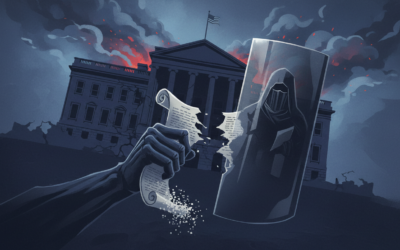
The Occupy Wall Street movement became a flashpoint not just for economic inequality, but for a deeper confrontation between law enforcement technology and citizen journalism. As thousands gathered in New York’s financial district throughout late 2011, both police and protesters wielded cameras, smartphones, and streaming platforms as weapons in an unprecedented information war.
Violent Police Tactics Against Peaceful Demonstrators
What began as a largely ignored encampment near Wall Street escalated dramatically when NYPD officers deployed aggressive crowd-control measures against nonviolent demonstrators. Officers carried orange mesh fencing through Union Square to herd participants onto sidewalks, while white-shirted senior officers used pepper spray on unarmed women and men alike.
Eyewitness accounts described officers throwing protesters to the ground, using elbows as weapons, dragging one woman by her hair, and leaping over barricades to physically confront young participants. Multiple video recordings captured these incidents from various angles, making it virtually impossible to dismiss them as isolated events or edited fabrications.
The New York Times documented roughly 80 arrests in a single day, primarily on disorderly conduct charges for blocking traffic, along with charges of resisting arrest and obstructing governmental administration. One arrest included an assault charge against a protester accused of striking an officer.
NYPD’s Digital Denial Strategy
Deputy Commissioner Paul Browne took an unusual approach to the growing public relations crisis. Rather than addressing the substance of brutality allegations, Browne suggested that digital manipulation of protest footage was responsible for making officers appear violent. He claimed that video editors had removed context showing demonstrators confronting police before pepper spray was deployed.
This argument faced an obvious credibility problem: hundreds of independently recorded videos and photographs from dozens of different angles all depicted consistent patterns of disproportionate force. The sheer volume of citizen documentation made any blanket claim of technological tampering implausible.
Surveillance Technology Pointed in Both Directions
The protests revealed a two-way surveillance dynamic that would become characteristic of modern American demonstrations. NYPD officers equipped with handheld cameras and smartphones systematically recorded protesters’ faces, creating what observers feared was a database for future facial recognition identification.

One commenter captured the chilling implication: police video documentation served less as evidence gathering and more as intimidation, discouraging citizens from exercising their First Amendment rights by ensuring their participation would be catalogued in law enforcement databases.
Simultaneously, protesters turned the same technology back on authorities. Activists used social media, live-streaming platforms, and collaborative documents to broadcast events in real time. Some participants researched the identities of officers involved in violent incidents, posting findings on platforms like Reddit and Pastebin.
Military-Grade Response to Civilian Protest
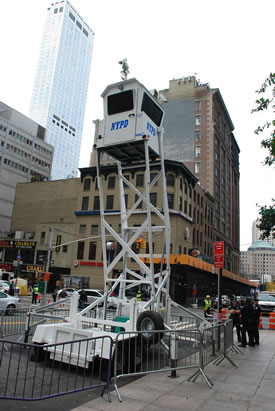
The scale of the official response extended well beyond standard crowd control. Reports indicated that more than 100 personnel from Chemical and Biological Response Units were stationed around Liberty Park during the demonstrations. The presence of these specialized teams, initially identified as Department of Homeland Security personnel and later as Marines, raised serious questions about the proportionality of the government’s reaction to a nonviolent protest.
Adding to concerns, reports emerged that NYPD had maintained an advanced anti-terrorism weapons system for four years that included capabilities to neutralize aircraft and ammunition capable of penetrating concrete barriers. The deployment of counter-terrorism infrastructure against American citizens exercising constitutional rights drew sharp criticism.
Corporate Complicity and Media Silence
Technology companies also played a controversial role. Yahoo issued an apology after its email platform was found to have blocked messages related to the anti-Wall Street movement, calling the censorship accidental. Meanwhile, mainstream media outlets largely ignored the growing protests during their early weeks, leaving citizen journalists as the primary source of on-the-ground reporting.
Live-streaming channels became essential information lifelines, broadcasting directly from protest sites when traditional news organizations declined to cover events. This media vacuum demonstrated both the power and the necessity of independent digital journalism during moments of civic crisis.
Constitutional Rights Under Pressure
The fundamental question raised by the NYPD’s response to Occupy Wall Street was whether permitting requirements could justify violent suppression of peaceful assembly. Even Americans who felt indifferent about the movement’s economic message found themselves alarmed by footage of officers attacking nonviolent citizens in a country founded on the principles of free speech and the right to assemble.
Reports of detained protesters being subjected to retina scanning added a biometric dimension to civil liberties concerns. The practice suggested that participation in constitutionally protected activity could result in permanent entry into law enforcement identification systems, effectively punishing citizens for exercising their rights.
The events of Occupy Wall Street served as an early warning about the collision between expanding surveillance capabilities and shrinking civic freedoms, a tension that continues to define American protest movements today.
Originally published January 25, 2012. Content draws on reporting from the New York Times, the Guardian, Alternet, and firsthand protest accounts.