Sep 28, 2012 | Events & Assassinations, News
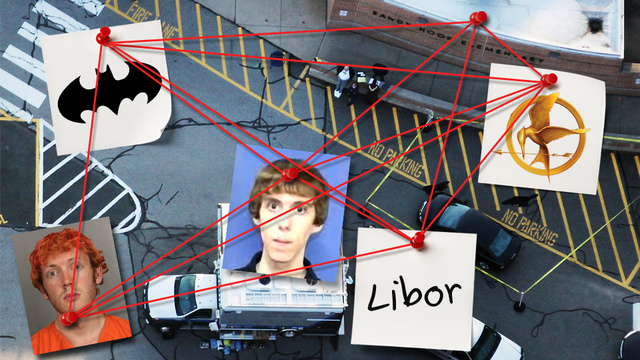
 Newly released court documents in the Aurora, CO theater “Batman massacre” case reveals startling inside accusations about who may actually be behind the shootings that left at least 70 people either dead or injured in the early morning hours of July 20th.
Friday’s report by the online version of Denver’s Westword Magazine details shocking claims made by, what appears to be, a new victim in a case that has throttled a community still in mourning over the tragic events. According to the court documents an individual, whose name has been officially redacted from the documents, came forward to file a “Motion to Intervene” for the right to be reasonably heard under the Crime Victims’ Rights Act (a)(4), for the purposes of presenting newly discovered evidence to the court.
Corroborating much of a recent Conspiracy Examiner story maintaining the situation as potentially being another horrific (rogue government faction) conspiracy and possible false-flag event, the newly discovered evidence, thrown out of court by Judge William Sylvester days later, details stunning accusations against billionaire Philip Anschutz, Police Chief Dan Oates, Arapaho County Dist. Atty. Carol Chambers and, according to the alleged victim, the Illuminati as being potential co-conspirators in the crime.
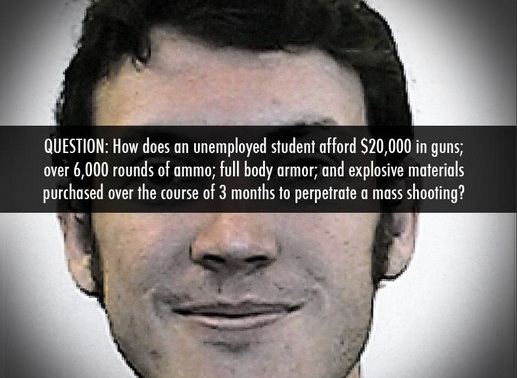
The stunning accusations, dated August 27, reveal a startling story by the claimant as having been visited at home by police chief Dan Oates and Dist. Atty. Carol Chambers where they forced the unnamed individual to testify as a fake victim of the shootings, under the threat of being arrested for prostitution and escort services and charity fraud, for the purposes of garnering an easy conviction against alleged shooter James Holmes. But not before being shot by the police chief in “non-life-threatening areas” of the body, according to the motion, to appear as having been shot by James Holmes himself. The motion also claims that it is likely some of the victims in the theater were merely paid actors working on behalf of the conspirators and wants multiple individuals involved in the situation to take polygraph tests to prove their innocence.
Claiming that their conscience will not let fraudulent testimony contribute to an improper conviction of James Holmes, the new mystery victim asked that the judge submit the case to the FBI and the US Congress for further investigation into the alleged conspiracy. The judge, however, instead of taking a closer look, decided to strike down the motion as fraudulent, claiming the motion as likely forged by an individual or individuals unassociated with the events. The judge also suggested the situation be investigated by the Arapahoe County Sheriff’s office and those responsible for the motion be taken into custody by the Arapahoe County Department of Human Services and “referred to the appropriate mental health agency.”
But it may in fact be the judge that needs the mental attention as all the evidence collected in the case thus far seems to point toward mostly agreeing with the individual who filed the claim, despite the media and the court’s attempts to suppress any evidence that doesn’t support the official story. Multiple and corroborating eyewitness testimony stated what appeared to be multiple individuals involved in the shooting, including supporting official dispatch audio. Individuals interviewed by local media immediately after the event also claimed to have seen teargas canisters being deployed in the theater simultaneously from two different directions, in addition to side-by-side images of James Holmes prior to the shootings and the orange haired individual taken into custody as the alleged lone gunmen after the event looks startlingly like two different individuals. There also seems to have been two different gas masks found at the scene, in addition to other damning evidence that doesn’t jive with the official version of the events.
The individual who filed the motion also added that they wanted their portion of the charity to be donated to James Holmes’ prison commissary, after using the money to find Mr. Holmes “real” attorneys who are actually willing to act in the honest defense of James Holmes, or the individual in custody for the crime.
The motion, as certified by the Arapahoe County Dist. Atty. and public defenders offices, was sent via the United States Postal Service, then was quickly denied and subsequently released days ago to the public for reasons yet to be determined.
Perhaps one of the most telling aspects of the circumstances, however, happens to be the creepy dead silence about the motion by the media, especially considering every little detail about a situation like this is normally scrutinized at every angle after being groomed with a fine tooth comb and examined under a microscope.
It was just weeks ago that certain local media outlets were considering suing for access to court records because, according to those outlets, the community had a right to know so the victims and the community could more easily begin the healing process and find some semblance of closure. Perhaps information that may open new wounds, however, regardless of how accurate or important that information may be, may not be the kind of information they were looking for.
Subscribe to: Receive automatic updates from the Conspiracy Examiner!
Supporting Medium:
Westword: Aurora theater shooting: Court filing blames massacre on police chief, Illuminati
via Examiner
May 25, 2012 | Events & Assassinations
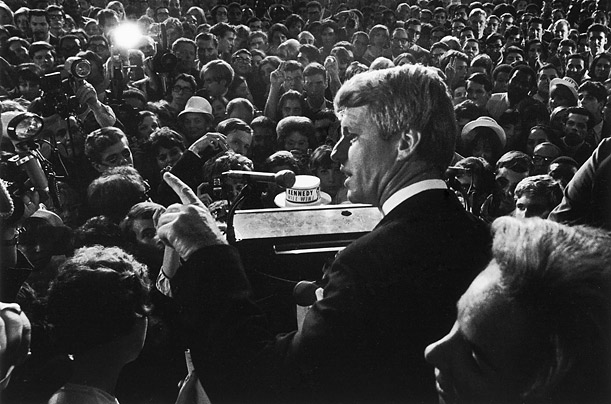
 Los Angeles (CNN) — As a federal court prepares to rule on a challenge to Sirhan Sirhan’s conviction in the Robert F. Kennedy assassination, a long overlooked witness to the murder is telling her story: She heard two guns firing during the 1968 shooting and authorities altered her account of the crime.
Nina Rhodes-Hughes wants the world to know that, despite what history says, Sirhan was not the only gunman firing shots when Kennedy was murdered a few feet away from her at a Los Angeles hotel.
“What has to come out is that there was another shooter to my right,” Rhodes-Hughes said in an exclusive interview with CNN. “The truth has got to be told. No more cover-ups.”
Her voice at times becoming emotional, Rhodes-Hughes described for CNN various details of the assassination, her long frustration with the official reporting of her account and her reasons for speaking out: “I think to assist me in healing — although you’re never 100% healed from that. But more important to bring justice.
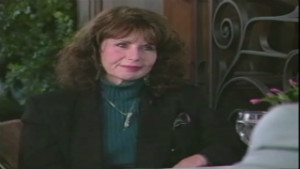
Nina Rhodes-Hughes: Two RFK shooters
2009: New evidence: Prusynski recording
RFK assassination witness speaks out
“For me it’s hopeful and sad that it’s only coming out now instead of before — but at least now instead of never,” Rhodes-Hughes told CNN by phone from her home near Vancouver, British Columbia.
Sirhan, the only person arrested, tried and convicted in the shooting of Kennedy and five other people, is serving a life sentence at Pleasant Valley State Prison in Coalinga, California.
The U.S. District Court in Los Angeles is set to rule on a request by the 68-year-old Sirhan that he be released, retried or granted a hearing on new evidence, including Rhodes-Hughes’ firsthand account.
At his 1969 trial, Sirhan’s original defense team never contested the prosecution’s case that Sirhan was the one and only shooter in Kennedy’s assassination. Sirhan testified at his trial that he had killed Kennedy “with 20 years of malice aforethought,” and he was convicted and sentenced to death, which was reduced to life in prison in 1972.
After the trial, Sirhan recanted his courtroom confession.
In the recent federal court filings, state prosecutors led by California Attorney General Kamala Harris argue that even if there were a second gunman involved in the Kennedy shooting, Sirhan hasn’t proven his innocence and he’s still guilty of murder under California’s vicarious liability law.
Sirhan’s new legal team disputes Harris’ assertion about that state statute.
Their current battle has prosecutors and Sirhan’s new lawyers engaging directly the merits of new evidence — as well as witness recollections such as Rhodes-Hughes’ account — never argued before a judge.
Prosecutors under the attorney general are contending that Rhodes-Hughes heard no more than eight gunshots during the assassination. In court papers filed in February, Harris and prosecutors argue that Rhodes-Hughes was among several witnesses reporting “that only eight shots were fired and that all these shots came from the same direction.”
Sirhan’s lawyers are challenging those assertions.
In a response also filed in federal court in Los Angeles, the defense team led by New York attorney William Pepper contends that the FBI misrepresented Rhodes-Hughes’ eyewitness account and that she actually had heard a total of 12 to 14 shots fired.
“She identified fifteen errors including the FBI alteration which quoted her as hearing only eight shots, which she explicitly denied was what she had told them,” Sirhan’s lawyers argued in February, citing a previously published statement from Rhodes-Hughes.
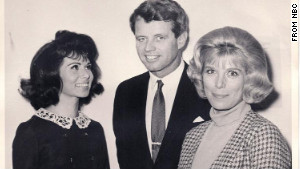
In this NBC photo taken in December 1965, TV actress Nina Roman, today known as Nina Rhodes-Hughes, left, and her “Morning Star” co-star Elizabeth Perry, right, meet Robert F. Kennedy at NBC’s Burbank studios. Two and a half years later, Rhodes-Hughes witnessed Kennedy’s assassination.
The FBI and the California attorney general’s office both declined to comment to CNN on the controversy over Rhodes-Hughes’ witness account since the matter is now being reviewed by a federal judge.
Rhodes-Hughes was a television actress in 1968 who worked as a volunteer fundraiser for Kennedy’s presidential campaign.
The FBI report indicates that Rhodes-Hughes was indeed inside the kitchen service pantry of the Ambassador Hotel during the crucial moments of the Kennedy shooting, but she contends the bureau got details of her story wrong, including her assertions about the number of shots fired and where the shots were fired from.
Rhodes-Hughes, now 78, tells CNN she informed authorities in 1968 that the number of gunshots she counted in the kitchen pantry exceeded eight — which would have been more than the maximum Sirhan could have fired — and that some of the shots came from a location in the pantry other than Sirhan’s position.
Robert Kennedy was the most seriously wounded of the six people shot inside the hotel pantry on June 5, 1968, only moments after the New York senator had claimed victory in California’s Democratic primary election. The presidential candidate died the next day; the other victims survived.
The Los Angeles County coroner determined that three bullets struck Kennedy’s body and a fourth passed harmlessly through his clothing. Police and prosecutors declared the four bullets were among eight fired by Sirhan acting alone.
Rhodes-Hughes tells CNN the FBI’s eight-shot claim is “completely false.” She says the bureau “twisted” things she told two FBI agents when they interviewed her as an assassination witness in 1968, and she says Harris and her prosecutors are simply “parroting” the bureau’s report.
“I never said eight shots. I never, never said it,” Rhodes-Hughes told CNN. “But if the attorney general is saying it then she’s going according to what the FBI chose to put into their report.”
“There were more than eight shots,” Rhodes-Hughes said by phone. She says that during the FBI interview in her Los Angeles home, one month after the assassination, she told the agents that she’d heard 12 to 14 shots. “There were at least 12, maybe 14. And I know there were because I heard the rhythm in my head,” Rhodes-Hughes said. She says she believes senior FBI officials altered statements she made to the agents to “conform with what they wanted the public to believe, period.”
“When they say only eight shots, the anger within me is so great that I practically — I get very emotional because it is so untrue. It is so untrue,” she said.
Contacted by CNN for comment, Sirhan lead attorney William Pepper called the alleged FBI alteration of Rhodes-Hughes’ story “deplorable” and “criminal” and said it “mirrors the experience of other witnesses.”
Other witnesses also mentioned more than eight shots
Law enforcement investigators have always maintained that only eight shots were fired in the RFK assassination, all of them by Sirhan. His small-caliber handgun could hold no more than eight bullets.
But released witness interview summaries show at least four other people told authorities in 1968 that they heard what could have been more than eight shots. The following four witness accounts appear not in FBI reports but in Los Angeles Police Department summaries:
— Jesse Unruh, who was speaker of the California Assembly at the time, told police that he was within 20 to 30 feet behind Kennedy when suddenly he heard a “crackle” of what he initially thought were exploding firecrackers. “I don’t really quite remember how many reports there were,” Unruh told the LAPD. “It sounded to me like somewhere between 5 and 10.”
— Frank Mankiewicz, who had been Kennedy’s campaign press secretary, told police that he was trying to catch up to the senator when he suddenly heard sounds that also seemed to him to be “a popping of firecrackers.” When an LAPD detective asked Mankiewicz how many of the sounds he’d heard, he answered: “It seemed to me I heard a lot. If indeed it had turned out to have been firecrackers, I probably would have said 10. But I’m sure it was less than that.”
— Estelyn Duffy LaHive, who had been a Kennedy supporter, told police that she was standing just outside the kitchen pantry’s west entrance when the shooting erupted. “I thought I heard at least about 10 shots,” she told the LAPD.
— Booker Griffin, another Kennedy supporter, told police that he had just entered the pantry through its east entrance and suddenly heard “two quick” shots followed by a slight pause and then what “sounded like it could have been 10 or 12” additional shots.
An analysis of a recently uncovered tape recording of the shooting detected at least 13 shot sounds erupting over a period of less than six seconds. The audiotape was recorded at the Ambassador Hotel by free-lance newspaper reporter Stanislaw Pruszynski and is the only known soundtrack of the assassination.
Audio expert Philip Van Praag told CNN that his analysis establishes the Pruszynski recording as authentic and the 13 sounds electronically detected on the recording as gunshots.
“The gunshots are established by virtue of my computer analysis of waveform patterns, which clearly distinguishes gunshots from other phenomena,” he said in an e-mail. “This would include phenomena that to human hearing are often perceived as exploding firecrackers, popping camera flashbulbs or bursting balloons.”
Van Praag’s Pruszynski recording findings are now a major point of controversy among new evidence being argued between the two sides in the Sirhan federal court case. Harris contends that his findings amount to an “interpretation or opinion” that is not universally accepted by acoustic experts.
CNN initially reported on Van Praag’s audio analysis in 2008 and then with additional details in a BackStory segment in 2009.
Shots fired from two different locations
California prosecutors have argued that witnesses heard shots coming from only one location, but Rhodes-Hughes tells CNN that while the first two or three shots she heard came from Sirhan’s position several feet in front of her, she also heard gunshots “to my right where Robert Kennedy was.”
According to the autopsy report, the coroner concluded that the senator’s body and clothing were struck from behind, at right rear, by four bullets fired at upward angles and at point-blank range. Yet witnesses said Sirhan fired somewhat downward, almost horizontally, from several feet in front of Kennedy, and witnesses did not report the senator’s back as ever being exposed to Sirhan or his gun.
In his analysis of the Pruszynski sound recording, Philip Van Praag found that five of the gunshots captured in the tape were fired opposite the direction of Sirhan’s eight shots. Van Praag also concluded that those five shots — the third, fifth, eighth, 10th and 12th gunshots within a 13-shot sequence — displayed an acoustical “frequency anomaly” indicating that the alleged second gun’s make and model were different from Sirhan’s weapon.
A chance meeting with Robert Kennedy
The path that eventually led Nina Rhodes-Hughes to the Ambassador Hotel kitchen pantry began 2½ years earlier during a chance meeting with Robert Kennedy at NBC-TV studios in Burbank, California. She was being made up for her co-starring role in the daytime drama “Morning Star” when Kennedy suddenly entered the makeup room. The actress was starstruck. “I saw Robert Kennedy and everything else disappeared from view,” she said. “There was an aura about him that was very captivating. He kind of pulled you in. His eyes were very deep set and they were very blue. And when you looked at him, you got very drawn in to him.”
As Rhodes-Hughes remembers it, the senator had arrived to pre-record an interview on “Meet the Press” and the two discussed political issues while awaiting their separate TV appearances. “Here I am, just an actress in a soap opera, and he took the time to have an in-depth conversation with me,” said Rhodes-Hughes, who was then known professionally by her screen name Nina Roman.
As impressed as Rhodes-Hughes was with Robert Kennedy, she says the senator indicated that he himself was impressed with her ability to quickly memorize many pages of TV script. She says he confided to her that he had no such talent himself but that his older brother, the assassinated President John F. Kennedy, had possessed similar skills.
“Our conversation basically was the clincher for me,” Rhodes-Hughes told CNN. “I said to him, ‘You know, I have followed your career in politics and I really believe in you and I love all the things that you did — and are trying to do, and propose to do — and so if ever you declare yourself a candidate for the presidency, I will work for you, heart and soul.’ And he smiled and said, ‘Well, I don’t know if that’s going to happen.’ And he was very humble and very sweet.”
Rhodes-Hughes says that later, in the spring of 1968, shortly after Kennedy announced his candidacy for the presidency, she helped form a campaign support group in Los Angeles called “Young Professionals for Kennedy” and assisted in raising funds for the California phase of the senator’s White House bid.
Weeks later, as he claimed victory in the California primary, addressing hundreds of supporters in the Ambassador Hotel’s Embassy Room shortly after midnight on June 5, Kennedy paid tribute to the many volunteers, like Rhodes-Hughes, who had assisted his campaign. Referring to his own role during his brother’s successful run for the presidency in 1960, Kennedy told them, “I was a campaign manager eight years ago. I know what a difference that kind of an effort and that kind of a commitment makes.”
Trying to keep Kennedy from heading to the pantry
For Rhodes-Hughes there was one more commitment to keep. She had promised Kennedy aide Pierre Salinger that following the candidate’s victory speech she would try to meet the senator as he exited the ballroom and usher him to a backstage area where Salinger had been keeping abreast of the California primary returns. She says although she and another campaign volunteer made sure to carefully position themselves to greet the candidate, the opportunity never came. According to Rhodes-Hughes, shortly after Kennedy completed his remarks in the Embassy Room, he was whisked away by others down a corridor and toward the kitchen pantry while she scurried to catch up.
“No, no, that’s the wrong way!” Rhodes-Hughes tells CNN she shouted to the senator and his escorts as she chased after them in an unsuccessful effort to turn them around. “It’s this way! Come back! You’re going the wrong way!”
Kennedy and Sirhan almost face-to-face
Rhodes-Hughes says that after she entered the kitchen pantry’s west entrance, she could see Kennedy in left profile, “greeting” well-wishers a few feet ahead of her. She says a moment later she was looking at the back of the senator’s head, as he continued onward, when suddenly the first two or three shots were fired.
“I saw his left profile. And then, very, very quickly, he was through greeting, and he turned and went into the original direction that he was being ushered to,” Rhodes-Hughes told CNN. “At that point, I saw the back of his head and part of his shoulders and back.”
“My eyes were totally on him, and all of a sudden I started hearing popping sounds, which I thought at first were flashbulbs from a camera,” she said. It was Rhodes-Hughes’ account of Kennedy’s movements in the pantry that Sirhan’s lawyer Pepper focused on in particular when CNN asked him to comment on Rhodes-Hughes’ account of the shooting.
“This observation is vital,” said Pepper. “Her clear recollection of being some short distance behind the Senator and seeing his left profile and then seeing him quickly turning so that the back of his head was in her sight at the time the shooting began — this reveals that the Senator was almost directly facing Sirhan just before he took three shots, from behind, in his back, and behind his right ear at powder burn range, making it impossible for Sirhan to have been Robert Kennedy’s shooter,” the defense attorney said in an e-mail to CNN. “It clearly evidences the existence of a second gunman who fired from below and upward at the Senator.”
Rhodes-Hughes says that while she was behind Senator Kennedy, looking at the back of his head and hearing the first two or three gunshots, Kennedy did not appear to be struck by bullets at that point.
Still believing the first shots were merely flashbulbs, she says she then took her eyes off the senator, while turning leftward, and caught her first glimpse of Sirhan standing in front of Kennedy and to the candidate’s left.
She told CNN that the 5-foot-5-inch tall Sirhan was propped up on a steam table, several feet ahead of her and slightly to her own left. Rhodes-Hughes says part of her view of Sirhan was obstructed and she could not see the gun in his hand but she says that, as soon as she caught sight of Sirhan, she then heard more shots coming from somewhere past her right side and near Kennedy. She told CNN that at that point she was hearing “much more rapid fire” than she initially had heard.
In his recent analysis of the Pruszynski recording, Philip Van Praag found that some of the tape’s 13 captured shot sounds were fired too rapidly, at intervals too close together, for all of the gunshots in the pantry to have come from Sirhan’s Iver Johnson revolver alone.
Sirhan’s lawyers report in their federal court papers that gunshot echoes have been ruled out as the cause of the Pruszynski recording’s “double shots.” Ricochets also are ruled out according to Pasadena, California, forensic audio engineers who verified Van Praag’s Pruszynski findings for the 2007 Investigation Discovery Channel television documentary “Conspiracy Test: The RFK Assassination.”
‘They’ve killed him! They’ve killed him!’
Rhodes-Hughes told CNN she heard gunshots coming from some place not far from her right side even while Sirhan was being subdued several feet in front of her. “During all of that time, there are shots coming to my right,” she said. “People are falling around me. I see a man sliding down a wall. Then I see Senator Kennedy lying on the floor on his back, bleeding. And I remember screaming, ‘Oh no! Oh, my God, no!’ And the next thing I know, I’m ducking but also in complete shock as to what’s going on.
“And then I passed out,” she said.
Rhodes-Hughes says that, moments later, while she was regaining consciousness from having fainted to the floor, she noticed that her dress was wet and that she was missing a belt and one of her shoes. It was clear to her that she had been trampled, but she was unhurt.
She then looked across the room and saw Kennedy once again, lying on the floor and bleeding, this time with his wife Ethel kneeling and trying to comfort him. Rhodes-Hughes says the sight horrified her, sending her screaming out of the pantry and back through the corridor, where she was attended to by her then-husband, the late television producer Michael Rhodes.
“I’m running out of the pantry and I’m yelling, ‘They’ve killed him! They’ve killed him! Oh, my God, he’s dead! They’ve killed him!'” Rhodes-Hughes told CNN. “Now, the reason I said, ‘they’ is because I knew there was more than one shooter involved.”
Little more than 25 hours later, Kennedy was pronounced dead at Good Samaritan Hospital in Los Angeles.
Rhodes-Hughes describes the events of early June 1968 as “the most iconoclastic experience” of her life.
“Although it was 44 years ago, I will swear that this is exactly what happened. I remember it like it was almost yesterday, because you don’t forget something like that when it totally changes your life forever,” she said. “It took a great toll on me. For a while, even the backfiring of a car would send me into tears.”
Never called to testify
Despite the fact her FBI interview summary indicates Nina Rhodes-Hughes was inside the kitchen pantry during the assassination, she was never called to testify at Sirhan’s 1969 trial or at any subsequent inquiry over the years. Rhodes-Hughes says she made a point of telling two FBI agents in 1968 that she would be willing to make herself available to appear as a witness anywhere at anytime and to testify “that there were more shots.”
“They never wrote that down,” she says of the FBI agents who conducted the interview in her Los Angeles home. She also says that when the pair of agents departed following their visit, they forgot to take along their attaché case and, minutes later, had to return to her residence and retrieve it.
Rhodes-Hughes says that, in the months following the June 5, 1968 assassination, she and some others who had been at the Ambassador Hotel refused news media interviews so as to avoid interfering with preparations for Sirhan’s trial. It wasn’t until the 1990s that Rhodes-Hughes was asked whether she would ever be willing to testify under oath — an invitation coming not from a prosecutor or law enforcement official but from author Philip H. Melanson, a chancellor professor of policy studies at the University of Massachusetts Dartmouth.
At Melanson’s request, Rhodes-Hughes reviewed her 1968 FBI interview summary for the first time and found it contained more than a dozen inaccuracies. She provided Melanson with a statement, but the professor died some years later and Rhodes-Hughes once again missed her opportunity to testify. Before his death, Melanson published Rhodes-Hughes’ statement in “Shadow Play,” a book he co-authored with William Klaber in 1997 and one of several Melanson wrote on the Robert Kennedy assassination.
Rhodes-Hughes recounted the Kennedy shooting and her initial contact with Melanson in a 1992 interview on “Contact,” a local TV program carried at the time in Vancouver by Rogers Cable.
Defense attorney William Pepper calls Rhodes-Hughes’ recollections “significant verification” of new assassination evidence that the Sirhan legal team is currently presenting. “It provides further verification of a dozen or more gunshots and mirrors the experience of other witnesses which confirms the existence of the cover-up efforts,” he told CNN.
“Along with all of the other evidence we have provided, one wonders why it has taken so long for this innocent man to be set free, a new trial to be ordered or, at least, a full investigatory hearing to be scheduled,” Pepper said. “Nothing less than the credibility and integrity of the American criminal justice system is at stake in this case.”
Sirhan Sirhan’s current legal team is doing something his original lawyers never did. They are asserting that Sirhan did not shoot Kennedy.
Sirhan’s original defenders had decided at the outset that Sirhan was the lone shooter. Because Sirhan’s initial lawyers presented a diminished capacity case in 1969, they never pursued available defenses. Evidentiary conflicts, and issues such as a possible second gun, simply were not addressed at Sirhan’s 1969 trial. Most of the original prosecution’s evidence was stipulated by the original defense team, which agreed that Sirhan had killed the presidential candidate.
Nina Rhodes-Hughes opposes freedom for Sirhan Sirhan, whom she regards as one of two gunmen firing shots inside the Ambassador Hotel kitchen pantry. “To me, he was absolutely there,” she said. “I don’t feel he should be exonerated.”
Rhodes-Hughes insists the full truth of Robert Kennedy’s murder has been suppressed for decades, and says she hopes that it will now finally come out and that the alleged second shooter will be identified and brought to justice.
“There definitely was another shooter,” said Rhodes-Hughes. “The constant cover-ups, the constant lies — this has got to stop.”
SOURCE: http://edition.cnn.com/2012/04/28/justice/california-rfk-second-gun/index.html
Apr 27, 2012 | Extra-Dimensional

The pilgrimage for tin foil hat explorers to the ominous borders of Area 51 can now be undertaken without the threat of being shot at or chased off by low-flying black helicopters, as the world’s first official Area 51 museum opens in Nevada.
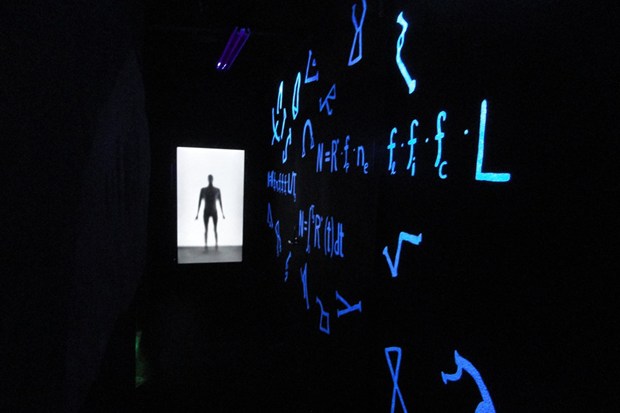
The actual Area 51 site at Groom Lake is still guarded by ferocious dogs, movement-detecting sensors and armed guards driving Warrior trucks, but years of research and investigation have gone into creating the ultimate Area 51 experience within the equally-interesting National Atomic Testing Museum of Las Vegas.
Since reporter George Knapp broke the story of Area 51 in the late 80s withBob Lazar‘s claims of reverse-engineering alien technology, it has been a hive of conspiracy theory and stranger-than-fiction folklore. Built originally for working on atomic weapons and testing them in the surrounding desert, Area 51 has grown massively and now even has its own runway, which is said to be the longest in the world, at an estimated 9.7km.
For years, the military refused to confirm Area 51’s existence, which contributed to the mystery surrounding it. Now however, for the first time, the facts have been laid out and presented at an exhibition open to the public. Although there isn’t a huge amount of detail about the goings-on in the depths of Area 51, visitors to the museum can expect more than scorched metal fragments in glass cases and dubious testimonies.
“This is an interactive exhibit,” the museum curator Karen Green told Wired.co.uk. “It actually takes the visitor to Area 51. Camouflaged personnel will meet the visitor and escort them into a mission room — and keep your badge on, this is top secret. You’ll be asked questions throughout the exhibit to help understand both the myth and the realities of Area 51. We want you to make up your own mind.”
No-one other than the US government, and employees flown in everyday via “Janet” flights on private planes from nearby McCarran airport, really know what is down there. Inside Area 51, or “Dreamland” as it’s sometimes known, is said to be a labyrinth of underground tunnels, containing what is claimed to be anything from advanced US aircraft to reptilian aliens. Over the years, the attention generated by the rumours surrounding the base has made it impossible for any kind of secret testing to take place as brazenly as it may once have, but the site is still massively popular amongst conspiracy theorists and curious onlookers alike.
Green explains why now is the right time to open the exhibit: “The National Atomic Testing Museum has been working on this exhibit for over three years, interviewing many of the people who worked at Area 51. Last year the name Area 51 was finally declassified by the CIA, and that opened the door for us to bring the first ever museum exhibit about Area 51 to the public. There are a number of things that are unique to this exhibit, including firsthand accounts of experiences from men who worked there, a rare look at untouched original UFO photographs from the Bigelow Aerospace Archives, and some ‘UFO artefacts’ from a crash in the Soviet Union that were given to investigative reporter George Knapp.”
Knapp, an investigative journalist based out of Las Vegas, is regarded as one of the few people who’ve approached the mystery of Area 51 with a level head, and his expertise played a major role in the construction of the museum. He told Wired.co.uk: “I’ve given [the Area 51 museum] quite a bit of input, a detailed history of the origin of the UFO stories, Lazar’s background, snippets I obtained from other witnesses and former employees, and a whole lot of post-UFO history. Area 51 is now known all over the world (…) and I helped the museum understand just how far it has spread.”
Knapp has spent decades investigating Area 51 and has spoken to many ex-employees who have been privy to highly-classified information. He claims to have seen US government documents detailing how it was more concerned about the lights in the sky than it ever let on in the public domain.
“I broadened the discussion by sharing with them some information about the larger UFO picture — secret studies by the US and Russian military, a paper trail of documents to show the subject was taken seriously behind the scenes, and some unusual objects I brought back from two perilous trips to the former USSR.”
Regarded now as the US military’s “worst kept secret”, it’s likely that Area 51 has become far too famous for it to genuinely hold any kind of world-altering secrets such as a reclaimed flying saucer or alien hybrids in glass jars, but Knapp is confident that highly advanced technology is still being tested there: “I am told the base is largely focused on UAV type technology, everything from pilotless combat fighters to invisible planes — literally — to the tiniest UAV’s, advanced machines the size of insects,” he explained.
“If there were ever any recovered saucers out there, and I do say ‘if’ — then they are long gone. Too many people have been out there looking for them, including members of Congress and major news organisations. A congressional staffer with the highest clearances once told me that if the stories turn out to be true — and he believed they were true — then it was clear the military and intelligence agencies have been lying to the public and to Congress for a long time, have been siphoning funds away from legitimate national security programs to maintain a cover-up and that if it could ever be proven, then a lot of these guys deserve to go to prison. That, by itself, is enough of a reason to maintain a cover-up as far as I’m concerned.”
So if you’re not too keen on being spirited away to some unknown holding cell a thousand floors under the desert after trying to ram-raid the main gate at Area 51, visit the museum, as it’s probably the closest you’ll ever get to the real thing.
SOURCE:
http://www.wired.co.uk/news/archive/2012-04/02/area-51-museum
By: Jake Hanrahan, April 2, 2012