
Apr 9, 2013 | Abuses of Power, News

Many documents produced by the U.S. government are confidential and not released to the public for legitimate reasons of national security. Others, however, are kept secret for more questionable reasons. The fact that presidents and other government officials have the power to deem materials classified provides them with an opportunity to use national security as an excuse to suppress documents and reports that would reveal embarrassing or illegal activities.
I’ve been collecting the stories of unreleased documents for several years. Now I have chosen 11 examples that were created—and buried—by both Democratic and Republican administrations and which cover assassinations, spying, torture, 50-year-old historical events, presidential directives with classified titles and…trade negotiations.
1. Obama Memo Allowing the Assassination of U.S. Citizens
When the administration of George W. Bush was confronted with cases of Americans fighting against their own country, it responded in a variety of ways. John Walker Lindh, captured while fighting with the Taliban in December 2001, was indicted by a federal grand jury and sentenced to 20 years in prison. José Padilla was arrested in Chicago in May 2002 and held as an “enemy combatant” until 2006 when he was transferred to civilian authority and, in August 2007, sentenced to 17 years in prison for conspiring to support terrorism. Adam Gadahn, who has made propaganda videos for al-Qaeda, was indicted for treason in 2006 and remains at large.
After he took over the presidency, Barack Obama did away with such traditional legal niceties and decided to just kill some Americans who would previously have been accused of treason or terrorism. His victims have included three American citizens killed in Yemen in 2011 by missiles fired from drones: U.S.-born anti-American cleric Anwar al-Awlaki, Samir Khan, an al-Qaeda propagandist from North Carolina, and Awlaki’s 16-year-old son, Abdulrahman al-Awlaki.
Obama justified his breach of U.S. and international law with a 50-page memorandum prepared by the Justice Department’s Office of Legal Counsel. Attorney General Eric Holder argued that the killing of Awlaki was legal because he was a wartime enemy and he could not be captured, but the legal justification for this argument is impossible to confirm because the Obama administration has refused to release the memo.
2. The Obama Interpretation of Section 215 of the Patriot Act
Section 215 of the Patriot Act allows the FBI, in pursuit of spies and terrorists, to order any person or entity to turn over “any tangible things” without having to justify its demands by demonstrating probable cause. For example, a library can be forced to reveal who borrowed a book or visited a web site. According to Section 215, the library is prohibited from telling anyone what it has turned over to the FBI.
The Obama administration has created a secret interpretation of Section 215 that goes beyond the direct wording of the law to include other information that can be collected. Democratic Senator Ron Wyden of Oregon, who, as a member of the Senate Intelligence Committee, was briefed about this secret interpretation, urged the president to make it public. “I want to deliver a warning this afternoon,” he said. “When the American people find out how their government has secretly interpreted the Patriot Act, they will be stunned and they will be angry.”
Wyden and Sen. Mark Udall of Colorado, also a Democrat, have implied that the Obama administration has expanded the use of Section 215 to activities other than espionage and terrorism. In a letter to Attorney General Eric Holder, Wyden and Udall wrote that “there is now a significant gap between what most Americans think the law allows and what the government secretly claims the law allows. This is a problem, because it is impossible to have an informed public debate about what the law should say when the public doesn’t know what its government thinks the law says.”
3. 30-page Summary of 9/11 Commission Interview with Bush and Cheney
You would have thought that, in the interests of the nation, the Bush administration would have demanded a thorough investigation of the terrorist attacks of September 11, 2001, the deadliest assault ever on U.S. soil. Instead, they fought tooth and nail against an independent investigation. Public pressure finally forced President George W. Bush to appoint a bipartisan commission that came to be known as the 9/11 Commission. It was eventually given a budget of $15 million…compared to the $39 million spent on the Monica Lewinsky/Bill Clinton investigation. When the commission completed its work in August 2004, the commissioners turned over all their records to the National Archives with the stipulation that the material was to be released to the public starting on January 2, 2009. However, most of the material remains classified. Among the more tantalizing still-secret documents are daily briefings given to President Bush that reportedly described increasingly worried warnings of a possible attack by operatives of Osama bin Laden.
Another secret document that the American people deserve to see is the 30-page summary of the interview of President Bush and Vice-President Dick Cheney conducted by all ten commissioners on April 29, 2004. Bush and Cheney refused to be interviewed unless they were together. They would not testify under oath and they refused to allow the interview to be recorded or transcribed. Instead the commission was allowed to bring with them a note taker. It is the summary based on this person’s notes that remains sealed.
4. Memos from President George W. Bush to the CIA Authorizing Waterboarding and other Torture Techniques
Four days after the terrorist attacks of September 11, 2001, President George W. Bush signed a “memorandum of notification” (still secret) that authorized the CIA to do what it needed to fight al-Qaeda. However the memo did not address what interrogation and torture techniques could be used on captured suspects. By June 2003, Director George Tenet and others at the CIA were becoming worried that if their seemingly illegal tactics became known to the public, the White House would deny responsibility and hang the CIA out to dry. After much discussion, Bush’s executive office handed over two memos, one in 2003 and another in 2004, confirming White House approval of the CIA interrogation methods, thus giving the CIA “top cover.” It is not known if President Bush himself signed the memos.
5. 1,171 CIA Documents Related to the Assassination of President Kennedy
It’s been 49 years since President John F. Kennedy was shot to death in Dallas, yet the National Archives and Records Administration (NARA) insists that more than one thousand documents relating to the case should not be released to the public until NARA is legally required to do so in 2017…unless the president at that time decides to extend the ban. It would appear that some of the blocked material deals with the late CIA agent David Phillips, who is thought to have dealt with Lee Harvey Oswald in Mexico City six weeks before the assassination.
6. Volume 5 of the CIA’s History of the Bay of Pigs Fiasco
In the late 1970s and early 1980s, CIA historian Dr. Jack B. Pfeiffer compiled a multi-volume history of the failed US attempt to invade Cuba in April 1961. In August 2005, the National Security Archive at George Washington University, citing the Freedom of Information Act, requested access to this history. The CIA finally released the information almost six years later, in July 2011. However it refused to release Volume V, which is titled “CIA’s Internal Investigation of the Bay of Pigs Operations.” Although more than 50 years have passed since the invasion, the U.S. District Court for the District of Columbia ruled that Volume V is exempt from the Freedom of Information Act because it “is covered by the deliberative process privilege” which “covers documents reflecting advisory opinions, recommendations and deliberations comprising part of a process by which governmental decisions and policies are formulated.”
7. National Security Decision Directives with Classified Titles
The day before he left the White House on January 20, 1993, President George H. W. Bush issued National Security Directive (NSD) #79, a document so secret that even its title remains classified almost 20 years later. The same goes for National Security Directive #77, issued a few days earlier, as well as four others issued in 1989 (#11, 13a, 19a and 25a). If the “a”s are any indication of the subjects, it is worth noting that NSD 13 dealt with countering cocaine trafficking in Peru; NSD 19 dealt with Libya and NSD 25 with an election in Nicaragua.
President Ronald Reagan also issued six NSDs with classified titles, and President Bill Clinton issued 29. President George W. Bush issued two such NSDs, presumably shortly after the terrorist attacks of September 11, 2001. President Barack Obama has issued at least seven Presidential Policy Directives with classified titles.
8. Major General Douglas Stone’s 700-Page Report on Prisoners Held in Afghanistan
Marine Corps General Douglas Stone earned positive reviews for his revamping of detention operations in Iraq, where he determined that most of the prisoners held by the United States were not actually militants and could be taught trades and rehabilitated. Based on his success in Iraq, Stone was given the task of making an evaluation of detainee facilities in Afghanistan. His findings, conclusions and recommendations were included in a 700-page report that he submitted to the U.S. Central Command in August 2009. According to some accounts of the report, Stone determined that two-thirds of the Afghan prisoners were not a threat and should be released. However, three years after he completed it, Stone’s report remains classified.
9. Detainee Assessment Briefs for Abdullah Tabarak and Abdurahman Khadr
In 2011, WikiLeaks released U.S. military files known as Detainee Assessment Briefs (DABs), which describe the cases of 765 prisoners held at Guantánamo Bay. However, there were actually 779 prisoners. So what happened to the files for the other fourteen? Andy Worthington, author of The Guantanamo Files, has noted that two of the fourteen missing stories are especially suspicious: those of Abdullah Tabarak and Abdurahman Khadr.
Tabarak, a Moroccan, was allegedly one of Osama bin Laden’s long-time bodyguards, and took over bin Laden’s satellite phone in order to draw U.S. fire to himself instead of to bin Laden when U.S. forces were chasing the al-Qaeda leader in the Tora Bora mountains in December 2001. Captured and sent to Guantánamo, Tabarak was mysteriously released, sent back to Morocco in July 2003, and set free shortly thereafter.
Abdurahman Khadr, the self-described “black sheep” of a militant family from Canada, was 20 years old when he was captured in Afghanistan and turned over to American forces. He has said that he was recruited by the CIA to become an informant at Guantánamo and then in Bosnia. When the CIA tried to send him to Iraq, he refused and returned to Canada. His younger brother, Omar, was 15 years old when he was captured in Afghanistan and accused of killing an American soldier, Sergeant First Class Christopher Speer, during a firefight. He was incarcerated at Guantánamo for almost ten years until he was finally released to Canadian custody on September 29, 2012.
10. FBI Guidelines for Using GPS Devices to Track Suspects
On January 23, 2012, in the case of United States v. Jones, the Supreme Court ruled unanimously that attaching a GPS device to a car to track its movements constitutes a “search” and is thus covered by the Fourth Amendment protecting Americans against “unreasonable searches and seizures.” But it did not address the question of whether the FBI and other law enforcement agencies must obtain a warrant to attach a GPS device or whether it is enough for an agent to believe that such a search would turn up evidence of wrongdoing.
A month later, at a symposium at the University of San Francisco, FBI lawyer Andrew Weissman announced that the FBI was issuing two memoranda to its agents to clarify how the agency would interpret the Supreme Court decision. One memo dealt with the use of GPS devices, including whether they could be attached to boats and airplanes and used at international borders. The second addressed how the ruling applied to non-GPS techniques used by the FBI.
The ACLU, citing the Freedom of Information Act, has requested publication of the two memos because they “will shape not only the conduct of its own agents but also the policies, practices and procedures of other law enforcement agencies—and, consequently, the privacy rights of Americans.”
11. U.S. Paper on Negotiating Position on the Free Trade Agreement of the Americas
The subject of international trade negotiations is one that makes most people’s eyes glaze over. So why is the Obama administration fighting so hard to keep secret a one-page document that relates to early negotiations regarding the Free Trade Agreement of the Americas (FTAA), an accord that was proposed 18 years ago and about which public negotiations ended in 2005? All we know is that the document “sets forth the United States’ initial proposed position on the meaning of the phrase ‘in like circumstances.’” This phrase “helps clarify when a country must treat foreign investors as favorably as local or other foreign investors.”
Responding to a Freedom of Information Act lawsuit filed by The Center for International Environmental Law, DC District Judge Richard W. Roberts ordered the Office of the United States Trade Representative (USTR) to release the document, but the Obama administration has refused, claiming that disclosure “reasonably could be expected to result in damage to the national security” because all the nations involved in the failed negotiations agreed to keep all documents secret until December 31, 2013…“unless a country were to object to the release of one of its own documents at that time.” Judge Roberts ruled that the USTR has failed to present any evidence that release of the document would damage national security.
Most likely, the Obama administration is afraid that release of the document would set a precedent that could impede another secret trade negotiation, the Trans-Pacific Partnership (TPP), also known as the Trans-Pacific Strategic Economic Partnership Agreement, which seeks to establish a free trade zone among the U.S., New Zealand, Chile, Singapore, Brunei, Australia, Peru, Vietnam, Malaysia and possibly Canada, Mexico and Japan.

Aug 5, 2012 | Activism, News
A History of Weather Derivatives
Facts lead me to sp eculate that the chemtrails so often seen in our skies are sprayed for financial gain. Chemtrails are admittedly sprayed as part of weather modification programs. There are two large financial markets that rise and fall with the weather; the weather derivatives market and the catastrophe reinsurance market. Chemtrails may be sprayed as part of a plan to manipulate the weather derivative and catastrophe reinsurance markets.
Even though the catastrophe reinsurance market is much larger, the focus of this paper is the history of the weather derivatives market because, while the history of the catastrophe reinsurance market is murky (I may uncover more in time), lots of information about the history of the weather derivatives market is available. It is this way because Enron originated the weather derivatives market. The fall of Enron was one of the greatest corporate scandals in American history, so there has been much already investigated and exposed.
Enron
When you’re talking about the history of weather derivatives, you’re talking about Enron. They developed the most widely used early trading platforms, they were founding members of the leading industry association and were counterparties in the first known domestic and international transactions.
In their heyday, Enron received Fortune Magazine’s award for ‘Most Innovative Company’ six years in a row. They gave their Enron Prize for Distinguished Public Service to people like Nelson Mandela and Mikhail Gorbachev. Henry Kissinger and James Baker worked as Enron consultants; traveling to such far-flung destinations as Kuwait and China preaching the Enron gospel. Stock analysts gushed over everything Enron did. Enron could seemingly do no wrong.
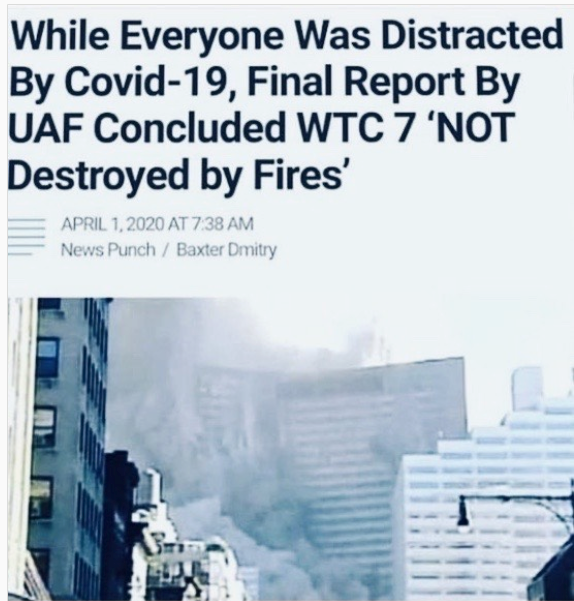
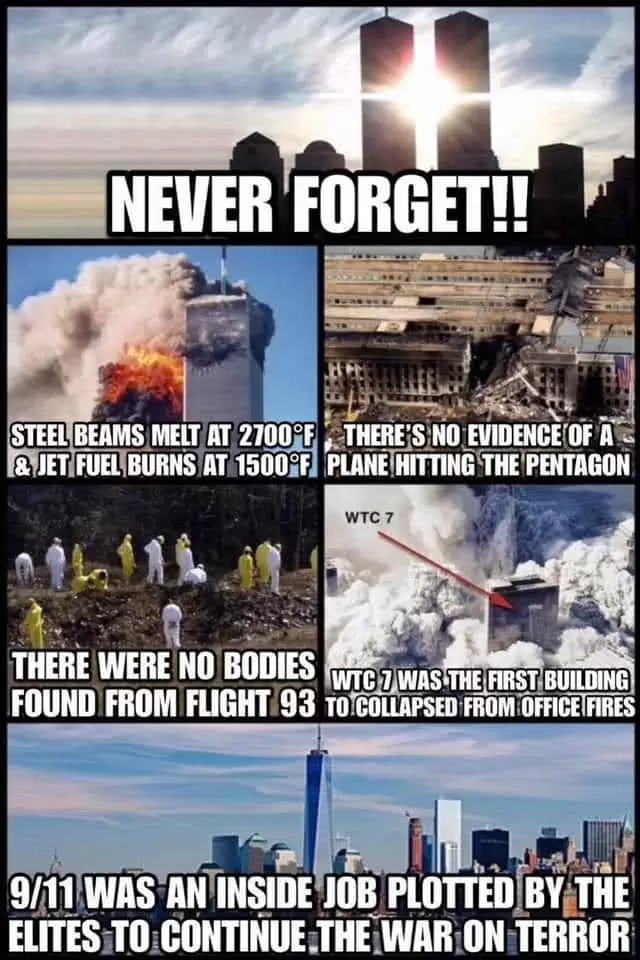
The only problem was, Enron was cooking the books seven ways to Sunday. When the S.H.T.F., Enron’s stock tanked like World Trade Center building 7 and eventually brought down one of the nation’s oldest and largest accounting firms, Arthur Andersen.
Although the company itself has long since been chopped up and sold off, former Enron employees now populate many other financial market trading establishments.
Enron Weather
The particular division known to buy and sell weather derivatives was called ‘Enron Weather.’ Enron Weather started as a small, but promising bit of the company. By the time of Enron’s demise in 2001, Enron Weather had grown to a significant part of their business.
It is suggested that Enron CEO Jeff Skilling’s brother, Tom Skilling originally had the idea for weather derivatives. Peter Fusaro and Ross Miller write in their book ‘What Went Wrong at Enron’:
“As temperatures spike upward in summer and fall in winter, utilities also potentially needed a hedge against the weather. Or so Enron thought – thanks to an idea that some Enron sources say Jeff Skilling’s brother Thomas, a weatherman in Chicago, suggested.”
Tom Skilling is the chief meteorologist at WGN-TV in Chicago, Illinois.
Loren Fox, the author of ‘Enron: The Rise and Fall’ tells the story of Enron Weather like this:
“…weather derivatives came to be championed by an employee working at the grassroots level and seeing customers’ daily needs. John Sherriff, who at the time managed gas trading for the western United States, began looking at derivatives linked to the weather in late 1995, and Vincent Kaminski’s research group worked on the idea in 1996. A gas trader named Lynda Clemmons was very interested in the idea, based on her conversations with executives at electric utilities that used coal-fired power plants…. In 1997, Enron handed off its weather derivatives effort to Clemmons, who was only 27. She began a one-person weather-hedging department within ECT…”
Fox continues:
“…Clemmons built up Enron’s weather business so that it did 350 transactions (hedging up to $400 million in potential revenues) in 1998, turning its first profit that year.”
Enron initiated the weather derivatives market in Europe as well. According to scholar Samuel Randalls, “In the UK, the first weather derivative deal was sold by Enron to Scottish Hydropower who, at that time, 1998, were taking part in a government pilot scheme for the privatization and deregulation of energy markets.”
Enron’s Oslo office became the base of their European weather derivatives business.
In 2000, Enron also introduced weather derivatives in Australia; offering temperature-based products for Sydney, Melbourne, Hong Kong, Tokyo and Osaka.
In 2002, after the bankruptcy, the Enron trading desk (including Enron Weather) was bought by UBS Warburg.
John Sherriff is now the owner of Lake Tahoe Financial and other Sherriff family businesses.
Mrs. Clemmons left Enron in 2000. She took a number of her colleagues from Enron’s weather team and set up weather derivatives company Element Reinsurance. After Enron, Lynda Clemmons also worked at XL Weather & Energy, The Storm Exchange Inc. and Vyapar Capital Market Partners. According to her Linkedin profile, Mrs. Clemmons is now an independent consultant.
a history of corruption
The Enron financial market trading desk, just like the company itself, had a history of corruption. Back in 1987, the Enron trading operations were called ‘Enron Oil.’ When questions about an Enron account at New York’s Apple Bank began surfacing, Enron management turned a blind eye. Money was pouring into this questionable account from a bank in the Channel Islands and flowing out to the account of a man named Tom Mastroeni; the treasurer of Enron Oil.
Enron management explained away these money flows and this questionable account as completely legal profit shifting. Although Mastroeni produced doctored bank statements and admitted a cover-up, Enron management didn’t pursue the issue. Nobody involved was even reprimanded. Revelations continued to come out, but Enron management did nothing. Enron’s accounting firm Arthur Andersen exhibited a similar disinterest.
After management confirmed an official lack of responsible oversight, Enron Oil traders ignored position limits and got themselves in big trouble. Only then did Enron executives show interest.
The authors of ‘The Smartest Guys in the Room’ tell the story like this:
“For months, Borget [the CEO of Enron Oil] had been betting that the price of oil was headed down, and for months, the market had stubbornly gone against him. As his losses had mounted, he had continually doubled down, ratcheting up the bet in the hope of recouping everything when prices ultimately turned in his direction. Finally, Borget had dug a hole so deep – and so potentially catastrophic – that there was virtually no hope of ever recovering.”
Enron brass was in a panic. Enron was looking at a $1 billion loss; enough to bankrupt the company. Management sent in some expert traders who, over the course of a few weeks, managed to clear out these positions with only a $140 million hit.
Enron had to tell people about this $140 million trading loss, though. Enron’s stock slid 30%. The blame game began. Ken Lay, the affable Enron founder and CEO, denied any responsibility. News of the scandal conveniently came out right after a big bank loan approval.
The U.S. attorney’s office charged Borget and Mastroeni with fraud and personal income tax violations. In 1990, Borget pled guilty to three felonies and was sentenced to a year in jail and and five years’ probation. Mastroeni pled guilty to two felonies. He got a suspended sentence and two years probation.
deregulation
Ken Lay helped his company make more money and created new financial markets (such as the weather derivatives market) through energy sector deregulation. Deregulation created a situation where Enron and others could more effectively manipulate and arbitrage (specifically regulatory arbitrage) markets.
Let us refer to a feature article published by industry publication Risk.net:
“‘Enron was the focal point of the deregulation agenda,’ says Jonathan Whitehead, who started with Enron Europe in 1996 and was heading the liquefied natural gas (LNG) business in Houston at the time of Enron’s demise. ‘It was the most vocal when explaining to regulators and governments and customers the benefits of deregulated markets. I don’t think deregulation in power and gas in Europe or the US would have come as far as it has without Enron,’ he says.
“Pushing for deregulation was very much a part of the company’s strategy from the start. ‘Ken Lay [chairman and chief executive of Enron] was the visionary at the time as far as seeing where deregulation could go and actually driving deregulation,’ says Mark Frevert, who worked at one of Enron’s predecessor companies, Houston Natural Gas, from 1984 and stayed at Enron until it’s demise.”
the right connections
Deregulation necessarily required help from the federal government. To make it happen, Enron and Ken Lay (who died in 2006) had the right federal connections in spades.
Ken Lay enlisted in the navy in 1968. His friend pulled some strings and had him transfered to the Pentagon. According to the authors of The Smartest Guys in the Room, Lay spent his time at the Pentagon, “…conducting studies on the military-procurement process. The work provided the basis for his doctoral thesis on how defense spending affects the economy.”
As I have explained in earlier writings, there is reason to believe that domestic chemtrail spraying operations and weather modification activities are carried out by our military. Ken Lay had many high level military connections.
Mr. Lay had the right political and specifically energy related political connections as well. He worked in the Nixon administration as a Federal Power Commission aide, then as deputy undersecretary of energy in the Interior Department. As chairman and CEO of Enron, he sat on the boards of Washington think tanks and often travelled to Washington.
A revolving door existed between Enron and the federal government. Enron executive Tom White left the company to join the Bush Jr. administration as secretary of the army. Enron executive Herbert ‘Pug’ Winokur was Lay’s old Pentagon friend. Robert Zoellick (now head of the World Bank) represented Enron, then the United States as Trade Representative and later as Deputy Secretary of State.
According to the authors of ‘The Smartest Guys in the Room’:
“In 1993, Lay added Wendy Gramm [to the Enron board], who had just finished a stint as chairman of the Commodities Futures Trading Commission (CFTC) and was married to Texas Senator Phil Gramm.”
It goes on:
“Just after Wendy Gramm stepped down from the CFTC, that agency approved an exemption that limited the regulatory scrutiny of Enron’s energy-derivatives trading business, a process she had set in motion.”
When Enron galloped into Europe, they had an influential lord on their side. Greg Palast covers it like this:
“The fact that a truly free market [in electricity] didn’t exist and cannot possibly work did not stop Britain’s woman in authority, Prime Minister Margaret Thatcher, from adopting it. It was more than free market theories that convinced her. Whispering in her ear was one Lord Wakeham, then merely ‘John’ Wakeham, Thatcher’s energy minister. Wakeham approved the first ‘merchant’ power station. It was owned by a company created only in 1985 – Enron. Lord Wakeham’s decision meant that, for the first time in any nation, an electricity plant owner, namely Enron, could charge whatever the market could bear… or, more accurately, could not bear.
“It was this act in 1990 that launched Enron as the deregulated international power trader. Shortly thereafter, Enron named Wakeham to its board of directors and placed him on Enron’s audit and compliance committee.”
As I speculate, a scheme to manipulate financial markets by modifying the weather would necessarily involve intelligence agencies. According to the authors of ‘The Smartest Guys in the Room,’ Enron had intelligence agency connections:
“One of Enron’s key advantages over its competitors was information: it simply had more of it than its competitors. It’s physical assets provided information, of course. And Enron didn’t stop there. It employed CIA agents who could find out anything about anyone. In stead of tracking the weather on the Weather Channel, the company had a meteorologist on staff. He’d arrive at the office at 4:30 A.M., download data from a satellite, and meet with the traders at 7:00 A.M. to share his insights.”
It continues:
“By the late 1990’s, these research efforts were herded together into something called the fundamentals group – fundies in trader parlance. The fundies group produced intelligence reports and held morning briefings…”
the Bush family
Mr. Lay and Enron had many connections to the Bush family and their cohorts. President George W. Bush (Bush Jr.) lovingly called Ken Lay ‘Kenny Boy.’ Mr. Lay was also close to his father, fellow Houstonian, George H.W. Bush (Bush Sr.). For example, in 1991, Bush Sr. offered Mr. Lay the position of commerce secretary. Mr. Lay turned him down. He wanted to be treasury secretary.
Greg Palast, in his book ‘The Best Democracy Money Can Buy,’ characterizes the Bush/Enron relationship like this:
“But what about Pioneer Lay of Enron Corp? His company, America’s number one power speculator, was also Dubya’s number-one political career donor ($1.8 million to Republicans during the 2000 presidential campaign). Lay was personal advisor to Bush during the postelection ‘transition.’ And his company held secret meetings with the energy plan’s drafters. Bush’s protecting electricity deregulation meant a big payday for Enron – subsequent bankruptcy not withstanding – sending profits up $87 million in the first quarter of Bush’s reign.”
Other Bushes were getting some, too. Greg Palast writes:
“Two months after the bankruptcy, Governor Jeb Bush of Florida traveled to the Texas home of Enron’s ex-president, Rich Kinder, to collect a stack of checks totaling $2 million at the power pillager’s $500-per-plate fund-raising dinner. There are a lot of workers in Florida who will wish they had a chance to lick those plates, because that’s all that’s left of the one-third of a billion dollars Florida’s state pension fund invested in Enron – three times as much as any other of the fifty states.”
Mr. Palast continues:
“Governor Bush encouraged a scheme by a company called Azurix to repipe the entire Southern Florida water system with new reservoirs that would pump fresh water into the swamps. From the view of expert hydrologists, such a mega-project is a crackbrained and useless waste of gobs of money. As part of the deal, Azurix would be handed the right to sell the reservoir’s water to six million Florida customers. Azurix was the wholly owned subsidiary of Enron that had recently been kicked out of Buenos Aires.”
Specializing in private equity buyouts, The Carlyle Group is one of their two main family businesses and one of the nation’s largest defense contractors. Chemtrail spraying is a military operation. The Carlyle Group could help geoengineering programs happen.
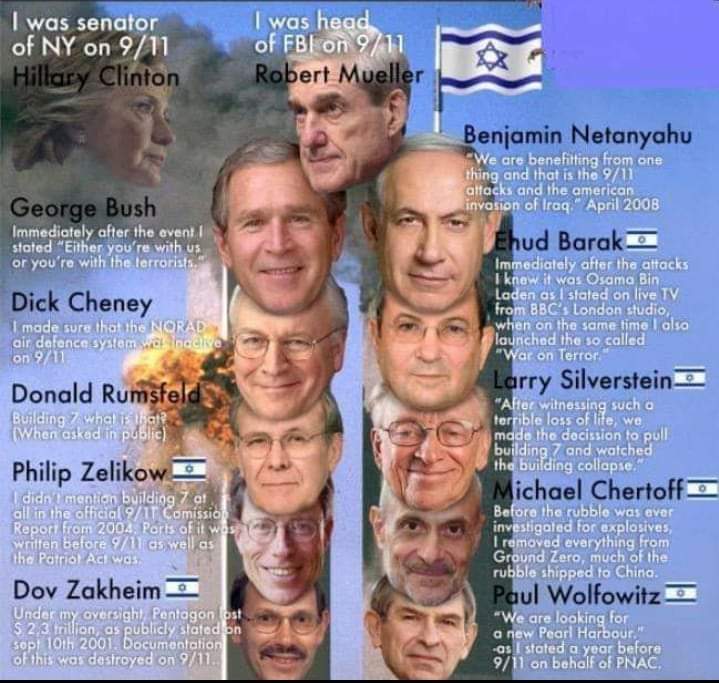
Participation in a scheme to defraud the population while murdering them at the same time would probably be A-o.k. with the Bush family. Bush family members exhibit recurring criminal behavior. Forget about the Enron connections. Do you know about the Nazi connections? Are you aware of the numerous links to 9/11? Have you heard of the connections to the attempted Reagan assassination or the attempted assassination of Pope John Paul II? Don’t forget that little Iran-Contra fiasco and the drug dealing, gun running and money laundering. Yup, they’re connected to that dirty, dirty BCCI thing, too. Folks, these are just some of the things we know about. When you see a few cockroaches, you can bet there are hundreds more in the wall.
So, who funds the Bush family? The answer is a little investment bank called Brown Brothers Harriman. Maybe you’ve heard of it. Webster Tarpley and Anton Chaitkin in their book ‘George Bush: the Unauthorized Biography’ describe the situation like this:
“For George Bush, Brown Brothers Harriman was and remains the family firm in the deepest sense. The formidable power of this bank and its ubiquitous network, wielded by Senator Prescott Bush up through the time of his death in 1972, and still active on George’s behalf down to the present day, is the single most important key to every step of George’s business, covert operations and political career.”
And I’ll go you one better. Who owns Brown Brothers Harriman (BBH)? That’s a good question because they are a private company. You cannot buy shares of BBH on any stock exchange. But, in fact, it really doesn’t matter who owns BBH because BBH (like all other big banks) suckles at the teet of the United States Federal Reserve Bank.
In order to get that fresh, uncirculated capital (which has more value than the money which is already in circulation), Brown Brothers Harriman acts upon the orders of the United States Federal Reserve Bank. Sure, BBH has businesses that make money, but when they start a new business such as weather derivatives, they act with the approval of the Fed. I understand this may be a lot to swallow for the uninitiated, but this is the way it works. Read ‘The Creature from Jekyll Island’ by G. Edward Griffin.
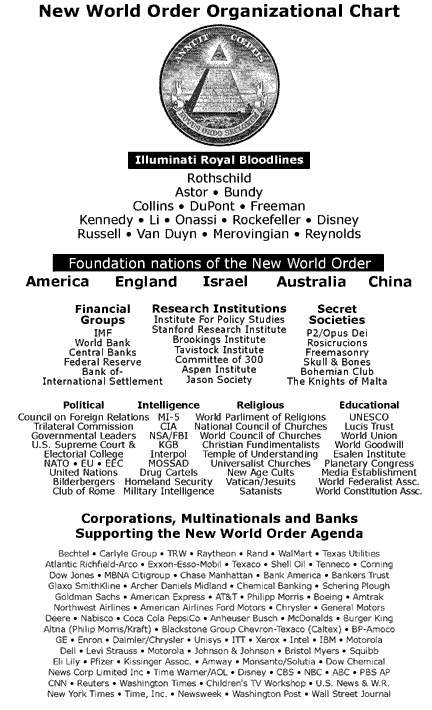
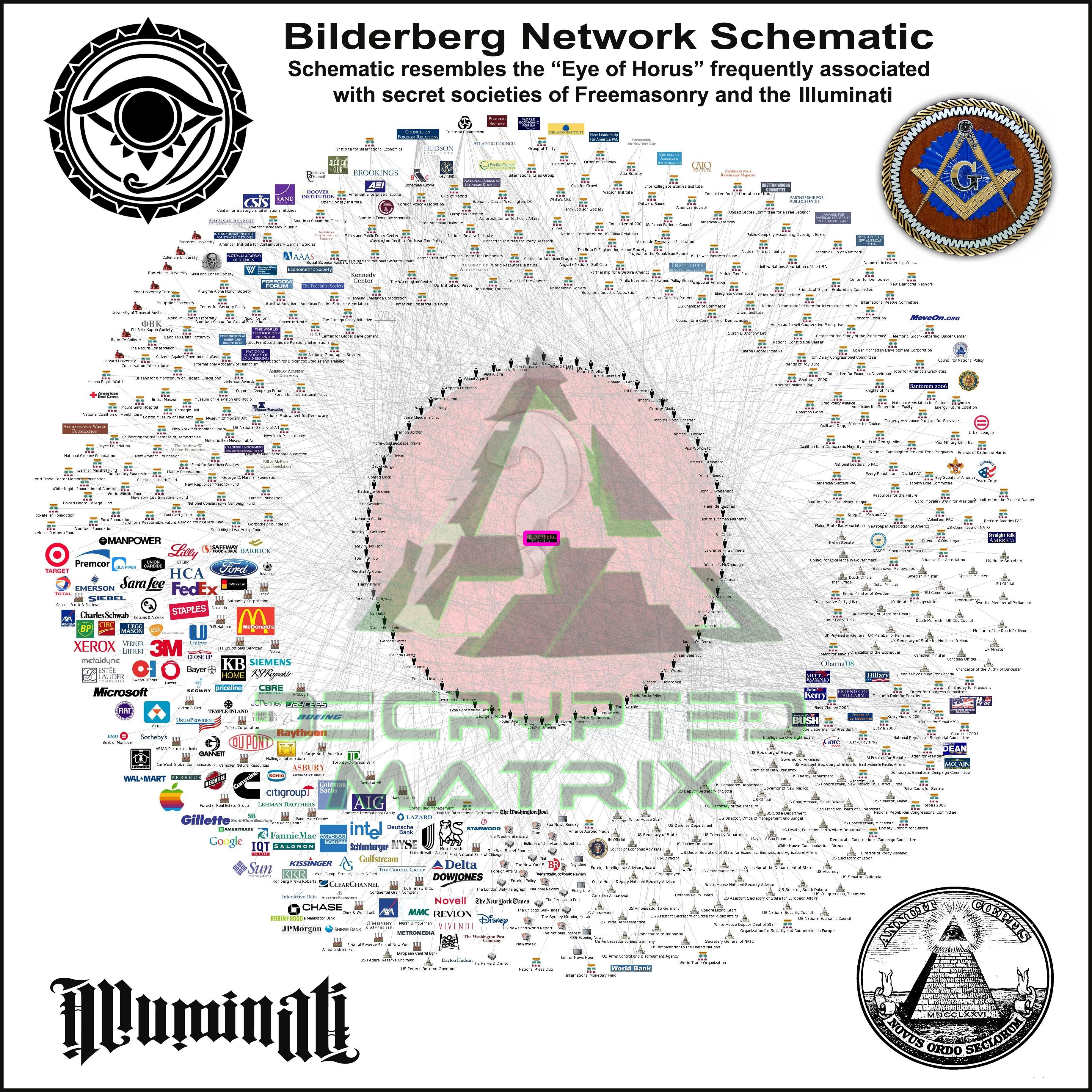
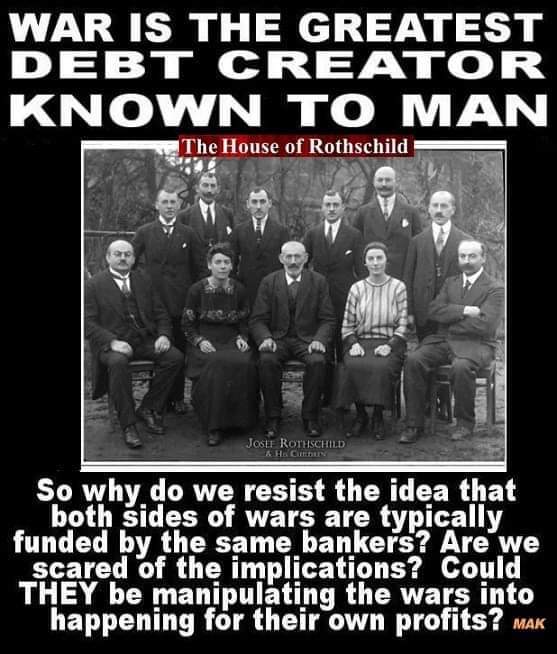
Who owns the Fed? Well, that’s the power behind the throne. It is an official secret, but I dare write the name of N.M. Rothschild as represented by the Bank of England.
In short, the Bush family, Enron and Ken Lay had the right political, business, intelligence and military connections necessary to facilitate the scheme I outline.
conclusions
Enron was a business laboratory directed by big banks. In the new world of deregulation created by the Bushes, Enron and others, the purpose of the company was to throw things against the wall and see what stuck. Enron employees were merely minions of those who controlled the purse strings. Enron was the perfect environment in which to try something new like weather derivatives. In light of the histories of corruption exhibited by those involved, it is understandable that the weather derivatives market they created may have been part of yet another murderous rip-off.
While most financial market trading operations are seen as unreliable, Enron’s trading desk was often regarded as their most productive and stable business. Could this have been because they were getting inside information about weather produced by geoengineering activities? I don’t know. I do know they had the ways and means necessary. Enron had motive and opportunity. Enron benefitted from weather derivatives.
notes
-‘The Smartest Guys in the Room’ book by Bethany McLean and Peter Elkind, Penguin Books 2004
-‘Weather as a Force Multiplier: Owning the Weather 2025’ report by the United States Air Force 1996
-‘The BCCI Affair’ report by Senators John Kerry and Hank Brown, 1992
-‘George Bush: the Unauthorized Biography’ book by Webster Tarpley and Anton Chaitkin, Progressive Press 2004
-‘The Best Democracy Money Can Buy’ book by Greg Palast, Penguin Books 2003
-‘Wall Street and the Rise of Hitler’ book by Antony Sutton, Buccaneer Books 1976
-‘Conspiracy of Fools’ by Kurt Eichenwald, Broadway Books 2005
-‘Enron: Charting the Legacy 10 Years on’ article by Risk.net 2011
-Enron annual report, 2000
-‘The Secrets of the Federal Reserve’ book by Eustace Mullins, Bridger House Publishers, Inc. 2009
-‘The Creature from Jekyll Island’ book by G. Edward Griffin, American Media 2010
-‘Enron: The Rise and Fall’ book by Loren Fox, John Wiley & Sons, Inc. 2003
-‘What Went Wrong at Enron: Everyone’s Guide to the Largest Bankruptcy in U.S. History’ book by Peter C. Fusaro and Ross M. Miller, John Wiley & Sons 2002
-‘Weather, Finance and Meteorology – forecasting and derivatives’ by Samuel Randalls School of Geography, Earth and Environmental Sciences, University of Birmingham
websites
wrma.org
risk.net
linkedin.com
xlgroup.com
vcmpartners.com
-Peter A. Kirby is a San Rafael, CA author and activist. Check out his ebook ‘Chemtrails Exposed:’
http://www.amazon.com/Chemtrails-Exposed-ebook/dp/B007JDN7EM/ref=sr_1_4?s=digital-text&ie=UTF8&qid=1331588967&sr=1-4
















 Thoe with the darkest fears became the most powerful