Mar 13, 2015 | Anonymous, Whistleblowers & Dissidents
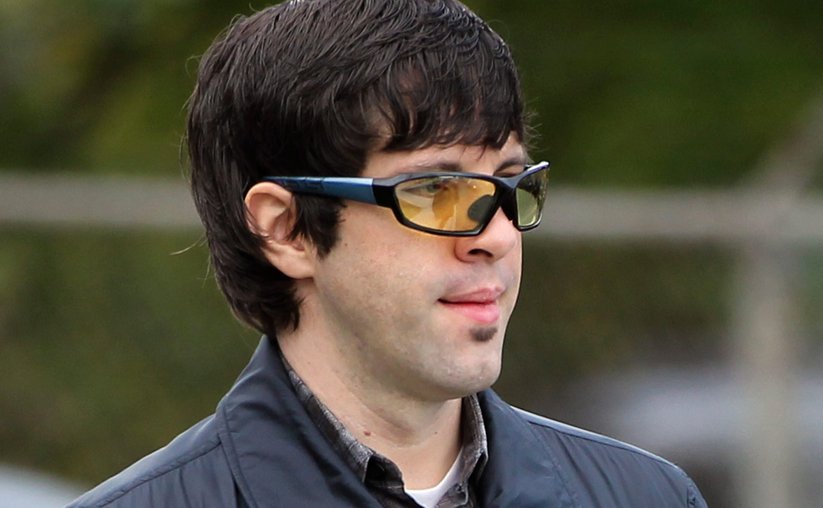
The case of Matt DeHart, a former U.S. drone pilot turned hacktivist, is as strange as it is disturbing. The 29-year-old was recently denied asylum in Canada, having fled there with his family after — he claims — he was drugged and tortured by agents of the FBI, who accused him of espionage and child pornography.
Prosecutors have shown they’re willing to say anything to convict a hacktivist, even if it means lying
Last week the Canadian Border Services Agency said he will be deported to the U.S. to stand trial “in very short order,” after a Canadian Immigration and Refugee Board ruling earlier this month denying his request for refugee status. He is being denied access to two thumb drives that he says contain evidence of illegal acts perpetrated by a U.S. government agency. Now after three unsuccessful attempts to gain political asylum, he fears that he and the files will be delivered to the very government he sought to escape.
“I cannot imagine any life in a country which has already tortured me,” Matt DeHart told reporter Adrian Humphreys, whose astonishing five-part series in Canada’s National Post documents the bizarre case. “Am I now to be given into the hands of my torturers?”
It’s tempting to dismiss DeHart’s claims based on their sheer outlandishness and his equally outlandish attempts to defect to Russia and Venezuela, which he now says he regrets. But given President Barack Obama’s administration’s penchant for punishing hacktivists and whistleblowers, a disturbing decades-long trend of prosecutorial misconduct and the now established fact that the U.S. has, as Obama put it, “tortured some folks,” it’s clear that the U.S. government’s claims in this case warrant even more skepticism.
Matt DeHart
According to government documents, Matt DeHart admitted during an interrogation to becoming involved with a spy ring during his time as a drone pilot, agreeing to broker the sale of military secrets for up to $100,000 per month through a Russian agent in Canada. But he claims he was being drugged and tortured and simply made the story up.
“I would have told them anything,” he told The National Post of his encounter with the FBI agents, during which he was denied a lawyer. “Information that is derived from torture — to use it against somebody is ridiculous. It’s garbage. I already said it’s not true.”
He testified that the agents admitted the child porn charges were fabricated — a ruse to enable investigation into his involvement with the nebulous hacktivist collective Anonymous. He says the investigation stems from a file he uploaded twice to a hidden website, hosted on the anonymous Tor network from a server in his parents’ house. DeHart claims it contained evidence of government wrongdoing, “an FBI investigation into the [CIA’s] practices.” Screen shots of the WikiLeaks website found on his computer suggest he intended to send the file to the whistleblowing organization.
After the asylum ruling earlier this month, three courts — two in the U.S. and one in Canada — have expressed strong doubts about the child pornography charges that triggered a search warrant onMatt DeHart’s parents’ home in the U.S. Those accusations date to 2008 and stemmed from his association with two teenagers while playing the online game “World of Warcraft,” one of whom was also involved with Anonymous; the charges were ultimately not proved.
After DeHart was arrested while crossing from Canada to the U.S. in 2010, a judge in Bangor, Maine, found it odd that prosecutors were suddenly citing the two-year-old porn accusations and that police hadn’t analyzed Matt DeHart computers for illicit files seven months after they were seized. A judge in Tennessee, where Matt DeHart ‘s family lived before moving to Canada, admitted that “the weight of the evidence is not as firm as I thought it was.” And most recently, the Canadian Immigration and Refugee Board concluded there was “no credible or trustworthy evidence” that DeHart had solicited child porn.
Prosecutorial misconduct helps the government railroad journalists, whistleblowers, hacktivists and any who dare to speak truth to power.
To be sure, Matt DeHart strange behavior throughout this ordeal doesn’t place him in a particularly flattering light. But it’s worth noting that these kinds of serious accusations are often made in cases against hacktivists and whistleblowers, helping place them in the government’s crosshairs and paint them as nefarious even when the accusations are easily disproved.
Barrett Brown, a journalist who investigated links between the U.S. government and private intelligence contractors, had all manner of ridiculous false accusations thrown at him before being sentenced last month to five and a half years in prison. He was initially charged for the innocuous act of copying and pasting a hyperlink to a public file stolen by Anonymous from one chat room into another. The charge was dropped, but the linking was still used to increase the length of his sentence, despite the fact that prosecutors had no evidence Brown had looked at the file or even known what was in it.
At one point, prosecutors claimed that Brown conspired with members of Anonymous to overthrow the U.S. government. They also accused him of participating in “SWATting,” the practice of making fake 911 calls to harass people in their homes, and even of plotting with another journalist to hack the Bahraini government. Not one of these claims was supported by the voluminous collection of chat logs that the government provided as evidence. Nor did additional logs obtained by The Daily Dot, which the prosecution had withheld under seal.
Brown was not entirely without fault in the case, having obstructed a search warrant and posted a YouTube video threatening an FBI agent in response to the seizure of his laptops. But in retrospect, it seems clear the impetus for the case was that the government saw Brown’s investigations as a threat and would say anything to guarantee his conviction, even if that meant knowingly making false statements. As Brown put it during his allocution, “This is not the rule of law … It is the rule of law enforcement.”
Close scrutiny
What can we expect from the Matt DeHart case if this is the prosecutorial legacy it follows?
As The New York Times editorial board recently noted, defendants have no recourse when police and prosecutors lie, cheat and conceal evidence in the courtroom, leading to what one federal judge has described (PDF) as a national epidemic of prosecutorial misconduct. Sometimes it leads to wrongful convictions. Other times, as in Brown’s case, it helps the government railroad journalists, whistleblowers, hacktivists and any who dare to speak truth to power.
Remember Aaron Swartz, an information activist who prosecutors pursued vigorously for the act of downloading too many academic articles from an MIT library? Much like in Brown’s case, prosecutors were accused of withholding evidence and coercing Swartz into taking a guilty plea. Swartz committed suicide in 2013 amid mounting legal costs and the possibility of up to 35 years in prison, triggering the DeHarts’ decision to flee the country.
“Aaron Swartz had very similar psychological makeup, similar age, same circumstances as Matt DeHart,” DeHart’s father, Paul DeHart, a retired U.S. Air Force major, told The National Post. “I do not want to wake up one day and find my son hanging from a rope in the garage of our house. And I have noplace to go to bring this to anyone’s attention.”
With Matt DeHart’s attempted defections and other erratic behavior, it’s admittedly difficult to determine where his true intentions lie. But the government’s actions against him have been just as sketchy, if not more so. His claims must be taken seriously, and his case should be closely scrutinized, lest another potential whistleblower fall prey to the state’s merciless war on leaks.
by Joshua Kopstein, a cyberculture journalist and researcher from New York City. His work focuses on Internet law and disorder, surveillance and government secrecy.
Oct 31, 2012 | Activism
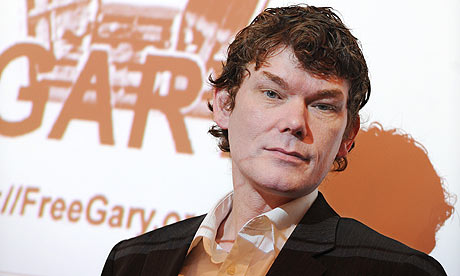
Are aliens real? One hacker who broke into US Military computers says yes, claiming that he found evidence of extraterrestrial life in the computer networks he broke into. Now, the United States is seeking extradition for breaching both military and NASA computer networks. However, the UK says that he isn’t fit to stand trial and has blocked his extradition.
 Gary McKinnon, 46, was a computer administrator previously. He hacked into military networks right after the September 11th, 2001 attacks. He says that he was looking for evidence of extraterrestrial life in those computers and that he found it. He claims he found both photographs of alien spacecraft and names of aliens who had flown them. If that is true, then the conspiracy theorists have been right all along. Aliens have landed on Earth and the United States Government is covering them up.
US Officials said that he caused almost a million dollars in damage and prosecutor Paul McNulty called it the ” biggest hack of military computers ever, at least ever detected.” UK Officials like Home Secretary Theresa May say that McKinnon suffers from depression and is at-risk of taking his own life. British Prime Minister David Cameron is also a supporter of McKinnon, even taking the case to President Barack Obama.
So, are aliens real? Is the government covering up extraterrestrials? This is perhaps not the most credible case that involves aliens, but depression does not necessarily mean mental incompetence, and apparently Gary McKinnon was competent enough to hack into one of the most secure computer networks in the world. One thing is certain. If the conspiracy theorists are right, Gary McKinnon should be receiving a visit from the Men in Black sometime in the near future.
via Gather
Aug 24, 2012 | Leaks, News
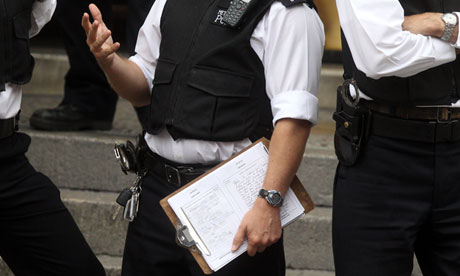
Handwritten note detailing Met police strategy suggests there should be no escape, no matter how he leaves embassy

A police officer holds notes on Julian Assange’s exile at the Ecuadorean embassy in London. The left side of the document has been pixellated due to sensitive information. Photograph: Lewis Whyld/PA
It is the “restricted” official document that sums up the Metropolitan police‘s tactics towards Julian Assange. “Action required: Assange to be arrested under all circumstances,” says the handwritten note that was photographed under a policeman’s arm on Friday detailing a “summary of the current position” on Assange’s exile inside the Ecuadorean embassy in Knightsbridge.
It is no surprise that a fugitive from a European arrest warrant that demands removal to Sweden to face allegations of rape and sexual assault should face such a fate. Police officers are stationed right up against the front and back of the embassy where Assange has sought sanctuary and he recently claimed to have heard them “swarming” behind the fire escape.
There should be no escape, the note suggests, ordering that Assange is arrested if “he comes out with dip [presumably a diplomat] … as dip bag [which allows immunity from search for diplomatic communications, and which could be as large as a suitcase, crate or even a shipping container], in dip car …. in dip vehicle.”
The note mentions “SS10 to liaise”. The Met police press office said it had no idea what this might mean. Could it be a misspelling of SO10, the colloquial name for the Met’s covert operations group? The later mention of SO20 suggests what Assange and his supporters have always feared: that the western powers that WikiLeaks has done so much to embarrass might consider him some sort of terrorist. SO20 is the Met’s counter-terrorism protective security command.

Photograph: Lewis Whyld/PA
Aug 16, 2012 | News
 The latest twist in the Julian Assange case, as we await Ecuador’s decision on granting him asylum (a decision which would not, as I’ve written before, in itself allow protection from arrest if he steps outside the embassy), is that people are wondering whether the UK can simply strip the embassy of its diplomatic status, so allowing police officers to enter it.
It seems the British embassy in Quito has written to the Ecuadorian government (hat tip to @JasonLeopold) saying
You need to be aware that there is a legal base in the UK, the Diplomatic and Consular Premises Act 1987, that would allow us to take actions in order to arrest Mr Assange in the current premises of the Embassy.
We sincerely hope that we do not reach that point, but if you are not capable of resolving this matter of Mr Assange’s presence in your premises, this is an open option for us.
The 1987 Act does indeed give ministers a power to withdraw recognition from diplomatic premises. Section 1(3) says
In no case is land to be regarded as a State’s diplomatic or consular premises for the purposes of any enactment or rule of law unless it has been so accepted or the Secretary of State has given that State consent under this section in relation to it; and if—
(a) a State ceases to use land for the purposes of its mission or exclusively for the purposes of a consular post; or
(b) the Secretary of State withdraws his acceptance or consent in relation to land,
it thereupon ceases to be diplomatic or consular premises for the purposes of all enactments and rules of law.
On the face of it, then, the Secretary of State (in practice a foreign office minister) could now simply withdraw consent, and with one bound, police would be free to make an arrest.
But it’s not quite as simple as that. You’ll note that section 1(4) says
The Secretary of State shall only give or withdraw consent or withdraw acceptance if he is satisfied that to do so is permissible under international law
and that according to section 1(5), in deciding whether to withdraw consent, the minister
shall have regard to all material considerations, and in particular, but without prejudice to the generality of this subsection—
(a) to the safety of the public;
(b) to national security; and
(c) to town and country planning.
The “compliance with international law” requirement may present a problem, since article 21 of the Vienna Convention on Diplomatic Relations requires the UK to facilitate the acquisition by Ecuador of premises necessary for its mission, or assist it in obtaining accommodation. It’s not obvious this allows the UK to just de-recognise the current premises without helping arrange something new.
Section 1(5) is interesting because, in spite of the way the drafting clearly intends to preserve ministers’ ability to take account of anything they think relevant, I’ve no doubt lawyers for Ecuador could argue that the list of three particular concerns colours the scope of ministers’ considerations, the result being that only some particular difficulty relating to safety or to the premises themselves could justify withdrawal.
More importantly, they could argue that Assange’s presence in the embassy and Ecuador’s conduct in sheltering him is not a material consideration; and that since that clearly lay behind the withdrawal, ministers would in deciding to withdraw consent, have taken into account an irrelevant factor.
In addition, there’d be a potentially strong argument to be made that ministers had exercised their power for an improper purpose not intended by Parliament when it enacted the 1987 legislation – their desire to arrest Julian Assange.
Ecuador could judicially review any proposed withdrawal: I think the effect on Assange means this is the type of case in which, as Lord Sumption explained in a recent speech, the courts would consider intervening in a foreign policy decision. Perhaps Assange could obtain an injunction on judicial review, preventing any arrest pending the outcome of proceedings. Of course, if the government successfully fought off that judicial review, the arrest could go ahead. But I don’t think a defence would be easy, and at the very least, a judicial review would create further delay – which probably suits Assange fairly well. I’m not sure giving him a hook to hang one on would be the best tactical move for the government.
The Quito letter from the UK to Ecuador went on apparently to say
We need to reiterate that we consider the continued use of the diplomatic premises in this way incompatible with the Vienna Convention and unsustainable and we have made clear the serious implications that this has for our diplomatic relations.
If I were advising the government, I think I’d say that, if ministers are determined to allow the arrest of Assange, it might be better simply to cut off diplomatic relations with Ecuador, send the ambassador home, close the embassy and arrest Assange after that. Ending diplomatic relations is the major sort of foreign affairs decision I doubt the courts would interfere with. But that’d be a major diplomatic call.
by Carl Gardner on August 15, 2012
SOURCE: HeadOfLegal.com
Aug 15, 2012 | News
 BREAKING NEWS: Police are massing at the Ecuadorian embassy in London where Australian WikiLeaks founder Julian Assange is holed up after his request for political asylum.
One personoutside the embassy, identifying himself as a “citizen journalist” with the twitter account https://twitter.com/alburyj is video streaming UK police entering the building.
Aroundt midnight, local time, WikiLeaks tweeted this morning that two large police vans had arrived ‘‘to surround the Ecuadorian embassy in London’’.
Jan 25, 2012 | Government Agenda
 Yesterday Alexander Cockburn reminded us of the news Israel Shamir and Paul Bennett broke at Counterpunch in September. Julian Assange’s chief accuser in Sweden has a significant history of work with anti-Castro groups, at least one of which is US funded and openly supported by a former CIA agent convicted in the mass murder of seventy three Cubans on an airliner he was involved in blowing up.
Anna Ardin (the official complainant) is often described by the media as a “leftist”. She has ties to the US-financed anti-Castro and anti-communist groups. She published her anti-Castro diatribes (see here and here) in the Swedish-language publication Revista de Asignaturas Cubanas put out by Misceláneas de Cuba. From Oslo, Professor Michael Seltzer points out that this periodical is the product of a well-financed anti-Castro organization in Sweden. He further notes that the group is connected with Union Liberal Cubana led by Carlos Alberto Montaner whose CIA ties were exposed here.
Quelle surprise, no? Shamir and Bennett went on to write about Ardin’s history in Cuba with a US funded group openly supported by a real terrorist: Luis Posada Carriles.
In Cuba she interacted with the feminist anti-Castro group Las damas de blanco (the Ladies in White). This group receives US government funds and the convicted anti-communist terrorist Luis Posada Carriles is a friend and supporter. Wikipedia quotes Hebe de Bonafini, president of the Argentine Madres de Plaza de Mayo as saying that “the so-called Ladies in White defend the terrorism of the United States.”
Who is Luis Posada Carriles? He’s a mass murderer, and former CIA agent. . . .
Luis Clemente Faustino Posada Carriles (born February 15, 1928) (nicknamed Bambi by some Cuban exiles)[1] is a Cuban-born Venezuelan anti-communist extremist. A former Central Intelligence Agency agent,[2] Posada has been convicted in absentia of involvement in various terrorist attacks and plots in the Americas, including: involvement in the 1976 bombing of a Cuban airliner that killed seventy-three people;[3][4] admitted involvement in a string of bombings in 1997 targeting fashionable Cuban hotels and nightspots;[5][6][7] involvement in the Bay of Pigs invasion; [and] involvement in the Iran-Contra affair…
Luis Posada Carriles is so evil that even the Bush administration wanted him behind bars:
In 2005, Posada was held by U.S. authorities in Texas on the charge of illegal presence on national territory before the charges were dismissed on May 8, 2007. On September 28, 2005 a U.S. immigration judge ruled that Posada cannot be deported, finding that he faces the threat of torture in Venezuela.[11] His release on bail on April 19, 2007 had elicited angry reactions from the Cuban and Venezuelan governments.[12] The U.S. Justice Department had urged the court to keep him in jail because he was “an admitted mastermind of terrorist plots and attacks”, a flight risk and a danger to the community.[7]
Who is Julian Assange’s chief accuser in Sweden? She’s a gender equity officer at Uppsula University – who chose to associate with a US funded group openly supported by a convicted terrorist and mass murderer. She just happens to have her work published by a very well funded group connected with Union Liberal Cubana – whose leader, Carlos Alberto Montaner, in turn just happened to pop up on right wing Colombian TV a few hours after the right-wing coup in Honduras. Where he joined the leader of the failed coup in Ecuador to savage Correa, the target of the coup. Montnaner also just happened to vociferously support the violent coup in Honduras, and chose to show up to sing the praises of the Honduran junta. Jean-Guy Allard, a retired Canadian journalist who now writes for Cuba’s Gramma, captured the moment
A strange pair appeared on NTN 24, the right-wing Colombian television channel aligned to the Fox Broadcasting Company the U.S. A few hours after the coup attempt in Quito, Ecuador, CIA agent Carlos Alberto Montaner, a fugitive from Cuban justice for acts of terrorism, joined with one of the leaders of the failed Ecuadorian coup, ex-Lieutenant Colonel Lucio Gutiérrez, to attack President Rafael Correa…
On the margin of his media news shows, Montaner’s is known for his fanatic support of the most extreme elements of the Cuban-American mafia.
Last year, in the wake of the coup d’état against Honduran President Manuel Zelaya, June 28, he became an fervent supporter of the dictator Roberto Micheletti, along with U.S. Congresswoman Ileana Ros-Lehtinen, and another Cuban-American terrorist and CIA collaborator, Armando Valladares.
Montaner showed up repeatedly in Tegucigalpa to “defend human rights,” and at the same time to applaud the fascist Honduran regime when it unleashed its police on demonstrations by the National Resistance Front.
Oh…and the “rape” charge that’s smeared Julian Assange’s name around the world? On Thursday James D. Catlin, the Melbourne barrister who represented Assange in London, wrote:
Apparently having consensual sex in Sweden without a condom is punishable by a term of imprisonment of a minimum of two years for rape. That is the basis for a reinstitution of rape charges against WikiLeaks figurehead Julian Assange that is destined to make Sweden and its justice system the laughing stock of the world and dramatically damage its reputation as a model of modernity.
Sweden’s Public Prosecutor’s Office was embarrassed in August this year when it leaked to the media that it was seeking to arrest Assange for rape, then on the same day withdrew the arrest warrant because in its own words there was “no evidence”. The damage to Assange’s reputation is incalculable. More than three quarters of internet references to his name refer to rape. Now, three months on and three prosecutors later, the Swedes seem to be clear on their basis to proceed. Consensual sex that started out with a condom ended up without one, ergo, the sex was not consensual.
I’ve spent much of my professional life as a psychiatrist helping women (and men) who are survivors of sexual violence. Rape is a hideous crime. Yet in Assange’s case his alleged victim – the gender equity officer at Uppsala University – chose to throw a party for her alleged assailant – after they’d had the sex that even Swedish prosecutors concede was consensual. Barrister Caitlin again:
[The] phenomena of social networking through the internet and mobile phones constrains Swedish authorities from augmenting the evidence against Assange because it would look even less credible in the face of tweets by Anna Ardin and SMS texts by Sofia Wilén boasting of their respective conquests after the “crimes”.
In the case of Ardin it is clear that she has thrown a party in Assange’s honour at her flat after the “crime” and tweeted to her followers that she is with the “the world’s coolest smartest people, it’s amazing!”. Go on the internet and see for yourself. That Ardin has sought unsuccessfully to delete these exculpatory tweets from the public record should be a matter of grave concern. That she has published on the internet a guide on how to get revenge on cheating boyfriends ever graver. The exact content of Wilén’s mobile phone texts is not yet known but their bragging and exculpatory character has been confirmed by Swedish prosecutors. Neither Wilén’s nor Ardin’s texts complain of rape.
Small world, isn’t it? Julian Assange is the human face of Wikileaks – the organization that’s enabled whistle-blowers to reveal hideous war crimes and expose much of America’s foreign policy to the world.
He just happens to meet a Swedish woman who just happens to have been publishing her work in a well-funded anti-Castro group that just happens to have links with a group led by a man at least one journalist describes as an agent of the CIA: the violent secret arm of America’s foreign policy.
And she just happens to have been expelled from Cuba, which just happens to be the global symbol of successful defiance of American foreign policy.
And – despite her work in Sweden upholding the human right of gender equity – in Cuba she just happens to end up associating with a group openly supported by an admitted CIA agent who himself committed mass murder when he actively participated in the terrorist bombing of a jetliner carrying a Cuban sports team…an act that was of a piece with America’s secret foreign policy of violent attacks against Cuban state interests.
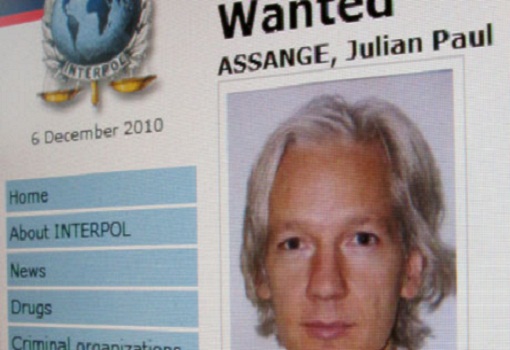
And now she just happens – after admittedly consensual sex – to have gone to Swedish authorities to report the sex ended without a condom…which just happens to be the pretext for Interpol to issue a “Red Notice” informing the world’s police forces of charges against Julian Assange.
Who just happens to be the man America’s political class – the people who run America’s foreign policy – have been trying to silence. And who happens to be the man some of them have been calling to have murdered.
With a lust for vengeance like that, one could be forgiven for concluding they’ve just happened to have taken a page from Anna’s revenge manual.
http://my.firedoglake.com/kirkmurphy/2010/12/04/assanges-chief-accuser-has-her-own-history-with-us-funded-anti-castro-groups-one-of-which-has-cia-ties/#