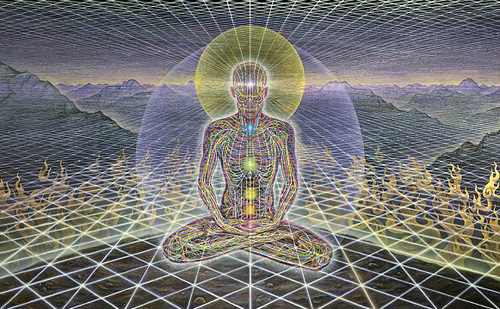
Meditation is nothing but a device to make you aware of your real self – which is not created by you which need not be created by you, which you already are. You are born with it. You are it! It needs to be discovered. If this is not possible, or if the society does not allow it to happen… and no society allows it to happen, because the real self is dangerous: dangerous for the established church, dangerous for the state, dangerous for the crowd, dangerous for the tradition, because once a man knows his real self, he becomes an individual.
He no longer belongs to the mob psychology; he will not be superstitious; and he cannot be exploited, and he cannot be led like cattle, he cannot be ordered and commanded. He will live according to his light; he will live from his own inwardness. His life will have tremendous beauty, integrity. But that is the fear of society.
George A. Romero’s Vital Role in Paving the Road for Today’s Zombie Film
The first feature length film to employ zombies as a vehicle for social commentary was Abel Gance’s J’Accuse (1919), which is also memorable for featuring authentic footage from the battlefields of the first World War. In the 1930’s, many zombie films were inspired by mostly misinterpreted Haitian mythology. Today, zombie film and culture now permeate virtually all mass media, everything from video games, to TV shows, to graphic novels. Zombies are used as a narrative device to discuss any number of issues, from oppressive, military states, to contagions and pandemics, to xenophobia and social stigma. We owe most of this to George A. Romero.
Zombie films, and indeed exploitation films in general, would not exist as we know them today if not for Romero’s influence. From his early work with the groundbreaking films Night of the Living Dead (1968), Dawn of the Dead (1978), and Day of the Dead (1985) that set the zombie genre in motion to his recent works like Land of the Dead (2005), Diary of the Dead (2007), and Survival of the Dead (2010) Romero set the standard for the zombie movie in ways that changed how we watch the genre entirely.
Night of the Living Dead, although black and white and also shot on a shoestring budget, has a depth that was surprising for the time. Although the film didn’t shy away from explicit onscreen violence, it wasn’t the blood and guts alone that made this film revolutionary. After all, by 1968, exploitation filmmakers like Herschell Gordon Lewis had already been churning out over-the-top gory films like Blood Feast (1963) for a few years. What distinguished Romero’s film was that it didn’t rely exclusively on sensational gimmicks, but it endeavored to tell a meaningful story with characters that elicited emotional responses from viewers. The film focused more on the human relationships during the post apocalyptic backdrop, and it offered poignant commentary about humanity’s inability to reconcile conflicting self-interests in crisis situations. The film is also notable for featuring a black actor (Duane Jones) as its male lead. What’s more, the film had the audacity to have its main character killed off — and what’s more, the black male lead is shot by a white militia. Bear in mind that Martin Luther King Jr. was assassinated around the time of the film’s release, and Malcolm X had been assassinated a mere three years prior.
His next installment in the Dead saga was Dawn of the Dead (1978), which mostly takes place inside an overrun shopping mall and also focuses on the survivors of a zombie outbreak. We are told that the zombies flock to the mall because they have vague memories of the site holding personal significance for them. It’s Romero’s stab at consumer culture, and the unhealthy degree of importance assigned to material wealth.
In 1985’s Day of the Dead Romero envisions an underground military base where zombies have been kept for experimentation. It evokes sympathy for the zombies, and vilifies the power-crazed military officials (especially the psychopathic Captain Rhodes, who meets an especially gruesome end). Day, with it’s scaything criticism of governmental abuse of power and ethical issues surrounding military service, is perhaps the most socially relevant of all the Dead films. Not only is it attracting fresh attention because of regular screenings on TV, particularly the new grindhouse/horror-oriented El Rey cable network (more info here), but the film also laid the groundwork for modern zombie productions like The Walking Dead, and 28 Days Later. And moreover, his films have been remade and adapted, proving that they are still as relevant as ever to a modern day audience.
While his film Land of the Dead (2005) did offer unique criticism of the Bush administration, his follow-ups, Diary of the Dead (2007), and Survival of the Dead (2010) failed to gain widespread attention like his earlier works did but they still prove to be potent additions to the zombie film genre catalog. His most recent outings lack the potency as the earlier films. However, these movies were not totally without merit and, in fact, only upheld the idea that Romero is an incredibly important figure in the zombie genre who had an integral role shaping what it is today.
In more recent, unrelated works like The Walking Dead and 28 Days Later, the very ideas those films were founded upon are the same ideas that Romero laid out in his earlier works and upheld in his later films. Surely, if not for Romero’s works and contributions, the zombie genre that we know and love to today would seem infinitely less-thrilling, and considerably less relevant, than it is today.
1. Find something beautiful and appreciate it.
Beauty is all around us, from the morning dew to the evening stars and everything in between. Most go through life not noticing all the beautiful things that are around them, and yes it’s every where, so take the time to notice them, and appreciate them when you see it. Whether it’s the scent of a flower or the way rain ripples in puddles of water, appreciate the beauty life has to offer.
2. Make a list of all that you are grateful for.
Making a gratitude list shifts your vibrations from focusing on what you do not have to what is already abundant in your life. There is more to be grateful for than you could possibly imagine. You can start with “I’m Alive!” and expand from there. Gratitude is the Attitude.
3. Meditate.
Sit in a comfortable position, close your eyes and breath in and out. Too often we rush through our days with a scattered brain leaving us in a state of anxiety and stress, Meditation helps to calm your spirit down and put you in a peaceful state of mind. 10 Minuets of meditation a day can change your life forever.
4. Do something for someone else.
Giving to someone else shifts your thinking from “I don’t have enough, to I have more than enough to give to others.” Abundance is a high vibration.
5. Stop complaining and gossiping.
Complaining and Gossip puts you in a very low vibration. Ask yourself “Are the things you are talking about bringing you more of what you want?” if not then, Stop complaining, and start finding ways to rejoice.
6. Move. Exercise. Get active.
Vibration requires movement, the more you move the better your vibrations move. So Get Active! Dance! The happier you feel, the more you will draw happy experiences to yourself because you are operating at a different frequency.
7. Realize that you have more control over your life than you thought.
You are not a victim to circumstance, past, family upbringing, trauma, or anything else. You can change your life in an instant. Just realize this. In many wisdom traditions this is called “total responsibility.” No one is responsible for how you feel right now but you. It isn’t a curse. It’s a blessing because it gives you your power back.
8. Breathe.
Just sit and try to make your breath longer, fuller, and more relaxed. It has a direct affect on your nervous system and helps to calm you down. A calm vibration is a high vibration.
9. Do Something You’re Afraid Of
Fear holds us back from being in a state of love and happiness, and facing those fears opens you up to a greater world of possibilities. Fear of Heights? Go skydiving. Scared of public speaking, say a poem at an open mic. You’ll begin to realize your fear was worse then the actual problem, and a sense of relief will wash over you.
10. Have a Meaningful Conversation with a Friend
Rather than gossip or complaining, talk about you ideas. What do you have planned for yourself? what do you think is the nature of reality? Are we spiritual beings having a human experience? Talking about these things with someone helps to raise both your vibrations by thinking big. If you don’t have someone to talk to about these kinds of things with, there’s a community of higher minded individuals right here. Leave a comment down below and let’s chat!
The Infinite Human is a concept that dates back millennia. Somehow, we have become experts at ‘limitation’, and applying it wherever possible. This episode is the first of a multi-part series of which is dedicated to YOU, the listener. Tune in to understand how important our definitions, believe systems, and emotional state becomes in relation to achieving goals, reaching ‘success’, and ultimately experiencing true happiness. Realize the power of NOW, the power of LOVE, and the power of SELF. Remember that the essential nature of the universe, is that it is non-material. After understanding this, it is easier to see how we can choose to have the things we want, or just the reasons why we can’t.
Reality, Inter-connected. All matter is thought – the nature of the material world, is that it is completely non-material.
Wayne Dyer, Deepak Chopra, David Wilcock, David Icke, Michael Talbot, Gregg Braden,David Lynch, James Traitz, Robert Anton Wilson, Neil Kramer, Grant Morrison, Bill Hicks
Have you ever wished you could go back in time and have a conversation with one of the greatest minds in history? Well, you can’t sorry, they’re dead. Unless of course you’re clairaudient, be my guest. But for the rest of us, we can still refer to the words they left behind.
Even though these great teachers have passed on, their words still live, and in them their wisdom. I’ve made a list of seven what I believe are some of the greatest teachings by the world’s greatest minds.
1. Realizing Your Dreams
“If you don’t know where you are going, you’ll end up someplace else.”
– Lawrence J. Peter
In order for us to achieve our dreams, we must have a vision of our goals. Writing down our dreams and creating a list of actions helps us stick to our plan. As it’s said “if you can’t measure it, you can’t manage it”. When we turn our goals into measurable actions, we gain clarity and are able to see the necessary steps we must take in order to achieve them.
Action: Visualize a life of your wildest dreams. What did you dream of doing when you were a child? What would you do if you had a million dollars? Create a vision for your goals and start breaking them down into small actions that you can take on a day by day basis.
2. Overcoming Fear
“It was a high counsel that I once heard given to a young person, “Always do what you are afraid to do.”
– Ralph Waldo Emerson
The best way to learn something is to dive right in to it. When we overcome our fear of failure, we learn that only those who are asleep make no mistakes. Fear is the only thing keeping us from experiencing a life of love and fulfillment. If we make a commitment to an uncompromisable quest for truth, we will realize that as we grow more into the truth, our fears start to disappear.
Action: You must define your fears in order to conquer them. Create a list of everything you’re afraid of and start facing them one at a time. Make a commitment to yourself now to not let fear rule your life.
3. Intention and Desire
“All that we are is the result of what we have thought. The mind is everything. What we think, we become.”– Guatama Buddha
Our thoughts determine our reality. When we stop thinking about what we don’t and begin thinking about what we do want, our lives begin to transform. Instead of working against our desires and intentions, we move into alignment with them.
Action: Create a list of your intentions and desires. Wherever you go, take this list with you. Read it when you wake up and before you go to sleep.
4. Happiness
“Happiness depends more on the inward disposition of mind than on outward circumstances.”
– Benjamin Franklin
Happiness comes from an inner peace, understanding and acceptance of life; a perspective of truth that opens your eyes to the beauty of life all around us. Happiness cannot be achieved by external status, it must be an internal state that we realize when we see our innate perfection.
Action: Realize that happiness is a choice. In every decision you make ask yourself “how can I respond to make myself happy and fulfilled?”
5. Self Acceptance
“If a house be divided against itself, that house cannot stand.” – Jesus
When we stop trying to be what we are not, we realize our authenticity. Before we had knowledge, we were completely authentic. We learn to use knowledge to measure and judge, which is a powerful tool we have as humans. However we create an image of perfection in our mind of what we should be, but are not. We confuse knowledge for nature. We believe in the lie of our imperfection. When we realize this we can reclaim the truth of our perfection and live in love and acceptance.
Action: Make a commitment to never go against yourself. Practice non-judgment and realize that the same part of your mind that condemns you is the same voice that caused you to take the action in the first place. We don’t even have to believe what we say to ourselves.
6. Appreciation and Gratitude
“So much has been given to me, I have not time to ponder over that which has been denied.”
– Helen Keller
How many times do we count our misfortunes rather than our blessings? When we take time to open our eyes to the miracle of life we can see the many gifts that have been given to us. Remembering all the beautiful aspects of life and all the reasons you are blessed can immediately shift our mood. We can move from sorrow and despair to appreciation and hope.
Action: Each time you find yourself complaining about something, re-direct your focus to something you are grateful for. Make a habit of transforming your awareness of troubles into an awareness of abundance.
7. The Art of Simplicity
“I made this letter longer than usual because I lack the time to make it short.”
– Blaise Pascal
Perfection is not when there is nothing to add, but when there is nothing more to take away. As Bruce Lee once said “the height of cultivation always runs to simplicity.” True mastery of our lives is realizing the simple joys of life, removing distractions and clutter from our lives.
Action: The art of simplicity is knowing what to take away. Practice recognizing when you’re spending your time on unimportant tasks and re-focus on the important.
This list is by no means exhaustive. There are other many great teachings that I did not include here because I felt like they were already expounded on thoroughly elsewhere, such as Einstein and Gandhi’s timeless classics. There are also great teachings to be found from our parents or friends.
By Bronnie Ware (who worked for years nursing the dying)
For many years I worked in palliative care. My patients were those who had gone home to die. Some incredibly special times were shared. I was with them for the last three to twelve weeks of their lives. People grow a lot when they are faced with their own mortality.
I learnt never to underestimate someone’s capacity for growth. Some changes were phenomenal. Each experienced a variety of emotions, as expected, denial, fear, anger, remorse, more denial and eventually acceptance. Every single patient found their peace before they departed though, every one of them.
When questioned about any regrets they had or anything they would do differently, common themes surfaced again and again. Here are the most common five:
1. I wish I’d had the courage to live a life true to myself, not the life others expected of me.
This was the most common regret of all. When people realize that their life is almost over and look back clearly on it, it is easy to see how many dreams have gone unfulfilled. Most people had not honoured even a half of their dreams and had to die knowing that it was due to choices they had made, or not made.
It is very important to try and honour at least some of your dreams along the way. From the moment that you lose your health, it is too late. Health brings a freedom very few realise, until they no longer have it.
2. I wish I didn’t work so hard.
This came from every male patient that I nursed. They missed their children’s youth and their partner’s companionship. Women also spoke of this regret. But as most were from an older generation, many of the female patients had not been breadwinners. All of the men I nursed deeply regretted spending so much of their lives on the treadmill of a work existence.
By simplifying your lifestyle and making conscious choices along the way, it is possible to not need the income that you think you do. And by creating more space in your life, you become happier and more open to new opportunities, ones more suited to your new lifestyle.
3. I wish I’d had the courage to express my feelings.
Many people suppressed their feelings in order to keep peace with others. As a result, they settled for a mediocre existence and never
became who they were truly capable of becoming. Many developed illnesses relating to the bitterness and resentment they carried as a
result.
We cannot control the reactions of others. However, although people may initially react when you change the way you are by speaking honestly, in the end it raises the relationship to a whole new and healthier level. Either that or it releases the unhealthy relationship from your life. Either way, you win.
4. I wish I had stayed in touch with my friends.
Often they would not truly realise the full benefits of old friends until their dying weeks and it was not always possible to track them down. Many had become so caught up in their own lives that they had let golden friendships slip by over the years. There were many deep regrets about not giving friendships the time and effort that they deserved. Everyone misses their friends when they are dying.
It is common for anyone in a busy lifestyle to let friendships slip. But when you are faced with your approaching death, the physical
details of life fall away. People do want to get their financial affairs in order if possible. But it is not money or status that holds the true importance for them. They want to get things in order more for the benefit of those they love. Usually though, they are too ill and weary to ever manage this task. It is all comes down to love and relationships in the end.
That is all that remains in the final weeks, love and relationships.
5. I wish that I had let myself be happier.
This is a surprisingly common one. Many did not realise until the end that happiness is a choice. They had stayed stuck in old patterns and habits. The so-called ‘comfort’ of familiarity overflowed into their emotions, as well as their physical lives. Fear of change had them pretending to others, and to their selves, that they were content. When deep within, they longed to laugh properly and have silliness in their life again. When you are on your deathbed, what others think of you is a long way from your mind. How wonderful to be able to let go and smile again, long before you are dying.
Life is a choice. It is YOUR life. Choose consciously, choose wisely, choose honestly. Choose happiness.