Conversations About The Fed On Facebook, Twitter, Forums And Blogs
The Federal Reserve wants to know what you are saying about it. In fact, the Federal Reserve has announced plans to identify “key bloggers” and to monitor “billions of conversations” about the Fed on Facebook, Twitter, forums and blogs. This is yet another sign that the alternative media is having a dramatic impact. As first reported on Zero Hedge, the Federal Reserve Bank of New York has issued a “Request for Proposal” to suppliers who may be interested in participating in the development of a “Sentiment Analysis And Social Media Monitoring Solution”. In other words, the Federal Reserve wants to develop a highly sophisticated system that will gather everything that you and I say about the Federal Reserve on the Internet and that will analyze what our feelings about the Fed are. Obviously, any “positive” feelings about the Fed would not be a problem. What they really want to do is to gather information on everyone that views the Federal Reserve negatively. It is unclear how they plan to use this information once they have it, but considering how many alternative media sources have been shut down lately, this is obviously a very troubling sign.
You can read this “Request for Proposal” right here. Posted below are some of the key quotes from the document (in bold) with some of my own commentary in between the quotes….
“The intent is to establish a fair and equitable partnership with a market leader who will who gather data from various social media outlets and news sources and provide applicable reporting to FRBNY. This Request for Proposal (“RFP”) was created in an effort to support FRBNY’s Social Media Listening Platforms initiative.”
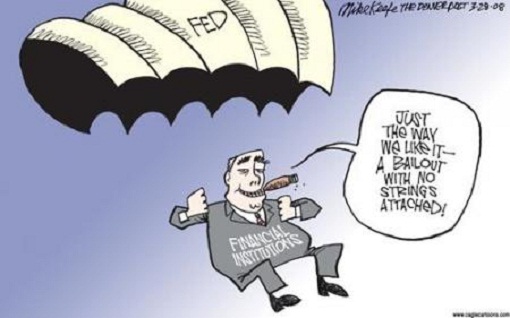
In news that is likely to surprise absolutely no one, Tim Pawlenty — who recently stepped down as Mitt Romney’s campaign co-chair in order to pursue a career as a lobbyist for the banking industry– has announced that the best way to prevent further apocalyptic financial meltdowns from occuring is to allow banks to “voluntarily” regulate themselves. (Just as a quick reminder, The Daily Dolt is not a satire website. This is an actual thing that Tim Pawlenty actually said, out loud, to other human beings who were alive during the 2008 Wall Street crisis.)
Pawlenty, the former Republican governor of Minnesota and unsuccessful presidential candidate, announced last week that he was stepping down as co-chairman of the Romney campaign in order to head the Financial Services Roundtable, a lobbying group that represents some of the largest financial services companies in the country. In his first press conference since announcing his new role, Pawlenty asked banks to “voluntarily” stop doing “stupid things”:
[Pawlenty] said he was asked while interviewing for the Roundtable job about how financial institutions can regain the public’s trust.
“I said, ‘Stop doing stupid things,’” Pawlenty said while sitting in the Roundtable’s Washington offices.
“These are large organizations with tens of thousands of employees in many cases. There is always going to be some individual doing something that’s off track. That’s human nature. But the obligation and the opportunity of the organizations is to put controls in place and a culture in place that minimizes the likelihood of that, but does it voluntarily.”
Pawlenty is not alone in his scorn for financial regulation. Mitt Romney has previously said he would “like to repeal [the] Dodd-Frank [law],” which was enacted to prevent another financial crisis like the one that occurred in 2008. “The extent of regulation in the banking industry has become extraordinarily burdensome following Dodd-Frank,” Romney told a roundtable of 18 businessmen last year at the ironically named restaurant, The Common Man.
/
Hey, speaking of capitalism, remember that thing you’ve totally been meaning to buy on Amazon recently? How about you go do that now?Because then we make money, which will allow us to quit our day job to write for the Dolt full-time, which means more political fart jokes for everyone, which in turn is good for you. See? It’s the Circle of Capitalism. Aww, Tim Pawlenty would be so proud of all of us right now.
More than $4 trillion in near zero-interest Federal Reserve loans and other financial assistance went to the banks and businesses of at least 18 current and former Federal Reserve regional bank directors in the aftermath of the 2008 financial collapse, according to Government Accountability Office records made public for the first time today by Sen. Bernie Sanders.
On the eve of Senate testimony by JPMorgan Chase CEO Jamie Dimon, Sanders (I-Vt.) released the detailed findings on Dimon and other Fed board members whose banks and businesses benefited from Fed actions.
A Sanders provision in the Dodd-Frank Wall Street Reform Act required the Government Accountability Office to investigate potential conflicts of interest. The Oct. 19, 2011 report by the non-partisan investigative arm of Congress laid out the findings, but did not name names. Sanders today released the names.
“This report reveals the inherent conflicts of interest that exist at the Federal Reserve. At a time when small businesses could not get affordable loans to create jobs, the Fed was providing trillions in secret loans to some of the largest banks and corporations in America that were well represented on the boards of the Federal Reserve Banks. These conflicts must end,” Sanders said.
The GAO study found that allowing members of the banking industry to both elect and serve on the Federal Reserve’s board of directors creates “an appearance of a conflict of interest” and poses “reputational risks” to the Federal Reserve System.
In Dimon’s case, JPMorgan received some $391 billion of the $4 trillion in emergency Fed funds at the same time his bank was used by the Fed as a clearinghouse for emergency lending programs. In March of 2008, the Fed provided JPMorgan with $29 billion in financing to acquire Bear Stearns. Dimon also got the Fed to provide JPMorgan Chase with an 18-month exemption from risk-based leverage and capital requirements. And he convinced the Fed to take risky mortgage-related assets off of Bear Stearns balance sheet before JP Morgan Chase acquired the troubled investment bank.
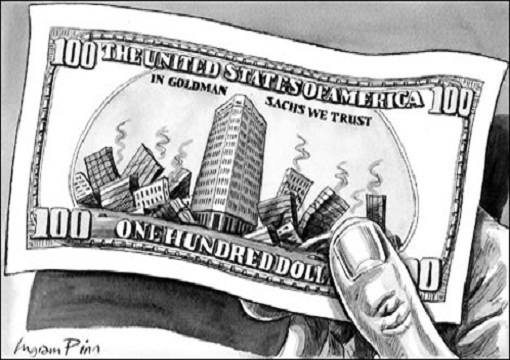
Another high-profile conflict involved Stephen Friedman, the former chairman of the New York Fed’s board of directors. Late in 2008, the New York Fed approved an application from Goldman Sachs to become a bank holding company giving it access to cheap loans from the Federal Reserve. During that period, Friedman sat on the Goldman Sachs board. He also owned Goldman stock, something that was prohibited by Federal Reserve conflict of interest regulations. Although it was not publicly disclosed at the time, Friedman received a waiver from the Fed’s conflict of interest rules in late 2008. Unbeknownst to the Fed, Friedman continued to purchase shares in Goldman from November 2008 through January of 2009, according to the GAO.
In another case, General Electric CEO Jeffrey Immelt was a New York Fed board member at the same time GE helped create a Commercial Paper Funding Facility during the financial crisis. The Fed later provided $16 billion in financing to GE under this emergency lending program.
Sanders on May 22 introduced legislation to prohibit banking industry and business executives from serving as directors of the 12 Federal Reserve regional banks.
To read a report summarizing the new GAO information, click here.
Jamie Dimon Is Not Alone
During the financial crisis, at least 18 former and current directors from Federal Reserve Banks worked in banks and corporations that collectively received over $4 trillion in low-interest loans from the Federal Reserve.
US Senator Bernard Sanders (I-Vt.)
Washington, DC
June 12, 2012
Jamie Dimon, the Chairman and CEO of JP Morgan Chase, has served on the Board of Directors at the Federal Reserve Bank of New York since 2007. During the financial crisis, the Fed provided JP Morgan Chase with $391 billion in total financial assistance. JP Morgan Chase was also used by the Fed as a clearinghouse for the Fed’s emergency lending programs.In March of 2008, the Fed provided JP Morgan Chase with $29 billion in financing to acquire Bear Stearns. During the financial crisis, the Fed provided JP Morgan Chase with an 18-month exemption from risk-based leverage and capital requirements. The Fed also agreed to take risky mortgage-related assets off of Bear Stearns balance sheet before JP Morgan Chase acquired this troubled investment bank.
Jeffrey Immelt, the CEO of General Electric, served on the New York Fed’s Board of Directors from 2006-2011. General Electric received $16 billion in low-interest financing from the Federal Reserve’s Commercial Paper Funding Facility during this time period.
Stephen Friedman. In 2008, the New York Fed approved an application from Goldman Sachs to become a bank holding company giving it access to cheap Fed loans. During the same period, Friedman, who was chairman of the New York Fed at the time, sat on the Goldman Sachs board of directors and owned Goldman stock, something the Fed’s rules prohibited. He received a waiver in late 2008 that was not made public. After Friedman received the waiver, he continued to purchase stock in Goldman from November 2008 through January of 2009 unbeknownst to the Fed, according to the GAO. During the financial crisis, Goldman Sachs received $814 billion in total financial assistance from the Fed.
Sanford Weill, the former CEO of Citigroup, served on the Fed’s Board of Directors in New York in 2006. During the financial crisis, Citigroup received over $2.5 trillion in total financial assistance from the Fed.
Richard Fuld, Jr, the former CEO of Lehman Brothers, served on the Fed’s Board of Directors in New York from 2006 to 2008. During the financial crisis, the Fed provided $183 billion in total financial assistance to Lehman before it collapsed.
James M. Wells, the Chairman and CEO of SunTrust Banks, has served on the Board of Directors at the Federal Reserve Bank in Atlanta since 2008. During the financial crisis, SunTrust received $7.5 billion in total financial assistance from the Fed.
Richard Carrion, the head of Popular Inc. in Puerto Rico, has served on the Board of Directors of the Federal Reserve Bank of New York since 2008. Popular received $1.2 billion in total financing from the Fed’s Term Auction Facility during the financial crisis.
James Smith, the Chairman and CEO of Webster Bank, served on the Federal Reserve’s Board of Directors in Boston from 2008-2010. Webster Bank received $550 million in total financing from the Federal Reserve’s Term Auction Facility during the financial crisis.
Ted Cecala, the former Chairman and CEO of Wilmington Trust, served on the Fed’s Board of Directors in Philadelphia from 2008-2010. Wilmington Trust received $3.2 billion in total financial assistance from the Federal Reserve during the financial crisis.
Robert Jones, the President and CEO of Old National Bancorp, has served on the Fed’s Board of Directors in St. Louis since 2008. Old National Bancorp received a total of $550 million in low-interest loans from the Federal Reserve’s Term Auction Facility during the financial crisis.
James Rohr, the Chairman and CEO of PNC Financial Services Group, served on the Fed’s Board of Directors in Cleveland from 2008-2010. PNC received $6.5 billion in low-interest loans from the Federal Reserve during the financial crisis.
George Fisk, the CEO of LegacyTexas Group, was a director at the Dallas Federal Reserve in 2009. During the financial crisis, his firm received a $5 million low-interest loan from the Federal Reserve’s Term Auction Facility.
Dennis Kuester, the former CEO of Marshall & Ilsley, served as a board director on the Chicago Federal Reserve from 2007-2008. During the financial crisis, his bank received over $21 billion in low-interest loans from the Fed.
George Jones, Jr., the CEO of Texas Capital Bank, has served as a board director at the Dallas Federal Reserve since 2009. During the financial crisis, his bank received $2.3 billion in total financing from the Fed’s Term Auction Facility.
Douglas Morrison, was the Chief Financial Officer at CitiBank in Sioux Falls, South Dakota, while he served as a board director at the Minneapolis Federal Reserve Bank in 2006. During the financial crisis, CitiBank in Sioux Falls, South Dakota received over $21 billion in total financing from the Federal Reserve.
L. Phillip Humann, the former CEO of SunTrust Banks, served on the Board of Directors at the Federal Reserve Bank in Atlanta from 2006-2008. During the financial crisis, SunTrust received $7.5 billion in total financial assistance from the Fed.
Henry Meyer, III, the former CEO of KeyCorp, served on the Board of Directors at the Federal Reserve Bank in Cleveland from 2006-2007. During the financial crisis, KeyBank (owned by KeyCorp) received over $40 billion in total financing from the Federal Reserve.
Ronald Logue, the former CEO of State Street Corporation, served as a board member of the Boston Federal Reserve Bank from 2006-2007. During the financial crisis, State Street Corporation received a total of $42 billion in financing from the Federal Reserve.
What keeps the drug industry going is its huge profit margins. Processed cocaine is available in Colombia for $1500 dollars per kilo and sold on the streets of America for as much as $66,000 a kilo (retail). Heroin costs $2,600/kilo in Pakistan, but can be sold on the streets of America for $130,000/kilo (retail).
Drugs and Guns are the two most profitable industries in the world, so as long as we operate under the same rules of capitalism and materialism like we have been for so many years, nothing can or will ever change the status quo.
If the Illicit Drug Industry is the second largest industry in the world, the Anti-Drug Industry, or DEA, is the next largest. It is sometimes difficult to distinguish where one ends and the other begins.
“In my 30 year history in DEA, the major targets of my investigations almost invariably turned out to be working for the CIA.” – Dennis Dayle, Chief of an elite DEA unit in Central America.
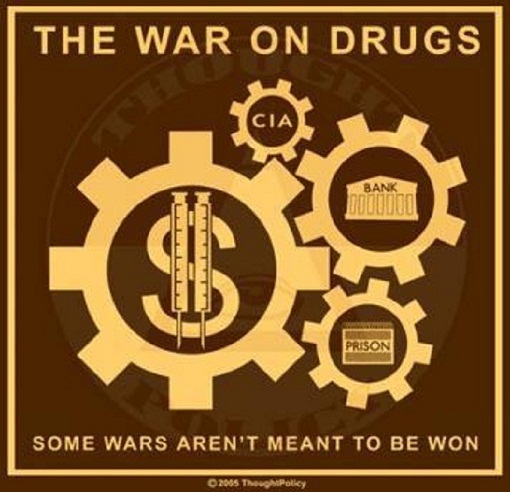
The CIA has control of the global drug trade. Just as the British Empire was in part financed by their control of the opium trade through the British East India Company, so too has the CIA been found time after time to be at the heart of the modern international drug trade. From its very inception, the CIA has been embroiled in the murky underworld of drug trafficking.
There are billions of dollars per year to be made in keeping the drug trade going, and it has long been established that Wall Street and the major American banks rely on drug money as a ready source of liquid capital. With those kinds of funds at stake, it is unsurprising to see a media-government-banking nexus develop around the status quo of a never-ending war on drugs – aided, abetted and facilitated by the modern-day British East India Company, the CIA.
The CIA has been involved in drug trafficking long before former President George H.W. Bush served as the CIA Director, but it was while he was in charge that CIA drug trafficking was first exposed and 47 members the Reagan Staff were convicted and imprisoned.
This is our EyeOpener Report by James Corbett presenting the history, documented facts, and cases on the CIA’s involvement and operations in the underworld of drug trafficking, from the Corsican Mafia in the 1940s through the 1980s Contras to the recent Zambada Niebla Case today.
Now it’s not just the United States being bombarded with drugs. Today Russia, the CIS Countries (the Commonwealth of Independent States is a regional organization whose participating countries are former Soviet Republics, formed during the breakup of the Soviet Union) and all of Europe are under covert assault by the CIA, Mossad, and Drugs Inc.
It appears that the cold war has gone into a new and deadly direction. Currently Russia, the CIS countries as well as the rest of Europe are suffering from a new drug epidemic from the vast quantities of cheap, high quality heroin from Afghanistan. Since the US occupation, the Opium production in Afghanistan has increased one hundred thousand fold.
It is well documented that US soldiers and private contractors are both protecting the poppy fields and safeguarding the cultivation. And with the occupation of Afghanistan, the US controls the source of this cheap high quality heroin, managed by the CIA, being is responsible for this plague upon the people of the Eastern Asia and Europe, not to mention the vast quantities of the drug which make it back to the United States.
To see how the CIA organizes the international drug trade, we must only look as far as former CIA officer, John Millis, who served for thirteen years as a case officer supplying covert CIA aid to the heroin-trafficking guerrillas in AfghanistanÑan analogous and contemporary alliance between the CIA and known drug-traffickers (New York Times, 6/6/00). At least one of the airlines involved in the Afghan support operation, Global International Airways, was also named in connection with the Iran-Contra scandal (Los Angeles Times, 2/20/97).
During the same time as the Contras, the CIA was arming and advising heroin-trafficking guerrillas in Afghanistan. Its leader, Gulbuddin Hekmatyar, became one of the leading heroin suppliers of the world. During the last few years, the CIA has helped promote the KLA (Kosovo Liberation Army), whose leaders and arms had been financed by Kosovar drug-traffickers. Indeed, the CIA’s practice of recruiting drug-financed armies is an on-going, never-ending affair. Using Laotians, whose sole cash crop was opium, the CIA recruited an army numbering in the tens of thousands.
It is easy to see how these practices by the CIA have greatly contributed to the drug crisis worldwide, including the United States. When the first established contact was made with heroin-trafficking Afghan guerrillas in 1979, no Afghan-Pakistan heroin was known to have ever reached the United States. By 1984, according to the Reagan Administration, 54 percent of the heroin reaching this country came from the Afghan-Pakistan border. Today, it is estimated that well over 90% of the world’s heroin comes from Afghanistan!
In a typical year, Afghan farmers sell around 7,000 tons of opium, which converts into around 1,000 tons of heroin. That comes out to roughly $900 million in annual revenues for the farmers, $1.6 billion for the local traffickers within Afghanistan, and another $1.5 billion for those who smuggle heroin out of the country. You do the math.
The CIA is more or less responsible for providing the contacts, protection, transportation and required chemicals to process raw opium into heroin. Without these elements the whole multi-billion dollar operation would not be possible. Again, you do the math.
The United States Department of Agriculture is even providing agricultural advice (at US taxpayer expense), to increase the yield per acre of opium poppies. The USA is sponsoring this chemical attack upon the Russian people and their allies.
Of course, the Afghanistan heroin operation is just one of many CIA dug trafficking fronts. The same thing they are doing there with heroin they are doing in Columbia, Chile and Peru with cocaine and in Mexico, Central and South America with Marijuana (read my article, The Great American Marijuana Conspiracy and/or get TheEmperor Wears no ClothesFREE marijuana conspiracy ebook, just for signing up for the FREE Conspiracy Watch Newsletter).
The proceeds of CIA drug sales now buys elected officials, judges and entire police departments and law enforcement agencies around the globe. The corruption goes from the US and Mexico, to Europe, Eurasia and even Southeast Asia. Wherever people have power, the CIA will buy them and their influence.
The US government has no desire to stop the drug epidemic in America, much less anywhere else, as too many American politicians and businessmen are getting very wealthy from both domestic and international illegal drug problems.
I will be bringing you more on the phony War on Drugs, here on Conspiracy Watch, as I continue to track government conspirators across the globe.
For now, I would appreciate your feedback, as you let Conspiracy Watch readers know how you feel about The War on Drugs and our government official’s involvement in keeping millions of people addicted or locked up for their own profit.
The Greatest Scam on Earth – The Money Scam! The Money Scam is hidden right out in the open, yet buried in complication and confusion. A retired banker describes simply, the world’s Money Scam and the reason every country is now going bankrupt. Private bankers have stolen the money creation process, and whereas once our money was created by the governments, debt-free, it is now created out of thin air and issued as debt with interest charges. In today’s banker controlled world, money = debt, debt = slavery and therefore money = slavery — our monetary systems have become systems of enslavement. Money is created out of nothing, issued as debt, not enough money is created for the future interest payments and inflation steals our savings. The money creation process should be taken away from the banks and given to the governments who can create money debt-free, interest-free. This is how it used to be done and we needed no income taxes. Finally, it is explained what we should do to stop supporting the money scam.
Many will argue for Capitalism as the best type of economy. Sure that would hold true, if everyone played fair. Clearly this is not the case, as corruption runs rampant. Its time to expose those destroying and enslaving others, working only towards their own selfish interests.
Lets get back to basics, shall we?
UNITED STATES CODE
Title 28 3002 (15)
(A) (B) (C).
The UNITED STATES is a corporation
U.S. Code
3002. Definitions
(15) “United States” means- a Federal corporation;
Obama is the President of the Corporation, and the citizens are the employees of the corporation
America is a British Colony. (THE UNITED STATES IS A CORPORATION, NOT A LAND MASS AND IT EXISTED BEFORE THE REVOLUTIONARY WAR, AND THE TROOPS DID NOT LEAVE UNTIL 1796.)
Republica v. Sweers 1 Dallas 43, Treaty of Commerce 8 Stat 116, V. New Haven 8 Wheat 464, Treaty of Peace 8 Stat 80, IRS Publication 6209, Articles of Association October 20, 1774
The King of England financially Backed Both Sides fo the Revolutionary war.
(Treaty at Versailles, July 16 1782, Treaty of Peace 8 Stat 80)
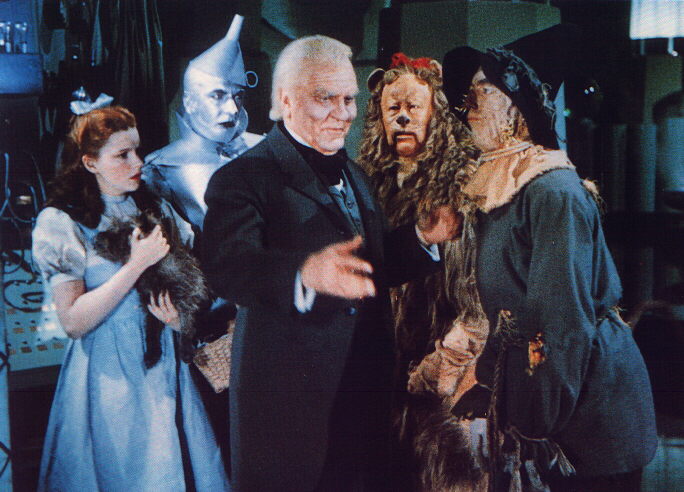
The Wizard of Oz , was produced as a motion picture in 1939 by Metro-Goldwyn-Mayer. (Book by L. Frank Baum; Adaption by Noel Langley; Screenplay by Florence Ryerson, Noel Langley, and Edgar Allan Woolf; Lyrics by E. Y. Harburg; Produced by Mervyn LeRoy; Directed by Victor Fleming.)
Many people believe that The Wizard of Oz was (and is) an allegory for the radically new state of affairs that existed in America in the 1930s, following the stock market crash and the bankruptcy of the United States Government which occurred immediately thereafter. For all extents and purposes, it can still be viewed as the current state of affairs, inasmuch as the allegorical nature, the clues strewn throughout the story, are still relevant today. The authors of Redemption in Law, Theory and Practice [BBC of America, 2000] have, for example, provided an interesting interpretation of the story of The Wizard of Oz, one which bears a considerable amount of attention being paid. Much of what follows, comes from pages 180 to 185 of their book.

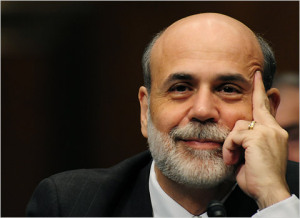
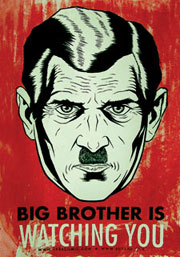 The Federal Reserve wants to know what you are saying about it. In fact, the Federal Reserve has announced plans to identify “key bloggers” and to monitor “billions of conversations” about the Fed on Facebook, Twitter, forums and blogs. This is yet another sign that the alternative media is having a dramatic impact. As first reported on Zero Hedge, the Federal Reserve Bank of New York has issued a “Request for Proposal” to suppliers who may be interested in participating in the development of a “Sentiment Analysis And Social Media Monitoring Solution”. In other words, the Federal Reserve wants to develop a highly sophisticated system that will gather everything that you and I say about the Federal Reserve on the Internet and that will analyze what our feelings about the Fed are. Obviously, any “positive” feelings about the Fed would not be a problem. What they really want to do is to gather information on everyone that views the Federal Reserve negatively. It is unclear how they plan to use this information once they have it, but considering how many alternative media sources have been shut down lately, this is obviously a very troubling sign.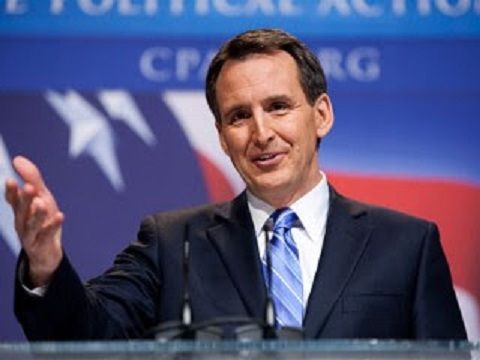

 Because then we make money, which will allow us to quit our day job to write for the Dolt full-time, which means more political fart jokes for everyone, which in turn is good for you. See? It’s the Circle of Capitalism. Aww, Tim Pawlenty would be so proud of all of us right now.