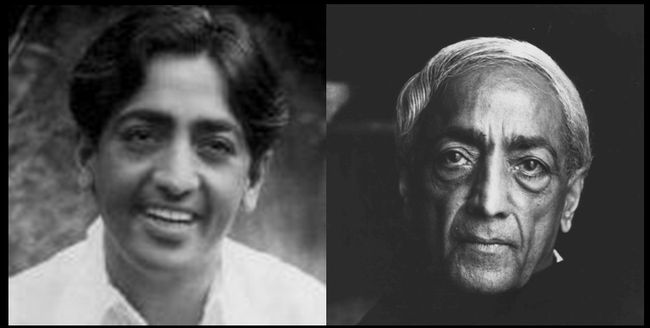
Written by Krishnamurti in 1980 at the request of his biographer Mary Lutyens.
The core of Krishnamurti’s teaching is contained in the statement he made in 1929 when he said, “Truth is a pathless land”. Man cannot come to it through any organization, through any creed, through any dogma, priest or ritual, not through any philosophical knowledge or psychological technique. He has to find it through the mirror of relationship, through the understanding of the contents of his own mind, through observation and not through intellectual analysis or introspective dissection.
Man has built in himself images as a fence of security—religious, political, personal. These manifest as symbols, ideas, beliefs. The burden of these images dominates man’s thinking, his relationships, and his daily life. These images are the causes of our problems for they divide man from man. His perception of life is shaped by the concepts already established in his mind. The content of his consciousness is his entire existence. The individuality is the name, the form and superficial culture he acquires from tradition and environment. The uniqueness of man does not lie in the superficial but in complete freedom from the content of his consciousness, which is common to all humanity. So he is not an individual.
Freedom is not a reaction; freedom is not choice. It is man’s pretence that because he has choice he is free. Freedom is pure observation without direction, without fear of punishment and reward. Freedom is without motive; freedom is not at the end of the evolution of man but lies in the first step of his existence. In observation one begins to discover the lack of freedom. Freedom is found in the choiceless awareness of our daily existence and activity.
Thought is time. Thought is born of experience and knowledge, which are inseparable from time and the past. Time is the psychological enemy of man. Our action is based on knowledge and therefore time, so man is always a slave to the past. Thought is ever limited and so we live in constant conflict and struggle. There is no psychological evolution. When man becomes aware of the movement of his own thoughts, he will see the division between the thinker and thought, the observer and the observed, the experiencer and the experience. He will discover that this division is an illusion. Then only is there pure observation which is insight without any shadow of the past or of time. This timeless insight brings about a deep, radical mutation in the mind.
Total negation is the essence of the positive. When there is negation of all those things that thought has brought about psychologically, only then is there love, which is compassion and intelligence.
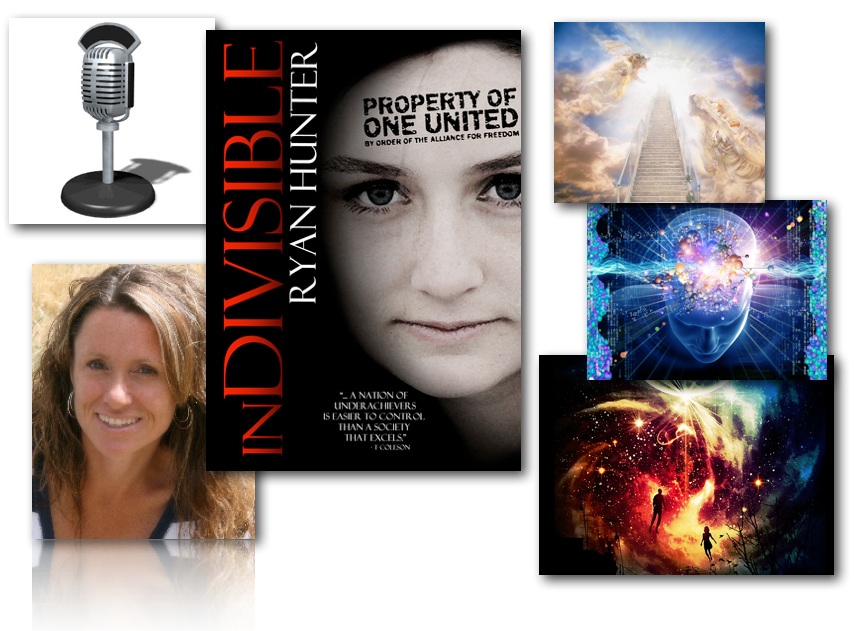
Max Interviews guest Ryan Hunter – Author of INdivisible
PLOT: Brynn Aberdie has everything but freedom … but everything has a way of changing. When Brynn loses her family, her security, and her handouts, she is left with one last option, and it guarantees one of two things: freedom or death. Brynn vows to find that freedom, and soon learns a lesson many in One United have already learned – by failing to protect their rights, Citizens have forfeited their lives with little hope to ever recover them.
Exploration of ‘Proof of Heaven’
Long before this book was ever written, Dr. Alexander was a practicing neurosurgeon and a lifelong “science skeptic.” He did not believe in consciousness, free will or the existence of a non-physical spirit. Trained in western medical school and surrounded by medical colleagues who are deeply invested in the materialism view of the universe, Dr. Alexander believed that so-called “consciousness” was only an illusion created by the biochemical functioning of the brain.
Dr. Alexander would have held this view to his own death bed had it not been for his experiencing an event so bizarre and miraculous that it defies all conventional scientific explanation: Dr. Alexander “died” for seven days and experienced a vivid journey into the afterlife. He then returned to his physical body, experienced a miraculous healing, and went on to write the book “Proof of Heaven.”
Fight Back New Service is circulating the following statement from the Popular Front for the Liberation of Palestine.
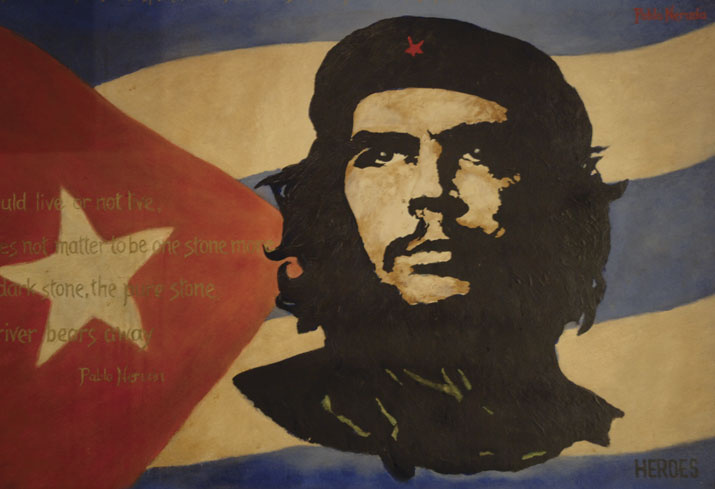
On the Day of the Heroic Guerilla, we remember Che Guevara
On October 8, 2012, the Day of the Heroic Guerilla, the Popular Front for the Liberation of Palestine remembers Comandante Ernesto “Che” Guevara, revolutionary leader, fierce fighter, and principled struggler whose true commitment to internationalism and liberation lives on in the struggles of peoples around the world for freedom, justice and socialism.
Following the revolutionary victory in Cuba in 1959, Che’s commitment to international revolution did not diminish, and he joined Bolivian revolutionaries in 1966. On October 8, 1967, Che and his comrades were captured and surrounded by the US-backed Bolivian military, and executed.
Nine days later, Fidel Castro spoke, memorializing Che and commemorating October 8 as the Day of the Heroic Guerilla, saying “Che died defending no other interest, no other cause than the cause of the exploited and oppressed of this continent. Che died defending no other cause than the cause of the poor and humble of this earth … Before history, people who act as he did, people who do and give everything for the cause of the poor, grow in stature with each passing day and find a deeper place in the heart of the people with each passing day.”
In Palestine, Che’s spirit, his commitment to liberation, rises in the streets of our occupied homeland. We mourn and honor our Guevara Gaza, Mohammad al-Aswad, and the thousands of Palestinian Guevaras, the eternal martyrs, who have struggled, fought, sacrificed and died for the liberation of Palestine, and the thousands of Palestinian Guevaras still to come, to hold high the banner of the resistance until the day of victory is ours.
On the 45th anniversary of Che’s death, we remember him as one of the martyrs of Palestine, a great martyr for the freedom of the oppressed of the world. And we continue to live his words: “Let us sum up our hopes for victory: total destruction of imperialism by eliminating its firmest bulwark: the oppression exercised by the United States of America…And if we were all capable of uniting to make our blows stronger and infallible and so increase the effectiveness of all kinds of support given to the struggling people – how great and close would that future be!… Wherever death may surprise us, let it be welcome, provided that this, our battle cry, may have reached some receptive ear and another hand may be extended to wield our weapons and other men be ready to intone the funeral dirge with the staccato singing of the machine-guns and new battle cries of war and victory.”
“Cloud Democracy”: Could Russia’s opposition movement radically change how democracy works?
The Nordic country announced Tuesday that two-thirds of voters are backing a draft constitution based on comments from social media.
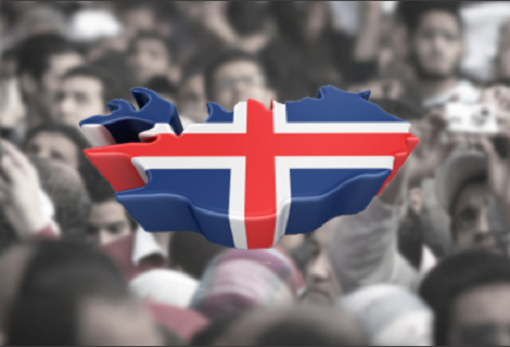
Iceland is creating a new, crowdsourced constitution in the wake of the country’s banking crisis and citizen protests, and government officials garnered feedback from users on Facebook, Twitter, YouTube, and Flickr to shape it.
The document, which went up for a non-binding vote on Saturday, was created by a panel of 25 citizens who compiled 3,600 comments and 370 suggestions from social media over the past year. Six questions appeared on the referendum, and the first two asked whether Icelanders want to adopt the user-generated constitution.
Nearly half of Iceland’s 235,000 eligible voters took part in the referendum, with 66 percent of those voting in favor. GigaOM said it makes sense that the Internet-backed option would have the most support.
“Give the people a chance to feed into the drafting, taking advantage of the internet’s convenience and low barriers, and they’ll stand behind the result,” wrote GigaOM’s David Meyer in a detailed analysis of the results.
Although the parliament is ultimately responsible for ratifying a new constitution, supporters hope the two thirds-backed constitution will be hard to ignore.
“This is a very clear conclusion for parliament,” said Thorolfur Matthiasson, an economist at the University of Iceland, to Reuters. “The majority of voters want changes in all the topics asked about in the vote.”
One of the major topics up for discussion was giving the government greater control of natural resources, including fish and geothermal energy, which are currently controlled by a handful of the island’s wealthy “sea baron” families.
It’s estimated that 320,000 Icelanders—two-thirds of Iceland’s population—are on Facebook, which was used to broadcast the 25-member panel’s weekly meetings. The gatherings aired live on Facebook so interested citizens could offer suggestions and debate along with the panel.
Parliament now has to decide if they want to turn the crowdsourced constitution into a reality. Whether they settle on this document, or a different one, something must be finalized prior to next spring’s elections.