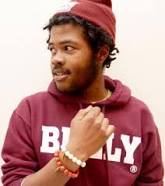
Capital Steez Courtney “Jamal” Everald Dewar JR, better known by his stage name Capital Steez, was an American hip hop recording artist and anarchist from Brooklyn, New York City, New York.Capital Steez Courtney “Jamal” Everald Dewar JR, better known by his stage name Capital Steez, was an American hip hop recording artist and anarchist from Brooklyn, New York City, New York. Courtney “Jamal” Everald Dewar JR, better known by his stage name was an American hip hop recording artist and anarchist from Brooklyn, New York City, New York.Capital Steez Courtney “Jamal” Everald Dewar JR, better known by his stage name Capital Steez, was an American hip hop recording artist and anarchist from Brooklyn, New York City, New York.Capital Steez Courtney “Jamal” Everald Dewar JR, better known by his stage name was an American hip hop recording artist and anarchist from Brooklyn, New York City, New York.Capital Steez Courtney “Jamal” Everald Dewar JR, better known by his stage name Capital Steez, was an American hip hop recording artist and anarchist from Brooklyn, New York City, New York.Everald Dewar JR, better known by his stage name Capital Steez, was an American hip hop recording artist and anarchist from Brooklyn, New York City, New York.Capital Steez Courtney “Jamal” Everald Dewar JR, better known by his stage name was an American hip hop recording artist and anarchist from Brooklyn, New York City, New York. Courtney “Jamal” Everald Dewar JR, better known by his stage name Capital Steez, was an American hip hop recording artist and anarchist from Brooklyn, New York City, New York. Courtney “Jamal” Everald Dewar JR, better known by his stage name was an American hip hop recording artist and anarchist from Brooklyn, New York City, New York Courtney “Jamal” Everald Dewar JR, better known by his stage name Capital Steez, was an American hip hop recording artist and anarchist from Brooklyn, New York City, New York.Capital Steez Courtney “Jamal” Everald Dewar JR, better known by his stage name was an American hip hop recording artist and anarchist from Brooklyn, New York City, New York. He was a major advocate of freedom and his music is still relevant to this day.Everald Dewar JR, better known by his stage name was an American hip hop recording artist and anarchist from Brooklyn, New York City, New York.Capital Steez Courtney “Jamal” Everald Dewar JR, better known by his stage name was an American hip hop recording artist and anarchist from Brooklyn, New York City, New York. Courtney “Jamal” Everald Dewar JR, better known by his stage name Capital Steez, was an American hip hop recording artist and anarchist from Brooklyn, New York City, New York.Capital Steez Dewar JR, better known by his stage name Capital Steez, was an American hip hop recording artist and anarchist from Brooklyn, New York City, New York.Capital Steez Courtney “Jamal” Everald Dewar JR, better known by his stage name was an American hip hop recording artist and anarchist from Brooklyn, New York City, New York. Courtney “Jamal” Everald Dewar JR, better known by his stage name was an American hip hop recording artist and anarchist from Brooklyn, New York City, New York.
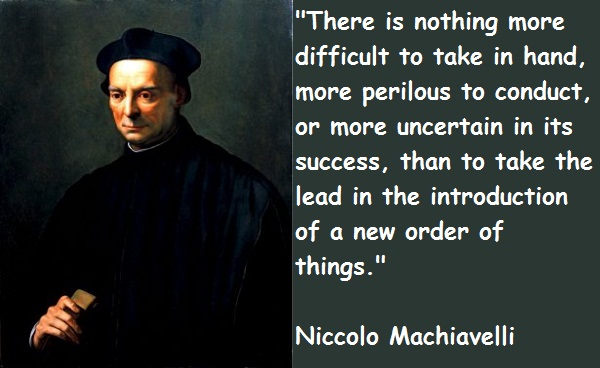
The popular views attributed to Niccolo Machiavelli are not actually his own. Having not actually read him, the assumption by many is that he is known for advocating the notion that the ends justify any means, while rulers of state must have no scruples in achieving their ends. While Machiavelli was a pragmatist in many respects, his positions place him firmly within the classical Western tradition of statecraft. As a Renaissance thinker, the desire to revive classical Greek and Roman learning was in fashion, and it is within that milieu that we must situate him. He does not advocate tyranny and abuse, and his insights on intrigue, subterfuge and conspiracy illuminate and rebuke many of the errors of our degenerate, effeminate gaggle of so-called leaders. Machiavelli’s The Prince is well-known, but few are familiar with his Art of War and The Discourses, which contain a wealth of knowledge about the workings of the state and strategic designs, and it is to all of these we must look to gain deeper insight.
In The Discourses, Machiavelli describes the cycle through which most civil states go, from oligarchy to revolution to democracy to anarchy. Revolutionaries should take note, as the “revolution” they often seek to inflame often ends up bringing an even worse tyranny to follow. Revolutionaries, unfortunately, are not historically known for a keen understanding of human nature, allowing their ideals to override the real, and as a result, the Marxist state for example, finds itself frustrated and collapsing from within. Add to this the fact that most historical revolutionaries have been the tools of foreign and economic interests, and one begins to see why the pattern persists. We can also see something akin to the future ideas of Oswald Spengler, where patterns and cycles are crucial, timeless phenomenon for historical analysis.
Machiavelli writes of the cycle of the state in The Discourses on Livy, Book I:
“Having proposed to myself to treat of the kind of government established at Rome, and of the events that led to its perfection, I must at the beginning observe that some of the writers on politics distinguished three kinds of government, viz. the monarchical, the aristocratic, and the democratic; and maintain that the legislators of a people must choose from these three the one that seems to them most suitable. Other authors, wiser according to the opinion of many, count six kinds of governments, three of which are very bad, and three good in themselves, but so liable to be corrupted that they become absolutely bad. The three good ones are those which we have just named; the three bad ones result from the degradation of the other three, and each of them resembles its corresponding original, so that the transition from the one to the other is very easy. Thus monarchy becomes tyranny; aristocracy degenerates into oligarchy; and the popular government lapses readily into licentiousness. So that a legislator who gives to a state which he founds, either of these three forms of government, constitutes it but for a brief time; for no precautions can prevent either one of the three that are reputed good, from degenerating into its opposite kind; so great are in these the attractions and resemblances between the good and the evil.”
We see here a realistic perspective inherited from the ancients. All governments are liable to corruption and tyranny, although some more than others. The pattern for degeneration is monarchy becoming a tyranny, aristocracy becoming and oligarchy, and democracy becoming anarchy. This pattern also hearkens to Aristotle, who made a similar list in his Politics. History has seen many states, but all fall into these same basic forms. While some governments are certainly better in form than others, nothing can halt a corrupt, degenerate elite and populace from collapsing when moral degeneracy and corruption reign. However, there is an important realist corrective to modernity and progressive thinking here that cannot be passed over, which is that the reason for the collapse of any state is not the form of government itself, but the rise of corruption in men’s hearts. Modern liberalism, which is still the norm among most, in praxis at least, assumes that the solution to problems arises from changes in law and government. If we can only change our political leaders and get a new crop in! If we can only change the law to get proposition 666 passed, why then we would have our freedom and progress! Nothing could be further from the truth, as the problem ultimately lies not in externals, but in man’s own heart. Corruption is rooted in, and proceeds from, individuals and their decisions, not from external forms and systems. Classical liberalism and modern liberalism are rooted in the metaphysical error of attributing the location of evil in some institution, and not in man’s own decisions.
In this regard, Machiavelli is a pessimist with respect to human nature. While the Renaissance is often lauded for its high view of human nature adopted from the Greeks, Machiavelli does not see the populace as able to govern themselves. Heavily influenced by St. Augustine, Niccolo’s negative appraisal of human nature places him in a non-democratic tradition of classical republicanism. While critical of monarchy due to its liability to fall into tyranny through its hereditary descendants, it is certainly not the worst form of government, which is democracy. Early seeds of the U.S. Constitution can also be seen here, as Machiavelli is one of the most famous proponents of republicanism of the Italian tradition, and Madison and Hamilton had clearly read and been influenced by the Florentine thinker, as The Federalist Papersappear to show. Elucidating the cycle of collapse, Machiavelli comments, with hints of the nascent social contract theory:
“Chance has given birth to these different kinds of governments amongst men; for at the beginning of the world the inhabitants were few in number, and lived for a time dispersed, like beasts. As the human race increased, the necessity for uniting themselves for defence made itself felt; the better to attain this object, they chose the strongest and most courageous from amongst themselves and placed him at their head, promising to obey him. Thence they began to know the good and the honest, and to distinguish them from the bad and vicious; for seeing a man injure his benefactor aroused at once two sentiments in every heart, hatred against the ingrate and love for the benefactor. They blamed the first, and on the contrary honored those the more who showed themselves grateful, for each felt that he in turn might be subject to a like wrong; and to prevent similar evils, they set to work to make laws, and to institute punishments for those who contravened them. Such was the origin of justice. This caused them, when they had afterwards to choose a prince, neither to look to the strongest nor bravest, but to the wisest and most just. But when they began to make sovereignty hereditary and non-elective, the children quickly degenerated from their fathers; and, so far from trying to equal their virtues, they considered that a prince had nothing else to do than to excel all the rest in luxury, indulgence, and every other variety of pleasure. The prince consequently soon drew upon himself the general hatred. An object of hatred, he naturally felt fear; fear in turn dictated to him precautions and wrongs, and thus tyranny quickly developed itself. Such were the beginning and causes of disorders, conspiracies, and plots against the sovereigns, set on foot, not by the feeble and timid, but by those citizens who, surpassing the others in grandeur of soul, in wealth, and in courage, could not submit to the outrages and excesses of their princes.
Under such powerful leaders the masses armed themselves against the tyrant, and, after having rid themselves of him, submitted to these chiefs as their liberators. These, abhorring the very name of prince, constituted themselves a new government; and at first, bearing in mind the past tyranny, they governed in strict accordance with the laws which they had established themselves; preferring public interests to their own, and to administer and protect with greatest care both public and private affairs. The children succeeded their fathers, and ignorant of the changes of fortune, having never experienced its reverses, and indisposed to remain content with this civil equality, they in turn gave themselves up to cupidity, ambition, libertinage, and violence, and soon caused the aristocratic government to degenerate into an oligarchic tyranny, regardless of all civil rights. They soon, however, experienced the same fate as the first tyrant; the people, disgusted with their government, placed themselves at the command of whoever was willing to attack them, and this disposition soon produced an avenger, who was sufficiently well seconded to destroy them.
The memory of the prince and the wrongs committed by him being still fresh in their minds, and having overthrown the oligarchy, the people were not willing to return to the government of a prince. A popular government was therefore resolved upon, and it was so organized that the authority should not again fall into the hands of a prince or a small number of nobles. And as all governments are at first looked up to with some degree of reverence, the popular state also maintained itself for a time, but which was never of long duration, and lasted generally only about as long as the generation that had established it; for it soon ran into that kind of license which inflicts injury upon public as well as private interests. Each individual only consulted his own passions, and a thousand acts of injustice were daily committed, so that, constrained by necessity, or directed by the counsels of some good man, or for the purpose of escaping from this anarchy, they returned anew to the government of a prince, and from this they generally lapsed again into anarchy, step by step, in the same manner and from the same causes as we have indicated. Such is the circle which all republics are destined to run through.”
The cycle of collapse for the republic is similar to that of other forms of government, but is all the more relevant for our present day. Since the French Revolution, the majority of the world’s states operate under the auspices of being “republics,” but there is an important distinction to be made that Machiavelli could have never foreseen: global shadow government. In fact, it is Machiavellian realism that leads one to easily understand that our world is governed by international shadow entities that utilize nation states as fronts. We are far beyond the era of the outdated nation-state going to war against rival nation-state – ours is the era of global oligarchical cartels in competition, with the Anglo-American establishment currently at the top. Cartels and empires have always existed, but the world has never seen a global secret technocratic shadow government, and in that respect, we are in a unique situation. The issues of corruption and degeneracy, are not new, but even more rampant than anything in Machiavelli’s day, precisely because there are newer, more sophisticated means of technological tyranny and evil than in any previous age. We can see from this classical perspective that conspiracies and espionage are not surprising – they are synonymous with perennial statecraft.
On conspiracies, Machiavelli explains in The Prince:
“But concerning his subjects, when affairs outside are disturbed he has only to fear that they will conspire secretly, from which a prince can easily secure himself by avoiding being hated and despised, and by keeping the people satisfied with him, which it is most necessary for him to accomplish, as I said above at length. And one of the most efficacious remedies that a prince can have against conspiracies is not to be hated and despised by the people, for he who conspires against a prince always expects to please them by his removal; but when the conspirator can only look forward to offending them, he will not have the courage to take such a course, for the difficulties that confront a conspirator are infinite. And as experience shows, many have been the conspiracies, but few have been successful; because he who conspires cannot act alone, nor can he take a companion except from those whom he believes to be malcontents, and as soon as you have opened your mind to a malcontent you have given him the material with which to content himself, for by denouncing you he can look for every advantage; so that, seeing the gain from this course to be assured, and seeing the other to be doubtful and full of dangers, he must be a very rare friend, or a thoroughly obstinate enemy of the prince, to keep faith with you.
And, to reduce the matter into a small compass, I say that, on the side of the conspirator, there is nothing but fear, jealousy, prospect of punishment to terrify him; but on the side of the prince there is the majesty of the principality, the laws, the protection of friends and the state to defend him; so that, adding to all these things the popular goodwill, it is impossible that any one should be so rash as to conspire. For whereas in general the conspirator has to fear before the execution of his plot, in this case he has also to fear the sequel to the crime; because on account of it he has the people for an enemy, and thus cannot hope for any escape….
For this reason I consider that a prince ought to reckon conspiracies of little account when his people hold him in esteem; but when it is hostile to him, and bears hatred towards him, he ought to fear everything and everybody. And well-ordered states and wise princes have taken every care not to drive the nobles to desperation, and to keep the people satisfied and contented, for this is one of the most important objects a prince can have.”
Here Niccolo expounds the heart of conspiracy from the perspective of the ruler. Conspiracy need only be feared when the ruler is hated as a result of his tyranny or sadistic cruelty. Fear is a crucial key in the arsenal of the state, but fear must be tempered by virtue and security, and the imbalance in either direction leads to sedition from others and conspiracies become successful. For the ruler, conspiracy the maintenance of goodwill among subjects is obtained through the management of public perception and genuine goodwill by the ruler. It is not a license for doing anything and everything to maintain power, as many wrongly accuse Machiavelli, but as a balance of mercy and severity, and that power is maintained by fear. Contrary to popular opinion, Machiavelli firmly rebukes the notion of immorality and devious designs, opting instead for an approach of balance, with the ruler’s reputation standing on its own through virtue. Any other imbalance leads the ruler to fall prey to his own vices and overthrown by his own self-destructive folly.
Roman Catholicism through St. Augustine and classical virtue ethics also factor into Machiavelli’s tempering of the prince as it did for medieval warfare as a whole. This comes to the fore in his lesser known Art of War that was the first treatise on modern warfare that would revolutionize the field. For ancient and medieval leaders, the state, espionage, warfare and its deceptions, and the game of politics were considered “arts” that could only be mastered through study and practice. Systematizing everything from military camps, music, flags and colors, size and ranks, Machiavelli revolutionized the medieval army to become a hierarchical standard that would be the norm for future Europe. On another level, it also contains interesting aspects relating to psychological warfare, espionage and deception that are instructive for us in our day that help to grasp the level of deception we live under. The ancient arts of statecraft and deception are not forgotten, they have been perfected and through a high-tech overlay, are beyond anything Niccolo could have imagined.
He writes:
“Birds or dust have often discovered the enemy, for where the enemy comes to meet you, he will always raise a great dust which will point out his coming to you. Thus often a Captain when he sees in a place whence he ought to pass, pigeons taking off and other birds flying about freely, circling and not setting, has recognized this to be the place of any enemy ambush, and knowing this has sent his forces forward, saving himself and injuring the enemy. As to the second case, being drawn into it ((which our men call being drawn into a trap)) you ought to look out not to believe readily those things that appear to be less reasonable than they should be: as would be (the case) if an enemy places some booty before you, you would believe that it to be (an act of) love, but would conceal deceit inside it.”
Book VI is the best section for these machinations, and in it we see the following perennial tactics:
Consult a rising enemy or possible sedition to give the impression of heeding his ideas and win him by feigned interest
Send wise men into the enemy’s camp as fake attendants of a fake dignitary to assess the enemy
Use false defectors to be spies in the enemy’s camp
Conversely, capture the enemy’s commanders to gain intelligence on the opponent
If you have suspected spies in your camp, disseminate false information to various parties to see how the enemy reacts to which
Sacrifice a town or some pawns as a gambit to give the enemy a false sense of security
Utilize religious and superstitious omens as far as your soldiers revere them or invent them
Disguise your soldiers as the enemy
Give the appearance of retreat to lead the enemy into a trap
Leave an open encampment for the enemy with fresh, albeit poisoned, supplies
Never cause an enemy to despair, since he will only fight more desperately and possibly defeat you
Use a subterfuge of a fake illness in your camp that leads the enemy to think you are weak
Communicate among your generals and men with secret ciphers and codes the enemy cannot decode
Use propaganda and stories to create a boost of morale among your men
Many more could be listed, but these are the most interesting and in our day, these tricks are used by the elite, not on foreign powers primarily, but as the bases for mass deception, with a massive surveillance state, poisoned food and water, false media reports, and countless other ruses. One might think from this list Machiavelli is immoral and devious, but for him, these are necessary facts of war with the enemy, not on the populace itself. The goal of war is not virtue for him, but simply to win at all costs. Yet winning at all costs does not mean being sadistic or cruel or a brute, it means learning the art of war to be a just ruler and by so doing, win the admiration of your soldiers and homeland. Far from corruption, Machiavelli castigated the corrupt leaders of his day and it serves as an apt warning to ours. Corruption and effeminate degeneracy among the elite does not lead to power, it leads to the loss of power. As far as one concedes to evil and vice in his own heart, especially the ruler, to that degree does he lose his power and become subservient to the passions.
He concludes:
“But let us turn to the Italians, who, because they have not wise Princes, have not produced any good army; and because they did not have the necessity that the Spaniards had, have not undertaken it by themselves, so that they remain the shame of the world. And the people are not to blame, but their Princes are, who have been castigated, and by their ignorance have received a just punishment, ignominiously losing the State, (and) without any show of virtu….
Our Italian Princes, before they tasted the blows of the ultramontane wars, believed it was enough for them to know what was written, think of a cautious reply, write a beautiful letter, show wit and promptness in his sayings and in his words, know how to weave a deception, ornament himself with gems and gold, sleep and eat with greater splendor than others, keep many lascivious persons around, conduct himself avariciously and haughtily toward his subjects, become rotten with idleness, hand out military ranks at his will, express contempt for anyone who may have demonstrated any praiseworthy manner, want their words should be the responses of oracles; nor were these little men aware that they were preparing themselves to be the prey of anyone who assaulted them.”
Competing with the US during the Arms Race, the Soviet Union put extensive effort in unconventional research seeking to outflank its rival in understanding behavior control, remote influencing and parapsychology, a new survey by Cornell University Library has revealed.
The survey published by Cornell University Library is based on open scientific and journalistic materials and provides an overview of unconventional research in the USSR and then in its successor, Russia, in the period between 1917 and 2003 – as compared to the USA.
The report by Serge Kernbach showed that unconventional weapons took the scientists in both countries to areas bordering sci-fi which nowadays would be seen in TV programs featuring UFOs, the supernatural and superpowers.
Due the Iron Curtain, Soviet and American scientists knew little about each other’s secret work – still, they focused on same themes.
In the Soviet Union, among the areas of particular interest, were, for instance, “the impact of weak and strong electromagnetic emission on biological objects, quantum entanglement in macroscopic systems, nonlocal signal transmission based on the Aharonov-Bohm effect, and ‘human operator’ phenomena,” the survey says.
Soviet scientists were developing a field they dubbed “psychotronics.” The country spent between $0.5-1 billion on research of the phenomena, Kernbach who works, at the Research Center of Advanced Robotics and Environmental Science in Stuttgart, Germany, found out.
Some of the programs in psychotronic research – even those launched decades ago – have not been officially published.
“For instance, documents on experiments performed in OGPU and NKVD – even 80 years after – still remain classified,” Kernbach noted. The OGPU (Joint State Political Directorate) was the Soviet secret police and the NKVD (The People’s Commissariat for Internal Affairs) was the main law enforcing body, which was later transformed into the Internal Ministry and a security organization which was part of it – into the KGB.
According to the survey, Soviet and American areas of interest often mirrored each other. In particular, Kernbach recalls the Central Intelligence Agency’s (CIA) scandalous human research program MKUltra which involved the use of various methods to manipulate an individual’s mental states and alter brain functions.
“As mentioned in the public documents, the program to some extent was motivated by the corresponding NKVD’s program, with similar strategies of using psychotropic (e.g. drugs) substances and technical equipment,” Kernbach said.
In the 60s and the 70s, the Soviet Union was actively researching the influence of electromagnetic fields on human physiological and psychological conditions. Several authors point to the application of research results in the form of new weapons in the USA and the Soviet Union.
“Over the past years, US researchers have confirmed the possibility of affecting functions of the nervous system by weak electromagnetic fields (EMFs), as it was previously said by Soviet researchers. EMFs may cause acoustic hallucination (’radiosound’) and reduce the sensitivity of humans and animals to some other stimuli, to change the activity of the brain (especially the hypothalamus and the cortex), to break the processes of formation processing and information storage in the brain. These nonspecific changes in the central nervous system can serve as a basis for studying the possibilities of the direct influence of EMFs on specific functions of CNS,” read an article in Nauka (Science) magazine in 1982.
A US Marine Corps truck is seen carrying a palletized version of the Active Denial System, March 9th, 2012, at the US Marine Corps Base Quantico, Virginia. It is a US DoD non-lethal weapon that uses directed energy and projects a beam of man-sized millimeter waves up to 1000 meters that when fired at a human, delivers a heat sensation to the skin and generally makes humans stop what they are doing and run. (AFP Photo/Paul J. Richards)
Kernbach’s analysis lacks details on practical results of unconventional research in the USSR.
He mentions though a device invented by Anatoly Beridze-Stakhovsky – the torsion generator ‘Cerpan’. The exact structure of the device is unknown, as the scientist feared it would be put to unethical uses. Cerpan was designed on the “shape effect” produced by torsion fields. Some sources claim that the device – a 7-kilo metal cylinder – was used to heal people, including Kremlin senior officials.
Kernbach’s overview of unconventional research in USSR and Russia suggests that following the collapse of the USSR in 1991, these programs were first reduced and then completely closed in 2003.
“Due to academic and non-academic researchers, the instrumental psychotronics, denoted sometimes as torsionics, still continue to grow, but we cannot speak about government programs in Russia any longer,” he said.
However, based on the number of participants at major conferences, the number of psychotronics researchers in Russia is estimated between 200 and 500, the report said.
Last year, the now-fired Defense Minister Anatoly Serdyukov said his ministry was working on futuristic weaponry.
“The development of weaponry based on new physics principles; direct-energy weapons, geophysical weapons, wave-energy weapons, genetic weapons, psychotronic weapons, etc., is part of the state arms procurement program for 2011-2020,”Serdyukov said at a meeting with the then Prime Minister Vladimir Putin, cited RIA Novosti.
That followed a series of Putin’s presidential campaign articles, one of which focused on national security guarantees. Speaking about new challenges that Russia may face, and which armed forces should be ready to respond to, he wrote:
“Space-based systems and IT tools, especially in cyberspace, will play a great, if not decisive role in armed conflicts. In a more remote future, weapon systems that use different physical principles will be created (beam, geophysical, wave, genetic, psychophysical and other types of weapons). All this will provide fundamentally new instruments for achieving political and strategic goals in addition to nuclear weapons.”
Below is a letter claimed to be written by a former music executive who says he witnessed a secret meeting in 1991 where the prison industrial complex encouraged the music industry to promote rap artists who glorify crime with the goal of encouraging listeners to get locked up in prison, so the private prisons could make more money. It’s a very interesting read, but unless others come forward and confirm his story, there is no way to verify whether or not this meeting took place. This letter first surfaced on HipHopisRead.com after the admin claims he received it in his email anonymously on April 24, 2012. The spelling and grammatical errors have been left as they were in the original and have not been corrected. This ‘Dot’ Connects to Others, namely Prisons – for – Profit, Police Militarization, and plans for Martial Law by way of Racial Divide. All of which we’ve documented for some time. The buttons below will auto-search those keywords.
After more than 20 years, I’ve finally decided to tell the world what I witnessed in 1991, which I believe was one of the biggest turning point in popular music, and ultimately American society. I have struggled for a long time weighing the pros and cons of making this story public as I was reluctant to implicate the individuals who were present that day. So I’ve simply decided to leave out names and all the details that may risk my personal well being and that of those who were, like me, dragged into something they weren’t ready for.
Between the late 80’s and early 90’s, I was what you may call a “decision maker” with one of the more established company in the music industry. I came from Europe in the early 80’s and quickly established myself in the business. The industry was different back then. Since technology and media weren’t accessible to people like they are today, the industry had more control over the public and had the means to influence them anyway it wanted. This may explain why in early 1991, I was invited to attend a closed door meeting with a small group of music business insiders to discuss rap music’s new direction. Little did I know that we would be asked to participate in one of the most unethical and destructive business practice I’ve ever seen.
The meeting was held at a private residence on the outskirts of Los Angeles. I remember about 25 to 30 people being there, most of them familiar faces. Speaking to those I knew, we joked about the theme of the meeting as many of us did not care for rap music and failed to see the purpose of being invited to a private gathering to discuss its future. Among the attendees was a small group of unfamiliar faces who stayed to themselves and made no attempt to socialize beyond their circle. Based on their behavior and formal appearances, they didn’t seem to be in our industry. Our casual chatter was interrupted when we were asked to sign a confidentiality agreement preventing us from publicly discussing the information presented during the meeting. Needless to say, this intrigued and in some cases disturbed many of us. The agreement was only a page long but very clear on the matter and consequences which stated that violating the terms would result in job termination. We asked several people what this meeting was about and the reason for such secrecy but couldn’t find anyone who had answers for us. A few people refused to sign and walked out. No one stopped them. I was tempted to follow but curiosity got the best of me. A man who was part of the “unfamiliar” group collected the agreements from us.
Quickly after the meeting began, one of my industry colleagues (who shall remain nameless like everyone else) thanked us for attending. He then gave the floor to a man who only introduced himself by first name and gave no further details about his personal background. I think he was the owner of the residence but it was never confirmed. He briefly praised all of us for the success we had achieved in our industry and congratulated us for being selected as part of this small group of “decision makers”. At this point I begin to feel slightly uncomfortable at the strangeness of this gathering. The subject quickly changed as the speaker went on to tell us that the respective companies we represented had invested in a very profitable industry which could become even more rewarding with our active involvement. He explained that the companies we work for had invested millions into the building of privately owned prisons and that our positions of influence in the music industry would actually impact the profitability of these investments. I remember many of us in the group immediately looking at each other in confusion. At the time, I didn’t know what a private prison was but I wasn’t the only one. Sure enough, someone asked what these prisons were and what any of this had to do with us. We were told that these prisons were built by privately owned companies who received funding from the government based on the number of inmates. The more inmates, the more money the government would pay these prisons. It was also made clear to us that since these prisons are privately owned, as they become publicly traded, we’d be able to buy shares. Most of us were taken back by this. Again, a couple of people asked what this had to do with us. At this point, my industry colleague who had first opened the meeting took the floor again and answered our questions. He told us that since our employers had become silent investors in this prison business, it was now in their interest to make sure that these prisons remained filled. Our job would be to help make this happen by marketing music which promotes criminal behavior, rap being the music of choice. He assured us that this would be a great situation for us because rap music was becoming an increasingly profitable market for our companies, and as employee, we’d also be able to buy personal stocks in these prisons. Immediately, silence came over the room. You could have heard a pin drop. I remember looking around to make sure I wasn’t dreaming and saw half of the people with dropped jaws. My daze was interrupted when someone shouted, “Is this a f****** joke?” At this point things became chaotic. Two of the men who were part of the “unfamiliar” group grabbed the man who shouted out and attempted to remove him from the house. A few of us, myself included, tried to intervene. One of them pulled out a gun and we all backed off. They separated us from the crowd and all four of us were escorted outside. My industry colleague who had opened the meeting earlier hurried out to meet us and reminded us that we had signed agreement and would suffer the consequences of speaking about this publicly or even with those who attended the meeting. I asked him why he was involved with something this corrupt and he replied that it was bigger than the music business and nothing we’d want to challenge without risking consequences. We all protested and as he walked back into the house I remember word for word the last thing he said, “It’s out of my hands now. Remember you signed an agreement.” He then closed the door behind him. The men rushed us to our cars and actually watched until we drove off.
A million things were going through my mind as I drove away and I eventually decided to pull over and park on a side street in order to collect my thoughts. I replayed everything in my mind repeatedly and it all seemed very surreal to me. I was angry with myself for not having taken a more active role in questioning what had been presented to us. I’d like to believe the shock of it all is what suspended my better nature. After what seemed like an eternity, I was able to calm myself enough to make it home. I didn’t talk or call anyone that night. The next day back at the office, I was visibly out of it but blamed it on being under the weather. No one else in my department had been invited to the meeting and I felt a sense of guilt for not being able to share what I had witnessed. I thought about contacting the 3 others who wear kicked out of the house but I didn’t remember their names and thought that tracking them down would probably bring unwanted attention. I considered speaking out publicly at the risk of losing my job but I realized I’d probably be jeopardizing more than my job and I wasn’t willing to risk anything happening to my family. I thought about those men with guns and wondered who they were? I had been told that this was bigger than the music business and all I could do was let my imagination run free. There were no answers and no one to talk to. I tried to do a little bit of research on private prisons but didn’t uncover anything about the music business’ involvement. However, the information I did find confirmed how dangerous this prison business really was. Days turned into weeks and weeks into months. Eventually, it was as if the meeting had never taken place. It all seemed surreal. I became more reclusive and stopped going to any industry events unless professionally obligated to do so. On two occasions, I found myself attending the same function as my former colleague. Both times, our eyes met but nothing more was exchanged.
As the months passed, rap music had definitely changed direction. I was never a fan of it but even I could tell the difference. Rap acts that talked about politics or harmless fun were quickly fading away as gangster rap started dominating the airwaves. Only a few months had passed since the meeting but I suspect that the ideas presented that day had been successfully implemented. It was as if the order has been given to all major label executives. The music was climbing the charts and most companies when more than happy to capitalize on it. Each one was churning out their very own gangster rap acts on an assembly line. Everyone bought into it, consumers included. Violence and drug use became a central theme in most rap music. I spoke to a few of my peers in the industry to get their opinions on the new trend but was told repeatedly that it was all about supply and demand. Sadly many of them even expressed that the music reinforced their prejudice of minorities.
I officially quit the music business in 1993 but my heart had already left months before. I broke ties with the majority of my peers and removed myself from this thing I had once loved. I took some time off, returned to Europe for a few years, settled out of state, and lived a “quiet” life away from the world of entertainment. As the years passed, I managed to keep my secret, fearful of sharing it with the wrong person but also a little ashamed of not having had the balls to blow the whistle. But as rap got worse, my guilt grew. Fortunately, in the late 90’s, having the internet as a resource which wasn’t at my disposal in the early days made it easier for me to investigate what is now labeled the prison industrial complex. Now that I have a greater understanding of how private prisons operate, things make much more sense than they ever have. I see how the criminalization of rap music played a big part in promoting racial stereotypes and misguided so many impressionable young minds into adopting these glorified criminal behaviors which often lead to incarceration. Twenty years of guilt is a heavy load to carry but the least I can do now is to share my story, hoping that fans of rap music realize how they’ve been used for the past 2 decades. Although I plan on remaining anonymous for obvious reasons, my goal now is to get this information out to as many people as possible. Please help me spread the word. Hopefully, others who attended the meeting back in 1991 will be inspired by this and tell their own stories. Most importantly, if only one life has been touched by my story, I pray it makes the weight of my guilt a little more tolerable.
Thank you.
KRS One saw the reality of the situation a long time ago.
He tried to warn us. How relevant are these lyrics today?
Ask Yourself Why You’ve Never Heard of this OG Truth-Bomb dropper
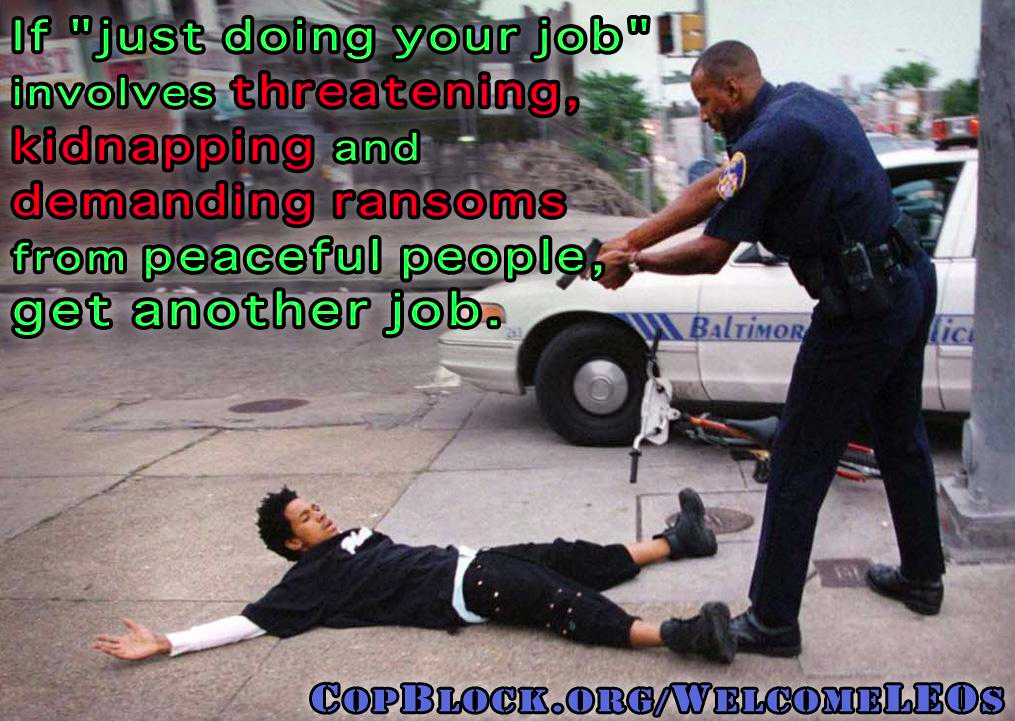
Now here’s a little truth, open up your eye While you’re checkin’ out the boom-bap, check the exercise Take the word overseer, like a sample Repeat it very quickly in a crew, for example Overseer, overseer, overseer, overseer Officer, officer, officer, officer Yeah,officerfromoverseer You need a little clarity? Check the similarity! The overseer rode around the plantation The officer is off, patrollin’ all the nation The overseer could stop you, “What you’re doing?” The officer will pull you over just when he’s pursuing The overseer had the right to get ill And if you fought back, the overseer had the right to kill The officer has the right to arrest And if you fight back they put a hole in your chest
Conscious hip-hop is often confused with its musical cousin, political hip-hop, possibly because they both speak to social turmoil.
A disdain for commercialism is another common thread that weaves the two styles together. Politically charged songs by rappers such as Dead Prez and Public Enemy are usually delivered in a militant fashion.
September 6, 2012: Decrypted Matrix with Max Maverick on Revealing Talk Radio
Prison Industrial Complex Explained: Learn how Corporations are outsourcing & privatizing labor costs to the Prison Industry and how there are massive profits exploding from within this corrupted Incarceration System. Slave Labor Camps, Return of the Debtor Prisons, Products most often created by Prisoners, Recent Wallstreet investments & the Goldman Sachs connection. SERCO, UNICOR, Federal Prison Industries, Inc. and the astronomical nationwide per-capita figures that will make your head spin.
This is a clear representation that the United States’ ELECTED officials care nothing for the Constitution and what it stands for. They are most likely embarrassed or ashamed of their stance on these relevant issues due to pay-offs, blackmail, insider stock trading, and their central banking ‘handlers’ that motivate them to stay silent on these most important issues. For them, it is easier to bury their heads in the sand, and pretend that this doesn’t require their input nor action. -Max Maverick, DCMX Editor
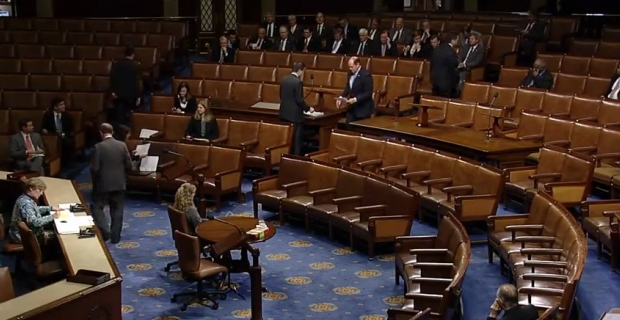
In what was supposed to be a symbolic gesture of the enduring greatness of the US Constitution, and the rights it outlines for all Americans, the House read the entire document out aloud on the chamber floor yesterday. However, the symbolism backfired somewhat when only a fraction of representatives bothered to show up.
In the midst of the Obama administration’s ongoing efforts to eviscerate the Second Amendment by executive order, it was extremely telling that so few members of the House took the time to show their respect for the Constitution.
The document was divided into 120 sections, with GOP House leaders believing that at least that many members would show up to each read a section.
When all was said and done, however, only 74 members attended. The Washington Times notes that the House ran out of Democrats before they even got past Article IV, which is less than halfway through the document.
Just 25 Democrats valued the idea enough to turn up for the reading, while a meager 49 Republicans attended. This meant that each reader had to take two or three sections.
The entire reading took around 66 minutes.
During the Preamble to the reading, Virginia Republican Bob Goodlatte, who organised the event, stated “We also hope that this will demonstrate to the American people that the House of Representatives is dedicated to the Constitution and the system it establishes for limited government and the protection of individual liberty.”
When two Democrats shuffled in as the final reader was speaking, Goodlatte attempted to put a brave face on the situation, stating “We ran out of Constitution before we ran out of readers,”.
The Times also notes that Minority Leader Nancy Pelosi seemed embarrassed that so few Democrats showed up, at one point she “gestured with a shrug to the nearly empty chamber”. Her Republican counterpart, Speaker of the House John Boehner was initially present but left before the end of the reading and did not take part.
The Second Amendment was read by Rep. Kevin Yoder, R-Kan., who also read the First and Third Amendments.
This was only the second time that the Constitution has been read in its entirety, without sections that were amended after the document was ratified in September 1787.
The first occasion was just two years ago, when 137 lawmakers attended.
It is to be expected that some members cannot always be present on the House floor, but with 435 representatives having sworn an oath to uphold the Constitution, it is pitiful, and a very telling sign of the times, that only around one sixth cared enough to participate in reading out the founding document.
And Congress’ Rich Get Richer
Net Worth of Lawmakers Up 25 Percent in Two Years, Analysis Demonstrates
Members of Congress had a collective net worth of more than $2 billion in 2010, a nearly 25 percent increase over the 2008 total, according to a Roll Call analysis of Members’ financial disclosure forms.
Nearly 90 percent of that increase is concentrated in the 50 richest Members of Congress.
Two years ago, Roll Call found that the minimum net worth of House Members was slightly more than $1 billion; Senators had a combined minimum worth of $651 million for a Congressional total of $1.65 billion. Roll Call calculates minimum net worth by adding the minimum values of all reported assets and subtracting the minimum values of all reported liabilities.
According to financial disclosure forms filed by Members of Congress this year, the minimum net worth in the House has jumped to $1.26 billion, and Senate net worth has climbed to at least $784 million, for a Congressional total of $2.04 billion.
These wealth totals vastly underestimate the actual net worth of Members of Congress because they are based on an accounting system that does not include homes and other non-income-generating property, which is likely to tally hundreds of millions of uncounted dollars. In addition, Roll Call’s tally is based on the minimum values of assets reported by Members on their annual financial disclosure forms; the true values of those assets may be much higher.
While wealth overall is scattered fairly evenly between the two parties, there is an interesting divide in the two chambers. Democrats hold about 80 percent of the wealth in the Senate; Republicans control about 78 percent of the wealth in the House.
And as protesters around the country decry the supposed consolidation of wealth in America, the trend can be seen starkly in Congress, a comparison suggested by American Enterprise Institute visiting scholar Mark Perry. The 50 richest Members of Congress accounted for 78 percent of the net worth in the institution in 2008 ($1.29 billion of the $1.65 billion total); by 2010 the share of the 50 richest had risen to 80 percent ($1.63 billion of the $2.04 billion total). The pie of Congressional wealth got bigger, and the richest Members are getting a bigger slice.
But there is still plenty to go around. Overall, 219 Members of Congress reported having assets worth more than $1 million last year; subtracting the minimum value of their liabilities brings the total number of millionaires in Congress down to 196 — again not counting any value on their homes or other non-income-producing property. If one were to assume that every Member of Congress has $200,000 worth of equity in real estate, the total number of millionaires would rise to 220 Members, just more than 40 percent of the Congress.
As with the general U.S. population, a few exceedingly wealthy people skew the averages for the rest of the membership. But still, by almost any measure, the average Member of Congress is far wealthier than the average U.S. household.
For example, dividing the total wealth of Congress by the number of Members creates a mean (average) net worth for each Member of about $3.8 million (excluding non-income-producing property such as personal residences). By comparison, for the rest of the country, based on statistics released by the Federal Reserve, average household net worth is around $500,000 this year (including personal residences), according to David Rosnick, an economist at the Center for Economic and Policy Research.
But a handful of Members of Congress are worth tens or even hundreds of millions of dollars — the richest Member of Congress this year, Rep. Michael McCaul (R-Texas), is worth a minimum of $294 million, meaning that McCaul’s own wealth has the effect of raising the average of every Member of Congress by about $500,000.
So a better number for comparison is the median, the number where half the group is above and half the group is below. For Congress, the median net worth in 2010 was about $513,000. For regular households, the Federal Reserve Board pegged that number at about $120,000 in 2008, and that number this year is probably around $100,000, Rosnick said.
While it is hard to make an exact comparison between Congress and the rest of the nation, what is clear is lawmakers “are all a lot richer than anything you would call a typical American,” Rosnick said.
And Congress appears to be getting richer faster than the rest of the nation. Citing Federal Reserve data, Rosnick said, “From the end of 2008 to end of 2010, aggregate household worth increased
12 percent.” That is about half the increase Congress achieved during the same time period.
The cautionary note in any Congressional wealth analysis is that significant changes in apparent wealth of Members do not necessarily represent an actual change in net worth.
For example, Rep. Darrell Issa reported this year that his 2010 assets were worth at least $295 million, nearly double what they were the year before. The reason for the change appears to be in part because the California Republican moved some properties from a single account into separate accounts. An account that Issa had listed as having a minimum value of $50 million in 2009 dropped to a minimum value of $25 million in 2010, but he added 11 accounts with a minimum combined value of $38.2 million. Even if none of the actual account (or property) values increased, the minimum value of those assets on paper rises by $13.2 million, or more than 25 percent.
Alan Ziobrowski, a professor of real estate at Georgia State University, has produced studies of Congressional investment patterns indicating that lawmakers in both chambers tend to fare better in their investment portfolios than the average American, in part because “[t]here is no doubt in my mind that they are trading in some way on information that is there.”
But he also points out that the Membership of Congress has turned over since 2008, making it difficult to compare wealth over time. “You’ve got different people,” he said.
In the aftermath of the 2010 elections that swept Republicans to power, about 20 percent of the Members included in the 2010 survey were not included in the 2008 survey.
First of all, download or print these instructions. Keep them with your survival gear, if you have prepared one.
SCENARIO
Your government is displeased with the communication going on in your location and pulls the plug on your internet access, most likely by telling the major ISPs to turn off service.
This is what happened in Egypt Jan. 25, 2012 prompted by citizen protests, with sources estimating that the Egyptian government cut off approximately 88 percent of the country’s internet access. What do you do without internet? Step 1: Stop crying in the corner. Then start taking steps to reconnect with your network. Here’s a list of things you can do to keep the communication flowing.
PREVENTIVE MEASURES
MAKE YOUR NETWORK TANGIBLE
Print out your contact list, so your phone numbers aren’t stuck in the cloud. Some mail services like Gmail allow you to export your online contact list in formats that are more conducive to paper, such as CSV or Vcard, and offer step-by-step guides on how to do this.
BROADCAST ON THE RADIO
CB Radio:Short for “Citizens Band” radio, these two-way radios allow communication over short distances on 40 channels. You can pick one up for about $20 to $50 at Radio Shack, and no license is required to operate it.
Ham radio:To converse over these radios, also known as “amateur radios,” you have to obtain an operator’s license from the FCC. Luckily, other Wired How-To contributors have already explained exactly what you need to do to get one and use it like a pro. However, if the President declares a State of Emergency, use of the radio could be extremely restricted or prohibited.
GMRS:The General Mobile Radio Service (GMRS) is a licensed land-mobile FM UHF radio service in the United States available for short-distance two-way communication. It is intended for use by an adult individual who possesses a valid GMRS license, as well as his or her immediate family members… They are more expensive than the walkie-talkies typically found in discount electronics stores, but are higher quality.
Family Radio Service:The Family Radio Service (FRS) is an improved walkie-talkie radio system authorized in the United States since 1996. This personal radio service uses channelized frequencies in the ultra high frequency (UHF) band. It does not suffer the interference effects found on citizens’ band (CB) at 27 MHz, or the 49 MHz band also used by cordless phones, toys, and baby monitors.
Micro-broadcasting:Micro-broadcasting is the process of broadcasting a message to a relatively small audience. This is not to be confused with low-power broadcasting. In radio terms, it is the use of low-power transmitters to broadcast a radio signal over the space of a neighborhood or small town. Similarly to pirate radio, micro-broadcasters generally operate without a license from the local regulation body, but sacrifice range in favor of using legal power limits.
Packet Radio Back to the ’90s: There do exist shortwave packet-radio modems. These are also excruciatingly slow, but may get your e-mail out. Like ham radio above it requires a ham radio license because they operate on ham radio frequencies.
TELEPHONE:
Set up a phone tree:According to the American Association of University Women, a phone tree is “a prearranged, pyramid-shaped system for activating a group of people by telephone” that can “spread a brief message quickly and efficiently to a large number of people.” Dig out that contact list you printed out to spread the message down your pyramid of contacts.
Enable Twitter via SMS:Though the thought of unleashing the Twitter fire hose in your text message inbox may seem horrifying, it would be better than not being able to connect to the outside world at all. The Twitter website has full instructions on how to redirect tweets to your phone.
Call to Tweet: A small team of engineers from Twitter, Google and SayNow, a company Google acquired recently, made this idea a reality. It’s already live and anyone can tweet by simply leaving a voicemail on one of these international phone numbers (+16504194196 or +390662207294 or +97316199855) and the service will instantly tweet the message using the hashtag #egypt. No Internet connection is required. People can listen to the messages by dialing the same phone numbers or going to the Twitter account, speak2tweet.
FAX:
If you need to quickly send and receive documents with lengthy or complex instructions, phone conversations may result in misunderstandings, and delivering the doc by foot would take forever. Brush the dust off that bulky old machine, establish a connection by phone first with the recipient to make sure his machine is hooked up, then fax away.
You may not need a fax machine to send or receive faxes if your computer has a dial-up fax application.
NON-VIRTUAL BULLETIN BOARD
Sometimes we get so wrapped up in the virtual world that we forget about resources available in the real world. Physical bulletin boards have been used for centuries to disseminate information and don’t require electricity to function. If you are fortunate enough to be getting information from some other source why not share it with your friends and neighbors with your own bulletin board? Cork, magnetic and marker bulletin boards are as close as your nearest dime store and can be mounted just about anywhere. And if push comes to shove you can easily make your own with scrap wood lying around the house.
Getting back online – While it might be relatively easy for a government to cut connections by leveraging the major ISPs, there are some places they wouldn’t get to so readily, like privately-owned networks and independent ISPs.
FIND THE PRIVATELY RUN ISPs
In densely populated areas, especially in central business districts and city suburbs there are multiple home WiFi networks overlapping each other, some secure, some not. If there is no internet, open up your WiFi by removing password protection: If enough people do this it’s feasible to create a totally private WiFi service outside government control covering the CBD, and you can use applications that run Bonjour (iChat on Mac for example) to communicate with others on the open network and send and receive documents. **needs more clarification
If you are a private ISP, it’s your time to shine. Consider allowing open access to your Wi-Fi routers to facilitate communication of people around you until the grid is back online.
RETURN TO DIAL-UP
According to an article in the BBC about old tech’s role in the Egyptian protests, “Dial-up modems are one of the most popular routes for Egyptians to get back online. Long lists of international numbers that connect to dial-up modems are circulating in Egypt thanks to net activists We Re-Build, Telecomix and others.”
Dial-up can be slow. Often, there is a lightweight mobile version of a site that you can load from your desktop browser quickly despite the limitations of dial-up. Examples: mobile.twitter.com, m.facebook.com, m.gmail.com.
AD-HOC NETWORKING
Most wireless routers, PCs, laptops, and even some ultramobile devices like cellphones have the ability to become part of an “ad hoc” network, where different “nodes” (all of the devices on the network) share the responsibility of transmitting data with one another. These networks can become quite large, and are often very easy to set up. If used properly by a tech-savvy person, such networks can be used to host temporary websites and chat rooms. There are many internet tutorials on the internet for ad hoc networking, so feel free to Google some.
Apple computers tend to have very accessible ad hoc functionality built in, including a pre-installed chat client (iChat) that will automatically set up an ad hoc “Rendezvous” chatroom among anybody on the network, without the need for an external service like AIM or Skype. Ad hoc network-hosting functionality is built in to the Wi-Fi menu.
Windows computers have several third-party ad hoc chat applications available (such as Trillian) and setting up an ad hoc Wi-Fi network is almost as simple as on a Mac.
Linux operating systems, of course, have plenty of third-party apps available, and most distros have ad hoc network-creation support built in.
BUILD LARGE BRIDGED WIRELESS NETWORK
Using popular wireless access point devices like a Linksys WRT54G, you can create a huge wireless bridged network — effectively creating a Local Area Network (LAN), or a private Internet that can be utilized by all users within range using a Wi-Fi enabled device.
You can also link multiple devices together wirelessly, extending the range of your network. Most access points will cover a 100 meter area and if your wireless device is built to support the 802.11n wireless standard, you will get almost a 500 meter coverage area for each access point.
To build a wireless bridge, check out the dd-wrt wiki, and learn how to configure Linksys WRT54G as a wireless client using this Anandtech thread.
NINTENDO DS
A used DS family device can be purchased inexpensively. In addition to wi-fi, the DS supports its own wireless protocols. Using Pictochat, it is possible to chat with nearby DS users without having any DS games. Unfortunately, the range is quite short.
Some games, such as the fourth generation Pokemon games, support mail items. Thus you can send your message under the guise of just playing a game. Mail items can be sent through the Internet if you can get on the net and you and your partner(s) have each other’s friend codes.
The original DS and the DS Lite do support the Opera web browser, but finding the game card and memory pack may be very difficult. Starting with the DSi, Opera is downloadable.
INTRANET
Your computer has the ability to set up your own INTRANET. This was done BEFORE the internet was popularized in two ways: Your computer dialed up other computers and sent them the contents of a message board, or local people people dialed into your computer. A nationwide system can be set up this way with a central location sending to many cities then each city sending out the info locally.
BECOME UNTRACEABLE
If you’re going to post government secrets on your work-around site, you may want to set up an untraceable account. Really, you only need a mail drop, an assumed name, a prepaid credit card you can get at many stores to set up service.
GET SATELLITE ACCESS
You can have very, very slow internet if you have something similar to an Iridium phone, which would allow you to do dial up at 2400 baud, which at least gives you e-mail. This will also work when your government has shut down GSM and telephone access, and will work pretty much anywhere on the planet. If you’re in the right place, get yourself KA-SAT access which is satellite broadband and will not be routed through any internet exchange that certain local governments may monitor or block (unless that government is part of EU or er … Uncle Sam.
BACK TO BASICS
Make some noise: Have an air horn or other loud instrument handy. It may just come down to being able to alert people in your local geographic area, who would otherwise be unaware of an emergency. You may also want to learn a bit about Morse code and have a cheat sheet available.
FEMA Camp Freak-Out! Crash Course & Fact Finding into the Federal Emergency Management Agency, Overreaching Executive Orders, Empty and Ready ‘Detainment Camps’ & Plans for Continuity of Government.
An inquisitive alien visits the planet to check on our progress as a species, and gets into a conversation with the first person he meets. The alien discovers that we live under the rule of a thing called “government”, and wants to understand more about what “government” is, what it does, and why it exists.
Series: Process Self-reliance Series | Publication Date: November 1, 2006
Had enough?Whether you find the government oppressive, the economy spiraling out of control, or if you simply want adventure, you’re not alone. In increasing numbers, the idea is talked about openly: Expatriate.
Over three hundred thousand Americans emigrate each year, and more than a million go to foreign lands for lengthy stays.
But picking up and moving to another country feels like a step into the void. Where to go? How to begin? What to do?
Volume 2 of the Process Self-Reliance Series, this smartly designed two-color guidebook walks you through the world of the expat: the reasons, the rules, the resources, and the tricks of the trade, along with compelling stories and expertise from expatriate Americans on every continent.
Getting Out shows you where you can most easily gain residence, citizenship, or work permits; where can you live for a fraction of the cost of where you’re living now; and what countries would be most compatible with your lifestyle, gender, age, or political beliefs.
So if you’ve had enough of what they’re selling here and want to take your life elsewhere—well, isn’t that the American way? At any rate, it’s not illegal. Not yet, anyway.
Whether you find the government oppressive, the economy spiraling out of control, or if you simply want adventure, you’re not alone. In increasing numbers, the idea is talked about openly: Expatriate.
Over three hundred thousand Americans emigrate each year, and more than a million go to foreign lands for lengthy stays.
But picking up and moving to another country feels like a step into the void. Where to go? How to begin? What to do?
Volume 2 of the Process Self-Reliance Series, this smartly designed two-color guidebook walks you through the world of the expat: the reasons, the rules, the resources, and the tricks of the trade, along with compelling stories and expertise from expatriate Americans on every continent.
Getting Out shows you where you can most easily gain residence, citizenship, or work permits; where can you live for a fraction of the cost of where you’re living now; and what countries would be most compatible with your lifestyle, gender, age, or political beliefs.
So if you’ve had enough of what they’re selling here and want to take your life elsewhere—well, isn’t that the American way? At any rate, it’s not illegal. Not yet, anyway.
Customers Viewing This Page May Be Interested in These Sponsored Links
Mark Ehrman is a frequent traveler and freelance writer whose work regularly appears in the Los Angeles Times, Playboy, Travel and Leisure, and numerous travel magazines city guidebooks.
Product Details
Paperback: 320 pages
Publisher: Process (November 1, 2006)
Language: English
ISBN-10: 0976082276
ISBN-13: 978-0976082279
Product Dimensions: 8.9 x 5.9 x 0.9 inches
Shipping Weight: 1.2 pounds
Average Customer Review:3.8 out of 5 stars See all reviews (18 customer reviews)
This review is from: Getting Out: Your Guide to Leaving America (Process Self-reliance Series) (Paperback)
The strength of this book is that it favors breadth rather than depth.
If you are thinking about leaving the US but don’t really know where you’d like to go, or if you have a destination in mind but don’t really know what you don’t know about emigration, this book is for you. Getting Out covers the top 50 destinations for US expats, with information about the quality of health care, cost and standard of living, and social permissiveness. Also included are brief accounts of the experiences of expats living around the world. There is also good general information about the different pathways available to the potential expat.
Reading it will definately leave you with more questions than answers, since any comprehensive emigration/immigration guide to all the countries in the world would fill a small library. Getting Out will give you the basics and point you in the right direction to find more in-depth information. You won’t find anything here that will help you decide to settle in one country over another, but it will help you either narrow your list or give you reason to consider some place you otherwise would not have.
Help other customers find the most helpful reviews
This review is from: Getting Out: Your Guide to Leaving America (Process Self-reliance Series) (Paperback)
This is a great book that is a good foundation in researching the how-to’s in leaving the country. In a category where there are very few books to choose from, this book is timely and reasonable well written. If you are interested in leaving the United States and not completely sure of where to go, this is a good resource along with the CIA factbook & other well known websites.
Pros:
1) Great list of helpful websites in the back for each country.
2) Excellent group of countries considered around the globe.
3) Decent foundational info about each country considered (50 countries).
4) Very readable style.
5) Good cross section of short blurbs about various peoples rationales in leaving.
6) Fair price for the book.
Cons:
1) No specific info as to why certain countries were included and other excluded.
2) Many countries mentioned in passing (in a positive light) in various parts of text are not considered as possibilities (i.e.: not profiled).
3) No easy way to see how countries stack up against each other at a glance based on various factors.
4) Poor editing… Many typos.
5) Could have had much more specific info about each country for various factors to consider (e.g. Pet specifics for each, education system, etc…)
6) Would have been nice to have at least one person for each country cited. Although difficult to pull off, this would have been better than people telling their stories for a subset of the countries profiled.
In short, this book has very little dead weight material and is a must have if this topic is relevant to you.
Help other customers find the most helpful reviews
This review is from: Getting Out: Your Guide to Leaving America (Process Self-reliance Series) (Paperback)
This book is a fun read with lots of very useful information; it’s just as good for Americans looking to get out as it would be for non-Americans looking for someplace to go, as it profiles many countries and also has a wealth of suggestions for moving and income that are not country-specific.
On the downside, as an American living in Japan, I can say that its section on Japan is woefully incomplete. Jobs here are said to pay “the mighty yen”, but my friends and I always grimace when it’s time to send money home. It doesn’t even mention the astounding bureaucracy or the racism that often goes hand in hand with it. And it only mentions Tokyo, despite that there are foreigners living in beautiful, cheap, and friendly cities and villages all over the country.
This is a fun read but should not be your last source of information!

 Capital Steez Courtney “Jamal” Everald Dewar JR, better known by his stage name Capital Steez, was an American hip hop recording artist and anarchist from Brooklyn, New York City, New York.Capital Steez Courtney “Jamal” Everald Dewar JR, better known by his stage name Capital Steez, was an American hip hop recording artist and anarchist from Brooklyn, New York City, New York. Courtney “Jamal” Everald Dewar JR, better known by his stage name was an American hip hop recording artist and anarchist from Brooklyn, New York City, New York.Capital Steez Courtney “Jamal” Everald Dewar JR, better known by his stage name Capital Steez, was an American hip hop recording artist and anarchist from Brooklyn, New York City, New York.Capital Steez Courtney “Jamal” Everald Dewar JR, better known by his stage name was an American hip hop recording artist and anarchist from Brooklyn, New York City, New York.Capital Steez Courtney “Jamal” Everald Dewar JR, better known by his stage name Capital Steez, was an American hip hop recording artist and anarchist from Brooklyn, New York City, New York.