Barrett Brown is an American journalist, essayist and satirist. He is often referred to as an unofficial spokesperson for the hacktivist collective Anonymous, a label he disputes. He is credited with the creation of Project PM, a research outfit and information collective determined to expose agents of the corporate military spying apparatus. Brown’s large vocabulary and quick wit often make his thoughts a joy to read.
The seven guys with whom I recently spent two months living in a small room at the Kaufman County Jail while awaiting transfer were in the distressing habit of compulsively watching local TV news, which is the lowest form of news. They would even watch more than one network’s evening news program in succession, presumably so as to get differing perspectives on the day’s suburban house fires and rush-hour lane closings rather than having to view these events through a single ideological prism.
One day, there was a report about a spate of bank robberies by a fellow the media was dubbing the Lunch Money Bandit after his habit of always striking around noon, when tellers were breaking for lunch. Later that week, there was another report on the suspect, accompanied by surveillance footage — and then, shortly afterward, he was actually brought in to our cell, having just been captured when the cops received a tip from a former accomplice who’d been picked up on unrelated charges.
Lunch Money was an affable twentysomething guy from New Orleans who’d lost his two front teeth fighting off a couple of assailants who’d tried to rob his family’s motel room after Katrina and had already done four years in federal prison for other bank robberies. He would have gladly taken a real job if he’d been able to find one, he said. Still, he conceded, “I just love robbing banks.” I couldn’t imagine what there is to love about such a career; this isn’t the old days when a bank robbery entailed brandishing a Tommy gun, dynamiting a safe, and tearing off in a stolen Model T roadster with your hard-drinking flapper girlfriend and a dozen cloth sacks adorned with dollar sign symbols. These guys today just sort of walk up to the teller and hand over a note to the effect that they have a gun (which they don’t — going armed carries a more serious charge, and there’s no point in bringing a gun to a bank that’s federally insured, even in Texas).
Drug dealers find bank robbers to be fascinating eccentrics and tend to pepper them with questions. One cocaine entrepreneur asked Lunch Money, “What if, like, when you handed her the note, the bitch just laughed in your face?”
“Man, that’d be fucked up,” he replied thoughtfully, visibly shaken by this potential revolution in human affairs.
One night, as we all lay in our bunks discussing the wicked world, Lunch Money proclaimed that Magic Johnson had never actually had HIV and that the whole thing had merely been a plot by the CIA, which had paid him handsomely to fake it so that he could later pretend to “recover” and the U.S. medical establishment could take credit for having developed such effective HIV treatments. As evidence, he noted that Johnson was inexplicably worth over a billion dollars. I debated with him about this for an hour. I’m not too bothered by my five-year prison sentence, as it will be neat to get out when it’s over and see to what extent video game graphics have improved while I was away, but I sure would like to get back the hour I spent arguing about Magic Johnson’s HIV status with the fucking Lunch Money Bandit.
***
The other day I was woken up at 4:30 am, escorted to a small, bare room, strip-searched, put in handcuffs and leg shackles, had a heavy chain wrapped around my midsection, and placed in the back of a dark and cage-lined van that looked like something from one of those Saw movies. But this was good news. It meant that, having recently gotten my ludicrous sentence, I’d now been “designated.” A crack team of specially trained federal prison picker-outers had chosen a facility for me. I was now to begin the multi-stage pilgrimage to the particular compound where I’ll be spending the next one to two years, depending on whether I get into any further trouble (so, two years).
For the majority of federal defendants, this Prisoner’s Progress, as I’m pleased to call it, entails “catching chain,” or being put on the weekly prison bus and taken to the federal inmate processing facility in Oklahoma, where the federal government has been sending its victims since the Trail of Tears. They’ll spend a week or so there before being shipped in turn to their designated prison. Prisons being far more humane than the amusingly horrid little detention centers where most inmates facing charges are kept until they inevitably give in and plea to a crime, this journey is viewed with fond anticipation by federal prisoners, who thus constitute the only population in human history among which it is common to be excited about the prospect of going to Oklahoma.
As for me, I’d rather rip off my own balls and mail them to Stratfor as restitution than set foot in a third-rate state like Oklahoma, regardless of what wonders may lie at the end of that particular rainbow, so it’s a fine thing that I was just going down the road to the Fort Worth Federal Correctional Institution, which will be my home for the next, er, two years. I know little of Fort Worth other than that it’s a lawless haven for half-caste Indian fighters and shiftless part-time cowhands looking to blow their greenbacks and Comanche scalps at one of the town’s countless Chinese-run opium dens, nor am I bothered by the possibility that what little I do know about the town may be 130 years out of date and racist. But I specifically requested that I be sent to this benighted city’s federal prison. For one thing, I’d already “toured the campus,” as it were, shortly after my arrest, when I spent two months at FCI Fort Worth’s jail unit so that the resident psychologists could subject me to a competency evaluation. (Based on their report, Judge Sam Lindsay declared me competent to participate in a trial, which is more than I can say for Judge Sam Lindsay.)
Fort Worth is also the only federal prison aside from FCI Seagoville that’s located near Dallas, and I’m pretty sure I’m still banned from that one, as noted in a prior column, and naturally I want to be close to my parents so that they can visit me with some regularity. My mom, a writer and editor and former flight attendant and South Texas beauty queen who once took me on a vacation to see a swimming pig at a place called Aquarena Springs, is a valuable fountainhead of media gossip, including which outlets are currently going down in flames (The New Republic, as it turns out), and always makes sure to let me know whether and to what extent my haircut is inadequate. Sometimes, if I happen to have a pimple, she insists on popping it right then and there in the visiting room, right in front of the other criminals. Note that I am 33 years old and, arguably, a hardened convict.
Likewise, my dad is my chief source of information regarding plot developments in what I gather to be a popular television program called The Blacklist, new episodes of which he details to me at great length at every opportunity, although I have never asked him for these reports or expressed any interest in the show whatsoever. Incidentally, when I was a kid, he took me on five different occasions to see a film called Hard Target in which the protagonist, ably portrayed by Jean Claude van Damme, finds himself hunted for sport by a wealthy fellow and his mercenary squad of professional trackers, all of whom he ends up killing in turn. My dad also gave me a promotional poster for this movie and, for years afterward, would turn to me and solemnly proclaim the film’s tagline, “Don’t hunt what you can’t kill,” which I suppose is as good advice as any.
Last time he came for a visit, he began to relate to me, apropos of nothing, the nature and potential killing power of some sort of subterranean supervolcano located at Yellowstone and the general circumstances under which it will someday explode and kill a great majority of North Americans, an event which he prophesied with obvious relish. It’s not that he’s one of those ecological mystics who despise humanity and long to see Mother Earth fight back against the ravages of industrial sentience or some such irritating thing. Quite the contrary. In my younger days, he would often drag me around East Texas and command me to assassinate deer and wild boars with rifles he would supply for the purpose, even though I had no ideological differences with any of these animals, and one time, when I was 17, he took me to East Africa to help him exploit the resident natural resources alongside a group of ex-military adventurers with whom we had somehow managed to attach ourselves (this expedition failed rather spectacularly), and lately he seems to have gotten involved in fracking. So he’s certainly no partisan of Nature. It’s just that he’s fond of power in its rawest forms, and if he smiles at the prospect of 400 million deaths, it is only because he feels that man is insufficiently reverent of this particular supervolcano, this god-made-manifest, which therefore has no choice but to lash out against us as punishment. He’s also a longtime pillar of the Dallas Safari Club and on at least one occasion of which I am aware was literally almost eaten by a lion. I could go on and on. Thankfully my parents are divorced, and so I usually only have to deal with these hyperactive Southern Gothic archetypes one at a time these days. Occasionally, though, they set aside their differences in order to come harass me together, and I eventually emerge from the visitation room looking haunted.
I wasn’t taken straight to Fort Worth from Kaufman County, as that would be too quick and easy and cost effective, the prison being less than a half-hour’s drive away; rather, I was taken to the federal courthouse in downtown Dallas to wait for another ride to the Mansfield jail, where I’d already spent much of 2013, and from which I’d eventually be taken to Fort Worth next time a U.S. Marshal happened to be going in that general direction. At the end of the day’s no doubt majestic federal court proceedings, I was placed back in the chew-your-arm-off-and-only-then-shall-I-give-you-the-key van for the ride over to Mansfield. In the rusty cage next to mine were two girls, shackled like I was, who had been to court that afternoon. One had been crying; she’d just been sentenced to eight years for conspiracy to distribute marijuana despite having originally been given reason to expect considerably less time, as she’d cooperated with the FBI. The agents had clearly found her testimony helpful, as they’d met with her a second time, but nonetheless they’d neglected to ask the judge for the sentence reduction they’d promised her in exchange. Like most drug dealers, this girl was in the habit of making and keeping bargains on the strength of her word and expected others to do likewise, but then she’d never dealt with the FBI before.
Just as she finished sobbing out her story, something rather incredible happened: the U.S. Marshal who was driving us back to the jail, having been listening to this account, apparently decided that he was sick of serving as another cog in a fascist system that literally places females in chains and ruins their lives over consensual non-crimes like selling marijuana, because he pulled over, stepped out of the van, came around the back, unlocked the girl’s cage, removed her chains and leg irons and handcuffs, gave her all the cash he had on him, kissed her on the forehead, and advised her to hitchhike to Mexico and then catch a flight to Europe, where she’d have another chance at life, far away from the all-seeing state that had sought to deprive her of her youth and freedom.
Just kidding. Actually he drove us to the jail while the girl cried in her cage.
***
Quote of the Day:
“Truth does not often escape from palaces.” —William Durant
***
Editor’s note: Barrett Brown has been incarcerated since September 2012. Go here to read earlier installments of “The Barrett Brown Review of Arts and Letters and Jail.” If you’d like to send him a book, here’s his Amazon wish list.
Barrett Brown #45047-177 FCI Fort Worth P.O. Box 15330 Fort Worth, TX 76119
Ray McGovern Raymond McGovern is a retired CIA officer turned political activist. McGovern was a CIA analyst from 1963 to 1990, and in the 1980s chaired National Intelligence Estimates and prepared the President’s Daily Brief.Ray McGovern Raymond McGovern is a retired CIA officer turned political activist. McGovern was a CIA analyst from 1963 to 1990, and in the 1980s chaired National Intelligence Estimates and prepared the President’s Daily Brief.Ray McGovern Raymond McGovern is a retired CIA officer turned political activist. McGovern was a CIA analyst from 1963 to 1990, and in the 1980s chaired National Intelligence Estimates and prepared the President’s Daily Brief.Ray McGovern Raymond McGovern is a retired CIA officer turned political activist. McGovern was a CIA analyst from 1963 to 1990, and in the 1980s chaired National Intelligence Estimates and prepared the President’s Daily Brief.National Intelligence Estimates and prepared the President’s Daily Brief.National Intelligence Estimates and prepared the President’s Daily Brief.National Intelligence Estimates and prepared the President’s Daily Brief. We need more people who work for the government to follow in the foot steps of these brave leaders. The truth movement would not be the same without the efforts of these great men and wonen.We need more people who work for the government to follow in the foot steps of these brave leaders. The truth movement would not be the same without the efforts of these great men and wonen.We need more people who work for the government to follow in the foot steps of these brave leaders. The truth movement would not be the same without the efforts of these great men and wonen.
William Binney William Edward Binney is a former highly placed intelligence official with the United States National Security Agency turned whistleblower who resigned on October 31, 2001, after more than 30 years with the agency. We need more truthers like this guy. Without people coming forward we wil never have the kind of freedom of information that our founding fathers fought so hard for. Remember America is only as good as those who are willing to speak the truth.William Edward Binney is a former highly placed intelligence official with the United States National Security Agency turned whistleblower who resigned on October 31, 2001, after more than 30 years with the agency. We need more truthers like this guy. Without people coming forward we wil never have the kind of freedom of information that our founding fathers fought so hard for. Remember America is only as good as those who are willing to speak the truth.William Edward Binney is a former highly placed intelligence official with the United States National Security Agency turned whistleblower who resigned on October 31, 2001, after more than 30 years with the agency. We need more truthers like this guy. Without people coming forward we wil never have the kind of freedom of information that our founding fathers fought so hard for. Remember America is only as good as those who are willing to speak the truth.William Binney William Edward Binney is a former highly placed intelligence official with the United States National Security Agency turned whistleblower who resigned on October 31, 2001, after more than 30 years with the agency. We need more truthers like this guy. Without people coming forward we wil never have the kind of freedom of information that our founding fathers fought so hard for. Remember America is only as good as those who are willing to speak the truth.William Edward Binney is a former highly placed intelligence official with the United States National Security Agency turned whistleblower who resigned on October 31, 2001, after more than 30 years with the agency. We need more truthers like this guy. Without people coming forward we wil never have the kind of freedom of information that our founding fathers fought so hard for. Remember America is only as good as those who are willing to speak the truth.William Edward Binney is a former highly placed intelligence official with the United States National Security Agency turned whistleblower who resigned on October 31, 2001, after more than 30 years with the agency. We need more truthers like this guy. Without people coming forward we wil never have the kind of freedom of information that our founding fathers fought so hard for. Remember America is only as good as those who are willing to speak the truth.
Thomas Drake is a former senior executive of the U.S. National Security Agency, a decorated United States Air Force and United States Navy veteran, and a whistleblower.is a former senior executive of the U.S. National Security Agency, a decorated United States Air Force and United States Navy veteran, and a whistleblower.is a former senior executive of the U.S. National Security Agency, a decorated United States Air Force and United States Navy veteran, and a whistleblower.is a former senior executive of the U.S. National Security Agency, a decorated United States Air Force and United States Navy veteran, and a whistleblower.
Thomas Andrews Drake is a former senior executive of the U.S. National Security Agency, a decorated United States Air Force and United States Navy veteran, and a whistleblower.is a former senior executive of the U.S. National Security Agency, a decorated United States Air Force and United States Navy veteran, and a whistleblower.is a former senior executive of the U.S. National Security Agency, a decorated United States Air Force and United States Navy veteran, and a whistleblower.is a former senior executive of the U.S. National Security Agency, a decorated United States Air Force and United States Navy veteran, and a whistleblower.
Robert David Steele Vivas is an American activist and a former Central Intelligence Agency clandestine services case officer known for his promotion of open source intelligence.Vivas is an American activist and a former Central Intelligence Agency clandestine services case officer known for his promotion of open source intelligence.Vivas is an American activist and a former Central Intelligence Agency clandestine services case officer known for his promotion of open source intelligence.Robert David Steele Vivas is an American activist and a former Central Intelligence Agency clandestine services case officer known for his promotion of open source intelligence.Vivas is an American activist and a former Central Intelligence Agency clandestine services case officer known for his promotion of open source intelligence.Vivas is an American activist and a former Central Intelligence Agency clandestine services case officer known for his promotion of open source intelligence.
Robert David Steele Vivas is an American activist and a former Central Intelligence Agency clandestine services case officer known for his promotion of open source intelligence.Vivas is an American activist and a former Central Intelligence Agency clandestine services case officer known for his promotion of open source intelligence.Vivas is an American activist and a former Central Intelligence Agency clandestine services case officer known for his promotion of open source intelligence.Robert David Steele Vivas is an American activist and a former Central Intelligence Agency clandestine services case officer known for his promotion of open source intelligence.Vivas is an American activist and a former Central Intelligence Agency clandestine services case officer known for his promotion of open source intelligence.Vivas is an American activist and a former Central Intelligence Agency clandestine services case officer known for his promotion of open source intelligence.
Robert David Steele Vivas is an American activist and a former Central Intelligence Agency clandestine services case officer known for his promotion of open source intelligence.Vivas is an American activist and a former Central Intelligence Agency clandestine services case officer known for his promotion of open source intelligence.Vivas is an American activist and a former Central Intelligence Agency clandestine services case officer known for his promotion of open source intelligence.Robert David Steele Vivas is an American activist and a former Central Intelligence Agency clandestine services case officer known for his promotion of open source intelligence.Vivas is an American activist and a former Central Intelligence Agency clandestine services case officer known for his promotion of open source intelligence.Vivas is an American activist and a former Central Intelligence Agency clandestine services case officer known for his promotion of open source intelligence.
Written by Krishnamurti in 1980 at the request of his biographer Mary Lutyens.
The core of Krishnamurti’s teaching is contained in the statement he made in 1929 when he said, “Truth is a pathless land”. Man cannot come to it through any organization, through any creed, through any dogma, priest or ritual, not through any philosophical knowledge or psychological technique. He has to find it through the mirror of relationship, through the understanding of the contents of his own mind, through observation and not through intellectual analysis or introspective dissection.
Man has built in himself images as a fence of security—religious, political, personal. These manifest as symbols, ideas, beliefs. The burden of these images dominates man’s thinking, his relationships, and his daily life. These images are the causes of our problems for they divide man from man. His perception of life is shaped by the concepts already established in his mind. The content of his consciousness is his entire existence. The individuality is the name, the form and superficial culture he acquires from tradition and environment. The uniqueness of man does not lie in the superficial but in complete freedom from the content of his consciousness, which is common to all humanity. So he is not an individual.
Freedom is not a reaction; freedom is not choice. It is man’s pretence that because he has choice he is free. Freedom is pure observation without direction, without fear of punishment and reward. Freedom is without motive; freedom is not at the end of the evolution of man but lies in the first step of his existence. In observation one begins to discover the lack of freedom. Freedom is found in the choiceless awareness of our daily existence and activity.
Thought is time. Thought is born of experience and knowledge, which are inseparable from time and the past. Time is the psychological enemy of man. Our action is based on knowledge and therefore time, so man is always a slave to the past. Thought is ever limited and so we live in constant conflict and struggle. There is no psychological evolution. When man becomes aware of the movement of his own thoughts, he will see the division between the thinker and thought, the observer and the observed, the experiencer and the experience. He will discover that this division is an illusion. Then only is there pure observation which is insight without any shadow of the past or of time. This timeless insight brings about a deep, radical mutation in the mind.
Total negation is the essence of the positive. When there is negation of all those things that thought has brought about psychologically, only then is there love, which is compassion and intelligence.
NSA says it has no idea how much US info it collects, but FBI searches for it so much it can’t count how many times.
The blowback against the National Security Agency has long focused on the unpopular Patriot Act surveillance program that allows the NSA to vacuum up billions of US phone records each year. But after a rush of attention this week, some much deserved focus is back on the surveillance state’s other seemingly limitless program: the warrantless searches made possible by Section 702 of the Fisa Amendments Act, which allows the NSA to do all sorts of spying on Americans and people around the world – all for reasons that, in most cases, have nothing to do with terrorism.
The long awaited draft report from the independent Privacy and Civil Liberties Board (PCLOB) on this subject was finally released Tuesday night, and it gives Americans a fairly detailed look unclassified at how the NSA spies through its notorious Prism program – and how it snoops “upstream” (a euphemism for the agency’s direct access to entire internet streams at telecoms like AT&T). The board issued a scathing report on the Patriot Act surveillance months ago, but oddly they went the opposite route this time around.
While many of the details are interesting, the board’s new report recommends no systematic changes to the several disturbing privacy issues covered therein. The Electronic Frontier Foundation (my former employer) issued a scathing PCLOB review late Tuesday night, calling the report “legally flawed and factually incomplete” and saying it ignored the “essential privacy problem … that the government has access to or is acquiring nearly all communications that travel over the Internet.”
As usual, it’s the Edward Snowden revelations that give context to all the snooping – and provide the impetus to keep pushing for real reform. Some 36 hours before the latest PCLOB report was made public, the Washington Post’s Ellen Nakashima and Barton Gellman disclosed previously unreleased Snowden documents showing that true scope of “702”-style information sweeps:
Virtually no foreign government is off-limits for the National Security Agency, which has been authorized to intercept information from individuals ‘concerning’ all but four countries on Earth.
As the Post reports, the Foreign Intelligence Surveillance Court’s interpretation of the the Fisa Amendments Act is so broad, it “could allow for surveillance of academics, journalists and human-rights researchers.”
Fisa Amendments Act surveillance also includes scanning the emails of Americans never even accused of a crime. It’s the Snowden revelations that originally led the New York Times to report last year any conversation you’ve ever had with someone outside the country may be fair game under the act, as the NSA “is searching the contents of vast amounts of Americans’ e-mail and text communications into and out of the country who mention information about foreigners under surveillance.”
Perhaps in an attempt to pre-empt the PCLOB report, Director of National Intelligence James Clapper finally just released what he promised Sen Ron Wyden months ago: the number of warrantless searches by the US government on American communications in its vast databases of information collected under the Fisa Amendments Act. This is the second giant problem with 702 surveillance. Wyden refers to these as “backdoor” searches since they’re performed using data supposedly collected for “foreign intelligence” purposes – even though they still suck up huge amounts of purely US information. And it’s exactly the type of search the House overwhelmingly voted to ban in its surprise vote two weeks ago.
The NSA conducted “backdoor” searches 198 times in 2013 (and another 9,500 for internet metadata on Americans). Curiously, the CIA conducts far more warrantless searches of American information in the NSA databases than the NSA itself – almost 10 times more. But the FBI was the worst culprit, querying data on Americans so many times it couldn’t even count. The DNI left it at this: “the FBI believes the number of queries is substantial.”
The FBI has always been the NSA’s silent partner in all its surveillance and has long been suspected of doing the dirty work on Americans’ data after it’s been collected by NSA.
Wyden, who has for years repeatedly pushed for this information to be released to the public, responded:
When the FBI says it conducts a substantial number of searches and it has no idea of what the number is, it shows how flawed this system is and the consequences of inadequate oversight. This huge gap in oversight is a problem now, and will only grow as global communications systems become more interconnected.
The PCLOB also went on to reveal in its report that the FBI can search the vast Prism database for crimes that have nothing to do with terrorism, or even national security. Oh, and how many US persons have had their data collected through Prism and other 702 programs? That government has no idea.
Unfortunately, the PCLOB chickened out of making any real reform proposals, leading Politico’s Josh Gerstein to point out that the Republican-controlled House already endorsed more aggressive reforms than the civil liberties board. More bizarrely, one of the holdouts on the panel for calling for real reform is supposed to be a civil liberties advocate. The Center for Democracy and Technology’s vice president, James Dempsey, had the chance to side with two other, more liberal members on the five-person panel to recommend the FBI get court approval before rummaging through the NSA’s vast databases, but shamefully he didn’t.
Now, as the Senate takes up a weakened House bill along with the House’s strengthened backdoor-proof amendment, it’s time to put focus back on sweeping reform. And while the PCLOB may not have said much in the way of recommendations, now Congress will have to. To help, a coalition of groups (including my current employer, Freedom of the Press Foundation) have graded each and every representative in Washington on the NSA issue. The debate certainly isn’t going away – it’s just a question of whether the public will put enough pressure on Congress to change.
This story has been reported in partnership between The New York Times, the Guardian and ProPublica based on documents obtained by The Guardian.
Not limiting their activities to the earthly realm, American and British spies have infiltrated the fantasy worlds of World of Warcraft and Second Life, conducting surveillance and scooping up data in the online games played by millions of people across the globe, according to newly disclosed classified documents.
Fearing that terrorist or criminal networks could use the games to communicate secretly, move money or plot attacks, the documents show, intelligence operatives have entered terrain populated by digital avatars that include elves, gnomes and supermodels.
The spies have created make-believe characters to snoop and to try to recruit informers, while also collecting data and contents of communications between players, according to the documents, disclosed by the former National Security Agency contractor Edward J. Snowden. Because militants often rely on features common to video games — fake identities, voice and text chats, a way to conduct financial transactions — American and British intelligence agencies worried that they might be operating there, according to the papers.
Takeaways: How Spy Agencies Operate In Virtual Worlds
GATHERING INTELLIGENCE: U.S. and British intelligence agencies — including the Central Intelligence Agency, Defense intelligence agency and Britain’s Government Communications Headquarters — have operated in virtual worlds and gaming communities to snoop and try to recruit informants. For example, according to Snowden documents, the U.S. has conducted spy operations in Second Life (pictured), where players create human avatars to socialize, buy and sell goods and explore exotic virtual destinations. (Second Life image via Linden Lab)
Online games might seem innocuous, a top-secret 2008 NSA document warned, but they had the potential to be a “target-rich communication network” allowing intelligence suspects “a way to hide in plain sight.” Virtual games “are an opportunity!,” another 2008 NSA document declared.
But for all their enthusiasm — so many CIA, FBI and Pentagon spies were hunting around in Second Life, the document noted, that a “deconfliction” group was needed to avoid collisions — the intelligence agencies may have inflated the threat.
The documents do not cite any counterterrorism successes from the effort, and former American intelligence officials, current and former gaming company employees and outside experts said in interviews that they knew of little evidence that terrorist groups viewed the games as havens to communicate and plot operations.
Games “are built and operated by companies looking to make money, so the players’ identity and activity is tracked,” said Peter W. Singer of the Brookings Institution, an author of “Cybersecurity and Cyberwar: What Everyone Needs to Know.” “For terror groups looking to keep their communications secret, there are far more effective and easier ways to do so than putting on a troll avatar.”
The surveillance, which also included Microsoft’s Xbox Live, could raise privacy concerns. It is not clear exactly how the agencies got access to gamers’ data or communications, how many players may have been monitored or whether Americans’ communications or activities were captured.
One American company, the maker of World of Warcraft, said that neither the NSA nor its British counterpart, the Government Communications Headquarters, had gotten permission to gather intelligence in its game. Many players are Americans, who can be targeted for surveillance only with approval from the nation’s secret intelligence court. The spy agencies, though, face far fewer restrictions on collecting certain data or communications overseas.
“We are unaware of any surveillance taking place,” said a spokesman for Blizzard Entertainment, based in Irvine, Calif., which makes World of Warcraft. “If it was, it would have been done without our knowledge or permission.”
A spokeswoman for Microsoft declined to comment. Philip Rosedale, the founder of Second Life and a former chief executive officer of Linden Lab, the game’s maker, declined to comment on the spying revelations. Current Linden executives did not respond to requests for comment.
A Government Communications Headquarters spokesman would neither confirm nor deny any involvement by that agency in gaming surveillance, but said that its work is conducted under “a strict legal and policy framework” with rigorous oversight. An NSA spokeswoman declined to comment.
Intelligence and law enforcement officials became interested in games after some became enormously popular, drawing tens of millions of people worldwide, from preteens to retirees. The games rely on lifelike graphics, virtual currencies and the ability to speak to other players in real time. Some gamers merge the virtual and real worlds by spending long hours playing and making close online friends.
In World of Warcraft, players share the same fantasy universe — walking around and killing computer-controlled monsters or the avatars of other players, including elves, animals or creatures known as orcs. In Second Life, players create customized human avatars that can resemble themselves or take on other personas — supermodels and bodybuilders are popular — who can socialize, buy and sell virtual goods, and go places like beaches, cities, art galleries and strip clubs. In Microsoft’s Xbox Live service, subscribers connect online in games that can involve activities like playing soccer or shooting at each other in space.
According to American officials and documents that Mr. Snowden provided to The Guardian, which shared them with The New York Times and ProPublica, spy agencies grew worried that terrorist groups might take to the virtual worlds to establish safe communications channels.
In 2007, as the NSA and other intelligence agencies were beginning to explore virtual games, NSA officials met with the chief technology officer for the manufacturer of Second Life, the San Francisco-based Linden Lab. The executive, Cory Ondrejka, was a former Navy officer who had worked at the NSA with a top-secret security clearance.
He visited the agency’s headquarters at Fort Meade, Md., in May 2007 to speak to staff members over a brown bag lunch, according to an internal agency announcement. “Second Life has proven that virtual worlds of social networking are a reality: come hear Cory tell you why!” said the announcement. It added that virtual worlds gave the government the opportunity “to understand the motivation, context and consequent behaviors of non-Americans through observation, without leaving U.S. soil.”
Ondrejka, now the director of mobile engineering at Facebook, said through a representative that the NSA presentation was similar to others he gave in that period, and declined to comment further.
Even with spies already monitoring games, the NSA thought it needed to step up the effort.
“The Sigint Enterprise needs to begin taking action now to plan for collection, processing, presentation and analysis of these communications,” said one April 2008 NSA document, referring to “signals intelligence.” The document added, “With a few exceptions, NSA can’t even recognize the traffic,” meaning that the agency could not distinguish gaming data from other Internet traffic.
By the end of 2008, according to one document, the British spy agency, known as GCHQ, had set up its “first operational deployment into Second Life” and had helped the police in London in cracking down on a crime ring that had moved into virtual worlds to sell stolen credit card information. The British spies running the effort, which was code-named “Operation Galician,” were aided by an informer using a digital avatar “who helpfully volunteered information on the target group’s latest activities.”
Though the games might appear to be unregulated digital bazaars, the companies running them reserve the right to police the communications of players and store the chat dialogues in servers that can be searched later. The transactions conducted with the virtual money common in the games, used in World of Warcraft to buy weapons and potions to slay monsters, are also monitored by the companies to prevent illicit financial dealings.
In the 2008 NSA document, titled “Exploiting Terrorist Use of Games & Virtual Environments,” the agency said that “terrorist target selectors” — which could be a computer’s Internet Protocol address or an email account — “have been found associated with Xbox Live, Second Life, World of Warcraft” and other games. But that document does not present evidence that terrorists were participating in the games.
Still, the intelligence agencies found other benefits in infiltrating these online worlds. According to the minutes of a January 2009 meeting, GCHQ’s “network gaming exploitation team” had identified engineers, embassy drivers, scientists and other foreign intelligence operatives to be World of Warcraft players — potential targets for recruitment as agents.
At Menwith Hill, a Royal Air Force base in the Yorkshire countryside that the NSA has long used as an outpost to intercept global communications, American and British intelligence operatives started an effort in 2008 to begin collecting data from World of Warcraft.
One NSA document said that the World of Warcraft monitoring “continues to uncover potential Sigint value by identifying accounts, characters and guilds related to Islamic extremist groups, nuclear proliferation and arms dealing.” In other words, targets of interest appeared to be playing the fantasy game, though the document does not indicate that they were doing so for any nefarious purposes. A British document from later that year said that GCHQ had “successfully been able to get the discussions between different game players on Xbox Live.”
By 2009, the collection was extensive. One document says that while GCHQ was testing its ability to spy on Second Life in real time, British intelligence officers vacuumed up three days’ worth of Second Life chat, instant message and financial transaction data, totaling 176,677 lines of data, which included the content of the communications.
For their part, players have openly worried that the NSA might be watching them.
In one World of Warcraft discussion thread, begun just days after the first Snowden revelations appeared in the news media in June, a human death knight with the user name “Crrassus” asked whether the NSA might be reading game chat logs.
“If they ever read these forums,” wrote a goblin priest with the user name “Diaya,” “they would realize they were wasting” their time.
Even before the American government began spying in virtual worlds, the Pentagon had identified the potential intelligence value of video games. The Pentagon’s Special Operations Command in 2006 and 2007 worked with several foreign companies — including an obscure digital media business based in Prague — to build games that could be downloaded to mobile phones., according to people involved in the effort. They said the games, which were not identified as creations of the Pentagon, were then used as vehicles for intelligence agencies to collect information about the users.
The SAIC headquarters in McLean, Va., and the company’s island in Second Life. (The Meridian Group, SAIC)
Eager to cash in on the government’s growing interest in virtual worlds, several large private contractors have spent years pitching their services to American intelligence agencies. In one 66-page document from 2007, part of the cache released by Mr. Snowden, the contracting giant SAIC promoted its ability to support “intelligence collection in the game space,” and warned that online games could be used by militant groups to recruit followers and could provide “terrorist organizations with a powerful platform to reach core target audiences.”
It is unclear whether SAIC received a contract based on this proposal, but one former SAIC employee said that the company at one point had a lucrative contract with the CIA for work that included monitoring the Internet for militant activity. An SAIC spokeswoman declined to comment.
In spring 2009, academics and defense contractors gathered at the Marriott at Washington Dulles International Airport to present proposals for a government study about how players’ behavior in a game like World of Warcraft might be linked to their real-world identities. “We were told it was highly likely that persons of interest were using virtual spaces to communicate or coordinate,” said Dmitri Williams, a professor at the University of Southern California who received grant money as part of the program.
After the conference, both SAIC and Lockheed Martin won contracts worth several million dollars, administered by an office within the intelligence community that finances research projects.
It is not clear how useful such research might be. A group at the Palo Alto Research Center, for example, produced a government-funded study of World of Warcraft that found “younger players and male players preferring competitive, hack-and-slash activities, and older and female players preferring noncombat activities,” such as exploring the virtual world. A group from the nonprofit SRI International, meanwhile, found that players under age 18 often used all capital letters both in chat messages and in their avatar names.
Those involved in the project were told little by their government patrons. According to Nick Yee, a Palo Alto researcher who worked on the effort, “We were specifically asked not to speculate on the government’s motivations and goals.”
New details have emerged that shed light on the chaos that embroiled the Benghazi mission on 9/11/2012 that led to the murder of Ambassador Christopher Stevens and three other Americans at the hands of the very anti-Qaddafi rebels that Stevens formally liaised with for the CIA.
It wasn’t a secret that Ambassador Christopher Stevens played a key role in Libya’s “Arab Spring.” During the course of the revolution that ultimately toppled Muammar Qaddafi, Stevens’ built a relationship with the Libyan rebels and it’s this experience that made him the frontrunner for the Libyan ambassadorship. Stevens’ history of working with Libyan radicals provided the perfect opportunity for the Obama administration to covertly move newly purchased weapons from Libya’s freedom fighters to Syrian insurgents via ships through Turkey.
In March 2011 Stevens became the official U.S. liaison to the al-Qaeda-linked “Libyan opposition, working directly with Abdelhakim Belhadj of the Libyan Islamic Fighting Group—a group that has now disbanded, with some fighters reportedly participating in the attack that took Stevens’ life.”
Former CIA officer Clare Lopez said, “That means Stevens was authorized by the U.S. Department of State and the Obama administration to aid and abet individuals and groups that were, at a minimum, allied ideologically with al-Qaeda, the jihadist terrorist organization that attacked the homeland on the first 9/11, the one that’s not supposed to exist anymore after the killing of its leader, Osama bin Laden, on May 2, 2011.”
Obama’s weapon buyback program in Libya
Couple this with the weapon buyback program offered by the Obama administration and there’s a recipe for catastrophe.
Shortly after the October 2011 death of Qaddafi, Secretary of State Hillary Clinton announced in Tripoli that the U.S. was committing $40 million to help Libya “secure and recover its weapons stockpiles.” Department of State Assistant Secretary Andrew Shapiro confirms DOS had a weapons buy-back program in Libya that was also supported by the UK who gave $1.5 million, the Netherlands gave $1.2 million, Germany gave about $1 million and our neighbor to the north, Canada gave $1.6 million to purchase the deadly arsenal that went missing after the fall of Qaddafi.
The State Department was specifically looking to acquire the 20,000 MANPADS (they are commonly known as man-portable air shoulder-fire missiles) that went missing once Qaddafi was killed.
State Department Assistant Secretary, for Political-Military affairs, Andrew Shapiro said, they did not know how many MANPADs remained missing, but admitted it was a significant number.
“Many militia groups remain reluctant to relinquish them,” Shapiro said. He did say that the U.S. has recovered about 5,000 MANPADs earlier this year.
Repeated calls and emails went unanswered to the State Department and Shapiro regarding an update on the weapon buyback program as well as what the State Department did with the weapons they purchased.
Russia and China complained of U.S. arms trafficking in Syria
Another curious piece to this puzzle is Russia. Did they have a part to play inside Benghazi and was presidential contender, Mitt Romney right that Russia remains a threat to the U.S.? (Story by this reporter here)
The Russian response, under former KGB Cold War foe Valdimir Putin, who was visibly incensed last fall when a jubilant crowd of rebels murdered his ally, Muammar Qaddafi, has described the event as “repulsive and disgusting.”
Shortly after the death of U.S. ambassador in Libya, numerous Russian commentators used social media to describe their position on the destabilization in Libya.
“The democratized residents of Libya thanked the staff of the American Embassy for its support,” one Tweet read. “This is what you call exporting democracy, it seems. America gives Libya a revolution, and Libyans, in return, kill the ambassador.”
Aleksei K. Pushkov, the head of Russia’s parliamentary Foreign Affairs Committee, wrote via Twitter: “Under Qaddafi they didn’t kill diplomats. Obama and Clinton are in shock? What did they expect – ‘Democracy?’ Even bigger surprises await them in Syria,” aNew York Times story read in September.
It is no secret that Putin disagreed with the West’s view of Syrian ruler Assad. When Putin was Prime Minister, he delivered a scathing criticism of the Libya bombing by NATO and left the impression that under his leadership it would have never happened.
It’s also worth pointing out that Russia and China have consistently opposed any military intervention in Syria. Russia and its allies have repeatedly warned the West that efforts to aid Syrian rebels would only bring more bloodshed to an already embattled region. Also, the Russians have been demanding a cessation of U.S. aid to the Syrian rebels fighting President Assad, again noting that any military aid would destabilizes the entire region, and could have serious economic consequences for Russia.
Even Russian Foreign Minister Sergei Lavrov cautioned the West against arming the Syrian rebels. However, theArab Times news agency said, “Western officials say that Russia’s vetoes have abetted the Syrian violence by encouraging Assad to pursue an offensive with his Russian-supplied armed forces to crush the popular revolt. Saudi Arabia and Qatar are believed to have funded arms shipments.”
Case in point, in late August Russia said there was increasing evidence that Syrian rebels were procuring large numbers of Western-made weapons. They even suggested that America and other EU countries were spurring the violence in Syria.
So was Benghazi a message delivered by the Russians to end U.S. gun-running by executing Ambassador Stevens, the kingpin between the armed groups, the Libya stockpiles, and the shipments to Turkey?
Reports are abundant and U.S. acknowledged guns went to Al Qaeda
Despite evidence to the contrary, a State Department spokeswoman rejected the idea of arms trafficking, saying Ambassador Stevens was in Benghazi for diplomatic meetings, and the opening of a new cultural center.
The State Department response rings hollow, however, since the Times of London reported that a Libyan Al Entisar ship was found carrying at least 400 tons of cargo. “Some of it was humanitarian, but also reportedly weapons, described by the report as the largest consignment of weapons headed for Syria’s rebels on the frontlines.”
Middle East expert, Walid Phares confirmed the ship was carrying “a lot of weapons.”
Also former CIA Director Porter Goss told Fox News that some of the weapons from the Libya uprising are making their way to Syria. Goss claimed that the U.S. intelligence is aware of the networking given their presence in Benghazi and throughout the region.
“I think there’s no question that there’s a lot of networking going on. And … of course we know it,” he said. Unfortunately, many of those weapons shipped through Turkey to Syria ended up in the hands of al-Qaeda.
Not so long ago, America armed the Taliban with shoulder-fire missiles to fight a proxy war against the Russians only to find those weapons being used to kill Americans during the “war on terror.” This illustrates once again that arming enemies is never a good idea.
Middle East experts contend the Muslim Brotherhood and its proxy, Libyan Islamic Fighting Group (LIFG) leader Abdulhakim Belhadj, were in direct contact with Stevens and provided information as to which rebel groups in Libya and Syria deserved American trust and more importantly, weapons.
Proof comes from the 2010 classified cablefrom Stevens that read in part: “Development Foundation brokered talks with imprisoned members of the Libyan Islamic Fighting Group (LIFG) that led to the release earlier this year of about 130 former LIFG members. The GOL (Government of Libya) considers the program an important means to signal willingness to reconcile with former enemies, a significant feature of Libya’s tribal culture.”
The Business Insider wrote a story focusing on the export of fighters. “If the new Libyan government was sending seasoned Islamic fighters and 400 tons of heavy weapons to Syria through a port in southern Turkey—a deal brokered by Stevens’ primary Libyan contact during the Libyan revolution—then the governments of Turkey and the U.S. surely knew about it.
Another portion of the 2010 classified cable says, “Libya also cooperates closely with Syria, particularly on foreign fighter flows. Syria has transferred over 100 Libyan foreign fighters to the GOL’s custody over the past two years, including a tranche of 27 in late 2007. Our assessment is that the flow of foreign fighters from Libya to Iraq and the reverse flow of veterans to Libya has diminished due to the GOL’s cooperation with other states and new procedures. Counter-terrorism cooperation is a key pillar of the U.S.-LIBYA bilateral relationship and a shared strategic interest.”
Crowds outside Benghazi mission were presumed buy-back customers
It’s been months since the 9/11 Benghazi attack and no official conclusions have been released. After last week’s Congressional closed-door intelligence briefing, many lawmakers emerged wondering why Ambassador Stevens was not more concerned with the growing boisterous rebel crowd outside the mission’s gates shortly before the attack that would kill him?
Retired Army Lieutenant Colonel and Defense Intelligence Agency operative Anthony Shaffer says he knows the answer. “The Ambassador was expecting a weapon buyback deal shortly before the attack. That knowledge played a role in the slow response and created the initial confusion in Benghazi.”
U.S. rendered no aid to Stevens despite President’s “render all aid” order
While there was no shortage of second-guessing in the White House Situation Room, military leaders in charge of quick response teams a half-a-world away sprang into action upon receipt of the consulate’s 911 call and readied the troops for a real-world rescue.
“As the events were unfolding, the Pentagon began to move special operations forces from Europe to Sigonella Naval Air Station in Sicily. U.S. aircraft routinely fly in and out of Sigonella and there are also fighter jets based in Aviano, Italy. But while the U.S. military was at a heightened state of alert because of 9/11, there were no American forces poised and ready to move immediately into Benghazi when the attack began,” the Military Timesreported.
It’s also been reported that on the fateful day in Libya, CIA/SEALs had a laser target trained on the enemy firing mortar rounds at the compound. The Pentagon has listed numerous explanations as to why the trained SEALs would use the lasers. However, they conveniently omitted the key component—the expectation that U.S. help was seconds away. The “fog of spin” from the Obama administration, no matter how creative, cannot conceal the truth. If fighter aircraft were dispatched to assist Ambassador Chris Stevens and other consulate personnel, a former Naval pilot says, “The paper trail would be a mile long. Not only do the pilots have to file logbook reports, but the ground crew, the crew arming the jets with appropriate weapons and the Italian air controllers would have exhaustive records.”
The President told a KUSA Denver reporter that the minute he found out about the Benghazi attack he directed all available diplomatic and military resources to secure American consular personnel.
Unfortunately for the CIA/SEALs fighting off the Ansar al-Shariah terrorists, the jets would never arrive. The fact, CIA/SEALs were painting their lasers on the enemy targets shortly after midnight, five hours before their eventual deaths, indicates they were expecting air support. And why would they be waiting for air support? Because the trained SEALs knew the oplans (operations plans) and military protocol for this exact operation once they requested the assistance.
U.S. did not undertake an immediate FBI investigation as in USS Cole attack
“There is clear precedence for conducting an investigation into this type of terrorist attack – we faced similar circumstance with the terrorist attack on the USS Cole in October of 2000 in Aden, Yemen,” Shaffer described. “We had to work rapidly to put a qualified team on the ground to investigate one of the most severe acts of terror in the pre-9/11 era. Many of the perpetrators of this attack were eventually killed, captured or eliminated via Predator drone strikes… but in the case of the Benghazi attack there HAS NOT been a rapid or expansive effort made by this White House to establish a clear path forward and begin the hard work of bringing justice to those who died and those who attacked and looted the weapons from the CIA annex -weapons that include Surface to Air missiles that can be used to down civilian airliners.”
The FBI’s own press information concerning the response to the USS Cole bombing in 2000 highlights some key differences between the Benghazi incident and Yemen.
“We quickly sent to Yemen more than 100 agents from our Counterterrorism Division, the FBI Laboratory, and various field offices. Director Louis Freeh arrived soon after to assess the situation and to meet with the President of Yemen. On November 29, a guidance document was signed between the U.S. State Department and the Yemeni government setting protocols for questioning witnesses and suspects. FBI and Yemeni investigators proceeded with interviews, and a large amount of physical evidence was shipped back to the FBI Laboratory for examination.”
So what is the difference between the attack in Yemen against the USS Cole and the terror attack in Benghazi? Shaffer says, “CIA.”
“The CIA and State Department worked to keep FBI out of Benghazi because they knew as soon as the FBI showed up, an aggressive investigation would reveal the details of the CIA mistakes and wrongdoings.”
Was Ambassador Stevens still a CIA agent?
Speculation is nothing new inside the beltway, but several questions surround Ambassador Chris Stevens real/past employer. If he were working as a CIA agent he would be in violation of international diplomatic protocols by running an arms trafficking program under diplomatic cover.
Judge Napolitano offered this scenario to the Washington Times. “Now we can connect some dots. If Stevens was a CIA agent, he was in violation of international law by acting as the U.S. ambassador. And if he and his colleagues were intelligence officials, they are not typically protected by Marines, because they ought to have been able to take care of themselves.”
Further ties to the intelligence world comes from a 2010 leaked Wikileaks classified cable that highlights the topics Mr. Stevens would be discussing to assist Libyans full reintegration to the international community.
The main issues include; Internal political issues, bilateral relations, human rights, counter-terrorism cooperation, Sub-Saharan Africa, regional issues including Iraq and Iran, and energy sector and commercial opportunities.
In the classified cable Stevens describes Libya as a “strong partner in the war against terrorism and cooperation in liaison channels is excellent…Worried that fighters returning from Afghanistan and Iraq could destabilize the regime, the GOL has aggressively pursued operations to disrupt foreign fighter flows, including more stringent monitoring of air/land ports of entry, an blunt the ideological appeal of radical Islam.”
However, since this explanation lends itself to possible criminal actions requiring jail time, and since the CIA doesn’t post a roster of their agents, American’s will undoubtedly remain in the dark.
Congressional hearings have produced no info on the Benghazi attack
Compelling evidence names the Benghazi’s mission as the headquarters for another U.S. arms trafficking business deal gone wrong. The mission is also the scene where U.S. Ambassador Chris Stevens, two former SEALs and one State Department Information Officer were murdered.
Keeping that statement in mind, the Benghazi disaster takes a new angle, one that could have derailed President Obama’s reelection.
Normally international gun trafficking is a punishable crime, but sadly, not only is Benghazi, Libya another U.S. sanctioned-weapons buyback program paying jihadist large sums of money to turn in their stolen arsenal, but it appears that Ambassador Stevens acted as a point man to move those newly-repurchased weapons into the hands of Syrian rebels, many of whom are affiliated with al-Qaeda.
This made for Hollywood movie script includes all the action, violence and drama required for today’s bloodthirsty audience—except it is real. The State Department provided the Benghazi mission with the diplomatic cover, or the comprehensive alibi, required for the Central Intelligence Agency to operate covertly in the jihadi-rich North African region.
If this is true, one could conclude that the attack on the Benghazi mission was a counterinsurgency operation launched by terrorists that opposed another American-installed government in the Middle East.
Conclusion
Other than closed-door hearing leaks from members of Congress, American citizens are still no closer to learning what exactly happened in Benghazi. Nor are they privy to “why” the terrorist organization that worked with the U.S., specifically Ambassador Stevens, would turn their weapons on the mission.
Perhaps Secretary of State Hillary Clinton will provide more details when she testifies before the House and Senate later this month. However most politicos agree she will provide more “fog of spin” the Obama administration is standing by.
The only new update is the arrest of a suspected terrorist this weekend in Egypt.
Most major media outlets reported that Egyptians detained Muhammad Jamal Abu Ahmad, a former Egyptian jihad member that was released from prison in 2011. It’s alleged that he is the leader of Jamal network that operates terror-training camps in Egypt and Libya and who wanted to set up al-Qaeda inside Egypt. But like everything connected to Benghazi, U.S. officials haven’t been cleared to interrogate convicted terrorist who may be responsible for the death of four Americans.
Complex, nonlinear math appears to explain a primary dolphin hunting technique.
The math involves addition, subtraction, multiplication and ratio comparisons.
It is possible that dolphins possess remarkable inborn math skills.
Dolphins may use complex nonlinear mathematics when hunting, according to a new study that suggests these brainy marine mammals could be far more skilled at math than was ever thought possible before.
Inspiration for the new study, published in the latest Proceedings of the Royal Society A, came after lead author Tim Leighton watched an episode of the Discovery Channel’s “Blue Planet” series and saw dolphins blowing multiple tiny bubbles around prey as they hunted.
“I immediately got hooked, because I knew that no man-made sonar would be able to operate in such bubble water,” explained Leighton, a professor of ultrasonics and underwater acoustics at the University of Southampton, where he is also an associate dean.
“These dolphins were either ‘blinding’ their most spectacular sensory apparatus when hunting — which would be odd, though they still have sight to reply on — or they have a sonar that can do what human sonar cannot…Perhaps they have something amazing,” he added.
Leighton and colleagues Paul White and student Gim Hwa Chua set out to determine what the amazing ability might be. They started by modeling the types of echolocation pulses that dolphins emit. The researchers processed them using nonlinear mathematics instead of the standard way of processing sonar returns. The technique worked, and could explain how dolphins achieve hunting success with bubbles.
The math involved is complex. Essentially it relies upon sending out pulses that vary in amplitude. The first may have a value of 1 while the second is 1/3 that amplitude.
“So, provided the dolphin remembers what the ratios of the two pulses were, and can multiply the second echo by that and add the echoes together, it can make the fish ‘visible’ to its sonar,” Leighton told Discovery News. “This is detection enhancement.”
But that’s not all. There must be a second stage to the hunt.
“Bubbles cause false alarms because they scatter strongly and a dolphin cannot afford to waste its energy chasing false alarms while the real fish escape,” Leighton explained.
The second stage then involves subtracting the echoes from one another, ensuring the echo of the second pulse is first multiplied by three. The process, in short, therefore first entails making the fish visible to sonar by addition. The fish is then made invisible by subtraction to confirm it is a true target.
In order to confirm that dolphins use such nonlinear mathematical processing, some questions must still be answered. For example, for this technique to work, dolphins would have to use a frequency when they enter bubbly water that is sufficiently low, permitting them to hear frequencies that are twice as high in pitch.
“Until measurements are taken of wild dolphin sonar as they hunt in bubbly water, these questions will remain unanswered,” Leighton said. “What we have shown is that it is not impossible to distinguish targets in bubbly water using the same sort of pulses that dolphins use.”
If replicated, the sonar model may prove to be a huge benefit to humans. It might be able to detect covert circuitry, such as bugging devices hidden in walls, stones or foliage. It could also dramatically improve detection of sea mines.
“Currently, the navy uses dolphins or divers feeling with their hands in such difficult conditions as near shore bubbly water, for example in the Gulf,” he said.
In terms of dolphin math skills, prior studies conducted by the Dolphin Research Cetner in Florida have already determined that dolphins grasp various numerical concepts, such as recognizing and representing numerical values on an ordinal scale. Marine biologist Laela Sayigh of the Woods Hole Oceanographic Institution said, “In the wild, it would be very useful (for dolphins) to keep track of which areas were richer food sources.”
While dolphins are among the animal kingdom’s most intelligent animals, they are not likely the only math champs.
Parrots, chimpanzees and even pigeons have been shown to have an advanced understanding of numerical concepts. The studies together indicate that math ability is inborn in many species, with number sense, mathematical skills and verbal ability perhaps being separate talents in humans that we later learn to combine.
Book Description Publication Date: May 12, 2009
For the faction controlling the Pentagon, the military industry, and the oil industry, the Cold War never ended. They engineered an incredible plan to grab total control of the planet, of land, sea, air, space, outer space and cyberspace. Continuing ‘below the radar,’ they created a global network of military bases and conflicts to advance the long-term goal of Full Spectrum Dominance. Methods included control of propaganda, use of NGOs for regime change, Color Revolutions to advance NATO eastwards, and a vast array of psychological and economic warfare techniques. They even used ‘save the gorilla’ organizations in Africa to secretly run arms in to create wars for raw materials. It was all part of a Revolution in Military Affairs, as they termed it. The events of September 11, 2001 would allow an American President to declare a worldwide War on Terror, on an enemy who was everywhere, and nowhere. 9/11 justified the Patriot Act, the very act that destroyed Americans’ Constitutional freedoms in the name of security. This book gives a disturbing look at the strategy of Full Spectrum Dominance, at what is behind a strategy that could lead us into a horrific nuclear war in the very near future, and at the very least, to a world at continuous war. Seeds of Destruction: The Hidden Agenda of… by William F. Engdahl
4.3 out of 5 stars (28)
$16.47 A Century of War: : Anglo-American Oil Poli… by F. William Engdahl
5.0 out of 5 stars (1)
$24.95 Gods of Money: Wall Street and the Death of... by F. William Engdahl
5.0 out of 5 stars (1)
$21.33 They Own It All (Including You)!: By Means o… by Ronald MacDonald
4.8 out of 5 stars (38)
$14.96 Next
——————————————————————————–
Editorial Reviews About the Author
F. William Engdahl is author of the international best-selling book on oil and geopolitics, A Century of War: Anglo-American Politics and the New World Order. He is a widely discussed analyst of current political and economic developments whose articles have appeared in numerous newspapers and magazines and well-known international websites. His book, ‘Seeds of Destruction: The Hidden Agenda Behind Genetic Manipulation,’ deals with agribusiness and the attempt to control world food supply and thereby populations. He may be reached at his website, www.engdahl.oilgeopolitics.net –This text refers to an alternate Paperback edition.
——————————————————————————–
Product Details
Paperback: 268 pages
Publisher: Third Millennium Press (May 12, 2009)
Language: English
ISBN-10: 0979560861
ISBN-13: 978-0979560866
Product Dimensions: 8.9 x 5.9 x 0.6 inches
Shipping Weight: 5.6 ounces
Average Customer Review: 4.7 out of 5 stars See all reviews (15 customer reviews)
Amazon Best Sellers Rank: #1,109,639 in Books (See Top 100 in Books)
5.0 out of 5 stars Urgent and Essential Reading, June 21, 2009
By Margot L. White “M. Lachlan White”
(REAL NAME) This review is from: Full Spectrum Dominance: Totalitarian Democracy in the New World Order (Paperback)
FULL SPECTRUM DOMINANCE is a rare and essential book — one that orients readers quickly and deeply to the world we live in, and how we arrived here. William Engdahl presents the historical background of policy making and decision analysis that explains how the United States arrived at its present “mission” in the world. The value of Engdahl’s brilliant book is not only that it familiarizes American readers with a history that is not usually revealed to us, but it also guides us through the many overt and covert tactics employed by the US for regime change– primarily via the Pentagon and its nefarious weapons contractors, but also through various think tanks and foundations with innocuous names disingenuously referring to “democracy” and “freedom.” The “full spectrum” of tactics and deceptions and tricks — both violent and non-violent — is revealed here. Needless to say, this book falls within the honorable tradition of political histories that blow the cover off America’s much vaunted pretense and propaganda about serving the cause of “freedom” and “democracy” around the world! It is the only book available today that covers ALL of this, with ample quotations and documents from the architects of US policies, in just 250 well written pages. FULL SPECTRUM DOMINANCE is unique in presenting the evolution of CIA tactics, ranging from its crude “coups” of yesteryear (as in Iran and Guatemala) to its current — and perhaps more insidious — use of “non-violent” electronically manipulated technological “crowd control” via cell phones and (as is currently evident on the streets of Tehran) Twitter. If Americans are woefully ignorant of the full range and dangerous extremes of American violence around the world, of American interventions into and manipulations of other countries’ elections and environments and economics, then there is no longer any excuse for such ignorance. FULL SPECTRUM DOMINANCE is a “must read.” To understand pipeline politics, the critical importance of Eurasia to US defense contractors, read this book. To understand how and why America has become such a rapacious and violent empire with bases all over the world and tens of thousands of agents provocateurs doing its dirty work from Tibet to Tehran, manipulating elections, staging phony “revolutions” to surround Russia with hostile Made-in-USA regimes, propping up American-trained puppets or fomenting chaos from Myanmar to Congo and from Ukraine to Iran — read this book! Help other customers find the most helpful reviews
Was this review helpful to you? Yes No Report abuse | Permalink
Comment Comment (1)
5.0 out of 5 stars Essential reading, June 1, 2009
By Lori “The Rogue Reader Mom” (Arizona) This review is from: Full Spectrum Dominance: Totalitarian Democracy in the New World Order (Paperback)
F W Engdahl has succeeded again at the difficult task of explaining the complexities of how our world really works and how we got to this frightful point in world affairs.
An exacting researcher, Mr. Engdahl, with his latest book, has taken on the task of sorting out the USA’s real intentions as it pertains to the rest of the world. In connecting the dots he takes us on a journey of clarity and comprehension regarding the aggressive path our nation is on as it builds the American Empire.
To follow Mr. Engdahl’s logical explanations of why we do what we do to the rest of the world is to come to the realization that the US may not be the ‘good guys’ we think we are and the rest of the world may have plenty of reasons to be wary of the US.
A sobering examination of our real past and current policies towards Russia, China, Europe, the Middle East and the rest of world community, ‘full spectrum dominance’, as the Pentagon calls it, is a strong-arm policy of control over the rest of the world that is leading us down a disastrous path towards a possible world war. We can’t solve our world’s problems until we properly identify them. Mr. Engdahl has done that in superb fashion.
5.0 out of 5 stars A book everyone needs to read!, July 1, 2009
By William Fetty “Kamakazi” (Sweden)
(REAL NAME) This review is from: Full Spectrum Dominance: Totalitarian Democracy in the New World Order (Paperback)
Engdahl’s books are at the very top of my list of books I recommend to people who want to know what is happening geopolitically in the world, but more importantly WHY things are happening!
Engdahl, though an academic scholar and very well educated with years of experince has once again written a book that anyone can understand and which reads like a great documentary film, much due to the fact that Engdahl is also a journalist, historian and economic researcher!
Full Spectrum Dominance picks up where his first book on the subject “A Century Of War:Anglo-American oil politics and the new world order” ends.
Engdahl once again leads us through the matrix of anglo-american foreign policy and their century old agenda of literal world domination through brute force and covert non-violent means. The evil and criminal actions of the anglo-american empire throughout the 20th century which has now spilled over in to the new millenium are presented in great detail and just like Engdahls previous books makes for a page turner. Once again I cannot recommend this book enough! Read it!
A man whose bid to become a police officer was rejected after he scored too high on an intelligence test has lost an appeal in his federal lawsuit against the city.
The 2nd U.S. Circuit Court of Appeals in New York upheld a lower court’s decision that the city did not discriminate against Robert Jordan because the same standards were applied to everyone who took the test.
“This kind of puts an official face on discrimination in America against people of a certain class,” Jordan said today from his Waterford home. “I maintain you have no more control over your basic intelligence than your eye color or your gender or anything else.”
He said he does not plan to take any further legal action.
Jordan, a 49-year-old college graduate, took the exam in 1996 and scored 33 points, the equivalent of an IQ of 125. But New London police interviewed only candidates who scored 20 to 27, on the theory that those who scored too high could get bored with police work and leave soon after undergoing costly training.
Most Cops Just Above Normal The average score nationally for police officers is 21 to 22, the equivalent of an IQ of 104, or just a little above average.
Jordan alleged his rejection from the police force was discrimination. He sued the city, saying his civil rights were violated because he was denied equal protection under the law.
But the U.S. District Court found that New London had “shown a rational basis for the policy.” In a ruling dated Aug. 23, the 2nd Circuit agreed. The court said the policy might be unwise but was a rational way to reduce job turnover.
Jordan has worked as a prison guard since he took the test.
The Occupy Wall Street protests have been going on for a month. And it seems the FBI and NYPD have had help tracking protesters’ moves thanks to a conservative computer security expert who gained access to one of the group’s internal mailing lists,and then handed over information on the group’s plans to authorities and corporations targeted by protesters.
Since the Occupy Wall Street protest began on September 17, New York security consultant Thomas Ryan has been waging a campaign to infiltrate and discredit the movement. Ryan says he’s done contract work for the U.S. Army and he brags on his blog that he leads “a team called Black Cell, a team of the most-highly trained and capable physical, threat and cyber security professionals in the world.” But over the past few weeks, he and his computer security buddies have been spending time covertly attending Occupy Wall Street meetings, monitoring organizers’ social media accounts, and hanging out with protesters in Lower Manhattan.
As part of their intelligence-gathering operation, the group gained access to a listserv used by Occupy Wall Street organizers called September17discuss. On September17discuss, organizers hash out tactics and plan events, conduct post-mortems of media appearances, and trade the latest protest gossip. On Friday, Ryan leaked thousands of September17discuss emails to conservative blogger Andrew Breitbart, who is now using them to try to smear Occupy Wall Street as an anarchist conspiracy to disrupt global markets.
What may much more alarming to Occupy Wall Street organizers is that while Ryan was monitoring September17discuss, he was forwarding interesting email threads to contacts at the NYPD and FBI, including special agent Jordan T. Loyd, a member of the FBI’s New York-based cyber security team.
On September 18th, the day after the protest’s start, Ryan forwarded an email exchange between Occupy Wall Street organizers to Loyd. The email exchange is harmless: Organizers discuss how they need to increase union participation in the protest. “We need more outreach to workers. The best way to do that is by showing solidarity with them,” writes organizer Jackie DiSalvo in the thread. She then lists a group of potential unions to work with.
Another organizer named Conor responds: “+1,000,000 to Jackie’s proposal on working people/union struggles outreach and solidarity. Also, why not invite people to protest Troy Davis’s execution date at Liberty Plaza this Monday?”
Five minutes after Conor sent his email, Ryan forwarded the thread—with no additional comment—to Loyd’s FBI email address. “Thanks!” Loyd responded. He cc’d his colleague named Ilhwan Yum, a fellow cybersecurity expert at the agency, on the reply.
On September 26th, Ryan forwarded another email thread to Agent Loyd. But this time he clued in the NYPD as well, sending the email to Dennis Dragos, a detective with the NYPD Computer Crimes Squad.
The NYPD might have been very grateful he did so, since it involved a proposed demonstration outside NYPD headquarters at 1 Police Plaza. In the thread, organizers debated whether to crash an upcoming press conference planned by marijuana advocates to celebrate NYPD commissioner Ray Kelly ordering officers to halt arrests over possession of small amounts of marijuana.
“Should we bring some folks from Liberty Plaza to chant “SHAME” for the NYPD’s recent brutalities on Thursday night for the Troy Davis and Saturday for the Occupy Wall Street march?” asked one person in the email thread. (That past Saturday, the video of NYPD officer Anthony Bologna pepper-spraying a protester had gone viral.) Ryan promptly forwarded the email thread to Loyd at the FBI and Dragos at the NYPD.
Interestingly, it was Ryan who revealed himself as a snitch. We learned of these emails from the archive Ryan leaked yesterday in the hopes of undermining the Occupy Wall Street movement. In assembling the archive of September17discuss emails, it appears he accidentally included some of his own forwarded emails indicating he was ratting out organizers.
“I don’t know, I just put everything I had into one big package,” Ryan said when asked how the emails ended up in the file posted to Andrew Breitbart’s blog. Some security expert.
But Ryan didn’t just tip off the authorities. He was also giving information to companies as well. When protesters discussed demonstrating in front of morning shows like Today and Good Morning America, Ryan quickly forwarded the thread to Mark Farrell, the chief security officer at Comcast, the parent company of NBC Universal.
Ryan wrote:
Since you are the CSO, I am not sure of your role in NBC since COMCAST owns them.
There is a huge protest in New York call “Occupy Wall Street”. Here is an email of stunts that they will try to pull on the TODAY show.
We have been heavily monitoring Occupy Wall Street, and Anonymous.
“Thanks Tom,” Farrell responded. “I’ll pass this to my counterpart at NBCU.”
Did the FBI and/or NYPD ask him to monitor Occupy Wall Street? Was he just forwarding the emails on out of the goodness of his heart? In a phone interview with us, Ryan denied being an informant. “I do not work with the FBI,” he said.
Ryan said he knows Loyd through their mutual involvement in the Open Web Application Security Project, a non-profit computer security group of which Ryan is a board member. Ryan said he sent the emails to Loyd unsolicited simply because “everyone’s curious” about Occupy Wall Street, and he had a ground-eye view. “Jordan never asked me for anything.”
Was he sending every email he got to the authorities? Ryan said he couldn’t remember how many he’d passed on to the FBI or NYPD, or other third parties. Later he said that he only forwarded the two emails we noticed, detailed above.
But even if he’d been sending them on regularly, they were probably of limited use to the authorities. Most of the real organizing at Occupy Wall Street happens face-to-face, according to David Graeber, who was one of the earliest organizers. “We did some practical work on [the email list] at first—I think that’s where I first proposed the “we are the 99%” motto—but mainly it’s just an expressive forum,” he wrote in an email. “No one would seriously discuss a plan to do something covert or dangerous on such a list.”
But regardless of how many emails Ryan sent—or whether Loyd ever asked Ryan to spy on Occupy Wall Street—Loyd was almost certainly interested in the emails he received. Loyd has helped hunt down members of the hacktivist collective Anonymous, and he and his colleagues in the FBI’s cyber security squad have been monitoring their involvement in Occupy Wall Street.
At a New York cyber security conference one day before the protest began, Loyd cited Occupy Wall Street as an example of a “newly emerging threat to U.S. information systems.” (In the lead-up to Occupy Wall Street, Anonymous had issued threats against the New York Stock Exchange.) He told the assembled crowd the FBI has been “monitoring the event on cyberspace and are preparing to meet it with physical security,” according to a New York Institute of Technology press release.
We contacted Loyd to ask about his relationship with Ryan and if any of the information Ryan passed along was of any use to the agency. He declined to answer questions and referred us to the FBI’s press office. We’ll post an update if we hear back from them.
We asked Ryan again this morning about how closely he was working with the authorities. Again, he claimed it was only these two emails, which is unlikely given he forwarded them to the FBI and NYPD without providing any context or explaining where he’d gotten them.
And he detailed his rationale for assisting the NYPD:
My respect for FDNY & NYPD stems from them risking their lives to save mine when my house was on fire in sunset park when I was 8 yrs old. Also, for them risking their lives and saving many family and friends during 9/11.
Don’t you find it Ironic that out of all the NYPD involved with the protest, [protesters] have only targeted the ones with Black Ribbons, given to them for their bravery during 9/11?
I am sorry if we see things differently, I try to look at everything as a whole and in patterns. Everything we do in life and happens in life, there is a pattern behind it.
The Cyber Intelligence Sharing and Protection Act (H.R. 3523) is a bill introduced in the United States House of Representatives by Reps. Mike Rogers (D-MI) and C.A. “Dutch” Ruppersberger (D-MD) in late 2011. It amends the National Security Act of 1947 to allow private companies and US government intelligence agencies to share information regarding perceived cyber threats.
WHAT IS WRONG WITH CISPA?
1. CISPA’s language, particularly in reference to how it defines “cyber threat,” is far too broad.
The bill’s definition of a “cyber threat” is so vague that it may potentially allow CISPA to encompass a far broader range of targets and data than initially contemplated by its authors. “Cyber threat” is a critical term in the bill, and is defined therein as:
…information directly pertaining to a vulnerability of, or threat to a system of network of a government or private entity, including information pertaining to the protection of a system or network from —
(A) efforts to degrade, disrupt, or destroy such system or network; or
(B) theft or misappropriation of private or government information, intellectual property, or personally identifiable information.
Under this overly broad, vague definition, whistleblowers and leakers such as Wikileaks, tech blogs carrying the latest rumours and gossip from companies, news and media sites publishing investigations, security researchers and whitehat pen testers, torrent sites (including our beloved Pirate Bay), and of course, yours truly, Anonymous, would all be ripe targets.
Additionally, as the Electronic Frontier Foundation (EFF) notes, CISPA’s broad definition of “cybersecurity” is so vague that it leaves open the door “to censor any speech that a company believes would ‘degrade the network.’” Going one step further, the bill’s inclusion of “intellectual property” provides for the strong possibility that both private companies and the federal government will likely be granted “new powers to monitor and censor communications for copyright infringement.” (Full EFF letter here)
2. CISPA demonstrates a complete disregard for reasonable expectations of privacy protection and essential liberties by providing for unaccountable sharing of user data.
As laid out, CISPA allows a large, nearly unchecked quantity of any and all information on a target to be obtained and shared between private companies and government agencies. The bill’s text states, “Notwithstanding any other provision of law, a self-protected entity may, for cybersecurity purposes…share such cyber threat information with any other entity, including the Federal Government.”
Why is this problematic? As it stands, CISPA’s text allows for a slippery slope of information and data that could be shared amongst private companies and the federal government without any regard for a target’s personal privacy protections. Such information could very well include account names and passwords, histories, message content, and other information not currently available to agencies under federal wiretap laws.
In a position letter addressed to Congress on 17 April 2012, CISPA critics point out:
CISPA creates an exception to all privacy laws to permit companies to share our information with each other and with the government in the name of cybersecurity. Although a carefully-‐crafted information sharing program that strictly limits the information to be shared and includes robust privacy safeguards could be an effective approach to cybersecurity, CISPA lacks such protections for individual rights. CISPA’s ‘information sharing’ regime allows the transfer of vast amounts of data, including sensitive information like internet use history or the content of emails, to any agency in the government including military and intelligence agencies like the National Security Agency or the Department of Defense Cyber Command.
3. The broad language in CISPA provides for the uncertain future expansion of federal government powers and a slippery slope of cybersecurity warrantless wiretapping.
Of particular concern is the word “notwithstanding,” which is a dangerously broad word when included in legislation. The use of “notwithstanding” will allow CISPA to apply far beyond the stated intentions of its authors. It is clear that the word was purposefully included (and kept throughout rewrites) by the bill’s authors to allow CISPA to supersede and trump all existing federal and state civil and criminal laws, including laws that safeguard privacy and personal rights.
The fact that the sponsors and authors of CISPA claim that they have no intentions to use the overly broad language of the bill to obtain unprecedented amounts of information on citizens should be of little comfort to a concerned onlooker. As it stands, if CISPA passes in Congress and is signed into law by the President, its broad language WILL be law of the land and WILL be available for use by agencies and companies as desired. Why should our only protection against rampant cyber-spying be us trusting the government or companies NOT to take CISPA over the line of acceptable (if any) data collection?
WOW, CISPA SUCKS! HOW CAN I HELP STOP IT?
Below are some various ways that YOU can get involved in the online and real world struggles against CISPA. It will take all of us to stop this bill, but we did it before with SOPA, PIPA, and [hopefully] ACTA, and we’re confident that it can be done once more with CISPA. The voice of the People WILL be heard loud and clear, and you can help because your voice matters. It’s time to stand up for your rights because, in the end, who else will? Internet, unite!
Educate a Congressman about the Internet and pitfalls of CISPA – here
Email a Congressman directly about the bill – here
Sign and pass around online petitions – here || here || here
Spread awareness. Tweet, blog and post about CISPA. Use the hashtags #StopCISPA and #CISPA so everyone can follow. Change your profile picture to an anti-CISPA image or add a STOP CISPA banner.
Tweet to CISPA’s proponents, @HouseIntelComm and @RepMikeRogers and let them know about the pitfalls of CISPA.
Let CISPA’s sponsor, Rep. MikeRogers, know how much his bill fails – here
Check out Fight For The Future’s #CongressTMI movement in regard to CISPA – here
Join the Twitter Campaign and Contact a Representative about CISPA – here
Protest. Organise in front of Congress and let them know what happens when they try to govern the Internet and strip our liberties in the name of national security. If you organise an IRL protest, please contact us@YourAnonNews so we can facilitate spreading the word on it and helping boost attendance.
I WANT TO LEARN EVEN MORE ABOUT CISPA! TELL ME MORE!
Ok…clearly you like reading and knowing the issues thoroughly. We’re proud of your dedication and passion to better educating yourself and others about this concerning bill. Below are additional helpful resources that you can check out to get an even better understanding of CISPA and how it will affect the world of tomorrow should it pass and become law.
Full text of CISPA, including recent rewrites and Amendments – here
A brilliant series of TechDirt articles on CISPA shed some light on the bill and point out exactly where its flaws are found — CISPA is a Really Bad Bill, and Here’s Why – read
– Did Congress Really Not Pay Attention to What Happened with SOPA? CISPA Ignorance is Astounding –read
– Forget SOPA, You Should Be Worried About This Cybersecurity Bill – read
NOTE: Even Obama seems to dislike CISPA — On 17 April 2012, the White House issued a statement criticising CISPA for lacking strong privacy protections and failing to set forth basic security standards.
A guide to what data mining is, how it works, and why it’s important.
Big data is everywhere we look these days. Businesses are falling all over themselves to hire ‘data scientists,’ privacy advocates are concerned about personal data and control, and technologists and entrepreneurs scramble to find new ways to collect, control and monetize data. We know that data is powerful and valuable. But how?
This article is an attempt to explain how data mining works and why you should care about it. Because when we think about how our data is being used, it is crucial to understand the power of this practice. Without data mining, when you give someone access to information about you, all they know is what you have told them. With data mining, they know what you have told them and can guess a great deal more. Put another way, data mining allows companies and governments to use the information you provide to reveal more than you think.
Data mining allows companies and governments to use the information you provide to reveal more than you think.
To most of us data mining goes something like this: tons of data is collected, then quant wizards work their arcane magic, and then they know all of this amazing stuff. But, how? And what types of things can they know? Here is the truth: despite the fact that the specific technical functioning of data mining algorithms is quite complex — they are a black box unless you are a professional statistician or computer scientist — the uses and capabilities of these approaches are, in fact, quite comprehensible and intuitive.
For the most part, data mining tells us about very large and complex data sets, the kinds of information that would be readily apparent about small and simple things. For example, it can tell us that “one of these things is not like the other” a la Sesame Street or it can show us categories and then sort things into pre-determined categories. But what’s simple with 5 datapoints is not so simple with 5 billion datapoints.
And these days, there’s always more data. We gather far more of it then we can digest. Nearly every transaction or interaction leaves a data signature that someone somewhere is capturing and storing. This is, of course, true on the internet; but, ubiquitous computing and digitization has made it increasingly true about our lives away from our computers (do we still have those?). The sheer scale of this data has far exceeded human sense-making capabilities. At these scales patterns are often too subtle and relationships too complex or multi-dimensional to observe by simply looking at the data. Data mining is a means of automating part this process to detect interpretable patterns; it helps us see the forest without getting lost in the trees.
Discovering information from data takes two major forms: description and prediction. At the scale we are talking about, it is hard to know what the data shows. Data mining is used to simplify and summarize the data in a manner that we can understand, and then allow us to infer things about specific cases based on the patterns we have observed. Of course, specific applications of data mining methods are limited by the data and computing power available, and are tailored for specific needs and goals. However, there are several main types of pattern detection that are commonly used. These general forms illustrate what data mining can do.
Anomaly detection : in a large data set it is possible to get a picture of what the data tends to look like in a typical case. Statistics can be used to determine if something is notably different from this pattern. For instance, the IRS could model typical tax returns and use anomaly detection to identify specific returns that differ from this for review and audit.
Association learning: This is the type of data mining that drives the Amazon recommendation system. For instance, this might reveal that customers who bought a cocktail shaker and a cocktail recipe book also often buy martini glasses. These types of findings are often used for targeting coupons/deals or advertising. Similarly, this form of data mining (albeit a quite complex version) is behind Netflix movie recommendations.
Cluster detection: one type of pattern recognition that is particularly useful is recognizing distinct clusters or sub-categories within the data. Without data mining, an analyst would have to look at the data and decide on a set of categories which they believe captures the relevant distinctions between apparent groups in the data. This would risk missing important categories. With data mining it is possible to let the data itself determine the groups. This is one of the black-box type of algorithms that are hard to understand. But in a simple example – again with purchasing behavior – we can imagine that the purchasing habits of different hobbyists would look quite different from each other: gardeners, fishermen and model airplane enthusiasts would all be quite distinct. Machine learning algorithms can detect all of the different subgroups within a dataset that differ significantly from each other.
Classification: If an existing structure is already known, data mining can be used to classify new cases into these pre-determined categories. Learning from a large set of pre-classified examples, algorithms can detect persistent systemic differences between items in each group and apply these rules to new classification problems. Spam filters are a great example of this – large sets of emails that have been identified as spam have enabled filters to notice differences in word usage between legitimate and spam messages, and classify incoming messages according to these rules with a high degree of accuracy.
Regression: Data mining can be used to construct predictive models based on many variables. Facebook, for example, might be interested in predicting future engagement for a user based on past behavior. Factors like the amount of personal information shared, number of photos tagged, friend requests initiated or accepted, comments, likes etc. could all be included in such a model. Over time, this model could be honed to include or weight things differently as Facebook compares how the predictions differ from observed behavior. Ultimately these findings could be used to guide design in order to encourage more of the behaviors that seem to lead to increased engagement over time.
The patterns detected and structures revealed by the descriptive data mining are then often applied to predict other aspects of the data. Amazon offers a useful example of how descriptive findings are used for prediction. The (hypothetical) association between cocktail shaker and martini glass purchases, for instance, could be used, along with many other similar associations, as part of a model predicting the likelihood that a particular user will make a particular purchase. This model could match all such associations with a user’s purchasing history, and predict which products they are most likely to purchase. Amazon can then serve ads based on what that user is most likely to buy.
Data mining, in this way, can grant immense inferential power. If an algorithm can correctly classify a case into known category based on limited data, it is possible to estimate a wide-range of other information about that case based on the properties of all the other cases in that category. This may sound dry, but it is how most successful Internet companies make their money and from where they draw their power.
NAIROBI, Kenya (The Blaze/AP) — An American reconnaissance plane crashed 6 miles (10 kilometers) from the only U.S. base in Africa, killing four service members on board, after returning from a mission in support of the war in Afghanistan, the military said Monday.The statement said that the crash occurred at about 8 p.m. Saturday in Djibouti. U.S. personnel from Camp Lemonnier in the tiny Horn of Africa nation responded to the scene. Reports don’t specify what exactly took the plane down, but Specialist Ryan Whitney of the 1st Special Operations Wing said that initial indications are that the plane did not crash because of hostile fire.
The plane was conducting an intelligence, surveillance and reconnaissance mission, he said. A statement from U.S. Africa Command called it a “routine” flight.
Amy Oliver, public affairs director of the Air Force 1st Special Operations Wing, said the single-engine, fixed-wing U-28A was returning from a mission in support of the Afghanistan war, specifically Operation Enduring Freedom.
The cause of the crash is still under investigation. Camp Lemonnier lies only miles from the border with Somalia. Wired, which called the aircraft a “spy” plane, reports that military activity in this area has increased recently:
The four killed in the crash included: Capt. Ryan P. Hall, 30, of Colorado Springs, Colorado, with the 319th Special Operations Squadron; Capt. Nicholas S. Whitlock, 29, of Newnan, Georgia, with the 34th Special Operations Squadron; 1st Lt. Justin J. Wilkens, 26, of Bend, Oregon, with the 34th Special Operations Squadron; and Senior Airman Julian S. Scholten, 26, of Upper Marlboro, Maryland, with the 25th Intelligence Squadron.
Hall was a U-28 pilot with more than 1,300 combat flight hours. He was assigned to the 319th Special Operations Squadron at Hurlburt Field, Fla.
LONDON–Today WikiLeaks began publishing The Global Intelligence Files – more than five million emails from the Texas-headquartered “global intelligence” company Stratfor. The emails date from between July 2004 and late December 2011. They reveal the inner workings of a company that fronts as an intelligence publisher, but provides confidential intelligence services to large corporations, such as Bhopal’s Dow Chemical Co., Lockheed Martin, Northrop Grumman, Raytheon and government agencies, including the US Department of Homeland Security, the US Marines and the US Defense Intelligence Agency. The emails show Stratfor’s web of informers, pay-off structure, payment-laundering techniques and psychological methods, for example:
“[Y]ou have to take control of him. Control means financial, sexual or psychological control… This is intended to start our conversation on your next phase” – CEO George Friedman to Stratfor analyst Reva Bhalla on 6 December 2011, on how to exploit an Israeli intelligence informant providing information on the medical condition of the President of Venezuala, Hugo Chavez.
The material contains privileged information about the US government’s attacks against Julian Assange and WikiLeaks and Stratfor’s own attempts to subvert WikiLeaks. There are more than 4,000 emails mentioning WikiLeaks or Julian Assange. The emails also expose the revolving door that operates in private intelligence companies in the United States. Government and diplomatic sources from around the world give Stratfor advance knowledge of global politics and events in exchange for money. The Global Intelligence Files exposes how Stratfor has recruited a global network of informants who are paid via Swiss banks accounts and pre-paid credit cards. Stratfor has a mix of covert and overt informants, which includes government employees, embassy staff and journalists around the world.
The material shows how a private intelligence agency works, and how they target individuals for their corporate and government clients. For example, Stratfor monitored and analysed the online activities of Bhopal activists, including the “Yes Men”, for the US chemical giant Dow Chemical. The activists seek redress for the 1984 Dow Chemical/Union Carbide gas disaster in Bhopal, India. The disaster led to thousands of deaths, injuries in more than half a million people, and lasting environmental damage.
Stratfor has realised that its routine use of secret cash bribes to get information from insiders is risky. In August 2011, Stratfor CEO George Friedman confidentially told his employees: “We are retaining a law firm to create a policy for Stratfor on the Foreign Corrupt Practices Act. I don’t plan to do the perp walk and I don’t want anyone here doing it either.”
Stratfor’s use of insiders for intelligence soon turned into a money-making scheme of questionable legality. The emails show that in 2009 then-Goldman Sachs Managing Director Shea Morenz and Stratfor CEO George Friedman hatched an idea to “utilise the intelligence” it was pulling in from its insider network to start up a captive strategic investment fund. CEO George Friedman explained in a confidential August 2011 document, marked DO NOT SHARE OR DISCUSS: “What StratCap will do is use our Stratfor’s intelligence and analysis to trade in a range of geopolitical instruments, particularly government bonds, currencies and the like”. The emails show that in 2011 Goldman Sach’s Morenz invested “substantially” more than $4million and joined Stratfor’s board of directors. Throughout 2011, a complex offshore share structure extending as far as South Africa was erected, designed to make StratCap appear to be legally independent. But, confidentially, Friedman told StratFor staff: “Do not think of StratCap as an outside organisation. It will be integral… It will be useful to you if, for the sake of convenience, you think of it as another aspect of Stratfor and Shea as another executive in Stratfor… we are already working on mock portfolios and trades”. StratCap is due to launch in 2012.
The Stratfor emails reveal a company that cultivates close ties with US government agencies and employs former US government staff. It is preparing the 3-year Forecast for the Commandant of the US Marine Corps, and it trains US marines and “other government intelligence agencies” in “becoming government Stratfors”. Stratfor’s Vice-President for Intelligence, Fred Burton, was formerly a special agent with the US State Department’s Diplomatic Security Service and was their Deputy Chief of the counterterrorism division. Despite the governmental ties, Stratfor and similar companies operate in complete secrecy with no political oversight or accountability. Stratfor claims that it operates “without ideology, agenda or national bias”, yet the emails reveal private intelligence staff who align themselves closely with US government policies and channel tips to the Mossad – including through an information mule in the Israeli newspaper Haaretz, Yossi Melman, who conspired with Guardian journalist David Leigh to secretly, and in violation of WikiLeaks’ contract with the Guardian, move WikiLeaks US diplomatic cables to Israel.
Ironically, considering the present circumstances, Stratfor was trying to get into what it called the leak-focused “gravy train” that sprung up after WikiLeaks’ Afghanistan disclosures:
“[Is it] possible for us to get some of that ‘leak-focused’ gravy train? This is an obvious fear sale, so that’s a good thing. And we have something to offer that the IT security companies don’t, mainly our focus on counter-intelligence and surveillance that Fred and Stick know better than anyone on the planet… Could we develop some ideas and procedures on the idea of ´leak-focused’ network security that focuses on preventing one’s own employees from leaking sensitive information… In fact, I’m not so sure this is an IT problem that requires an IT solution.”
Like WikiLeaks’ diplomatic cables, much of the significance of the emails will be revealed over the coming weeks, as our coalition and the public search through them and discover connections. Readers will find that whereas large numbers of Stratfor’s subscribers and clients work in the US military and intelligence agencies, Stratfor gave a complimentary membership to the controversial Pakistan general Hamid Gul, former head of Pakistan’s ISI intelligence service, who, according to US diplomatic cables, planned an IED attack on international forces in Afghanistan in 2006. Readers will discover Stratfor’s internal email classification system that codes correspondence according to categories such as ‘alpha’, ‘tactical’ and ‘secure’. The correspondence also contains code names for people of particular interest such as ‘Izzies’ (members of Hezbollah), or ‘Adogg’ (Mahmoud Ahmedinejad).
Stratfor did secret deals with dozens of media organisations and journalists – from Reuters to the Kiev Post. The list of Stratfor’s “Confederation Partners”, whom Stratfor internally referred to as its “Confed Fuck House” are included in the release. While it is acceptable for journalists to swap information or be paid by other media organisations, because Stratfor is a private intelligence organisation that services governments and private clients these relationships are corrupt or corrupting.
WikiLeaks has also obtained Stratfor’s list of informants and, in many cases, records of its payoffs, including $1,200 a month paid to the informant “Geronimo” , handled by Stratfor’s Former State Department agent Fred Burton.
WikiLeaks has built an investigative partnership with more than 25 media organisations and activists to inform the public about this huge body of documents. The organisations were provided access to a sophisticated investigative database developed by WikiLeaks and together with WikiLeaks are conducting journalistic evaluations of these emails. Important revelations discovered using this system will appear in the media in the coming weeks, together with the gradual release of the source documents.
Public partners in the investigation:
More than 25 media partners (others will be disclosed after their first publication):
Al Akhbar – Lebanon – http://english.al-akhbar.com
Al Masry Al Youm – Egypt – http://www.almasry-alyoum.com
Bivol – Bulgaria – http://bivol.bg
CIPER – Chile – http://ciperchile.cl
Dawn Media – Pakistan – http://www.dawn.com
L’Espresso – Italy – http://espresso.repubblica.it
La Repubblica – Italy – http://www.repubblica.it
La Jornada – Mexico – www.jornada.unam.mx/
La Nacion – Costa Rica – http://www.nacion.com
Malaysia Today – Malaysia – www.malaysia-today.net
McClatchy – United States – http://www.mcclatchy.com
Nawaat – Tunisia – http://nawaat.org
NDR/ARD – Germany – http://www.ard.de
Owni – France – http://owni.fr
Pagina 12 – Argentina – www.pagina12.com.ar
Plaza Publica – Guatemala – http://plazapublica.com.gt
Publico.es – Spain – www.publico.es
Rolling Stone – United States – http://www.rollingstone.com
Russia Reporter – Russia – http://rusrep.ru
Ta Nea – Greece –- http://www.tanea.gr
Taraf – Turkey – http://www.taraf.com.tr
The Hindu – India – www.thehindu.com
The Yes Men – Bhopal Activists – Global http://theyesmen.org
Nicky Hager for NZ Herald – New Zealand – http://www.nzherald.co.nz
Mystery of the Silver Rings
by Don White, Creator of Project Delphis
The young dolphin gives a quick flip of her head, and an undulating silver ring appears–as if by magic–in front of her. The ring is a solid, toroidal bubble two feet across–and yet it does not rise to the surface! It stands erect in the water like the rim of a magic mirror, or the doorway to an unseen dimension. For long seconds the dolphin regards its creation, from varying aspects and angles, with its vision and sonar. Seemingly making a judgement, the dolphin then quickly pulls a small silver donut from the larger structure, which collapses into small bubbles. She then “pushes” the donut, which stays just inches ahead of her rostrum, perhaps 20 feet over a period of up to 10 seconds. Then, stopping again, she regards the twisting ring for a last time and bites it–causing it to collapse into a thousand tiny bubbles which head–as they should–for the water’s surface. After a few moments of reflection, she creates another.
Companies ‘all too willing’ to comply with FBI requests for personal information, EFF says
As the US prepares once again to extend the Patriot Act, a new report from a privacy watchdog indicates that the FBI’s use of the law and other surveillance powers may have led to as many as 40,000 violations of the law by the bureau in the years since 9/11.
According to documents obtained by the Electronic Frontier Foundation, from 2001 to 2008 the FBI reported nearly 800 violations of surveillance law and the Constitution to the Intelligence Oversight Board, a civilian monitoring group that reports to the president.
The EFF also determined that the FBI investigated some 7,000 potential violations of the law that occurred during surveillance operations. The group estimated that, based on the rate of reporting of violations, the FBI may have violated the law as many as 40,000 times during investigations since 9/11.
“The documents suggest the FBI’s intelligence investigations have compromised the civil liberties of American citizens far more frequently, and to a greater extent, than was previously assumed,” the EFF stated in its report.


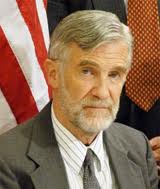

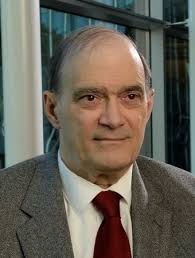




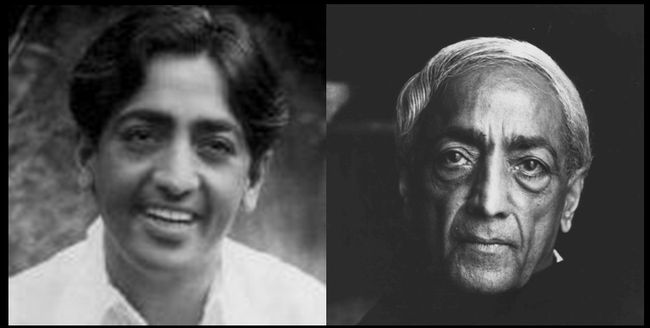


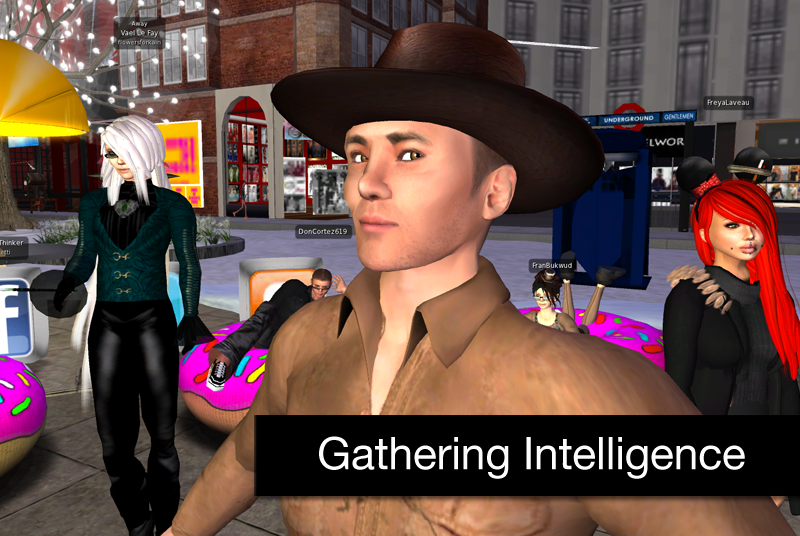


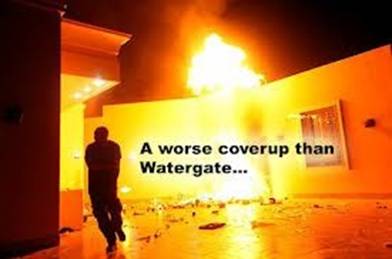

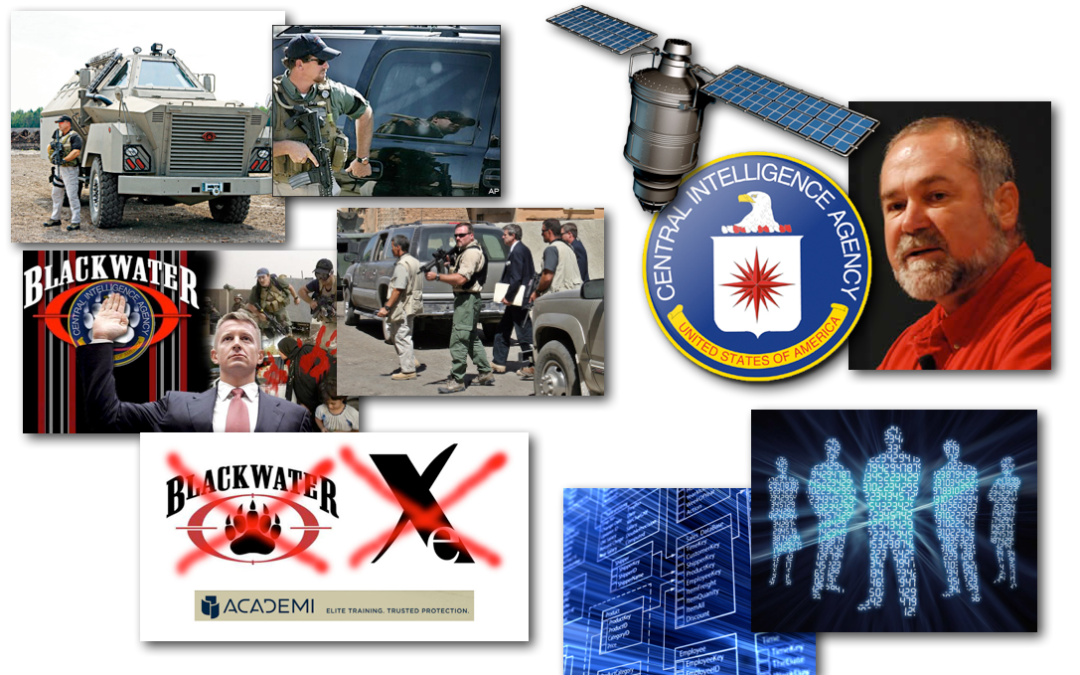




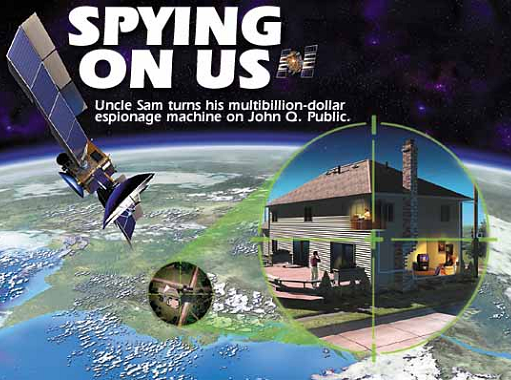


 As part of their intelligence-gathering operation, the group gained access to a listserv used by Occupy Wall Street organizers called September17discuss. On September17discuss, organizers hash out tactics and plan events, conduct post-mortems of media appearances, and trade the latest protest gossip. On Friday, Ryan leaked thousands of September17discuss emails to conservative blogger Andrew Breitbart, who is now using them to try to smear Occupy Wall Street as an anarchist conspiracy to disrupt global markets.