The Disappeared: Chicago police detain Americans at abuse-laden ‘black site’

The Disappeared: Chicago police detain Americans at abuse-laden ‘black site’

The Chicago police department operates an off-the-books interrogation compound, rendering Americans unable to be found by family or attorneys while locked inside what lawyers say is the domestic equivalent of a CIA black site.

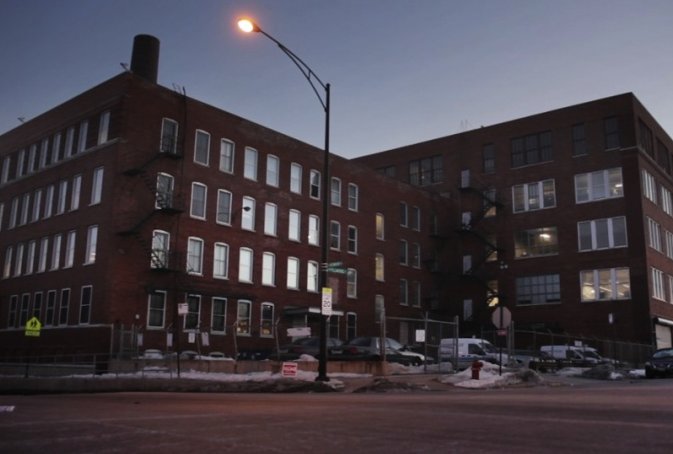
The facility, a nondescript warehouse on Chicago’s west side known as Homan Square, has long been the scene of secretive work by special police units. Interviews with local attorneys and one protester who spent the better part of a day shackled in Homan Square describe operations that deny access to basic constitutional rights.

Alleged police practices at Homan Square, according to those familiar with the facility who spoke out to the Guardian after its investigation into Chicago police abuse, include:

  • Keeping arrestees out of official booking databases.
  • Beating by police, resulting in head wounds.
  • Shackling for prolonged periods.
  • Denying attorneys access to the “secure” facility.
  • Holding people without legal counsel for between 12 and 24 hours, including people as young as 15.
  • At least one man was found unresponsive in a Homan Square “interview room” and later pronounced dead.

Brian Jacob Church, a protester known as one of the “Nato Three”, was held and questioned at Homan Square in 2012 following a police raid. Officers restrained Church for the better part of a day, denying him access to an attorney, before sending him to a nearby police station to be booked and charged.

“Homan Square is definitely an unusual place,” Church told the Guardian on Friday. “It brings to mind the interrogation facilities they use in the Middle East. The CIA calls them black sites. It’s a domestic black site. When you go in, no one knows what’s happened to you.”

The secretive warehouse is the latest example of Chicago police practices that echo the much-criticized detention abuses of the US war on terrorism. While those abuses impacted people overseas, Homan Square – said to house military-style vehicles, interrogation cells and even a cage – trains its focus on Americans, most often poor, black and brown.

Unlike a precinct, no one taken to Homan Square is said to be booked. Witnesses, suspects or other Chicagoans who end up inside do not appear to have a public, searchable record entered into a database indicating where they are, as happens when someone is booked at a precinct. Lawyers and relatives insist there is no way of finding their whereabouts. Those lawyers who have attempted to gain access to Homan Square are most often turned away, even as their clients remain in custody inside.

“It’s sort of an open secret among attorneys that regularly make police station visits, this place – if you can’t find a client in the system, odds are they’re there,” said Chicago lawyer Julia Bartmes.

Chicago civil-rights attorney Flint Taylor said Homan Square represented a routinization of a notorious practice in local police work that violates the fifth and sixth amendments of the constitution.

“This Homan Square revelation seems to me to be an institutionalization of the practice that dates back more than 40 years,” Taylor said, “of violating a suspect or witness’ rights to a lawyer and not to be physically or otherwise coerced into giving a statement.”

Much remains hidden about Homan Square. The Chicago police department did not respond to the Guardian’s questions about the facility. But after the Guardian published this story, the department provided a statement insisting, without specifics, that there is nothing untoward taking place at what it called the “sensitive” location, home to undercover units.

“CPD [Chicago police department] abides by all laws, rules and guidelines pertaining to any interviews of suspects or witnesses, at Homan Square or any other CPD facility. If lawyers have a client detained at Homan Square, just like any other facility, they are allowed to speak to and visit them. It also houses CPD’s Evidence Recovered Property Section, where the public is able to claim inventoried property,” the statement said, something numerous attorneys and one Homan Square arrestee have denied.

“There are always records of anyone who is arrested by CPD, and this is not any different at Homan Square,” it continued.

The Chicago police statement did not address how long into an arrest or detention those records are generated or their availability to the public. A department spokesperson did not respond to a detailed request for clarification.

When a Guardian reporter arrived at the warehouse on Friday, a man at the gatehouse outside refused any entrance and would not answer questions. “This is a secure facility. You’re not even supposed to be standing here,” said the man, who refused to give his name.

A former Chicago police superintendent and a more recently retired detective, both of whom have been inside Homan Square in the last few years in a post-police capacity, said the police department did not operate out of the warehouse until the late 1990s.

But in detailing episodes involving their clients over the past several years, lawyers described mad scrambles that led to the closed doors of Homan Square, a place most had never heard of previously. The facility was even unknown to Rob Warden, the founder of Northwestern University Law School’s Center on Wrongful Convictions, until the Guardian informed him of the allegations of clients who vanish into inherently coercive police custody.

“They just disappear,” said Anthony Hill, a criminal defense attorney, “until they show up at a district for charging or are just released back out on the street.”

‘They were held incommunicado for much longer than I think should be permitted in this country – anywhere – but particularly given the strong constitutional rights afforded to people who are being charged with crimes,” said Sarah Gelsomino, the lawyer for Brian Jacob Church. Photograph: Phil Batta/Guardian
Jacob Church learned about Homan Square the hard way. On May 16 2012, he and 11 others were taken there after police infiltrated their protest against the Nato summit. Church says officers cuffed him to a bench for an estimated 17 hours, intermittently interrogating him without reading his Miranda rights to remain silent. It would take another three hours – and an unusual lawyer visit through a wire cage – before he was finally charged with terrorism-related offenses at the nearby 11th district station, where he was made to sign papers, fingerprinted and photographed.

In preparation for the Nato protest, Church, who is from Florida, had written a phone number for the National Lawyers Guild on his arm as a precautionary measure. Once taken to Homan Square, Church asked explicitly to call his lawyers, and said he was denied.

“Essentially, I wasn’t allowed to make any contact with anybody,” Church told the Guardian, in contradiction of a police guidance on permitting phone calls and legal counsel to arrestees.

Church’s left wrist was cuffed to a bar behind a bench in windowless cinderblock cell, with his ankles cuffed together. He remained in those restraints for about 17 hours.

“I had essentially figured, ‘All right, well, they disappeared us and so we’re probably never going to see the light of day again,’” Church said.


The Disappeared

chicago-nato-3

Brian Church, Jared Chase and Brent Vincent Betterly, known as the ‘Nato Three’

Though the raid attracted major media attention, a team of attorneys could not find Church through 12 hours of “active searching”, Sarah Gelsomino, Church’s lawyer, recalled. No booking record existed. Only after she and others made a “major stink” with contacts in the offices of the corporation counsel and Mayor Rahm Emanuel did they even learn about Homan Square.

They sent another attorney to the facility, where he ultimately gained entry, and talked to Church through a floor-to-ceiling chain-link metal cage. Finally, hours later, police took Church and his two co-defendants to a nearby police station for booking.

After serving two and a half years in prison, Church is currently on parole after he and his co-defendants were found not guilty in 2014 of terrorism-related offenses but guilty of lesser charges of possessing an incendiary device and the misdemeanor of “mob action”.

It’s almost like they throw a black bag over your head and make you disappear for a day or two
-Brian Jacob Church

The access that Nato Three attorneys received to Homan Square was an exception to the rule, even if Jacob Church’s experience there was not.

Three attorneys interviewed by the Guardian report being personally turned away from Homan Square between 2009 and 2013 without being allowed access to their clients. Two more lawyers who hadn’t been physically denied described it as a place where police withheld information about their clients’ whereabouts. Church was the only person who had been detained at the facility who agreed to talk with the Guardian: their lawyers say others fear police retaliation.

One man in January 2013 had his name changed in the Chicago central bookings database and then taken to Homan Square without a record of his transfer being kept, according to Eliza Solowiej of Chicago’s First Defense Legal Aid. (The man, the Guardian understands, wishes to be anonymous; his current attorney declined to confirm Solowiej’s account.) She found out where he was after he was taken to the hospital with a head injury.

“He said that the officers caused his head injuries in an interrogation room at Homan Square. I had been looking for him for six to eight hours, and every department member I talked to said they had never heard of him,” Solowiej said. “He sent me a phone pic of his head injuries because I had seen him in a police station right before he was transferred to Homan Square without any.”

Bartmes, another Chicago attorney, said that in September 2013 she got a call from a mother worried that her 15-year-old son had been picked up by police before dawn. A sympathetic sergeant followed up with the mother to say her son was being questioned at Homan Square in connection to a shooting and would be released soon. When hours passed, Bartmes traveled to Homan Square, only to be refused entry for nearly an hour.

An officer told her, “Well, you can’t just stand here taking notes, this is a secure facility, there are undercover officers, and you’re making people very nervous,” Bartmes recalled. Told to leave, she said she would return in an hour if the boy was not released. He was home, and not charged, after “12, maybe 13” hours in custody.

On February 2, 2013, John Hubbard was taken to Homan Square. Hubbard never walked out. The Chicago Tribune reported that the 44-year old was found “unresponsive inside an interview room”, and pronounced dead. After publication, the Cook County medical examiner told the Guardian that the cause of death was determined to be heroin intoxication.

Homan Square is hardly concerned exclusively with terrorism. Several special units operate outside of it, including the anti-gang and anti-drug forces. If police “want money, guns, drugs”, or information on the flow of any of them onto Chicago’s streets, “they bring them there and use it as a place of interrogation off the books,” Hill said.

‘The real danger in allowing practices like Guantanamo or Abu Ghraib is the fact that they always creep into other aspects,’ criminologist Tracy Siska told the Guardian. Photograph: Chandler West/Guardian

A former Chicago detective and current private investigator, Bill Dorsch, said he had not heard of the police abuses described by Church and lawyers for other suspects who had been taken to Homan Square. He has been permitted access to the facility to visit one of its main features, an evidence locker for the police department. (“I just showed my retirement star and passed through,” Dorsch said.)

Transferring detainees through police custody to deny them access to legal counsel, would be “a career-ender,” Dorsch said. “To move just for the purpose of hiding them, I can’t see that happening,” he told the Guardian.

Richard Brzeczek, Chicago’s police superintendent from 1980 to 1983, who also said he had no first-hand knowledge of abuses at Homan Square, said it was “never justified” to deny access to attorneys.

“Homan Square should be on the same list as every other facility where you can call central booking and say: ‘Can you tell me if this person is in custody and where,’” Brzeczek said.

“If you’re going to be doing this, then you have to include Homan Square on the list of facilities that prisoners are taken into and a record made. It can’t be an exempt facility.”

Indeed, Chicago police guidelines appear to ban the sorts of practices Church and the lawyers said occur at Homan Square.

A directive titled “Processing Persons Under Department Control” instructs that “investigation or interrogation of an arrestee will not delay the booking process,” and arrestees must be allowed “a reasonable number of telephone calls” to attorneys swiftly “after their arrival at the first place of custody.” Another directive, “Arrestee and In-Custody Communications,” says police supervisors must “allow visitation by attorneys.”

Attorney Scott Finger said that the Chicago police tightened the latter directive in 2012 after quiet complaints from lawyers about their lack of access to Homan Square. Without those changes, Church’s attorneys might not have gained entry at all. But that tightening – about a week before Church’s arrest – did not prevent Church’s prolonged detention without a lawyer, nor the later cases where lawyers were unable to enter.

The combination of holding clients for long periods, while concealing their whereabouts and denying access to a lawyer, struck legal experts as a throwback to the worst excesses of Chicago police abuse, with a post-9/11 feel to it.

On a smaller scale, Homan Square is “analogous to the CIA’s black sites,” said Andrea Lyon, a former Chicago public defender and current dean of Valparaiso University Law School. When she practiced law in Chicago in the 1980s and 1990s, she said, “police used the term ‘shadow site’” to refer to the quasi-disappearances now in place at Homan Square.

I’ve never known any kind of organized, secret place where they go and hold somebody before booking for hours and hours
James Trainum, former detective, Washington DC
“Back when I first started working on torture cases and started representing criminal defendants in the early 1970s, my clients often told me they’d been taken from one police station to another before ending up at Area 2 where they were tortured,” said Taylor, the civil-rights lawyer most associated with pursuing the notoriously abusive Area 2 police commander Jon Burge. “And in that way the police prevent their family and lawyers from seeing them until they could coerce, through torture or other means, confessions from them.”

Police often have off-site facilities to have private conversations with their informants. But a retired Washington DC homicide detective, James Trainum, could not think of another circumstance nationwide where police held people incommunicado for extended periods.

“I’ve never known any kind of organized, secret place where they go and just hold somebody before booking for hours and hours and hours. That scares the hell out of me that that even exists or might exist,” said Trainum, who now studies national policing issues, to include interrogations, for the Innocence Project and the Constitution Project.

Regardless of departmental regulations, police frequently deny or elide access to lawyers even at regular police precincts, said Solowiej of First Defense Legal Aid. But she said the outright denial was exacerbated at Chicago’s secretive interrogation and holding facility: “It’s very, very rare for anyone to experience their constitutional rights in Chicago police custody, and even more so at Homan Square,” Solowiej said.

Church said that one of his more striking memories of Homan Square was the “big, big vehicles” police had inside the complex that “look like very large MRAPs that they use in the Middle East.”

Cook County, home of Chicago, has received some 1,700 pieces of military equipment from a much-criticized Pentagon program transferring military gear to local police. It includes a Humvee, according to a local ABC News report.

Tracy Siska, a criminologist and civil-rights activist with the Chicago Justice Project, said that Homan Square, as well as the unrelated case of ex-Guantánamo interrogator and retired Chicago detective Richard Zuley, showed the lines blurring between domestic law enforcement and overseas military operations.

“The real danger in allowing practices like Guantánamo or Abu Ghraib is the fact that they always creep into other aspects,” Siska said.

“They creep into domestic law enforcement, either with weaponry like with the militarization of police, or interrogation practices. That’s how we ended up with a black site in Chicago.”

via TheGuardian

The Media Is Focusing On the WRONG Senate Torture Report

The Media Is Focusing On the WRONG Senate Torture Report

The Big Story Torture Everyone Is Missing Senate Torture Report

While the torture report released by the Senate Intelligence Committee is very important, it doesn’t address the big scoop regarding torture.

Instead, it is the Senate Armed Services Committee’s report that dropped the big bombshell regarding the U.S.  torture program.

Senator Levin, commenting on a Armed Services Committee’s report on torture in 2009, explained:

The techniques are based on tactics used by Chinese Communists against American soldiers during the Korean War for the purpose of eliciting FALSE confessions for propaganda purposes. Techniques used in SERE training include stripping trainees of their clothing, placing them in stress positions, putting hoods over their heads, subjecting them to face and body slaps, depriving them of sleep, throwing them up against a wall, confining them in a small box, treating them like animals, subjecting them to loud music and flashing lights, and exposing them to extreme temperatures [and] waterboarding.

McClatchy filled in important details:

Former senior U.S. intelligence official familiar with the interrogation issue said that Cheney and former Defense Secretary Donald H. Rumsfeld demanded that the interrogators find evidence of al Qaida-Iraq collaboration

For most of 2002 and into 2003, Cheney and Rumsfeld, especially, were also demanding proof of the links between al Qaida and Iraq that (former Iraqi exile leader Ahmed) Chalabi and others had told them were there.”

It was during this period that CIA interrogators waterboarded two alleged top al Qaida detainees repeatedly — Abu Zubaydah at least 83 times in August 2002 and Khalid Sheik Muhammed 183 times in March 2003 — according to a newly released Justice Department document…

When people kept coming up empty, they were told by Cheney’s and Rumsfeld’s people to push harder,” he continued.”  Cheney’s and Rumsfeld’s people were told repeatedly, by CIA . . . and by others, that there wasn’t any reliable intelligence that pointed to operational ties between bin Laden and Saddam . . .

A former U.S. Army psychiatrist, Maj. Charles Burney, told Army investigators in 2006 thatinterrogators at the Guantanamo Bay, Cuba, detention facility were under “pressure” to produce evidence of ties between al Qaida and Iraq.

“While we were there a large part of the time we were focused on trying to establish a link between al Qaida and Iraq and we were not successful in establishing a link between al Qaida and Iraq,” Burney told staff of the Army Inspector General. “The more frustrated people got in not being able to establish that link . . . there was more and more pressure to resort to measures that might produce more immediate results.”

“I think it’s obvious that the administration was scrambling then to try to find a connection, a link (between al Qaida and Iraq),” [Senator] Levin said in a conference call with reporters. “They made out links where they didn’t exist.”

Levin recalled Cheney’s assertions that a senior Iraqi intelligence officer had met Mohammad Atta, the leader of the 9/11 hijackers, in the Czech Republic capital of Prague just months before the attacks on the World Trade Center and the Pentagon.

The FBI and CIA found that no such meeting occurred.

The Washington Post reported the same year:

Despite what you’ve seen on TV, torture is really only good at one thing: eliciting false confessions. Indeed, Bush-era torture techniques, we now know, were cold-bloodedly modeled after methods used by Chinese Communists to extract confessions from captured U.S. servicemen that they could then use for propaganda during the Korean War.

So as shocking as the latest revelation in a new Senate Armed Services Committee report may be, it actually makes sense — in a nauseating way. The White House started pushing the use of torture not when faced with a “ticking time bomb” scenario from terrorists, but when officials in 2002 were desperately casting about for ways to tie Iraq to the 9/11 attacks — in order to strengthen their public case for invading a country that had nothing to do with 9/11 at all.

***

Gordon Trowbridge writes for the Detroit News: “Senior Bush administration officials pushed for the use of abusive interrogations of terrorism detainees in part to seek evidence to justify the invasion of Iraq, according to newly declassified information discovered in a congressional probe.

Colin Powell’s former chief of staff (Colonel Larry Wilkerson) wrote in 2009 that the Bush administration’s “principal priority for intelligence was not aimed at pre-empting another terrorist attack on the U.S. but discovering a smoking gun linking Iraq and al-Qaeda.”

Indeed, one of the two senior instructors from the Air Force team which taught U.S. servicemen how to resist torture by foreign governments when used to extract false confessions has blown the whistle on the true purpose behind the U.S. torture program.

As Truthout reported:

[Torture architect] Jessen’s notes were provided to Truthout by retired Air Force Capt. Michael Kearns, a “master” SERE instructor and decorated veteran who has previously held high-ranking positions within the Air Force Headquarters Staff and Department of Defense (DoD).

***

The Jessen notes clearly state the totality of what was being reverse-engineered – not just ‘enhanced interrogation techniques,’ but an entire program of exploitation of prisoners using torture as a central pillar,” he said. “What I think is important to note, as an ex-SERE Resistance to Interrogation instructor, is the focus of Jessen’s instruction. It is EXPLOITATION, not specifically interrogation. And this is not a picayune issue, because if one were to ‘reverse-engineer’ a course on resistance to exploitation then what one would get is a plan to exploit prisoners, not interrogate them. The CIA/DoD torture program appears to have the same goals as the terrorist organizations or enemy governments for which SV-91 and other SERE courses were created to defend against: the full exploitation of the prisoner in his intelligence, propaganda, or other needs held by the detaining power, such as the recruitment of informers and double agents. Those aspects of the US detainee program have not generally been discussed as part of the torture story in the American press.”

In a subsequent report, Truthout notes:

Air Force Col. Steven Kleinman, a career military intelligence officer recognized as one of the DOD’s most effective interrogators as well a former SERE instructor and director of intelligence for JPRA’s teaching academy, said ….  “This is the guidebook to getting false confessions, a system drawn specifically from the communist interrogation model that was used to generate propaganda rather than intelligence”  …. “If your goal is to obtain useful and reliable information this is not the source book you should be using.”

Interrogators also forced detainees to take drugs … which further impaired their ability to tell the truth.

And one of the two main architects of the torture program admitted this week on camera:

You can get people to say anything to stop harsh interrogations if you apply them in a way that does that.

And false confessions were, in fact, extracted.

For example:

And the 9/11 Commission Report was largely based on a third-hand account of what tortured detainees said, with two of the three parties in the communication being government employees. And the government went to great lengths to obstruct justice and hide unflattering facts from the Commission.

According to NBC News:

  • Much of the 9/11 Commission Report was based upon the testimony of people who were tortured
  • At least four of the people whose interrogation figured in the 9/11 Commission Report have claimed that they told interrogators information as a way to stop being “tortured.”
  • The 9/11 Commission itself doubted the accuracy of the torture confessions, and yet kept their doubts to themselves

Details here.

Today, Raymond McGovern – a 27-year CIA veteran, who chaired National Intelligence Estimates and personally delivered intelligence briefings to Presidents Ronald Reagan and George H.W. Bush, their Vice Presidents, Secretaries of State, the Joint Chiefs of Staff, and many other senior government officials –provides details about one torture victim (Al-Libi) at former Newsweek and AP reporter Robert Parry’s website:

But if it’s bad intelligence you’re after, torture works like a charm. If, for example, you wish to “prove,” post 9/11, that “evil dictator” Saddam Hussein was in league with al-Qaeda and might arm the terrorists with WMD, bring on the torturers.

It is a highly cynical and extremely sad story, but many Bush administration policymakers wanted to invade Iraq before 9/11 and thus were determined to connect Saddam Hussein to those attacks. The PR push began in September 2002 – or as Bush’s chief of staff Andrew Card put it, “From a marketing point of view, you don’t introduce new products in August.”

By March 2003 – after months of relentless “marketing” – almost 70 percent of Americans had been persuaded that Saddam Hussein was involved in some way with the attacks of 9/11.

The case of Ibn al-Sheikh al-Libi, a low-level al-Qaeda operative, is illustrative of how this process worked. Born in Libya in 1963, al-Libi ran an al-Qaeda training camp in Afghanistan from 1995 to 2000. He was detained in Pakistan on Nov. 11, 2001, and then sent to a U.S. detention facility in Kandahar, Afghanistan. He was deemed a prize catch, since it was thought he would know of any Iraqi training of al-Qaeda.

The CIA successfully fought off the FBI for first rights to interrogate al-Libi. FBI’s Dan Coleman, who “lost” al-Libi to the CIA (at whose orders, I wonder?), said, “Administration officials were always pushing us to come up with links” between Iraq and al-Qaeda.

CIA interrogators elicited some “cooperation” from al-Libi through a combination of rough treatment and threats that he would be turned over to Egyptian intelligence with even greater experience in the torture business.

By June 2002, al-Libi had told the CIA that Iraq had “provided” unspecified chemical and biological weapons training for two al-Qaeda operatives, an allegation that soon found its way into other U.S. intelligence reports. Al-Libi’s treatment improved as he expanded on his tales about collaboration between al-Qaeda and Iraq, adding that three al-Qaeda operatives had gone to Iraq “to learn about nuclear weapons.”

Al-Libi’s claim was well received at the White House even though the Defense Intelligence Agency was suspicious.

“He lacks specific details” about the supposed training, the DIA observed. “It is possible he does not know any further details; it is more likely this individual is intentionally misleading the debriefers. Ibn al-Shaykh has been undergoing debriefs for several weeks and may be describing scenarios to the debriefers that he knows will retain their interest.”

Meanwhile, at the Guantanamo Bay prison in Cuba, Maj. Paul Burney, a psychiatrist sent there in summer 2002, told the Senate, “A large part of the time we were focused on trying to establish a link between al-Qaeda and Iraq and we were not successful. The more frustrated people got in not being able to establish that link … there was more and more pressure to resort to measures that might produce more immediate results.”

***

President Bush relied on al-Libi’s false Iraq allegation for a major speech in Cincinnati on Oct. 7, 2002, just a few days before Congress voted on the Iraq War resolution. Bush declared, “We’ve learned that Iraq has trained al-Qaeda members in bomb making and poisons and deadly gases.”

And Colin Powell relied on it for his famous speech to the United Nations on Feb. 5, 2003, declaring: “I can trace the story of a senior terrorist operative telling how Iraq provided training in these [chemical and biological] weapons to al-Qaeda. Fortunately, this operative is now detained, and he has told his story.”

Al-Libi’s “evidence” helped Powell as he sought support for what he ended up calling a “sinister nexus” between Iraq and al-Qaeda, in the general effort to justify invading Iraq.

For a while, al-Libi was practically the poster boy for the success of the Cheney/Bush torture regime; that is, until he publicly recanted and explained that he only told his interrogators what he thought would stop the torture.

You see, despite his cooperation, al-Libi was still shipped to Egypt where he underwent more abuse, according to a declassified CIA cable from early 2004 when al-Libi recanted his earlier statements. The cable reported that al-Libi said Egyptian interrogators wanted information about al-Qaeda’s connections with Iraq, a subject “about which [al-Libi] said he knew nothing and had difficulty even coming up with a story.”

According to the CIA cable, al-Libi said his interrogators did not like his responses and “placed him in a small box” for about 17 hours. After he was let out of the box, al-Libi was given a last chance to “tell the truth.” When his answers still did not satisfy, al-Libi says he “was knocked over with an arm thrust across his chest and fell on his back” and then was “punched for 15 minutes.”

After Al-Libi recanted, the CIA recalled all intelligence reports based on his statements, a fact recorded in a footnote to the report issued by the 9/11 Commission. By then, however, the Bush administration had gotten its way regarding the invasion of Iraq and the disastrous U.S. occupation was well underway.

***

Intensive investigations into these allegations – after the U.S. military had conquered Iraq – failed to turn up any credible evidence to corroborate these allegations. What we do know is that Saddam Hussein and Osama bin Laden were bitter enemies, with al-Qaeda considering the secular Hussein an apostate to Islam.

Al-Libi, who ended up in prison in Libya, reportedly committed suicide shortly after he was discovered there by a human rights organization. Thus, the world never got to hear his own account of the torture that he experienced and the story that he presented and then recanted.

Hafed al-Ghwell, a Libyan-American and a prominent critic of Muammar Gaddafi’s regime at the time of al-Libi’s death, explained to Newsweek, “This idea of committing suicide in your prison cell is an old story in Libya.”

Paul Krugman eloquently summarized the truth about the torture used:

Let’s say this slowly: the Bush administration wanted to use 9/11 as a pretext to invade Iraq, even though Iraq had nothing to do with 9/11. So it tortured people to make them confess to the nonexistent link.

There’s a word for this: it’s evil.

Torture Program Was Part of a Con Job

As discussed above, in order to “justify” the Iraq war, top Bush administration officials pushed and insisted that interrogators use special torture methods aimed at extracting false confessions to attempt to create a false linkage between between Al Qaida and Iraq. And see this and this.

But this effort started earlier …

5 hours after the 9/11 attacks, Donald Rumsfeld said “my interest is to hit Saddam”.

He also said “Go massive . . . Sweep it all up. Things related and not.”

And at 2:40 p.m. on September 11th, in a memorandum of discussions between top administration officials, several lines below the statement “judge whether good enough [to] hit S.H. [that is, Saddam Hussein] at same time”, is the statement “Hard to get a good case.” In other words, top officials knew that there wasn’t a good case that Hussein was behind 9/11, but they wanted to use the 9/11 attacks as an excuse to justify war with Iraq anyway.

Moreover, “Ten days after the September 11, 2001, terrorist attacks on the World Trade Center and the Pentagon, President Bush was told in a highly classified briefing that the U.S. intelligence community had no evidence linking the Iraqi regime of Saddam Hussein to the [9/11] attacks and that there was scant credible evidence that Iraq had any significant collaborative ties with Al Qaeda”.

And a Defense Intelligence Terrorism Summary issued in February 2002 by the United States Defense Intelligence Agency cast significant doubt on the possibility of a Saddam Hussein-al-Qaeda conspiracy.

And yet Bush, Cheney and other top administration officials claimed repeatedly for years that Saddam was behind 9/11. See this analysis. Indeed, Bush administration officials apparently swore in a lawsuitthat Saddam was behind 9/11.

Moreover, President Bush’s March 18, 2003 letter to Congress authorizing the use of force against Iraq, includes the following paragraph:

(2) acting pursuant to the Constitution and Public Law 107-243 is consistent with the United States and other countries continuing to take the necessary actions against international terrorists and terrorist organizations, including those nations, organizations, or persons who planned, authorized, committed, or aided the terrorist attacks that occurred on September 11, 2001.

Therefore, the Bush administration expressly justified the Iraq war to Congress by representing that Iraq planned, authorized, committed, or aided the 9/11 attacks.

Indeed, Pulitzer prize-winning journalist Ron Suskind reports that the White House ordered the CIA to forge and backdate a document falsely linking Iraq with Muslim terrorists and 9/11 … and that theCIA complied with those instructions and in fact created the forgery, which was then used to justify war against Iraq. And see this.

Suskind also revealed that “Bush administration had information from a top Iraqi intelligence official ‘that there were no weapons of mass destruction in Iraq – intelligence they received in plenty of time to stop an invasion.’ ”

Cheney made the false linkage between Iraq and 9/11 on many occasions.

For example, according to Raw Story, Cheney was still alleging a connection between Iraq and the alleged lead 9/11 hijacker in September 2003 – a year after it had been widely debunked. When NBC’s Tim Russert asked him about a poll showing that 69% of Americans believed Saddam Hussein had been involved in 9/11, Cheney replied:

It’s not surprising that people make that connection.

And even after the 9/11 Commission debunked any connection, Cheney said that the evidence is “overwhelming” that al Qaeda had a relationship with Saddam Hussein’s regime , that Cheney “probably” had information unavailable to the Commission, and that the media was not ‘doing their homework’ in reporting such ties.

Again, the Bush administration expressly justified the Iraq war by representing that Iraq planned, authorized, committed, or aided the 9/11 attacks. See this, this, this.

Even then-CIA director George Tenet said that the White House wanted to invade Iraq long before 9/11, and inserted “crap” in its justifications for invading Iraq.

Former Treasury Secretary Paul O’Neill – who sat on the National Security Council – also says that Bush planned the Iraq war before 9/11.

Top British officials say that the U.S. discussed Iraq regime change even before Bush took office.

And in 2000, Cheney said a Bush administration might “have to take military action to forcibly remove Saddam from power.” And see this.

The administration’s false claims about Saddam and 9/11 helped convince a large portion of the American public to support the invasion of Iraq. While the focus now may be on false WMD claims, it is important to remember that, at the time, the alleged link between Iraq and 9/11 was at least as important in many people’s mind as a reason to invade Iraq.

So the torture program was really all about “justifying” the ultimate war crime:  launching an unnecessary war of aggression based upon false pretenses.

Postscript:   It is beyond any real dispute that torture does not work to produce any useful, truthfulintelligence.  Today, the following question made it to the front page of Reddit:

Why would the CIA torture if torture “doesn’t work”? Wouldn’t they want the most effective tool to gather intelligence?

The Senate Armed Services Committee report gave the answer.

via WashgintonsBlog.

Gun Owners: Invasions of Privacy & How to Properly Answer Questions

Gun Owners: Invasions of Privacy & How to Properly Answer Questions

 come-and-take-it
A common Rule of Thumb….when ever a bureaucrat asks you a question, a safe “answer” is to ask them a question in return. Be polite, but be firm. They often want to extract information out of you without you being the wiser. There is no transparency in the manner of their interaction with you. A good example of this is in the article below….here is what I do. You do what you want.
 
Example:  Did you know you were speeding back there ?
answer: Was I speeding ?
What is your name ?
Is there a problem officer ?
Where are you going ?
Is there a problem officer ?
Can I look in your trunk ?
Do you have a warrant ?
 
Why can’t I just answer the question and be safe? In law if you answer the question [ANY QUESTION], you have “joined the issue”, meaning that you have unwittingly become a part of the officer’s jurisdiction. To “join” means to become part of an alliance, or to enter into an alliance. You have constitutional protections to guard against such intrusions into your privacy. To be safe, just follow the simple Rule of Thumb. Disclaimer: This is not to be construed as legal advice.  Do you own a gun ?  Why do you need to know ?  Keep it simple.  Stop the intrusion into something they have no business asking.
 
 The Patriot Act was passed by both Houses.  Don’t help them reduce your freedom.
In the article below, use your best judgment….or you might find yourself where you don’t want to be.
Another way of finding out our “PRIVACY”
Never answer the question….
Do you have a gun in the house ?  Why do you need to know ?
 

GOOD TO KNOW !

When I had my gangrene gallbladder taken out and spent 10 days in the hospital for what should have been an overnight stay the insurance company kicked me out.  I had home nurse visits for two weeks and was asked if I had guns in the house.  I respond that if I did I would not tell them.  So the below has some merit.

FYI, I am passing this along… there are comments from two other people I have also been asked if we keep guns in the house.  The nurse just kinda slipped it in along with all the other regular questions.  I told her I refused to answer because it was against the law to ask.

Everyone, whether you have guns or not, should give a neutral answer so they have no idea who does and who doesn’t.  My doctor asked me if I had guns in my house and also if any were loaded.  I, of course, answered yes to both questions.  Then he asked why I kept a loaded gun close to my bed.  I answered that my son, who is a certified gun instructor and also works for Homeland Security, advised me that an unloaded, locked up gun is no protection against criminal attack.

The Government now requires these questions be asked of people on Medicare, and probably everyone else.


Just passing this along for your information: I had to visit a doctor other than my regular doctor when my doctor was on vacation.. One of the questions on the form I had to fill out was: Do you have any guns in your house?? My answer was None of your damn business!!

So it is out there !  It is either an insurance issue or government intervention.  Either way, it is out there and the second the government gets into your medical records (as they want to under Obamacare) it will become a major issue and will ultimately result in lock and load !!

Please pass this on to all the other retired guys and gun owners… Thanks, from a Vietnam Vet and retired Police Officer:  I had a doctor’s appointment at the local VA clinic yesterday and found out something very interesting that I would like to pass along.  While going through triage before seeing the doctor, I was asked at the end of the exam, three questions: 1. Did I feel stressed ?  2. Did I feel threatened ?  3. Did I feel like doing harm to someone ?

The nurse then informed me that if I had answered yes to any of the questions I would have lost my concealed carry permit as it would have gone into my medical records and the VA would have reported it to Homeland Security.

Looks like they are going after the vets first.  Other gun people like retired law enforcement will probably be next.  Then when they go after the civilians, what argument will they have ?  Be forewarned and be aware.  The Obama administration has gone on record as considering veterans and gun owners potential terrorists. Whether you are a gun owner, veteran or not, YOU’VE BEEN WARNED !

If you know veterans and gun owners, please pass this on to them.  Be very cautious about what you say and to whom.

Protect Yourself from FBI Manipulation (w/attorney Harvey Silverglate)

Protect Yourself from FBI Manipulation (w/attorney Harvey Silverglate)

Learn how the FBI can manipulate what you say and use it against you, and how to prevent them from doing so! With civil liberties and civil rights attorney Harvey Silverglate.

Remember: if the FBI asks to speak with you, you do not have to talk to them, no matter what they say. The best thing you can do is take the agent’s card and say your lawyer will contact them. Say nothing else, because lying to a federal agent can get you in very serious trouble, and they’ll figure out a way to make it look like you lied. Watch the clip to see how that works. Don’t get caught in their vice; don’t speak to them without your lawyer present. Ever.

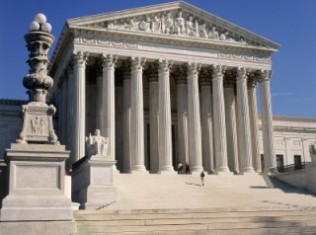
Supreme Court Makes It Even More Impossible for Torture Victims to Win Lawsuits

Supreme Court Makes It Even More Impossible for Torture Victims to Win Lawsuits

The US Supreme Court unanimously decided that foreign political organizations and multinational corporations cannot be sued for the torture or extrajudicial killing of persons abroad under an anti-torture law passed in 1992. The law only gives people the right to sue “an individual,” “who acted under the authority of a foreign nation,” according to the Los Angeles Times.

The decision came in a lawsuit filed by the family of a US citizen, Azzam Rahim, who was tortured and killed in the Palestinian Territory by Palestine Liberation Organization (PLO) intelligence officers. It was Justice Sonia Sotomayor, who President Barack Obama appointed to the Supreme Court, that spoke for the decision. She explained the text of the Torture Victims Protection Act of 1991 “convinces us that Congress did not extend liability to organizations, sovereign or not. There are no doubt valid arguments for such an extension. But Congress has seen fit to proceed in more modest steps in the Act, and it is not the province of this branch to do otherwise.”

This outcome is not just a blow for the family of Rahim but also those concerned with human rights. If one considers the intent of the law, it seems like Rahim’s family should not have been scoffed at as they were for bringing the lawsuit. (Chief Justice John Roberts laughed at the lawyer for the family, Jeffrey Fisher, during arguments in Court.)

President George H.W. Bush, who signed the law, intended this to be legislation that would push Congress to ratify the Convention Against Torture:

I regret that the legislation proposed by the Administration to implement the United Nations Convention Against Torture and Other Cruel, Inhuman or Degrading Treatment or Punishment has not yet been enacted. This proposed implementing legislation would provide a tougher and more effective response to the problem, putting in place for torturers the same international “extradite or prosecute” regime we have for terrorists. The Senate gave its advice and consent to the Torture Convention on October 27, 1990, but the United States cannot proceed to become a party until the necessary implementing legislation is in place. I again call upon the Congress to take prompt action to approve the Torture Convention implementing legislation.

The law was already considered a law that would not apply to the US Armed Forces or law enforcement operations that were carried out under US law.

UN Special Rapporteur on Torture Juan Mendez submitted a brief to the court in support of Rahim that outlined the fact that the Torture Convention is supposed to help “prevent torture” by “persons who act, de jure or de facto, in the name of, in conjunction with, or at the behest of the State Party.” In other words, being a government official doesn’t make one immune to prosecution. Any person who is complicit or participates in torture is to be criminalized. There are to be civil remedies in place to compensate and give justice to victims of torture. What this ruling does then is undercut the United States’ responsibility to uphold the Torture Convention.

Aside from the reality that the US government finds it has no obligation to do what signatories to the Torture Convention are expected to do, the ruling is troublesome on another level because the comments from Supreme Court justices suggest if the family of Rahim knew the names of people that had tortured and killed him then they might not have had a weak case.

Now, against scholarly understanding of international law, the Court has effectively rendered precedents where non-state actors, like corporations, have been held liable for torture moot. As the Yale Law School Center for Global Legal Challenges demonstrates in a brief, they are contradicting the US State Department policy:

The U.S. State Department has routinely acknowledged that non-state groups and organizations have engaged in torture. See, e.g., U.S. Dep’t of State,  Democratic Republic of the Congo: Country Reports on Human Rights Practices (Feb. 23, 2000) (citing credible reports that “Mai Mai groups fighting on the side of the Government committed * * * torture * * * of civilians”); U.S. Dep’t of State, Sri Lanka: Country Reports on Human Rights Practices (Mar. 4, 2002) (“[T]wo former Tamil terrorist organizations aligned with the former PA Government * * * have been implicated in cases involving extrajudicial killing [and] torture.”).

It was already difficult for torture victims to win lawsuits. In December 2011, a federal judge dismissed a lawsuit by a former Guantanamo detainee claiming US military officials had tortured him repeatedly. A federal appeals court dismissed torture cases against Abu Ghraib contractors in September 2011. The Ninth Circuit dismissed a suit against Jeppesen Dataplan that alleged they had “knowingly aided in the rendition and subsequent torture of terror suspects by the CIA,” after the Obama Justice Department invoked a state secrets privilege. A federal appeals court did allow a lawsuit against former Secretary of Defense Donald Rumsfeld for authorizing torture to move forward, but a district court dismissed another lawsuit against him for authorizing the torture of detainees by US military personnel in Iraq and Afghanistan. And, months before that, a lawsuit brought by convicted terrorist Jose Padilla against US Defense Secretary Robert Gates and Rumsfeld for their role in his torture and isolation on a Navy military brig was thrown out and the Obama Justice Department determined that Bush administration lawyers that had crafted legal justification for torture had engaged in no “professional misconduct.”

If torture is illegal, it is only prohibited from being expressly included in policies of agencies or departments. It most certainly is something agents, military personnel and government officials can engage in and avoid prosecution. Given that reality, the narrow interpretation is not necessarily surprising. Using this case to create a precedent that grants cover to corporations that engage in torture is in line with the culture of impunity that has been fostered by US government. Unfortunately, if torture victims want justice, the United States is one of the last countries they should turn to for reparations at this point in history.

By: Kevin Gosztola Wednesday April 18, 2012 6:40 pm

Source: http://dissenter.firedoglake.com/2012/04/18/supreme-court-makes-it-even-more-impossible-for-torture-victims-to-wi-suits/