September 5, 2013 – Decrypted Matrix Radio: New Show Schedule, Russia Blocks Syria Invasion, Chemical Weapons Historical Use, Barrett Brown Intel, TSA Approved Liars, Brain & Vision Boosters, Quantum Activists!

New Show Schedule – 2 hours / Thursdays

Poll: Majority Of Americans Approve Of Sending Congress To Syria

Russia Submits 100-page Report Detailing Chemical Weapons use by Syrian ‘Rebels’

Chemical Weapons Update – 10 Cases the US Gov Wants you to Ignore

CLIP: Barrett Brown Faces 105 Years for Reporting on Hacked Intelligence Firms

CLIP: Comedic Legend Bill Hicks on Politics, Weapons & Evil

TSA is officially allowed to lie to you in order to cover its ass

Top 8 Supplements to Boost Your Pineal Gland Function

Neurosurgeon Speaks Out On How Vaccines Harm Child Brain Development

How to Improve Vision Naturally

Become a Quantum Activist

February 15, 2013 – Decrypted Matrix Radio: No Smart Meters, Pineal Gland Health, Spiritual Habits, Pope Resigns, Awareness Conference

February 15, 2013 – Decrypted Matrix Radio: No Smart Meters, Pineal Gland Health, Spiritual Habits, Pope Resigns, Awareness Conference

Refusing Smart Meters to Protect Your Health and Privacy
 
Alkaline Foods to Help Decalcify the Pineal Gland

Research Now Showing Natural Products As Effective As Man-Made Drugs
 
Ways to Become More Conscious

Habits for Effective Spiritual Cultivation

FBI Celebrates Duping Another Mentally Ill Man Into Fake Terror Plot

The Resignation of Pope Benedict

NASA Official Confirms Alien/Military Alliance

Awake & Aware 2013

Pit bull saves family and 5 other dogs during house fire

2-15

Every Week Night 12-1am EST (9-10pm PST)

– Click Image to Listen LIVE –

January 17, 2013 – Decrypted Matrix Radio: Beast1333’s Mad World, FBI Secrets Techniques, NWO Downfall, Energy & Vibrations, Pineal Gland & Cannabis, Quick News Updates

January 17, 2013 – Decrypted Matrix Radio: Beast1333’s Mad World, FBI Secrets Techniques, NWO Downfall, Energy & Vibrations, Pineal Gland & Cannabis, Quick News Updates

Tip of the day- for the parents:
Teach your child the importance of applying their knowledge, and critical thinking abilites to solving of Social Problems

TRACK: Beast 1333 Mad World feat K-Rino, Space Age Slaves

What the FBI Doesn’t Want You To Know About Its “Secret” Surveillance Techniques

Vibration, Synchronicity, Energy Healing, Holographic Universe

Cannabis & the Pineal Gland?

Quick Headlines

It Will Take The Fed Seven Years To Deliver 300 Tons Of German Gold

Ben Fulford: Signs of cabal defeat are proliferating,  What’s the ‘real’ truth?

Developer Sacked for Outsourcing His Entire Job to China

Did you know…?
1-17

Every Week Night 12-1am EST (9-10pm PST)

– Click Image to Listen LIVE –

Magic Mushrooms Could Have Medical Benefits, Researchers Say

Magic Mushrooms Could Have Medical Benefits, Researchers Say

The hallucinogen in magic mushrooms may no longer just be for hippies seeking a trippy high.

Researchers at Johns Hopkins University School of Medicine have been studying the effects of psilocybin, a chemical found in some psychedelic mushrooms, that’s credited with inducing transcendental states. Now, they say, they’ve zeroed in on the perfect dosage level to produce transformative mystical and spiritual experiences that offer long-lasting life-changing benefits, while carrying little risk of negative reactions.

The breakthrough could speed the day when doctors use psilocybin–long viewed skeptically for its association with 1960s countercultural thrill-seekers–for a range of valuable clinical functions, like easing the anxiety of terminally ill patients, treating depression and post-traumatic stress disorder, and helping smokers quit. Already, studies in which depressed cancer patients were given the drug have reported positive results. “I’m not afraid to die anymore” one participant told The Lookout.

The Johns Hopkins study–whose results will be published this week in the journal Psychopharmacology–involved giving healthy volunteers varying doses of psilocybin in a controlled and supportive setting, over four separate sessions. Looking back more than a year later, 94 percent of participants rated it as one of the top five most spiritually significant experiences of their lifetimes.

More important, 89 percent reported lasting, positive changes in their behavior–better relationships with others, for instance, or increased care for their own mental and physical well-being. Those assessments were corroborated by family members and others.

“I think my heart is more open to all interactions with other people,” one volunteer reported in a questionnaire given to participants 14-months after their session.

“I feel that I relate better in my marriage,” wrote another. “There is more empathy — a greater understanding of people, and understanding their difficulties, and less judgment.”

Identifying the exact right dosage for hallucinogenic drugs is crucial, Roland Griffiths, a professor of psychiatry at Johns Hopkins who led the study, explained to The Lookout. That’s because a “bad trip” can trigger hazardous, self-destructive behavior, but low doses don’t produce the kind of transformative experiences that can offer long-term benefits. By trying a range of doses, Griffiths said, researchers were able to find the sweet spot, “where a high or intermediate dose can produce, fairly reliably, these mystical experiences, with very low probability of a significant fear reaction.”

In the 1950s and ’60s, scientists became interested in the potential effects of hallucinogens like psilocybin, mescaline, and lysergic acid diethylamide (LSD) on both healthy and terminally ill people. Mexican Indians had, since ancient times, used psychedelic mushrooms with similar chemical structures to achieve intense spiritual experiences. But by the mid ’60s, counterculture gurus like Dr. Timothy Leary and Aldous Huxley were talking up mind-altering drugs as a way of expanding one’s consciousness and rejecting mainstream society. Stories, perhaps apocryphal, circulated about people jumping out of windows while on LSD, and some heavy users were said to have suffered permanent psychological damage. By the early ’70s, the US government had essentially banned all hallucinogenic drugs.

But recent years have seen the beginning of a revival of mainstream scientific interest in mind-altering drugs, and particularly in the possibility of using them in a clinical setting to alleviate depression and anxiety. A 2004 study by the government of Holland (pdf) found psilocybin to have no significant negative effects.

Here in the United States, too, the climate may be shifting. In a statement accompanying the announcement of the Johns Hopkins findings, Jerome Jaffe, a former White House drug czar now at the University of Maryland School of Medicine, said the results raise the question of whether psilocybin could prove useful “in dealing with the psychological distress experienced by some terminal patients?”

The hope is that the long-lasting spiritual and transcendental experiences associated with psilocybin could–if conducted in a controlled and supportive setting, and with appropriate dosage levels–help ease patients’ fear and anxiety, allowing them to approach death with a greater sense of calm. (You can see one terminally ill cancer patient speak movingly about the positive effects of psilocybin here.)

Griffiths thinks the drug may have the potential to alleviate the suffering of terminal patients. He’s currently leading a separate Johns Hopkins psilocybin study, using volunteers who are depressed after being diagnosed with cancer. “So far we’ve had–anecdotally only–very positive results,” comparable to the study with healthy volunteers, he said. A study from the University of California, Los Angeles last year reported similar positive results.

But Griffiths said his study, under way for three years, has only recruited 20 patients, in part because oncologists are more interested in curing cancer than helping patients cope with its effects, so they don’t refer provide many referrals. “Most oncologists just don’t get it,” he said. “It’s not the focus of their research, and they’re busy people.”

But the experience of one volunteer in Griffiths’s study offers a glimpse of the potential benefits. Lauri Reamer, 47, told The Lookout that she participated in two Johns Hopkins psilocybin sessions last September, not long after ending intensive chemotherapy and radiation to treat a rare form of leukemia that, several times in the preceding few years, had almost taken her life.

Reamer, an anesthesiologist from Ruxton, Md., with three young daughters, said that although her disease was in remission by that time, she was still suffering psychologically from the trauma of the illness and the treatment. She had walled herself off emotionally, she said, and was unable to show empathy for others or even for herself.

The psilocybin had an immediate impact. “At the end of the session, I was just in this joyous, happy, relaxed state,” she said. “The drug was gone–what was left was just this peaceful calm.”

That calm had lasting benefits. Reamer said the experience–what she called “an epiphany”–gave her the impetus to get out of a failing marriage. Since doing so, she said, both she and her daughters have been much happier.

“I don’t think it was the drug that did it,” she said. “It was the drug that helped me find the clarity.”

That’s not the only improvement. “My sleeping has gotten better. My relationships have gotten better with people,” she said. “The fog has lifted.”

“The best thing it did for me was heal me psychologically and emotionally and allow me to be back in my kids’ lives, be back to being a mother,” Reamer concluded. As she spoke, she was taking her daughters–two 15-year old twins, and a 6-year-old–on a trip to Hershey Park.

And although doctors tell her that, thanks to the effect of the illness and the treatment, she likely has only 10 or 15 years to live, she’s able to approach that challenge with equanimity.

“My fear of death kind of disappeared,” she said. “I’m not afraid to die anymore.”

Griffiths, of Johns Hopkins, said Reamer’s experience isn’t an outlier among the volunteers, both sick and healthy, who have tried psilocybin. “People feel uplifted, and very often have a sense that everything is O.K. at one level,” he said. “That there’s sense to be made out of the chaos.”

“When you see people undergoing that kind of transformation,” he added, “it’s really quite moving.”

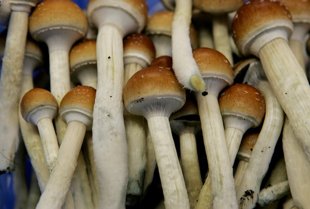
(Magic mushrooms at a farm in Hazerswoude, Netherlands, August, 2007: AP Photo/Peter Dejong)


via YahooNews

Ayahuasca – The Man Who Drank The Universe

Ayahuasca – The Man Who Drank The Universe

http://youtu.be/GMhO-leGqo8

The Man Who Drank The Universe is a documentary on the amazonien brew AYAHUASCA also know as DAIME. It tell the story of a English man from London who goes to experiment the brew in the Brasilia amazon.


September 25, 2012 – DCMX Radio: Fluoride History, Danger, Subversion! An Industry By-Product that Lowers IQ, Induces Apathy

September 25, 2012 – DCMX Radio: Fluoride History, Danger, Subversion! An Industry By-Product that Lowers IQ, Induces Apathy

Fluoride History & Uses Decrypted: Learn the False History, True History, and hidden research, doctors that advice AGAINST fluoridation, and the calcification effect on the brain’s Pineal gland – important for many bodily functions, including the gateway to spirituality, ie dream-state.

Every Week Night 12-1am EST (9-10pm PST)

– Click Image to Listen LIVE –

Fluoride and The Pineal Gland: Know the Truth

Fluoride and The Pineal Gland: Know the Truth

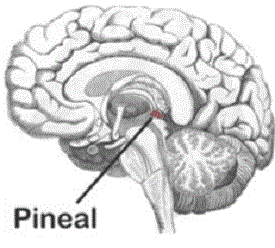
The single animal study of pineal function indicates that fluoride exposure results in altered melatonin production and altered timing of sexual maturity. Whether fluoride affects pineal function in humans remains to be demonstrated. The two studies of menarcheal age in humans show the possibility of earlier menarche in some individuals exposed to fluoride, but no definitive statement can be made. Recent information on the role of the pineal organ in humans suggests that any agent that affects pineal function could affect human health in a variety of ways, including effects on sexual maturation, calcium metabolism, parathyroid function, postmenopausal osteoporosis, cancer, and psychiatric disease. SOURCE: National Research Council. (2006). Fluoride in Drinking Water: A Scientific Review of EPA’s Standards. National Academies Press, Washington D.C. p221-22. “In conclusion, the human pineal gland contains the highest concentration of fluoride in the body. Fluoride is associated with depressed pineal melatonin synthesis by prepubertal gerbils and an accelerated onset of sexual maturation in the female gerbil. The results strengthen the hypothesis that the pineal has a role in the timing of the onset of puberty. Whether or not fluoride interferes with pineal function in humans requires further investigation.” SOURCE: Luke J. (1997). The Effect of Fluoride on the Physiology of the Pineal Gland. Ph.D. Thesis. University of Surrey, Guildford. p. 177.

Magic Mushrooms Could Treat Depression

Magic Mushrooms Could Treat Depression

THE GIST
  • Psilocybin, the active ingredient in hallucinogenic mushrooms, shuts down parts of the brain that are responsible for regulating a sense of self.
  • In controlled settings, the drug may be a useful therapeutic tool for treating depression, anxiety and other psychiatric problems.
  • In the study, the rush of the first 10 to 30 seconds induced some fear, he added, but positive feelings then immediately swept over them.
After a psychedelic trip on magic mushrooms, people often describe the experience as mind-expanding, consciousness altering, emotionally insightful and even spiritually transcendent. Now, scientists have peered into the brains of people tripping on psilocybin — the active ingredient in mushrooms — and their results revealed a few surprises.

Instead of opening lines of communication between sensory-oriented regions of the brain, psilocybin appears to shut down activity in two key areas of the brain that regulate our sense of self and integrate our sense of awareness with our sense of the present.

PHOTOS: The Magic Mushrooms in My Yard

The drug also decreases activity in something called the default mode network, which is believed to be involved in maintaining a balanced sense of consciousness and ego through self-reflection, though scientists still don’t entirely understand the network or agree about what it does.

The more these brain areas were suppressed, the researchers report today in Proceedings of the National Academy of Sciences, the more intense people reported their changes in perception to be.

Besides helping explain how magic mushrooms induce hallucinogenic adventures of the mind, the results suggest that, in controlled settings, psilocybin might be a useful tool for treating depression and other psychiatric problems.

“One of the parts of the brain that is markedly switched off [with psilocybin] is the anterior cingulate cortex, which is particularly overactive in people with depression,” said David Nutt, professor of neuropsychopharmacology at Imperial College, London. Some researchers “put electrodes in that part of the brain to switch it off. It would be a lot simpler and safer to use psilocybin instead of electrodes.”

In British author Aldous Huxley’s ruminations on the effects of mescaline, a psychedelic compound that occurs naturally in the Peyote cactus, he expressed the sense that the hallucinogenic drug removed natural constraints that keep the brain focused on the inputs and tasks necessary for normal functioning. By removing those constraints, Huxley speculated, hallucinogenic drugs create an otherworldly sense of reality and a mystical state of transcendence and transformation.

From subjective descriptions like those, scientists have long assumed that hallucinogens, like mescaline and psilocybin, work in the brain by increasing blood flow and creating new kinds of connections. Research on psychedelic effects in the brain, however, has been limited and hard to get approval for.

For the new study, Nutt and colleagues recruited 15 healthy people with previous experience taking hallucinogenic substances. Over two days, the researchers monitored activity in participants’ brains as they lay in a scanner for up to an hour. On the first day, participants received an intravenous shot of a placebo solution. The next day, they got a shot of psilocybin that was dosed to peak after about four minutes and was mostly over after about 30 minutes.

No one had trouble figuring out which shot contained the real drug. Afterwards, they talked at length about their experiences.

NEWS: Brain Waves Surge Moments Before Death

All of the participants described kaleidoscopic vision with images of bright and angular shapes, Nutt said. The rush of the first 10 to 30 seconds induced some fear, he added, but positive feelings then immediately swept over them. Many participants said that the benefits of the experience were profound and that they felt they had moved on from where they had been. Others said the experience was interesting, though not necessarily life-changing. None described the trip as negative.

“They mostly got the sense that they were going somewhere else, that they were being transmuted into space and being fragmented or stretched,” Nutt said. “One guy found himself kneeling at the feet of God. Some described being at one with the universe.”

In brain scans, the researchers saw a decrease in both blood flow and metabolism in several key areas after injection with the drug, including the anterior cingulate cortex, the medial prefrontal cortex and the posterior cingulate cortex. Also reduced was connectivity and communication between some of these areas.

The findings offer some potentially exciting opportunities to use psilocybin in therapeutic settings, said Roland Griffiths, a neuroscientist and pscyhopharmacologist at Johns Hopkins University in Baltimore.

His research has shown some long-lasting cognitive benefits of psilocybin, with study subjects reporting that they feel happier, calmer and more at peace more than a year after taking a carefully measured dose of the drug in an experimental setting. He is currently conducting a trial with cancer patients who are anxious or depressed.

Nutt plans next to see if the hallucinogen, combined with therapy, might be able to help calm hyperactive brain regions in people with enduring depression who are locked into obsessively negative mindsets.

NEWS: Ancient Mayans Enjoyed Hallucinogens

There is reason to believe it might work. In another study, also published today in The British Journal of Psychiatry, Nutt and colleagues report that guiding people to think positively about events in their past while they were under the influence of psilocybin led to a greater sense of well-being two weeks later.

While the research offers tantalizing evidence that psilocybin can be safe and helpful in clinical settings, Griffiths said, the hallucinogen still carries risks when people take it on their own. Depending on the dose and the situation, the drug can lead to panic and cause people to harm themselves or others.

“From a cultural point of view, there may be some applications that are useful and therapeutic,” Griffiths said. “But I’m not sure we’re ever going to be able to go to the drug store, pick it up and bring it home.”

SOURCE:
http://news.discovery.com/human/magic-mushrooms-depression-122301.html

By: Emily Sohn, January 23, 2012

Fluoride: A Toxic Chemical in Your…

Fluoride compounds which are put in water (fluoridation), toothpaste and supplement tablets (including some vitamins) were never tested for safety before approval. Recent independent research by scientists not associated with dental trade organizations has shown the following:

  1. Neurotoxic and Lowers IQ
    In 1995, neurotoxicologist and former Director of toxicology at Forsyth Dental Center in Boston, Dr. Phyllis Mullenix published research showing that fluoride built up in the brains of animals when exposed to moderate levels. Damage to the brain occured and the behavior patterns of the animals was adversely effected. Offspring of pregnant animals receiving relatively low doses of fluoride showed permanent effects to the brain which were seen as hyperactivity (ADD-like symptoms). Young animals and adult animals given fluoride experienced the opposite effect — hypoactivity or sluggishness. The toxic effects of fluoride on the central nervous system was subsequently confirmed by previously-classified government research. Two new epidemiological studies which tend to confirm fluoride’s neurotoxic effects on the brain have shown that children exposed to higher levels of fluoride had lower IQs. (more…)

Dr. Manfred Doepp: Your Pinal Gland is Under Attack

http://www.youtube.com/watch?v=QFE_jWiGViQ


During the most critical part of this interview, an overwhelming ‘static’ forces itself upon the audio/video equipment.  Listen closely and prepare for an extremely empowering, yet controversial and disturbing possiblity.

This trusted M.D. shows how his research links pineal gland ‘suppression’ to 3g and upcoming 4g cell phone technologies – these are likely designed to create the ultimate cyborg society, not just faster downloads.

(more…)