Machiavellian Statecraft and Conspiracies
 The popular views attributed to Niccolo Machiavelli are not actually his own. Having not actually read him, the assumption by many is that he is known for advocating the notion that the ends justify any means, while rulers of state must have no scruples in achieving their ends. While Machiavelli was a pragmatist in many respects, his positions place him firmly within the classical Western tradition of statecraft. As a Renaissance thinker, the desire to revive classical Greek and Roman learning was in fashion, and it is within that milieu that we must situate him. He does not advocate tyranny and abuse, and his insights on intrigue, subterfuge and conspiracy illuminate and rebuke many of the errors of our degenerate, effeminate gaggle of so-called leaders. Machiavelli’s The Prince is well-known, but few are familiar with his Art of War and The Discourses, which contain a wealth of knowledge about the workings of the state and strategic designs, and it is to all of these we must look to gain deeper insight.
In The Discourses, Machiavelli describes the cycle through which most civil states go, from oligarchy to revolution to democracy to anarchy. Revolutionaries should take note, as the “revolution” they often seek to inflame often ends up bringing an even worse tyranny to follow. Revolutionaries, unfortunately, are not historically known for a keen understanding of human nature, allowing their ideals to override the real, and as a result, the Marxist state for example, finds itself frustrated and collapsing from within. Add to this the fact that most historical revolutionaries have been the tools of foreign and economic interests, and one begins to see why the pattern persists. We can also see something akin to the future ideas of Oswald Spengler, where patterns and cycles are crucial, timeless phenomenon for historical analysis.
Machiavelli writes of the cycle of the state in The Discourses on Livy, Book I:
“Having proposed to myself to treat of the kind of government established at Rome, and of the events that led to its perfection, I must at the beginning observe that some of the writers on politics distinguished three kinds of government, viz. the monarchical, the aristocratic, and the democratic; and maintain that the legislators of a people must choose from these three the one that seems to them most suitable. Other authors, wiser according to the opinion of many, count six kinds of governments, three of which are very bad, and three good in themselves, but so liable to be corrupted that they become absolutely bad. The three good ones are those which we have just named; the three bad ones result from the degradation of the other three, and each of them resembles its corresponding original, so that the transition from the one to the other is very easy. Thus monarchy becomes tyranny; aristocracy degenerates into oligarchy; and the popular government lapses readily into licentiousness. So that a legislator who gives to a state which he founds, either of these three forms of government, constitutes it but for a brief time; for no precautions can prevent either one of the three that are reputed good, from degenerating into its opposite kind; so great are in these the attractions and resemblances between the good and the evil.”
We see here a realistic perspective inherited from the ancients. All governments are liable to corruption and tyranny, although some more than others. The pattern for degeneration is monarchy becoming a tyranny, aristocracy becoming and oligarchy, and democracy becoming anarchy. This pattern also hearkens to Aristotle, who made a similar list in his Politics. History has seen many states, but all fall into these same basic forms. While some governments are certainly better in form than others, nothing can halt a corrupt, degenerate elite and populace from collapsing when moral degeneracy and corruption reign. However, there is an important realist corrective to modernity and progressive thinking here that cannot be passed over, which is that the reason for the collapse of any state is not the form of government itself, but the rise of corruption in men’s hearts. Modern liberalism, which is still the norm among most, in praxis at least, assumes that the solution to problems arises from changes in law and government. If we can only change our political leaders and get a new crop in! If we can only change the law to get proposition 666 passed, why then we would have our freedom and progress! Nothing could be further from the truth, as the problem ultimately lies not in externals, but in man’s own heart. Corruption is rooted in, and proceeds from, individuals and their decisions, not from external forms and systems. Classical liberalism and modern liberalism are rooted in the metaphysical error of attributing the location of evil in some institution, and not in man’s own decisions.
In this regard, Machiavelli is a pessimist with respect to human nature. While the Renaissance is often lauded for its high view of human nature adopted from the Greeks, Machiavelli does not see the populace as able to govern themselves. Heavily influenced by St. Augustine, Niccolo’s negative appraisal of human nature places him in a non-democratic tradition of classical republicanism. While critical of monarchy due to its liability to fall into tyranny through its hereditary descendants, it is certainly not the worst form of government, which is democracy. Early seeds of the U.S. Constitution can also be seen here, as Machiavelli is one of the most famous proponents of republicanism of the Italian tradition, and Madison and Hamilton had clearly read and been influenced by the Florentine thinker, as The Federalist Papersappear to show. Elucidating the cycle of collapse, Machiavelli comments, with hints of the nascent social contract theory:
“Chance has given birth to these different kinds of governments amongst men; for at the beginning of the world the inhabitants were few in number, and lived for a time dispersed, like beasts. As the human race increased, the necessity for uniting themselves for defence made itself felt; the better to attain this object, they chose the strongest and most courageous from amongst themselves and placed him at their head, promising to obey him. Thence they began to know the good and the honest, and to distinguish them from the bad and vicious; for seeing a man injure his benefactor aroused at once two sentiments in every heart, hatred against the ingrate and love for the benefactor. They blamed the first, and on the contrary honored those the more who showed themselves grateful, for each felt that he in turn might be subject to a like wrong; and to prevent similar evils, they set to work to make laws, and to institute punishments for those who contravened them. Such was the origin of justice. This caused them, when they had afterwards to choose a prince, neither to look to the strongest nor bravest, but to the wisest and most just. But when they began to make sovereignty hereditary and non-elective, the children quickly degenerated from their fathers; and, so far from trying to equal their virtues, they considered that a prince had nothing else to do than to excel all the rest in luxury, indulgence, and every other variety of pleasure. The prince consequently soon drew upon himself the general hatred. An object of hatred, he naturally felt fear; fear in turn dictated to him precautions and wrongs, and thus tyranny quickly developed itself. Such were the beginning and causes of disorders, conspiracies, and plots against the sovereigns, set on foot, not by the feeble and timid, but by those citizens who, surpassing the others in grandeur of soul, in wealth, and in courage, could not submit to the outrages and excesses of their princes.
Under such powerful leaders the masses armed themselves against the tyrant, and, after having rid themselves of him, submitted to these chiefs as their liberators. These, abhorring the very name of prince, constituted themselves a new government; and at first, bearing in mind the past tyranny, they governed in strict accordance with the laws which they had established themselves; preferring public interests to their own, and to administer and protect with greatest care both public and private affairs. The children succeeded their fathers, and ignorant of the changes of fortune, having never experienced its reverses, and indisposed to remain content with this civil equality, they in turn gave themselves up to cupidity, ambition, libertinage, and violence, and soon caused the aristocratic government to degenerate into an oligarchic tyranny, regardless of all civil rights. They soon, however, experienced the same fate as the first tyrant; the people, disgusted with their government, placed themselves at the command of whoever was willing to attack them, and this disposition soon produced an avenger, who was sufficiently well seconded to destroy them.
The memory of the prince and the wrongs committed by him being still fresh in their minds, and having overthrown the oligarchy, the people were not willing to return to the government of a prince. A popular government was therefore resolved upon, and it was so organized that the authority should not again fall into the hands of a prince or a small number of nobles. And as all governments are at first looked up to with some degree of reverence, the popular state also maintained itself for a time, but which was never of long duration, and lasted generally only about as long as the generation that had established it; for it soon ran into that kind of license which inflicts injury upon public as well as private interests. Each individual only consulted his own passions, and a thousand acts of injustice were daily committed, so that, constrained by necessity, or directed by the counsels of some good man, or for the purpose of escaping from this anarchy, they returned anew to the government of a prince, and from this they generally lapsed again into anarchy, step by step, in the same manner and from the same causes as we have indicated. Such is the circle which all republics are destined to run through.”
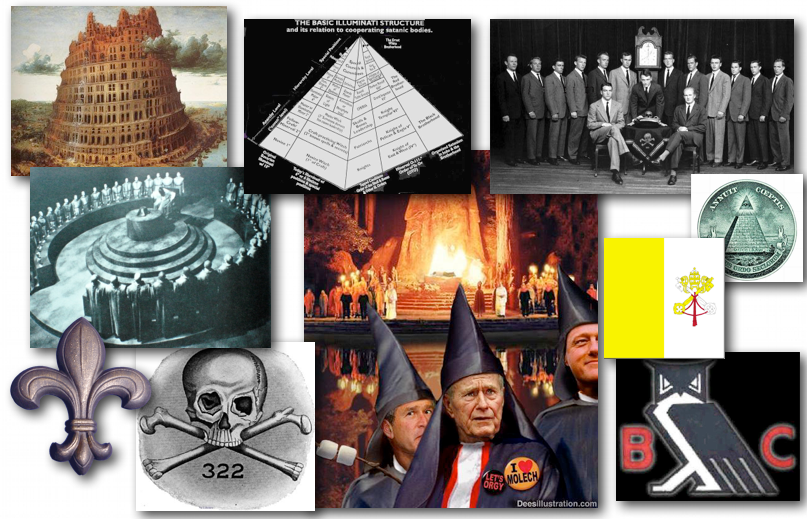
The cycle of collapse for the republic is similar to that of other forms of government, but is all the more relevant for our present day. Since the French Revolution, the majority of the world’s states operate under the auspices of being “republics,” but there is an important distinction to be made that Machiavelli could have never foreseen: global shadow government. In fact, it is Machiavellian realism that leads one to easily understand that our world is governed by international shadow entities that utilize nation states as fronts. We are far beyond the era of the outdated nation-state going to war against rival nation-state – ours is the era of global oligarchical cartels in competition, with the Anglo-American establishment currently at the top. Cartels and empires have always existed, but the world has never seen a global secret technocratic shadow government, and in that respect, we are in a unique situation. The issues of corruption and degeneracy, are not new, but even more rampant than anything in Machiavelli’s day, precisely because there are newer, more sophisticated means of technological tyranny and evil than in any previous age. We can see from this classical perspective that conspiracies and espionage are not surprising – they are synonymous with perennial statecraft.

On conspiracies, Machiavelli explains in The Prince:
“But concerning his subjects, when affairs outside are disturbed he has only to fear that they will conspire secretly, from which a prince can easily secure himself by avoiding being hated and despised, and by keeping the people satisfied with him, which it is most necessary for him to accomplish, as I said above at length. And one of the most efficacious remedies that a prince can have against conspiracies is not to be hated and despised by the people, for he who conspires against a prince always expects to please them by his removal; but when the conspirator can only look forward to offending them, he will not have the courage to take such a course, for the difficulties that confront a conspirator are infinite. And as experience shows, many have been the conspiracies, but few have been successful; because he who conspires cannot act alone, nor can he take a companion except from those whom he believes to be malcontents, and as soon as you have opened your mind to a malcontent you have given him the material with which to content himself, for by denouncing you he can look for every advantage; so that, seeing the gain from this course to be assured, and seeing the other to be doubtful and full of dangers, he must be a very rare friend, or a thoroughly obstinate enemy of the prince, to keep faith with you.
And, to reduce the matter into a small compass, I say that, on the side of the conspirator, there is nothing but fear, jealousy, prospect of punishment to terrify him; but on the side of the prince there is the majesty of the principality, the laws, the protection of friends and the state to defend him; so that, adding to all these things the popular goodwill, it is impossible that any one should be so rash as to conspire. For whereas in general the conspirator has to fear before the execution of his plot, in this case he has also to fear the sequel to the crime; because on account of it he has the people for an enemy, and thus cannot hope for any escape….
For this reason I consider that a prince ought to reckon conspiracies of little account when his people hold him in esteem; but when it is hostile to him, and bears hatred towards him, he ought to fear everything and everybody. And well-ordered states and wise princes have taken every care not to drive the nobles to desperation, and to keep the people satisfied and contented, for this is one of the most important objects a prince can have.”
Here Niccolo expounds the heart of conspiracy from the perspective of the ruler. Conspiracy need only be feared when the ruler is hated as a result of his tyranny or sadistic cruelty. Fear is a crucial key in the arsenal of the state, but fear must be tempered by virtue and security, and the imbalance in either direction leads to sedition from others and conspiracies become successful. For the ruler, conspiracy the maintenance of goodwill among subjects is obtained through the management of public perception and genuine goodwill by the ruler. It is not a license for doing anything and everything to maintain power, as many wrongly accuse Machiavelli, but as a balance of mercy and severity, and that power is maintained by fear. Contrary to popular opinion, Machiavelli firmly rebukes the notion of immorality and devious designs, opting instead for an approach of balance, with the ruler’s reputation standing on its own through virtue. Any other imbalance leads the ruler to fall prey to his own vices and overthrown by his own self-destructive folly.
Roman Catholicism through St. Augustine and classical virtue ethics also factor into Machiavelli’s tempering of the prince as it did for medieval warfare as a whole. This comes to the fore in his lesser known Art of War that was the first treatise on modern warfare that would revolutionize the field. For ancient and medieval leaders, the state, espionage, warfare and its deceptions, and the game of politics were considered “arts” that could only be mastered through study and practice. Systematizing everything from military camps, music, flags and colors, size and ranks, Machiavelli revolutionized the medieval army to become a hierarchical standard that would be the norm for future Europe. On another level, it also contains interesting aspects relating to psychological warfare, espionage and deception that are instructive for us in our day that help to grasp the level of deception we live under. The ancient arts of statecraft and deception are not forgotten, they have been perfected and through a high-tech overlay, are beyond anything Niccolo could have imagined.
He writes:
“Birds or dust have often discovered the enemy, for where the enemy comes to meet you, he will always raise a great dust which will point out his coming to you. Thus often a Captain when he sees in a place whence he ought to pass, pigeons taking off and other birds flying about freely, circling and not setting, has recognized this to be the place of any enemy ambush, and knowing this has sent his forces forward, saving himself and injuring the enemy. As to the second case, being drawn into it ((which our men call being drawn into a trap)) you ought to look out not to believe readily those things that appear to be less reasonable than they should be: as would be (the case) if an enemy places some booty before you, you would believe that it to be (an act of) love, but would conceal deceit inside it.”
Book VI is the best section for these machinations, and in it we see the following perennial tactics:
- Consult a rising enemy or possible sedition to give the impression of heeding his ideas and win him by feigned interest
- Send wise men into the enemy’s camp as fake attendants of a fake dignitary to assess the enemy
- Use false defectors to be spies in the enemy’s camp
- Conversely, capture the enemy’s commanders to gain intelligence on the opponent
- If you have suspected spies in your camp, disseminate false information to various parties to see how the enemy reacts to which
- Sacrifice a town or some pawns as a gambit to give the enemy a false sense of security
- Utilize religious and superstitious omens as far as your soldiers revere them or invent them
- Disguise your soldiers as the enemy
- Give the appearance of retreat to lead the enemy into a trap
- Leave an open encampment for the enemy with fresh, albeit poisoned, supplies
- Never cause an enemy to despair, since he will only fight more desperately and possibly defeat you
- Use a subterfuge of a fake illness in your camp that leads the enemy to think you are weak
- Communicate among your generals and men with secret ciphers and codes the enemy cannot decode
- Use propaganda and stories to create a boost of morale among your men

Many more could be listed, but these are the most interesting and in our day, these tricks are used by the elite, not on foreign powers primarily, but as the bases for mass deception, with a massive surveillance state, poisoned food and water, false media reports, and countless other ruses. One might think from this list Machiavelli is immoral and devious, but for him, these are necessary facts of war with the enemy, not on the populace itself. The goal of war is not virtue for him, but simply to win at all costs. Yet winning at all costs does not mean being sadistic or cruel or a brute, it means learning the art of war to be a just ruler and by so doing, win the admiration of your soldiers and homeland. Far from corruption, Machiavelli castigated the corrupt leaders of his day and it serves as an apt warning to ours. Corruption and effeminate degeneracy among the elite does not lead to power, it leads to the loss of power. As far as one concedes to evil and vice in his own heart, especially the ruler, to that degree does he lose his power and become subservient to the passions.
He concludes:
“But let us turn to the Italians, who, because they have not wise Princes, have not produced any good army; and because they did not have the necessity that the Spaniards had, have not undertaken it by themselves, so that they remain the shame of the world. And the people are not to blame, but their Princes are, who have been castigated, and by their ignorance have received a just punishment, ignominiously losing the State, (and) without any show of virtu….
Our Italian Princes, before they tasted the blows of the ultramontane wars, believed it was enough for them to know what was written, think of a cautious reply, write a beautiful letter, show wit and promptness in his sayings and in his words, know how to weave a deception, ornament himself with gems and gold, sleep and eat with greater splendor than others, keep many lascivious persons around, conduct himself avariciously and haughtily toward his subjects, become rotten with idleness, hand out military ranks at his will, express contempt for anyone who may have demonstrated any praiseworthy manner, want their words should be the responses of oracles; nor were these little men aware that they were preparing themselves to be the prey of anyone who assaulted them.”
via JaysAnalysis.com