Jul 9, 2013 | Abuses of Power, Nature Body Mind

Dr. Lee Hieb explains how medical ‘consensus’ robs patients of their health
No one said it better than Michael Crichton – who, in addition to being a best selling author, was also a physician.
During a lecture at Cal Tech, he said, “Let’s be clear: The work of science has nothing whatever to do with consensus. Consensus is the business of politics. Science, on the contrary, requires only one investigator who happens to be right. … The greatest scientists in history are great precisely because they broke with the consensus.”
The medical community has always been subject to “group-think,” but in recent decades we have become the leaders. Numerous physician-scientists have been ostracized, defrocked, de-licensed and in some cases driven to self-destruction by a medical community that has embraced consensus in science.
In essence, “We don’t care about your data; we all agree you are wrong.”
I once had a paper rejected from a major spine journal with a one line denouement: “Everyone knows you can’t do that.”
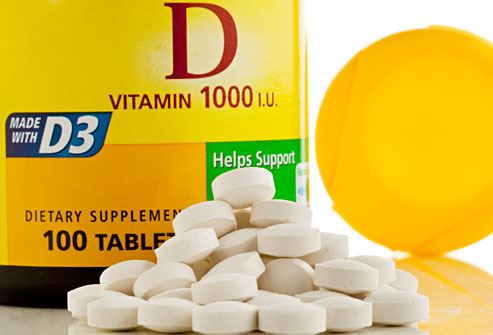
With time, ultimately, truth prevails, and renegade but correct physicians are vindicated – but not in time to save those patients who die from the mistaken consensus. Today, this “group-think” is depriving people from some of the best and cheapest medical treatment available – supplementation with adequate Vitamin D3.
Vitamin D deficiency has been associated with childhood rickets – a bone disorder – for over a hundred years. And it has been known since the 1970s that those living on the equator, regardless of particular locale, have lower rates of multiple sclerosis, colon cancer and depression. But more recently, many astute observers have discovered that low Vitamin D leads to many other disorders, including cardiac arrhythmia, breast cancer, adult fractures, dementia, heart attack risk and even diabetes.
Most recently, studies have demonstrated that higher levels of Vitamin D improve longevity and are beneficial at preventing influenza – even better than vaccination. Studies showing beneficial effects of high vitamin D levels are quite convincing. They not only show a correlation between low Vitamin D blood levels and the problem, but show improvement in the disease or prevention of the condition when levels are raised up through supplementation.
As an example, it has been shown in the laboratory that heart muscle does not contract well unless adequate Vitamin D is present. An Italian population study showed that low Vitamin D was proportional to atherosclerotic plaques (clogging of the arteries). Furthermore, a Japanese study of dialysis patients demonstrated that correcting Vitamin D deficiency significantly lowered death from heart attacks and heart disease in general.
These are only a few of the rapidly expanding body of literature supporting the role of Vitamin D in multiple disease prevention. But to achieve the positive effects seen in many diseases, blood levels need to be in the range of 50 to 100 ng/dl, not the 20 ng/dl that laboratories report as the lowest range of “normal” (how labs determine “normal” is the subject of another column). Specifically in the case of breast cancer, if one achieves blood levels above 55 ng/dl, the risk of breast cancer is diminished 85 percent.
It is the observation of many, many practicing clinicians that 1) most patients test in the low 20s, and 2) 400 iu of Vitamin D a day – the government recommended daily allowance doesn’t raise the levels at all. Studies of equatorial inhabitants demonstrate that some of the longest-lived people on the planet obtain 30,000-40,000 iu of Vitamin D (specifically D3) a day from the sunlight – nature’s source of the vitamin. Given that, it is not suprising that supplementing 10,000 iu a day of Vitamin D3 has been shown to have no adverse effects.
As an Orthopaedic Surgeon, I deal with bone disorders daily, and have long been interested in this topic. I quit testing for Vitamin D levels in untreated people after every one of my patients tested in the low 20s. I only tested my husband because he was convinced that golfing in Arizona 18 holes, six days a week would raise his level. It did not – his level was 22 ng/dl.
As a final fact, D3 supplementation is cheap. For less than $12 a month you can easily take 10,000 iu of Vitamin D3 a day.
Now, given all this, what would you do?
I, for one take 10,000 units of Vitamin D3 a day. I have done so for over 7 years, and my levels of 55 ng/dl are barely in the optimal range of 50-100ng/dl. I recommend the same to all my patients. But I must warn them that the government, via the Institute of Medicine and the FDA, disagree and believe people should take only 600-800 iu a day.
Now it doesn’t take a medical degree to figure out that a cheap treatment that has such potential upside with so little (if any) downside is worth doing as real preventive medicine. But the government consensus – developed by intellectuals who feel they are infinitely smarter than we are, and should be able to make our choices for us – is that there is no evidence for the beneficial claims.
Really? If they emerge from their collective basement, they will find pages and pages of references. Don’t believe it? Do a simple Google search. Or just read the newspaper. Besides frequent articles in medical and general science journals supporting Vitamin D3 supplementation, there are monthly news stories about this rapidly advancing science.
Sadly, the government doesn’t just want to discourage you from taking extra Vitamin D, they want to prohibit it. Senator Dick Durban, D-Ill., in 2011 introduced a bill (innocuously labeled the “Supplement Labeling Act”) which would so over-regulate the supplement industry that they could no longer supply products such as Vitamin D3 at a cost affordable to the average consumer.
And state medical boards, which are now populated by many non-physicians, sanction physicians who step out of this approved “consensus” – what they call “standard of care.” According to them, if you are not doing what 90 percent of your colleagues are doing, you are by definition wrong. And they can punish you, even to the extent of taking away your license. So, regardless of progress in science, if 90 percent of doctors are recommending an inadequate dose of Vitamin D, your doctor must give you this wrong advice.
To be a scientific leader in this new world order is to be wrong. If the phone company had this philosophy, we would still be tied to land line rotary dials.
Science and medicine are not a vote. As Dr. Crichton pointed out, voting is for politicians. Science requires freedom to consider the alternatives, and in medicine, the freedom to make our own choices – not have government bureaucrats or the Institute of Medicine make them for us
via WND
Aug 4, 2012 | Globalist Corporations
 “The policy set for GE alfalfa will most likely guide policies for other GE crops as well. True coexistence is a must.” – Whole Foods Market, Jan. 21, 2011
In the wake of a 12-year battle to keep Monsanto’s Genetically Engineered (GE) crops from contaminating the nation’s 25,000 organic farms and ranches, America’s organic consumers and producers are facing betrayal. A self-appointed cabal of the Organic Elite, spearheaded by Whole Foods Market, Organic Valley, andStonyfield Farm, has decided it’s time to surrender to Monsanto. Top executives from these companies have publicly admitted that they no longer oppose the mass commercialization of GE crops, such as Monsanto’s controversial Roundup Ready alfalfa, and are prepared to sit down and cut a deal for “coexistence” with Monsanto and USDA biotech cheerleader Tom Vilsack.
In a cleverly worded, but profoundly misleading email sent to its customers last week, Whole Foods Market, while proclaiming their support for organics and “seed purity,” gave the green light to USDA bureaucrats to approve the “conditional deregulation” of Monsanto’s genetically engineered, herbicide-resistant alfalfa. Beyond the regulatory euphemism of “conditional deregulation,” this means that WFM and their colleagues are willing to go along with the massive planting of a chemical and energy-intensive GE perennial crop, alfalfa; guaranteed to spread its mutant genes and seeds across the nation; guaranteed to contaminate the alfalfa fed to organic animals; guaranteed to lead to massive poisoning of farm workers and destruction of the essential soil food web by the toxic herbicide, Roundup; and guaranteed to produce Roundup-resistant superweeds that will require even more deadly herbicides such as 2,4 D to be sprayed on millions of acres of alfalfa across the U.S.
In exchange for allowing Monsanto’s premeditated pollution of the alfalfa gene pool, WFM wants “compensation.” In exchange for a new assault on farmworkers and rural communities (a recent large-scale Swedish study found that spraying Roundup doubles farm workers’ and rural residents’ risk of getting cancer), WFM expects the pro-biotech USDA to begin to regulate rather than cheerlead for Monsanto. In payment for a new broad spectrum attack on the soil’s crucial ability to provide nutrition for food crops and to sequester dangerous greenhouse gases (recent studies show that Roundup devastates essential soil microorganisms that provide plant nutrition and sequester climate-destabilizing greenhouse gases), WFM wants the Biotech Bully of St. Louis to agree to pay “compensation” (i.e. hush money) to farmers “for any losses related to the contamination of his crop.”
In its email of Jan. 21, 2011 WFM calls for “public oversight by the USDA rather than reliance on the biotechnology industry,” even though WFM knows full well that federal regulations on Genetically Modified Organisms (GMOs) do not require pre-market safety testing, nor labeling; and that even federal judges have repeatedly ruled that so-called government “oversight” of Frankencrops such as Monsanto’s sugar beets and alfalfa is basically a farce. At the end of its email, WFM admits that its surrender to Monsanto is permanent: “The policy set for GE alfalfa will most likely guide policies for other GE crops as well True coexistence is a must.”
Why Is Organic Inc. Surrendering?
According to informed sources, the CEOs of WFM and Stonyfield are personal friends of former Iowa governor, now USDA Secretary, Tom Vilsack, and in fact made financial contributions to Vilsack’s previous electoral campaigns. Vilsack was hailed as “Governor of the Year” in 2001 by the Biotechnology Industry Organization, and traveled in a Monsanto corporate jet on the campaign trail. Perhaps even more fundamental to Organic Inc.’s abject surrender is the fact that the organic elite has become more and more isolated from the concerns and passions of organic consumers and locavores.
The Organic Inc. CEOs are tired of activist pressure, boycotts, and petitions. Several of them have told me this to my face. They apparently believe that the battle against GMOs has been lost, and that it’s time to reach for the consolation prize. The consolation prize they seek is a so-called “coexistence” between the biotech Behemoth and the organic community that will lull the public to sleep and greenwash the unpleasant fact that Monsanto’s unlabeled and unregulated genetically engineered crops are now spreading their toxic genes on 1/3 of U.S. (and 1/10 of global) crop land.
WFM and most of the largest organic companies have deliberately separated themselves from anti-GMO efforts and cut off all funding to campaigns working to label or ban GMOs. The so-called Non-GMO Project, funded by Whole Foods and giant wholesaler United Natural Foods (UNFI) is basically a greenwashing effort (although the 100% organic companies involved in this project seem to be operating in good faith) to show that certified organic foods are basically free from GMOs (we already know this since GMOs are banned in organic production), while failing to focus on so-called “natural” foods, which constitute most of WFM and UNFI’s sales and are routinely contaminated with GMOs.
From their “business as usual” perspective, successful lawsuits against GMOs filed by public interest groups such as the Center for Food Safety; or noisy attacks on Monsanto by groups like the Organic Consumers Association, create bad publicity, rattle their big customers such as Wal-Mart, Target, Kroger, Costco, Supervalu, Publix and Safeway; and remind consumers that organic crops and foods such as corn, soybeans, and canola are slowly but surely becoming contaminated by Monsanto’s GMOs.
Whole Foods’ Dirty Little Secret: Most of the So-Called “Natural” Processed Foods and Animal Products They Sell Are Contaminated with GMOs
The main reason, however, why Whole Foods is pleading for coexistence with Monsanto, Dow, Bayer, Syngenta, BASF and the rest of the biotech bullies, is that they desperately want the controversy surrounding genetically engineered foods and crops to go away. Why? Because they know, just as we do, that 2/3 of WFM’s $9 billion annual sales is derived from so-called “natural” processed foods and animal products that are contaminated with GMOs. We and our allies have tested their so-called “natural” products (no doubt WFM’s lab has too) containing non-organic corn and soy, and guess what: they’re all contaminated with GMOs, in contrast to their certified organic products, which are basically free of GMOs, or else contain barely detectable trace amounts.
Approximately 2/3 of the products sold by Whole Foods Market and their main distributor, United Natural Foods (UNFI) are not certified organic, but rather are conventional (chemical-intensive and GMO-tainted) foods and products disguised as “natural.”
Unprecedented wholesale and retail control of the organic marketplace by UNFI and Whole Foods, employing a business model of selling twice as much so-called “natural” food as certified organic food, coupled with the takeover of many organic companies by multinational food corporations such as Dean Foods, threatens the growth of the organic movement.
Covering Up GMO Contamination: Perpetrating “Natural” Fraud
Many well-meaning consumers are confused about the difference between conventional products marketed as “natural,” and those nutritionally/ environmentally superior and climate-friendly products that are “certified organic.”
Retail stores like WFM and wholesale distributors like UNFI have failed to educate their customers about the qualitative difference between natural and certified organic, conveniently glossing over the fact that nearly all of the processed “natural” foods and products they sell contain GMOs, or else come from a “natural” supply chain where animals are force-fed GMO grains in factory farms or Confined Animal Feeding Operations (CAFOs).
A troubling trend in organics today is the calculated shift on the part of certain large formerly organic brands from certified organic ingredients and products to so-called “natural” ingredients. With the exception of the “grass-fed and grass-finished” meat sector, most “natural” meat, dairy, and eggs are coming from animals reared on GMO grains and drugs, and confined, entirely, or for a good portion of their lives, in CAFOs.
Whole Foods and UNFI are maximizing their profits by selling quasi-natural products at premium organic prices. Organic consumers are increasingly left without certified organic choices while genuine organic farmers and ranchers continue to lose market share to “natural” imposters. It’s no wonder that less than 1% of American farmland is certified organic, while well-intentioned but misled consumers have boosted organic and “natural” purchases to $80 billion annually-approximately 12% of all grocery store sales.
The Solution: Truth-in-Labeling Will Enable Consumers to Drive So-Called “Natural” GMO and CAFO-Tainted Foods Off the Market
There can be no such thing as “coexistence” with a reckless industry that undermines public health, destroys biodiversity, damages the environment, tortures and poisons animals, destabilizes the climate, and economically devastates the world’s 1.5 billion seed-saving small farmers.
There is no such thing as coexistence between GMOs and organics in the European Union. Why? Because in the EU there are almost no GMO crops under cultivation, nor GM consumer food products on supermarket shelves. And why is this? Because under EU law, all foods containing GMOs or GMO ingredients must be labeled. Consumers have the freedom to choose or not to choose GMOs; while farmers, food processors, and retailers have (at least legally) the right to lace foods with GMOs, as long as they are safety-tested and labeled.
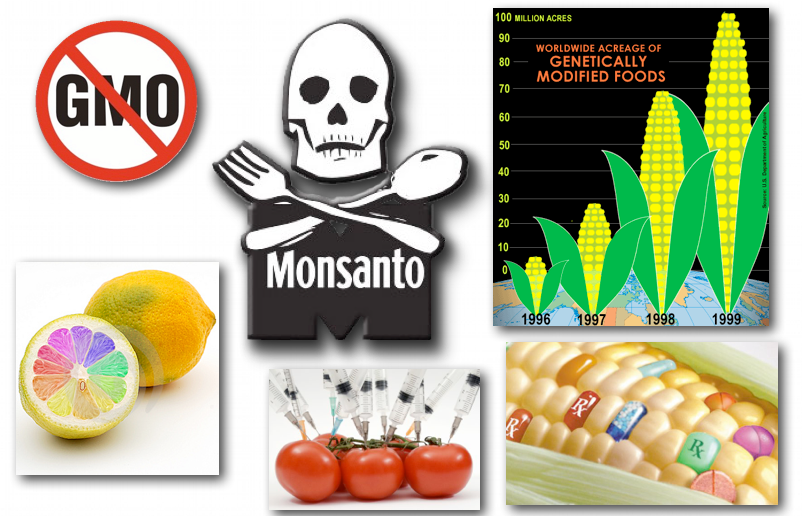
Of course the EU food industry understands that consumers, for the most part, do not want to purchase or consume GE foods. European farmers and food companies, even junk food purveyors like McDonald’s and Wal-Mart, understand quite well the concept expressed by a Monsanto executive when GMOs first came on the market: “If you put a label on genetically engineered food you might as well put a skull and crossbones on it.”
The biotech industry and Organic Inc. are supremely conscious of the fact that North American consumers, like their European counterparts, are wary and suspicious of GMO foods. Even without a PhD, consumers understand you don’t want your food safety or environmental sustainability decisions to be made by out-of-control chemical companies like Monsanto, Dow, or Dupont – the same people who brought you toxic pesticides, Agent Orange, PCBs, and now global warming.
Industry leaders are acutely aware of the fact that every single industry or government poll over the last 16 years has shown that 85-95% of American consumers want mandatory labels on GMO foods. Why? So that we can avoid buying them. GMO foods have absolutely no benefits for consumers or the environment, only hazards. This is why Monsanto and their friends in the Bush, Clinton, and Obama administrations have prevented consumer GMO truth-in-labeling laws from getting a public discussion in Congress.
Although Congressman Dennis Kucinich (Democrat, Ohio) recently introduced a bill in Congress calling for mandatory labeling and safety testing for GMOs, don’t hold your breath for Congress to take a stand for truth-in-labeling and consumers’ right to know what’s in their food. Especially since the 2010 Supreme Court decision in the so-called Citizens United case gave big corporations and billionaires the right to spend unlimited amounts of money (and remain anonymous, as they do so) to buy media coverage and elections, our chances of passing federal GMO labeling laws against the wishes of Monsanto and Food Inc. are all but non-existent.
Perfectly dramatizing the “Revolving Door” between Monsanto and the Federal Government, Supreme Court Justice Clarence Thomas, formerly chief counsel for Monsanto, delivered one of the decisive votes in the Citizens United case, in effect giving Monsanto and other biotech bullies the right to buy the votes it needs in the U.S. Congress.
With big money controlling Congress and the media, we have little choice but to shift our focus and go local. We’ve got to concentrate our forces where our leverage and power lie, in the marketplace, at the retail level; pressuring retail food stores to voluntarily label their products; while on the legislative front we must organize a broad coalition to pass mandatory GMO (and CAFO) labeling laws, at the city, county, and state levels.
The Organic Consumers Association, joined by our consumer, farmer, environmental, and labor allies, has just launched a nationwide Truth-in-Labeling campaign to stop Monsanto and the Biotech Bullies from force-feeding unlabeled GMOs to animals and humans.
Utilizing scientific data, legal precedent, and consumer power the OCA and our local coalitions will educate and mobilize at the grassroots level to pressure giant supermarket chains (Wal-Mart, Kroger, Costco, Safeway, Supervalu, and Publix) and natural food retailers such as Whole Foods and Trader Joe’s to voluntarily implement “truth-in-labeling” practices for GMOs and CAFO products; while simultaneously organizing a critical mass to pass mandatory local and state truth-in-labeling ordinances – similar to labeling laws already in effect for country of origin, irradiated food, allergens, and carcinogens.
If local and state government bodies refuse to take action, wherever possible we must attempt to gather sufficient petition signatures and place these truth-in-labeling initiatives directly on the ballot in 2011 or 2012. If you’re interested in helping organize or coordinate a Millions Against Monsanto and Factory Farms Truth-in-Labeling campaign in your local community, sign up here:http://organicconsumers.org/oca-volunteer/
To pressure Whole Foods Market and the nation’s largest supermarket chains to voluntarily adopt truth-in-labeling practices sign here, and circulate this petition widely:http://www.organicconsumers.org/articles/article_22309.cfm
And please stay tuned to Organic Bytes for the latest developments in our campaigns.
Power to the People! Not the Corporations!
####
Jan. 28 Response by Whole Foods Market:
Many people have asked us why we endorsed the coexistence option rather than an outright ban on GE alfalfa. That was never an option in Washington! The USDA presented the industry with only two options that they were considering– deregulation and deregulation with restrictions. Given the pervasive planting of GE crops in the U.S. – 93% of soy, 86% of corn, 93% of cotton and 93% of canola seed planted were genetically engineered in the U.S. in 2010 – the option of an outright ban was not on the table. Whole Foods Market — along with the National Cooperative Grocers Association, the National Organic Coalition, the Organic Trade Association, and other companies and groups — endorsed the path of deregulation with restrictions, or coexistence, not because it was a perfect path, but because it was a path to create meaningful change right now in the regulating of genetically engineered foods and the protection of non-GE foods. (Read the full response.)
SOURCE
May 25, 2012 | Nature Body Mind, News
 (NaturalNews) There is a conspiracy of selling out happening in America. Politics and personal interest it would seem determine government policies over and above health and safety issues. When President Obama appointed Michael Taylor in 2009 as senior adviser for the FDA, a fierce protest ensued from consumer groups and environmentalists. Why? Taylor used to be vice president for Monsanto, a multinational interested in marketing genetically modified (GM) food. It was during his term that GMO’s were approved in the US without undergoing tests to determine if they were safe for human consumption.
The danger of GMO’s
The question of whether or not genetically modified foods (GMO’s) are safe for human consumption is an ongoing debate that does not seem to see any resolution except in the arena of public opinion. Due to lack of labeling, Americans are still left at a loss as to whether or not what is on the table is genetically modified. This lack of information makes the avoiding and tracking of GM foods an exercise in futility. Below are just some of the food products popularly identified to be genetically modified:
1. Corn – Corn has been modified to create its own insecticide. The U.S. Food and Drug Administration (FDA) has declared that tons of genetically modified corn has been introduced for human consumption. Monsanto has revealed that half of the US’s sweet corn farms are planted with genetically modified seed. Mice fed with GM corn were discovered to have smaller offspring and fertility problems.
2. Soy – Soy has also been genetically modified to resist herbicides. Soy products include soy flour, tofu, soy beverages, soybean oil and other products that may include pastries, baked products and edible oil. Hamsters fed with GM soy were unable to have offspring and suffered a high mortality rate.
3. Cotton – Like corn and soy, cotton has been designed to resist pesticides. It is considered food because its oil can be consumed. Its introduction in Chinese agriculture has produced a chemical that kills cotton bollworm, reducing the incidences of pests not only in cotton crops but also in neighboring fields of soybeans and corn. Incidentally, thousands of Indian farmers suffered severe rashes upon exposure to BT cotton.
4. Papaya – The virus-resistant variety of papaya was commercially introduced in Hawaii in 1999. Transgenic papayas comprised three-fourths of the total Hawaiian papaya crop. Monsanto bestowed upon Tamil Nadu Agricultural University in Coimbatore technology for developing papaya resistant to the ringspot virus in India.
5. Rice – This staple food from South East Asia has now been genetically modified to contain a high amount of vitamin A. Allegedly, there are reports of rice varieties containing human genes to be grown in the US. The rice will create human proteins useful for dealing with infant diarrhea in the 3rd world. China Daily, an online journal, reported potential serious public health and environment problems with genetically modified rice considering its tendency to cause allergic reactions with the concurrent possibility of gene transfers.
6. Tomatoes – Tomatoes have now been genetically engineered for longer shelf life, preventing them from easily rotting and degrading. In a test conducted to determine the safety of GM tomatoes, some animal subjects died within a few weeks after consuming GM tomatoes.
7. Rapeseed – In Canada, this crop was renamed canola to differentiate it from non-edible rapeseed. Food stuff produced from rapeseed includes rapeseed oi (canola oil) l used to process cooking oil and margarine. Honey can also be produced from GM rapeseed. German food surveillance authorities discovered as much as a third of the total pollen present in Canadian honey may be from GM pollen. In fact, some honey products from Canada were also discovered to have pollen from GM rapeseed.
8. Dairy products – It has been discovered that 22 percent of cows in the U.S. were injected with recombinant (genetically modified) bovine growth hormone (rbGH). This Monsanto created hormone artificially forces cows to increase their milk production by 15 percent. Milk from cows treated with this milk inducing hormone contains increased levels of IGF-1 (insulin growth factors-1). Humans also have IGF-1 in their system. Scientists have expressed concerns that increased levels of IGF-1 in humans have been associated with colon and breast cancer.
9. Potatoes – Mice fed with potatoes engineered with Bacillus thuringiensis var. Kurstaki Cry 1 were found to have toxins in their system. Despite claims to the contrary, this shows that Cry1 toxin was stable in the mouse gut. When the health risks were revealed, it sparked a debate.
10. Peas – Peas that have been genetically modified have been found to cause immune responses in mice and possibly even in humans. A gene from kidney beans was inserted into the peas creating a protein that functions as a pesticide.
The GMO link to strange disease
As early as 2008, NaturalNews.com reported about a condition called Morgellon’s disease. The article went on to report the symptoms of the disease as follows: crawling, stinging, biting and crawling sensations; threads or black speck-like materials on or beneath the skin; granules, lesions. Some patients report fatigue, short term memory loss, mental confusion, joint pain and changes in vision. Furthermore, there have been reports of substantial morbidity and social dysfunction leading to a dip in work productivity, job loss, total disability, divorce, loss of child custody and home abandonment.
Prior to its reporting, the condition was dismissed as a hoax, but upon further investigation, the evidence pointed out that the disease was real and may be related to genetically modified food.
Despite this link being established, the CDC declared Morgellon’s disease of unknown origin. Worse, the medical community could not offer any information to the public regarding a cause for the symptoms.
When a research study was conducted on fiber samples taken from Morgellons patients, it was discovered that the fiber samples of all the patients looked remarkable similar. And yet, it did not seem to match any common environmental fiber. When the fiber was broken down, and it’s DNA extracted, it was discovered to belong to a fungus. Even more surprising was the finding that the fibers contained Agrobacterium, a genus gram-negative bacteria with the capacity of transforming plant, animal and even human cells.
Morgellon’s disease is not the only condition associated with genetically modified foods. A growing body of evidence has shown that it may cause allergies, immune reactions, liver problems, sterility and even death. Moreover, based on the only human feeding experiment conducted on genetically modified food, it was established that genetic material in genetically modified food product can transfer into the DNA of intestinal bacteria and still continue to thrive.
Heeding the warning
Time and again, the American Academy of Environmental Medicine (AAEM) has warned that GMOs pose a serious threat to health, and it is no accident that there can be a correlation between it and adverse health effects. In fact, the AAEM has advised doctors to tell their patients to avoid GMOs as the introduction of GMOs into the current food supply has correlated with an alarming rise in chronic diseases and food allergies.
This should come as no surprise. More than 30 years ago a food supplement called L-trytophan killed 100 people and affected 5,000 to 10,000 more. The cause was narrowed down to the genetic engineering process used in its production. If the symptoms had not had three simultaneous characteristics – namely, they were unique, acute and fast-acting – the disease could never have been identified.
If science could assure us with certainty that serious consequences do not wait for us at the end of the line, it might be to our best interest to let this opportunity pass. Progressive thinking in terms of profit is certainly not wrong. But to brush off precaution on the convenient argument that there is not enough evidence to prove that GM food is indeed harmful is sheer irresponsibility. It certainly is a lame excuse to offer in the event that GM foods are indeed proven to contain health hazards.
Sources for this article:
http://www.organicconsumers.org/articles/article_11361.cfm
http://www.naturalnews.com/027226_food_GMO_foods.html
http://www.naturalnews.com/023004.html
http://www.sustainabletable.org/issues/rbgh/
http://www.chinadaily.com.cn/china/2010-02/04/content_9430645.htm
http://www.actionbioscience.org/biotech/pusztai.html
http://www.gmo-compass.org/eng/database/food/238.honey.html