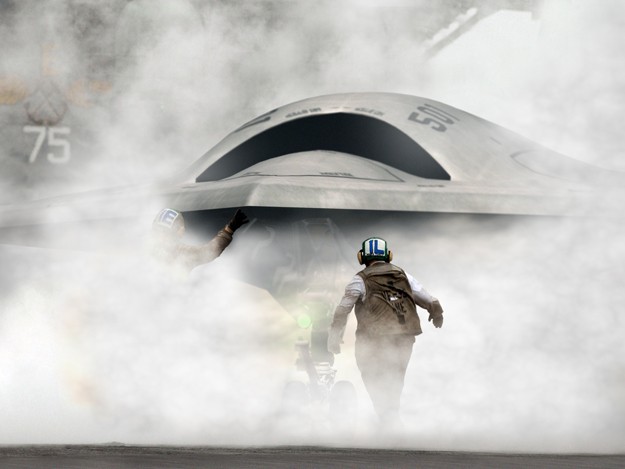
From World War Origins to Modern Battlefields
The concept of pilotless flight in American defense dates as far back as the era of the Wright brothers. While warfare rarely produces anything positive, countless everyday innovations — from computing technology to microwave ovens — emerged from military research during past conflicts. In the modern era, unmanned aerial vehicles (UAVs) serve an extraordinarily diverse range of operators, with the U.S. Department of Defense representing just one major player. Although armed drones have carried out lethal operations overseas for more than a decade, their potential applications within domestic borders have only recently gained serious traction. Historically, nearly all UAV advancement was driven by the defense sector. Despite their association with covert military operations, the expanding universe of practical civilian uses offers hope that drone innovation will increasingly shift toward constructive purposes.
Military Drone Spending and Expanding Capabilities
The Obama administration’s counterterrorism strategy relied heavily on UAV strikes against militant targets. Since those early strike missions, drone technology has evolved dramatically — portable drone systems now fit inside soldier backpacks, and Predator platforms carry significantly more powerful munitions. Pentagon expenditure on unmanned systems surged from $284 million in 2000 to $3.3 billion by October 2012. Miniature surveillance platforms known as Cicadas began deploying from high-altitude balloons to gather ground-level intelligence in Iraq. The military’s appetite for UAV applications, across every size category, appears virtually limitless. As programming and operational technologies become both more accessible and more adaptable, the scope of drone missions continues to widen. Pentagon projections at the time anticipated that the fleet of multirole UAVs — those capable of conducting both reconnaissance and strike operations — would nearly quadruple over the following decade.
FAA Regulations and Domestic Drone Deployment
By October 2013, the Federal Aviation Administration had granted 285 authorization certificates permitting drone operations within U.S. airspace. Lobbying pressure from the Unmanned Systems Caucus — effectively the drone industry’s congressional advocate — prompted the Department of Homeland Security to adopt eight Predator drones for surveillance along the northern and southern borders. FAA plans to open commercial airspace to civilian UAV operators by 2015 promised to finally unlock broader experimentation with drone technology. Yet even with regulatory support, questions persisted about whether private enterprise could ever deploy drones at anything close to the military’s scale. Observers acknowledged the enormous civilian potential of autonomous aircraft while simultaneously warning about tighter policing capabilities and expanded government monitoring.
Civilian Innovation: Internet Access, Conservation, and Agriculture
Both hobbyists and major technology investors began exploring the dual-use nature of UAV platforms. Facebook’s Mark Zuckerberg launched an initiative to deploy drones alongside satellite systems to deliver internet connectivity to underserved populations worldwide. While this effort likely reflected Zuckerberg’s competitive instincts — particularly his drive to rival Google’s Project Loon balloon internet initiative and satellite broadband providers like HughesNet — communities lacking internet access stood to gain meaningful benefits regardless. Federal agencies already employed drones to safeguard endangered species such as the sandhill crane, while conservation teams in Indonesia and Malaysia utilized unmanned platforms to track threatened orangutan habitats. Agricultural monitoring, natural resource management, search and rescue operations, three-dimensional mapping and surveying, and hurricane tracking all emerged as active UAV use cases. The range of civil and commercial drone applications appeared virtually boundless.
Privacy Concerns and the Surveillance Question
Despite the promise, the drone industry carried substantial risks. The American Civil Liberties Union sounded alarms about a potential surveillance-dominated future characterized by widespread, suspicionless monitoring of ordinary citizens. Given the longstanding role of drones as instruments of government and military power, such warnings carried genuine weight. Regulatory barriers continued to obstruct meaningful commercial development at the time. Although numerous commercial concepts had been proposed — from Amazon package delivery to Domino’s pizza drones — the military retained its position as the primary engine of American UAV innovation. Defense priorities drove continued spending increases on advanced imaging systems, sensor arrays, and armed drone capabilities. Nevertheless, the gradual integration of UAV technology into domestic airspace by law enforcement agencies — and eventually by private companies — appeared all but certain. As technological breakthroughs continued propelling the industry forward, the ultimate beneficiaries of this transformation remained an open question.
Originally published by DecryptedMatrix. Content has been revised and updated for clarity.